In this thematic analysis, I’ll explore how these timeless narratives address complex concepts like dharma (duty), karma (action and consequence), and moksha (liberation). By understanding the underlying themes, we can appreciate the profound wisdom embedded in Hindu mythology and its relevance to our modern lives. Join me as I unravel the layers of meaning in these ancient tales and discover how they continue to inspire and guide us today.
Overview of Hindu Mythology
Hindu mythology is deeply rooted in the ancient Indian subcontinent. Stories from this mythology are preserved in texts such as the Vedas, the Mahabharata – The Great Epic, the Ramayana, and the Puranas. Hindu myths date back to the Indus Valley Civilization (2600–1900 BCE), evolving through various cultural and philosophical periods.
Origins and Influences
Hindu mythology traces its origins to the Indus Valley Civilization, whose beliefs and traditions heavily influenced later mythology. Subsequent development occurred during the Vedic period, characterized by hymns, rituals, and philosophical texts. The Middle Ages and the modern era further shaped these myths, bringing in diverse cultural and ideological influences.
Key Themes
Hindu mythology explores several themes:
- Creation Myths: Tales about the universe’s origins and the gods involved.
- Divine Exploits: Stories featuring gods and goddesses overcoming evil, restoring dharma, and achieving enlightenment.
- Human Experiences: Myths resonating with values, karma, and life lessons that guide contemporary ethics and spirituality.
ApamNapat – Agni, The Son-of-waters’s extensive collection of these narratives provides a comprehensive look into the myths. Notably, characters from the Mahabharata and Ramayana highlight themes of duty, love, and honor, serving as moral compasses.
Key Themes in Hindu Mythology
Hindu mythology covers a wide array of themes that illustrate its profound and complex nature. The stories teach essential life lessons and convey fundamental aspects of Hindu belief systems.
Creation and Cosmology
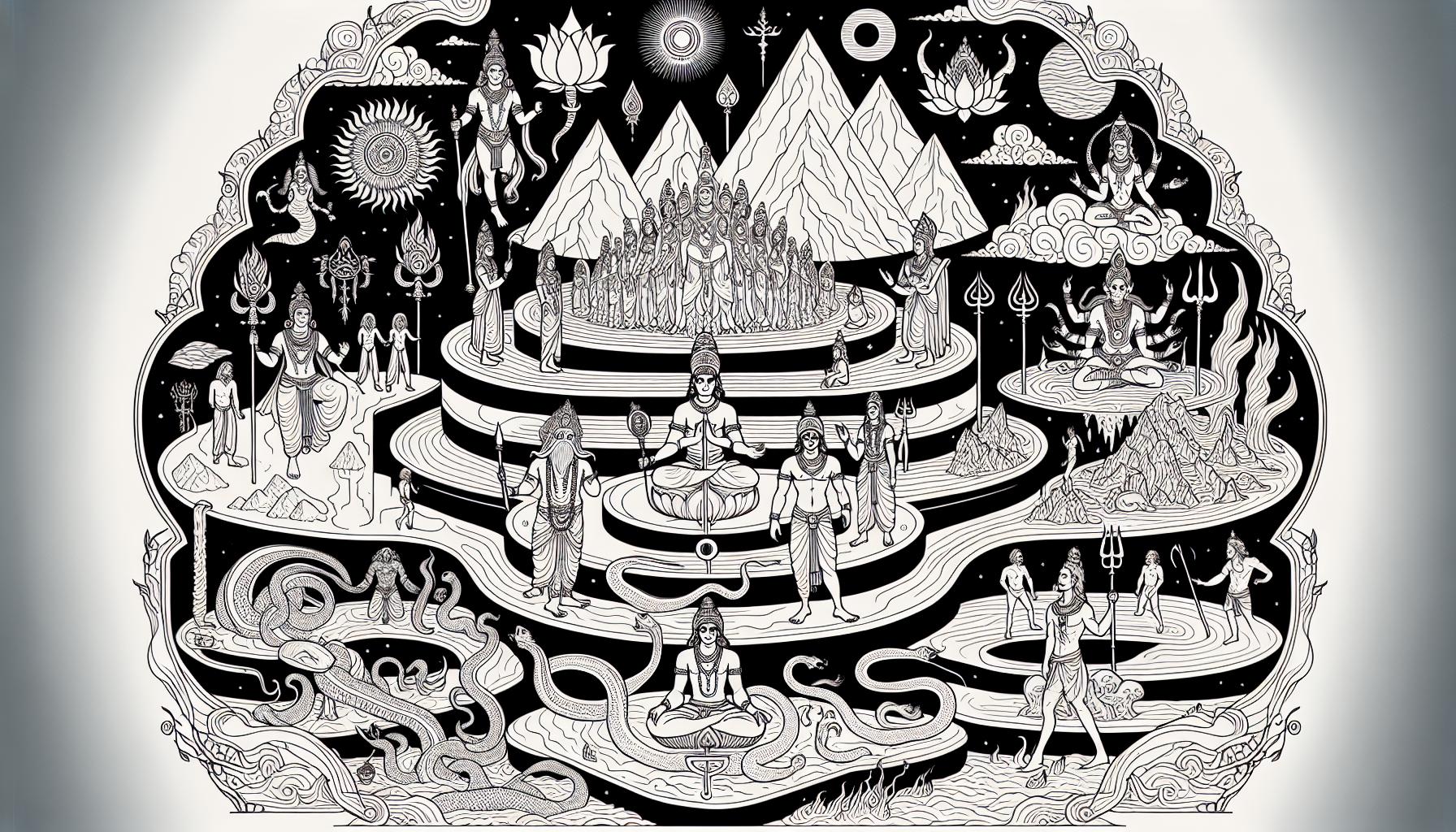
Hindu mythology offers elaborate narratives about creation and cosmology. The Puranas describe the universe as consisting of three levels: heaven, earth, and the netherworld. These levels are further divided into vertical layers. At the center of the universe lies Bharatavarsa (India), surrounded by oceans. The cosmic mountain Meru stands at the core of the central mainland. Above the mountain, resides Brahma-loka, the world of Brahman, while beneath it are hells inhabited by demons and serpents.
Deities and Divine Hierarchies
The pantheon of Hindu deities reflects a complex divine hierarchy. At the top sits Brahman, the supreme universal spirit. Notable deities include Brahma, the creator; Vishnu, the preserver; and Shiva, the destroyer. Each deity has their own area and responsibilities. For example, Vishnu resides in Vaikuntha and Shiva in Kailasa. Sub-deities like Lakshmi, Ganesha, and Saraswati – The Goddess of Learning and Wisdom serve specific roles within the hierarchy, symbolizing wealth, wisdom, and other essential qualities.
Good vs. Evil
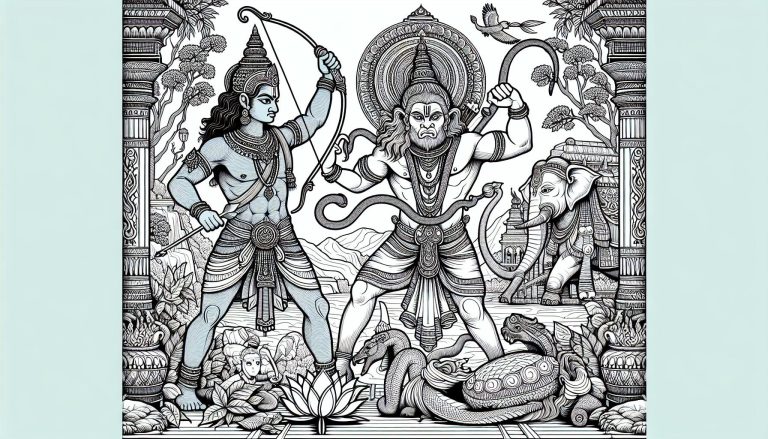
Stories in Hindu mythology often depict the eternal battle between good and evil. The Ramayana and Mahabharata are prime examples. Rama’s victory over Ravana in the Ramayana and the Pandavas’ triumph over the Kauravas in the Mahabharata symbolize the triumph of virtue over vice. These stories convey moral lessons, with characters embodying virtues and vices.
Dharma and Karma
Central to Hindu belief, the concepts of dharma (duty) and karma (action) permeate its mythology. Dharma represents the moral order and righteousness necessary for maintaining societal balance. Karma explains how actions lead to corresponding outcomes. For instance, characters like Arjuna in the Mahabharata illustrate the struggle to fulfill one’s dharma amid complex ethical dilemmas. Through these narratives, Hindu mythology emphasizes the importance of living a righteous life to attain favorable outcomes.
Symbolism in Hindu Mythology

Hindu mythology is rich in symbols that convey deep spiritual meanings. These symbols appear in various forms, including animals, flora, instruments, weapons, and colors.
Iconography and Imagery
Certain animals hold significant places in Hindu mythology. The monkey represents Hanuman, epitomizing devotion and loyalty. The elephant is associated with Ganesha, symbolizing wisdom and overcoming obstacles. The snake signifies Shiva, representing both destruction and regeneration. Each animal is linked to specific divine attributes and qualities.
Plants and flowers, too, have symbolic meanings. The lotus is widely recognized, often associated with purity and divine beauty. In Hindu art and scriptures, the lotus often appears beneath the feet of deities like Vishnu and Lakshmi, signifying spiritual enlightenment and pristine origin.
Metaphors and Allegories
Metaphors and allegories are extensively used to convey moral and philosophical teachings. In the Bhagavad Gita, the chariot symbolizes the human body, and the charioteer, Krishna, represents the divine guiding force. This metaphor imparts a lesson on the importance of divine guidance in life’s journey.
Allegorical tales, such as the story of the Samudra Manthan (Churning of the Ocean), depict the eternal battle between good and evil. The narrative illustrates the struggle for Amrita (divine nectar), involving gods and demons, symbolizing the pursuit of immortality and the inevitability of good triumphing over evil.
These symbols, whether viewed through iconography, flora, or deeper metaphors, offer profound insights into the divine and ethical dimensions of Hindu mythology.
Influence on Culture and Society
Hindu mythology has profoundly shaped Indian culture and society. Mythological stories have influenced social structures, religious rituals, and artistic expressions.
Social Hierarchy
Hindu mythology has played a significant role in shaping social hierarchy in Indian society. The caste system, detailed in texts like the Purusha Sukta hymn in the Rigveda, organizes society into four varnas: Brahmins, Kshatriyas, Vaishyas, and Shudras. These classifications have historically justified social stratification.
Religious Practices
Hindu mythology deeply influences religious practices. Stories of gods and goddesses from texts like the Vedas, Mahabharata, and Ramayana inform rituals, festivals, and daily worship. For instance, the festival of Diwali celebrates Lord Rama’s return to Ayodhya, an event narrated in the Ramayana. Devotional practices, including the recitation of mantras and performance of pujas, draw from mythological narratives and teachings.
Literature and Art
Hindu mythology has enriched Indian literature and art. Epic texts like the Mahabharata and Ramayana offer narratives that inspire countless literary works. These stories also influence classical dance forms such as Bharatanatyam and Kathak, which depict mythological events. Paintings and sculptures frequently illustrate mythological scenes, featuring deities like Vishnu, Shiva, and Durga.
Mythological elements permeate every facet of Indian culture and society, anchoring traditions and inspiring creativity. The incorporation of these ancient stories continues to shape the cultural and spiritual world of India.
Conclusion
Hindu mythology isn’t just a collection of ancient stories; it’s a profound world that weaves together the cultural, spiritual, and ethical fabric of India. The themes of creation, divine intervention, and moral lessons resonate deeply, offering timeless wisdom. Symbolism in animals, plants, and allegories enriches these narratives, providing layers of meaning that continue to inspire.
The influence of Hindu mythology extends beyond storytelling, shaping societal norms, religious practices, and artistic expressions. It serves as a cornerstone for understanding the complexities of Indian culture and its enduring traditions. By exploring these mythological themes, we gain valuable insights into the values and beliefs that have shaped and continue to shape millions of lives.
Sources & further reading
These themes are explored in greater depth across the following authoritative resources:
- Internet Sacred Text Archive, Rig Veda (Griffith translation)
- Internet Sacred Text Archive, Upanishads
- Britannica, Veda
- Britannica, Upanishad
- Patrick Olivelle, The Early Upanishads (Oxford University Press, 1998)
External resources for further reading. Apam Napat is not affiliated with these publishers; citation does not imply endorsement.
Frequently asked questions
When did Hindu mythology originate?
Where are Hindu myths preserved?
What key themes appear in Hindu mythology?
What is dharma in Hindu thematic analysis?
Based on the classical texts of Hindu mythology, see our sources.