Exploring these texts, I discovered how they address fundamental questions about existence, consciousness, and the purpose of life. Whether you’re a seasoned scholar or a curious newcomer, understanding Hindu philosophy can provide a fresh perspective on life’s big questions. Let’s take a journey through these sacred writings and uncover the layers of meaning they hold.
Overview of Hindu Philosophical Texts
Hindu philosophical texts encompass a vast and diverse range of scriptures and treatises that form the foundation of Hinduism. These texts are categorized into two primary groups: Shruti (revealed texts) and Smriti (remembered texts).
Shruti Texts
- Vedas: The four Vedas (Rigveda, Yajurveda, Samaveda, and Atharvaveda) are the most ancient and authoritative texts in Hinduism. They contain hymns, prayers, and rituals that form the core of Hindu philosophy.
- Upanishads: These texts are part of the Vedas and are considered the most influential and widely studied Hindu scriptures. They contain spiritual and philosophical teachings that explore the nature of reality and the self.
- Epics and Puranas: The Mahabharata – The Great Epic and Ramayana – Epic of Hinduism are two of the most significant epics in Hinduism, while the Puranas are a collection of texts that cover various aspects of Hindu mythology, cosmology, and philosophy.
Vedas: The Foundation of Hindu Philosophy

The Vedas, ancient Hindu texts, form the bedrock of Hindu philosophy. They encompass profound wisdom about existence and human life.
Rigveda
The Rigveda stands as the oldest and most revered Veda. With 10 mandalas, 1,028 hymns, and 10,600 verses, it establishes the standard for religious observance. It addresses core questions about existence and sets the tone for other Vedas.
Samaveda
The Samaveda comprises melodies and chants, with many verses derived from the Rigveda. It’s divided into the Purvarcika and the Uttararcika. Known for its musical and poetic qualities, the Samaveda emphasizes the critical role of sound and rhythm in Hindu rituals.
Yajurveda
The Yajurveda focuses on liturgical formulas used during rituals. It provides detailed instructions for performing religious ceremonies. Comprising two primary recensions, the Krishna Yajurveda and the Shukla Yajurveda, it serves as a valuable guide for ritualistic practices.
Atharvaveda
The Atharvaveda contains hymns, spells, and incantations. It addresses everyday life concerns such as health, longevity, and prosperity. Unique from the other Vedas, it blends both spiritual and practical knowledge, offering insight into various aspects of human existence.
Upanishads: The Essence of Vedic Teachings
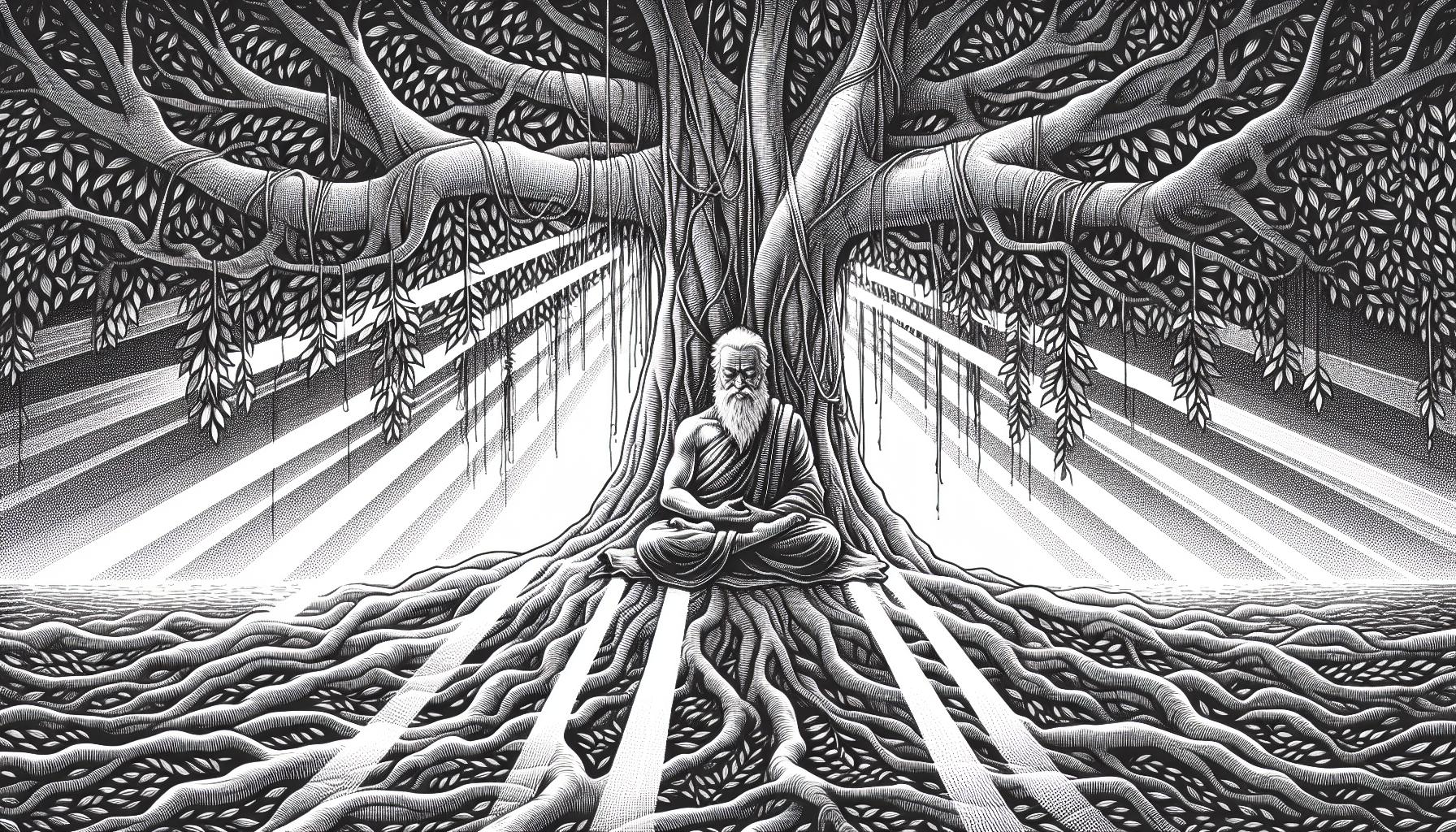
The Upanishads represent a significant shift from Vedic ritualism to profound philosophical insights. These texts investigate into meditation, philosophy, consciousness, and ontological knowledge.
Major Upanishads
There are approximately 108 Upanishads, but the first dozen hold the most importance. These principal Upanishads include:
- Brihadaranyaka Upanishad: Embedded in the Yajur Veda, it’s the oldest Upanishad. It addresses the Atman as the Higher Self, the immortality of the soul, the illusion of duality, and the essential unity of all reality.
- Chandogya Upanishad: Found in the Samaveda, this text includes one of the earliest declarations of Ahimsa (non-violence) as an ethical precept. It also explores the nature of reality and knowledge.
Philosophical Themes in Upanishads
The Upanishads cover several profound philosophical themes:
- Atman and Brahman: Central to the Upanishads is the concept of Atman (Self) and Brahman (Ultimate Reality). The texts often assert the unity of Atman and Brahman, emphasizing the interconnectedness of all existence.
- Moksha (Liberation): A major theme is the idea of liberation from the cycle of rebirth. The Upanishads describe spiritual practices and understanding as paths to achieving Moksha.
- Karma and Rebirth: The texts elaborate on the cycle of karma and its impact on rebirth. They discuss how actions in this life affect the soul’s future incarnations.
- Knowledge and Ignorance: Differentiating between true knowledge (Vidya) and ignorance (Avidya) is another critical theme. The Upanishads encourage inner reflection and meditation as means to attain true knowledge.
These texts have shaped Hindu philosophical thought for centuries, offering deep insights into the nature of existence and the self.
Bhagavad Gita: Conversations with the Divine
The Bhagavad Gita, often referred to as the Gita, stands as a seminal text in Hindu philosophy. It delves into complex moral and spiritual dilemmas through a profound dialogue.
Historical Context
The Bhagavad Gita is an integral part of the Mahabharata, one of Hinduism’s most significant epics. Specifically, it encompasses chapters 23 to 40 of Book VI and dates back to the second half of the first millennium BCE. This ancient Indian text, composed as a poem, has played a crucial role in shaping Hindu intellectual and spiritual traditions.
Core Philosophical Teachings
At the heart of the Bhagavad Gita lies a dialogue between Prince Arjuna and Krishna, an avatar of the god Vishnu. Arjuna, confronted with a moral crisis on the battlefield, receives guidance that addresses broader spiritual topics. Key teachings include:
- Duty and Righteousness (Dharma): Krishna teaches Arjuna about the importance of fulfilling one’s duty without attachment to outcomes. For example, in verse 2.47, Krishna states, “You have a right to perform your prescribed duties, but you are not entitled to the fruits of your actions.”
- Paths to Spiritual Realization (Yoga): The Gita outlines various paths to achieve spiritual growth, including Karma Yoga (path of action), Bhakti Yoga (path of devotion), and Jnana Yoga (path of knowledge). Each path provides a unique approach for individuals based on their nature and inclinations.
- Self and the Universe (Atman and Brahman): The text delves into the nature of the self (Atman) and its relationship to the ultimate reality (Brahman). It emphasizes the immortal nature of the soul and its unity with the divine.
- Detachment and Selflessness: The Gita encourages selflessness and detachment from material possessions and ego. In verse 18.66, Krishna exhorts Arjuna to surrender unto him completely, which symbolizes the broader theme of letting go of egoistic desires.
These teachings of the Bhagavad Gita offer profound insights into ethical living and spiritual enlightenment, making it a cornerstone of Hindu philosophy.
Brahma Sutras: Systematizing the Philosophy
The Brahma Sutras form a foundational text in Vedanta, synthesizing the diverse ideas of the Upanishads into a systematic philosophy. Authored by Badarayana, this text is crucial for understanding Brahman.
Authorship and Structure
Badarayana, credited with authoring the Brahma Sutras, systematized Upanishadic ideas. The sutras are composed of 555 concise verses. These verses are organized into four chapters. Each chapter addresses key philosophical questions with a structured approach and reaches conclusive insights.
Key Philosophical Arguments
The Brahma Sutras harmonize Upanishadic thoughts, presenting a cohesive understanding of Brahman. By synthesizing diverse ideas, it resolves potential conflicts and emphasizes the unified nature of existence and consciousness found in the Upanishads.
Smriti and Puranas: Secondary Scriptures
Smriti texts are a significant part of Hindu sacred literature, distinct from the Vedas. These texts are attributed to authors and hold a secondary, yet crucial, place in Hinduism.
Manusmriti and Ethics
The Manusmriti, also known as the Laws of Manu, stands as one of the most vital Dharma-shastras. This text addresses moral conduct, law, customs, and social duties. It is structured in twelve chapters, providing guidelines on various aspects of life, including governance, marriage, and justice. Numerous sections detail the duties of different social classes and stages of life (ashramas), aiming to maintain societal order and spiritual progress.
Puranas and Mythological Narratives
The Puranas, containing mythological and historical narratives, form a vital component of Smriti literature. Comprising 18 principal texts, they cover creation myths, legends of gods and goddesses, and accounts of dynasties. Key Puranas like the Vishnu Purana and the Shiva Purana investigate into the attributes and deeds of specific deities. These texts blend mythology, theology, and moral teachings, making them accessible and influential across generations.
Comparison with Other Philosophical Traditions
Indian philosophy offers both surprising points of affinity and illuminating differences when compared to Western philosophical thought. Hindu texts like the Upanishads and the Vedas engage in early inquiries about nature, life, mind, and the human body, much like early Western philosophers did. These texts investigate into questions about the divine, the nature of self, and the relationship between mind and matter.
Indian philosophers, but, posed questions about the origin and apprehension of truth in ways that did not appear in Western philosophy. For example, while Western traditions often focus on empirical evidence or rational deduction as primary means of understanding, Indian philosophy places a significant emphasis on experiential knowledge and inner realization. The Upanishads frequently discuss the concept of “Brahman” and its manifestation in all existence, a topic rarely addressed in Western texts.
While both traditions grapple with the nature of reality and existence, the methods and conclusions can differ significantly. Indian thinkers advanced novel formulations and argumentations that challenged conventional views. They addressed questions involving the interconnectedness of all beings, karma, and the cyclical nature of life and death.
Western philosophy typically foregrounds individualism and the tangible world. In contrast, Hindu philosophical texts often emphasize the interconnectedness of all beings, the importance of karma, and the cyclical nature of life, death, and rebirth. These divergences offer a broader spectrum of philosophical exploration when comparing Hindu and Western thought.
Conclusion
Hindu philosophical texts offer profound insights into the nature of existence and the universe. They emphasize experiential knowledge and inner realization, setting them apart from Western traditions. The Smriti texts like the Manusmriti and the Puranas provide rich narratives and moral guidance that continue to influence millions. By exploring these texts, we can gain a deeper understanding of interconnectedness, karma, and the cyclical nature of life. These timeless teachings not only enrich our spiritual lives but also offer valuable perspectives on our place in the world.
Sources & further reading
These themes are explored in greater depth across the following authoritative resources:
- Stanford Encyclopedia of Philosophy, Hindu Philosophy
- Mythopedia, Hindu Mythology
- Britannica, Hindu Mythology
- Sheldon Pollock, The Language of the Gods in the World of Men (University of California Press, 2006)
- A. K. Ramanujan, The Collected Essays (Oxford University Press, 1999)
External resources for further reading. Apam Napat is not affiliated with these publishers; citation does not imply endorsement.
Frequently asked questions
How are Hindu philosophical texts categorized?
What are the four Vedas?
What do the Upanishads teach?
What is the Rigveda?
What are the Hindu epics?
Based on the classical texts of Hindu mythology, see our sources.