
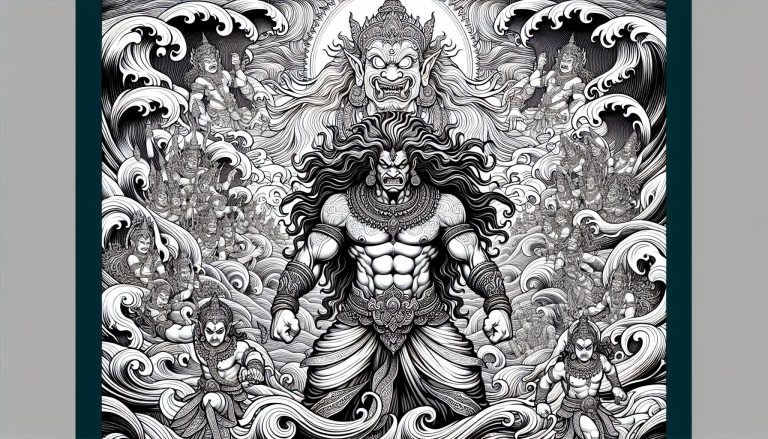
These beings are not merely villains; they possess a depth that challenges our understanding of good and evil. By exploring their stories, we can uncover rich cultural narratives and moral dilemmas that still resonate today. Join me as we investigate into the captivating world of Asuras and discover their role in the cosmic drama.
Origin Of Asuras
Asuras, vital entities within Indian mythology, have origins deeply rooted in Vedic literature. The Rigveda, one of the oldest texts, first mentions them. These beings were initially described as “devas,” celestial entities who later developed into a separate class due to differing qualities.
Vedic texts detail how Asuras and Devas, though born from the same primordial beings, diverged in their pursuits and nature. While Devas leaned towards order and righteousness, Asuras became associated with power and material desires. This dichotomy represents the cosmic struggle between light and darkness, hinting at moral dualities in human nature.
Asuras, in various legends, often trace their lineage back to Rishi Kashyapa – Father of the Devas and Asuras, a revered sage. For instance, Hiranyakashipu and Hiranyaksha, two prominent Asuras, were his offspring. Kashyapa’s wives, Diti and Danu, gave birth to many Asuras, emphasizing their extensive and varied ancestry.
In Puranic texts, the churning of the ocean (Samudra Manthan) further elucidates their role. During this cosmic event, Asuras and Devas collaborated to retrieve amrita, the nectar of immortality. This myth underscores their intertwined fates and the perpetual struggle for supremacy and balance.
Characteristics Of Asuras

Asuras in mythology exhibit distinct characteristics, influencing their roles and perceptions in various texts.
Physical Traits
Asuras often possess formidable physical appearances, making them stand out. Many texts describe them as having great strength and size. For example, Hiranyaksha and Hiranyakashipu are depicted as towering figures with immense power. Their eyes frequently gleam with a fierce intensity, reflecting their inner nature. Some Asuras have multiple arms, such as Ravana, who is famously depicted with ten heads and twenty arms. These features symbolize their terrifying capabilities and dominance in battles.
Behavioral Traits
The behaviors of Asuras often underpin their complex nature. They exhibit ambition and hunger for power, frequently challenging the Devas for supremacy. For example, stories of Asuras attempting to overthrow heavenly realms abound in mythological texts. Even though their negative traits, Asuras are also depicted as knowledgeable and adept in various forms of arts, science, and warfare. They possess determination, shown in their ability to undertake severe penances to gain boons from deities. Asuras like Mahabali display generosity and fairness, revealing a duality in their temperament. Their behavior is not solely malevolent but rather a blend of strength, ambition, intelligence, and occasionally, virtue.
Major Asuras In Mythology
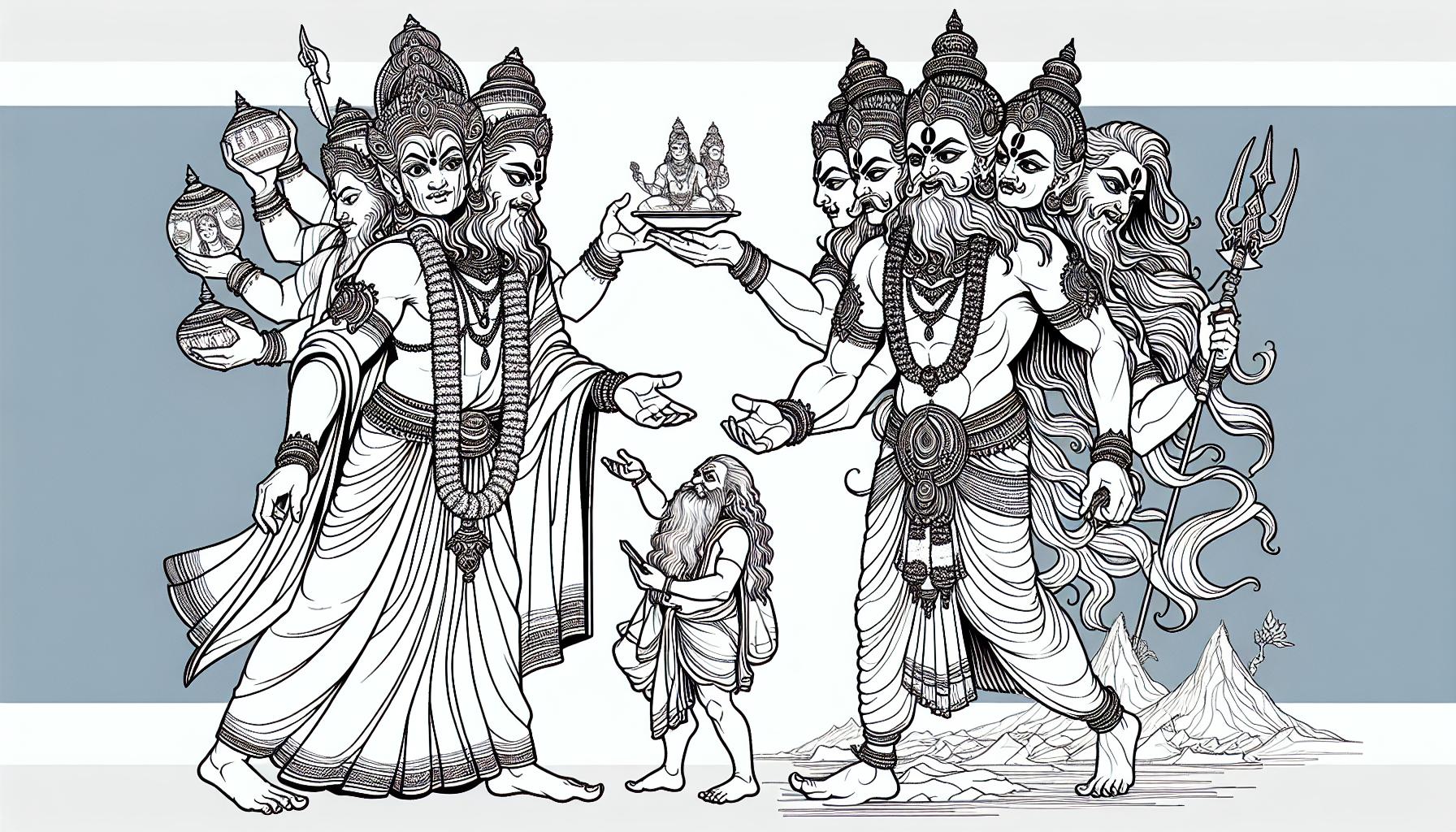
Some of the most significant Asuras have left a lasting impact on mythology through their complex stories and formidable traits.
Ravana
Ravana, the legendary king of Lanka, is a prominent figure in the Ramayana – Epic of Hinduism. Known for his ten heads and immense strength, Ravana abducted Sita, leading to a great war with Rama. He excelled in various arts, was a great scholar, and possessed immense knowledge of the Vedas and Shastras. Even though his villainous role, his devotion to Shiva and profound intelligence highlight his multifaceted personality.
Mahabali
Mahabali, a benevolent Asura king, ruled during a prosperous era and was admired by his subjects. His story is central to the Vamana avatar of Vishnu, who appeared as a dwarf Brahmin. Mahabali’s willingness to grant three paces of land to Vamana led to his eventual defeat. Recognized for his magnanimity and righteousness, Mahabali’s legend is celebrated during the Onam festival in Kerala.
Hiranyakashipu
Hiranyakashipu, infamous for his quest for immortality, is a key figure in the Narasimha avatar of Vishnu. Seeking to conquer the universe, he earned a boon that protected him from death under various conditions. His tyranny and opposition to his son Prahlada’s devotion to Vishnu resulted in his death at the hands of Narasimha, a half-man, half-lion incarnation. Hiranyakashipu’s story underscores the ultimate triumph of devotion and righteousness over arrogance and evil.
Asuras In Hindu Myths

Asuras play a significant role in Hindu myths, evolving over time through various texts and eras. Their depictions shift from the Vedic to the Puranic period, reflecting changes in religious and cultural narratives.
Vedic Period
During the Vedic period, Asuras were not seen as entirely malevolent. The Rigveda, one of the oldest Hindu scriptures, describes Asuras and Devas (gods) as part of the same divine family. Asuras like Varuna and Mitra were once revered as deities. Their divergence arose due to a conflict of qualities, where Asuras began embodying chaos and material pursuits, while Devas represented order and spiritual endeavors.
Puranic Period
In the Puranic period, Asuras took on more distinctly negative roles. Texts like the Bhagavata Purana and Vishnu Purana illustrate their transformation into antagonists challenging the Devas. Key figures include Ravana, who kidnapped Sita, leading to the Ramayana’s epic battle. Another prominent Asura, Mahabali, is remembered for his generosity but was overthrown by Vamana, an avatar of Vishnu. Hiranyakashipu, obsessed with immortality, symbolized arrogance unchecked by devotion, eventually defeated by Narasimha, another Vishnu avatar.
The shifting portrayals from divine entities to adversaries in Hindu mythology signify deeper themes of morality and balance, showing that even beings with divine origins can embody diverse and sometimes opposing qualities.
Comparative Study Of Asuras In Various Cultures
Asuras have unique roles in different mythological traditions, reflecting each culture’s values and beliefs. We’ll examine how Asuras are depicted in Hinduism, Buddhism, and Jainism.
Hinduism
In Hinduism, Asuras originate from Vedic literature where they were not inherently evil. They shared divine status with Devas but later represented opposing qualities, embodying material desires and chaos. Key figures like Hiranyakashipu, Ravana, and Mahabali illustrate moral complexities.
Buddhism
In Buddhism, Asuras are proud and power-seeking deities residing in the lower heavens. They often symbolize human vices like anger and jealousy. Unlike in Hinduism, their struggle isn’t with Devas but within the Samsara, reflecting inner conflicts rather than external cosmic battles.
Jainism
In Jainism, Asuras are less prominent but still appear as powerful beings opposing the Tirthankaras (spiritual teachers). They represent karmic obstructions and worldly attachments. Their portrayal underscores the Jain emphasis on overcoming internal and spiritual challenges.
By examining these interpretations, we see that while Asuras play antagonistic roles, the nuances in each tradition highlight diverse cultural and philosophical perspectives on good, evil, and the human condition.
Influence Of Asuras In Popular Culture
Asuras, depicted vividly in ancient texts, have also found their place in contemporary popular culture. Their characteristics and stories are reflected in various media, giving them a modern narrative.
Literature
Asuras appear in numerous literary works, drawing from their mythological roots. In novels like “Immortals of Meluha” by Amish Tripathi, characters inspired by Asuras play significant roles. Graphic novels such as Grant Morrison’s “18 Days” reimagine Asuras within epic tales. These portrayals retain core attributes like ambition and conflict while adapting to present-day themes.
Films And TV Shows
Films and TV shows globally integrate Asuras’ mythos into their narratives. In Indian cinema, movies like “Bahubali” feature characters with attributes reminiscent of Asuras. TV series such as “Mahakali” present Asuras in traditional mythological contexts, showing their battles and rivalries. Internationally, shows like “Supernatural” and “Lucifer” borrow elements from Asura myths, blending them with Western folklore to create intriguing villains and storylines.
Conclusion
Exploring Asuras in mythology offers a fascinating glimpse into the rich world of Indian cultural and religious narratives. Their journey from celestial beings to embodiments of chaos and material desires mirrors the evolving human understanding of good and evil.
Asuras not only play vital roles in mythological texts but also continue to inspire modern storytelling across various media. Their complex nature and enduring presence in literature and popular culture underscore their significance and the timeless questions they raise about morality and the human condition.
By examining Asuras, we gain deeper insights into the diverse interpretations of human virtues and vices across different traditions, enriching our appreciation of these ancient myths and their contemporary relevance.
Frequently asked questions
What is the origin of Asuras in Hindu mythology?
Who are the major Asuras in Hindu mythology?
How did Asuras change between Vedic and Puranic eras?
Who was Hiranyakashipu?
Sources & further reading
These themes are explored in greater depth across the following authoritative resources:
- Britannica, Asura
- Britannica, Naga
- Mythopedia, Hindu Mythology
- Internet Sacred Text Archive, Mahabharata
- Wendy Doniger, Hindu Myths (Penguin Classics, 1975)
External resources for further reading. Apam Napat is not affiliated with these publishers; citation does not imply endorsement.
Based on the classical texts of Hindu mythology, see our sources.