
As I delve into these profound writings, I’m struck by their enduring relevance and the depth of knowledge they offer. Whether you’re seeking spiritual enlightenment or simply curious about Hindu philosophy, understanding these sacred texts can provide a rich tapestry of wisdom and inspiration. Let’s explore the essence and significance of these ancient scriptures and uncover the timeless truths they hold.
Historical Background of Sacred Hindu Texts
Sacred Hindu texts have a deep-rooted history that spans thousands of years, originating from the ancient Indus Valley civilization. Among these texts, the Vedas are the oldest and most authoritative scriptures. Composed between 1500 and 500 BCE, the Vedas include four primary collections: Rigveda, Samaveda, Yajurveda, and Atharvaveda. Each collection plays a distinct role in Vedic rituals and hymns.
The Upanishads, written between 800 and 200 BCE, mark the philosophical evolution of Hindu thought. These texts delve into metaphysical discussions and the nature of reality, forming the theoretical basis for various Hindu philosophies. They introduce concepts such as Brahman (universal soul) and Atman (individual soul).
The Bhagavad Gita, part of the Mahabharata – The Great Epic epic, emerged around 200 BCE to 200 CE. This 700-verse text offers practical guidance on life, duty, and spirituality through a dialogue between Prince Arjuna and Lord Krishna. The Gita synthesizes various paths to spiritual realization, including devotion, knowledge, and disciplined action.
Each of these texts not only reflects the social and religious contexts of their times but also contributes to the continuity and diversity of Hinduism. They embody the spiritual wisdom and cultural heritage that have been preserved and revered by generations.
Classification of Sacred Texts
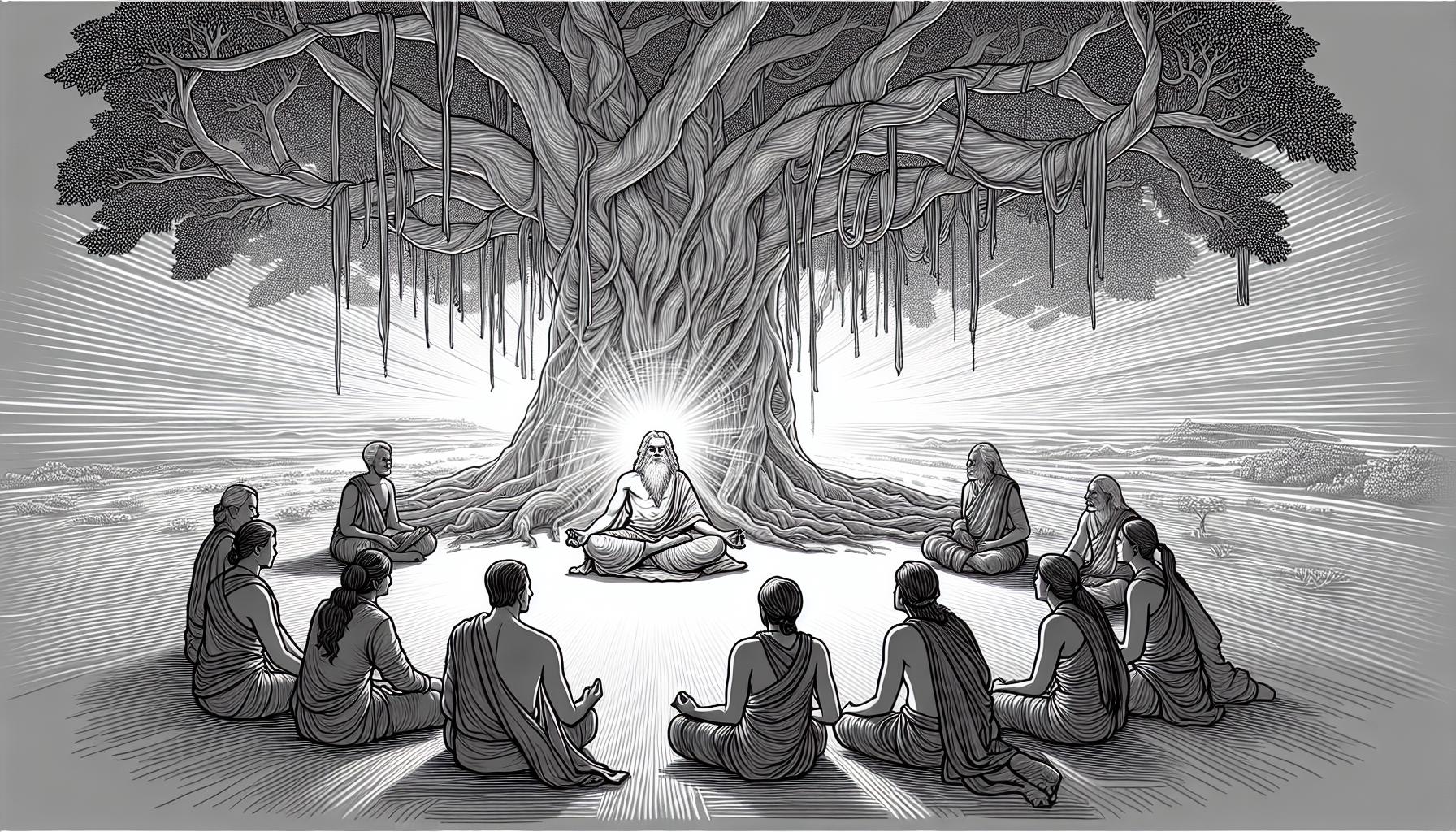
Sacred Hindu texts fall into two main categories: Shruti and Smriti. These classifications help understand the nature and authority of the scriptures.
Shruti
Shruti translates to “heard” or “revealed”. This category includes texts believed to be divinely revealed to ancient sages. The Vedas fall under this category. Comprising four types-Rigveda, Samaveda, Yajurveda, and Atharvaveda-they form the core of Shruti literature. Another significant part of Shruti is the Upanishads. These texts focus on spiritual knowledge and philosophical depth, exploring ideas like Atman and Brahman.
Smriti
Smriti means “remembered”. Unlike Shruti, these texts are human compositions. They provide details on how to live a righteous life and support society’s moral and ethical structure. The Smritis include epics like the Mahabharata and Ramayana. These texts offer rich narratives woven with ethical dilemmas and spiritual guidance. The Puranas, another subset, contain mythological stories and teachings that enrich Hindu dharma. Laws and codes, such as the Manusmriti, offer guidelines for conduct and social organization.
Hindu sacred texts, classified as Shruti and Smriti, present a tapestry of divine revelation and human wisdom, guiding both spiritual and practical aspects of life.
The Vedas
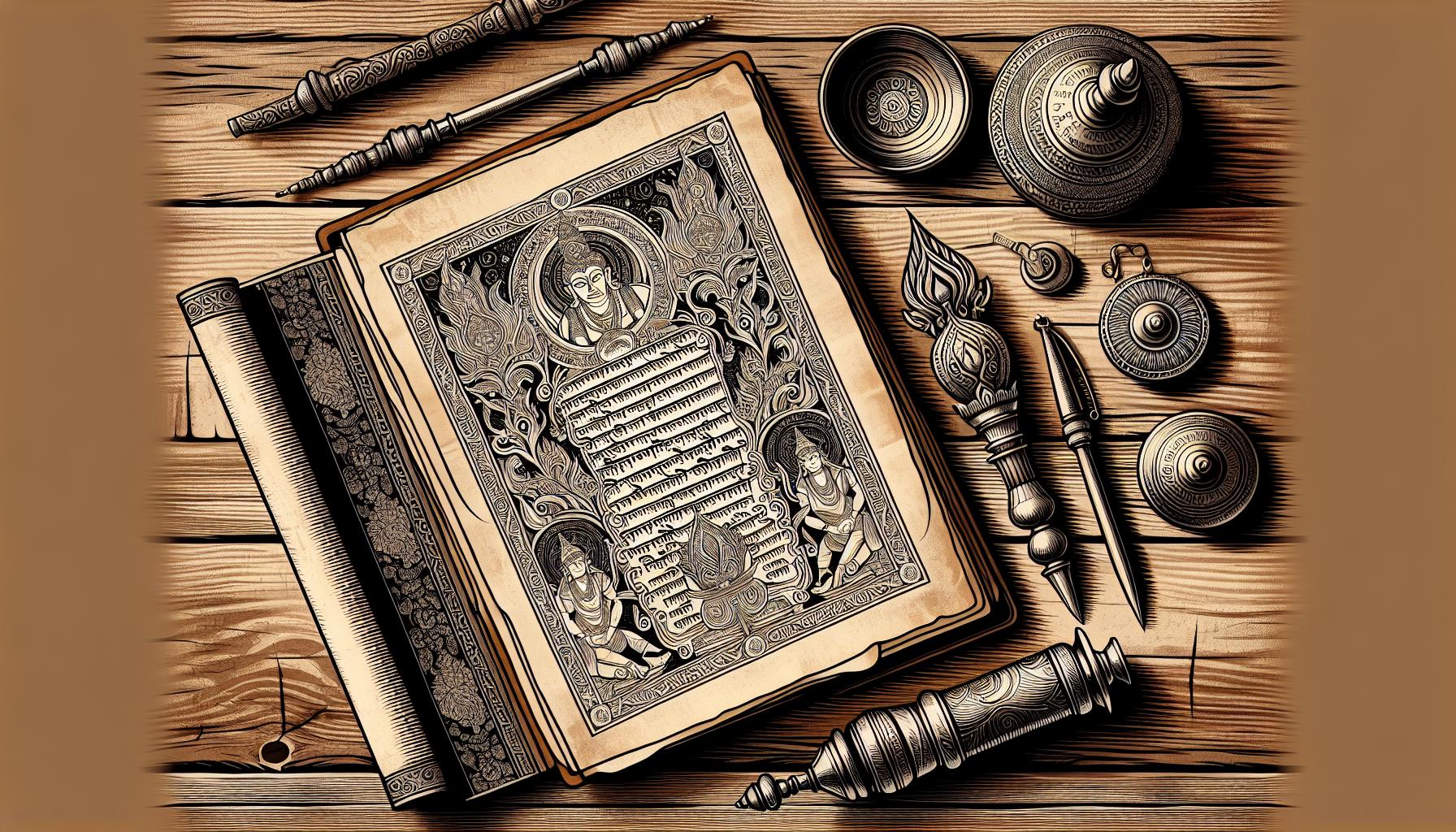
The Vedas are the foundational texts of Hinduism, known for providing comprehensive spiritual and practical guidance. There are four main Vedas, each serving distinct purposes in rituals and religious practices.
Rigveda
The Rigveda is the oldest and most significant of the Vedas. It consists of 10 books, known as mandalas, containing 1,028 hymns and 10,600 verses. These hymns focus on proper religious observance and practice, addressing fundamental questions about existence and the universe.
Samaveda
Samaveda is closely related to the Rigveda but distinguishes itself through its emphasis on chants and melodies used in rituals. This Veda transforms Rigvedic hymns into musical forms, demonstrating the importance of sound and music in religious ceremonies.
Yajurveda
Yajurveda comprises a collection of prayers and litanies essential for performing ancient Hindu rituals and ceremonies. Its verses provide detailed instructions for conducting various sacrificial rites, emphasizing precise ritualistic execution.
Atharvaveda
Atharvaveda stands apart from the other Vedas with its unique content of magical formulas, spells, and incantations. These elements were often used in domestic rituals and for healing purposes, reflecting the practical aspects of Vedic life.
The Upanishads

The Upanishads explore profound spiritual questions and philosophical themes. Regarded as the end part of the Vedas, these texts delve into concepts like the nature of reality, the self, and the ultimate truth.
Key Upanishads
Several Upanishads hold significant importance due to their philosophical depth. The Chandogya Upanishad covers meditation, morality, and the cosmic order. The Brihadaranyaka Upanishad, one of the oldest, discusses the concept of Atman (self) and Brahman (ultimate reality). The Katha Upanishad narrates the dialogue between Nachiketa and Yama, illuminating the idea of life and death. The Mundaka Upanishad introduces the distinction between higher knowledge (para vidya) and lower knowledge (apara vidya). The Isha Upanishad encapsulates its teachings in concise and poetic verses, emphasizing the unity of the divine.
Philosophical Themes
The Upanishads introduce several core philosophical themes. Monism emerges as a central idea, positing that all reality is one. The concept of Brahman, the unchanging ultimate reality, contrasts with the transient physical world. Additionally, the idea of Atman, the eternal self, signifies that the individual soul is fundamentally identical with Brahman. Karma, the law of cause and effect, and Moksha, liberation from the cycle of rebirth, are crucial concepts discussed in these texts. They also explore the intricate relationship between the material and spiritual aspects of existence through detailed metaphysical discussions.
The Ramayana and The Mahabharata
The Ramayana and The Mahabharata are two major Sanskrit epics central to Hindu culture. They contain narratives that explore moral dilemmas and human virtues.
Overview of The Ramayana
The Ramayana – Epic of Hinduism, composed by Sage Valmiki, narrates the journey of Prince Rama. It’s divided into seven kandas (books), each detailing various stages of Rama’s life, including his exile, the abduction of his wife Sita, and his battles to rescue her. The text highlights dharma (righteousness) and the moral duties of relationships. It has 24,000 verses, which provide detailed accounts of characters’ lives and moral challenges.
Overview of The Mahabharata
The Mahabharata, attributed to Sage Vyasa, is the longest epic in world literature, with over 100,000 verses. It narrates the struggles between the Kauravas and Pandavas, two branches of the same royal family. Key events include the game of dice, Krishna’s counsel, and the Kurukshetra war. It addresses complex aspects of dharma through intricate narratives. The text is divided into 18 parvas (books), each with sub-stories and philosophical discourses.
Bhagavad Gita
The Bhagavad Gita, part of The Mahabharata, is a 700-verse conversation between Prince Arjuna and Lord Krishna. It takes place on the battlefield of Kurukshetra and delves into profound spiritual and ethical questions. Krishna guides Arjuna through topics like duty, righteousness, and the nature of reality. The Gita emphasizes paths of devotion, knowledge, and selfless action (bhakti, jnana, and karma yoga).
The Puranas
The Puranas form a crucial part of Hindu sacred texts, filled with stories that explore the universe, mythology, and moral teachings. With their wide-ranging narratives, they offer insights into Hindu beliefs and cultural practices.
Prominent Puranas
Eighteen Mahapuranas are recognized as the most important. They include the Bhagavata Purana, known for its devotion to Lord Vishnu, the Vishnu Purana, detailing Vishnu’s incarnations. The Vishnu Purana, detailing Vishnu’s incarnations, closely aligns with narratives found in the Dasavatara tradition-highlighting his ten major avatars, including Rama and Krishna-and the Shiva Purana, focusing on Lord Shiva’s myths and rituals.
Mythology and Cosmology
Mythology and cosmology in the Puranas are vast. They offer detailed accounts of the universe’s creation, structure, and cycles. For example, the Bhagavata Purana presents stories of Krishna’s childhood, instilling moral values through engaging tales. Cosmological aspects include the descriptions of Loka (worlds) and the time cycles known as Yugas. I find the depictions of deities, demons, and cosmic events providing a comprehensive framework of Hindu cosmology and mythology.
Influence on Hindu Practices and Culture
Hindu sacred texts profoundly shape Hindu practices and culture. The Vedas, Upanishads, and Puranas each contribute uniquely.
Rituals and Worship
The Vedas, particularly the Rigveda, outline various rituals and ceremonies. These include yajnas (sacrificial rites) performed to honor gods and ensure prosperity. Mantras from the Vedas are chanted during these ceremonies. For example, the Gayatri mantra is recited at dawn and dusk during daily prayers.
Philosophical Foundations
The Upanishads influence philosophical thought within Hinduism. They delve into concepts like Brahman (universal soul) and Atman (individual soul). These ideas shape meditation and self-realization practices. For instance, the Chandogya Upanishad discusses the profound nature of Om, considered the sound of the universe.
Festivals and Celebrations
The Puranas inform many Hindu festivals. Stories from texts like the Bhagavata Purana inspire celebrations such as Krishna Janmashtami. This festival marks the birth of Lord Krishna, with festivities including fasting, singing, and reenacting Krishna’s life events.
Social and Moral Conduct
Hindu sacred texts prescribe moral and ethical guidelines. The Manusmriti, though one of the ancient legal texts, still impacts modern Hindu law and social conduct. Concepts like Dharma (duty/righteousness) influence daily behavior and societal roles. For example, the ideas of karma and rebirth from various texts encourage ethical living and accountability.
Architecture and Art
Sacred texts also guide Hindu architecture and art. Temples, sculptures, and paintings frequently depict themes from these texts. The Vishnu Purana describes the divine architecture of temples, setting standards for design and layout. Iconography often includes deities and stories depicted from the Puranas, enriching cultural heritage.
Yoga and Meditation
Hindu texts significantly impact yoga and meditation. The Bhagavad Gita offers guidance on different types of yoga, including Karma Yoga (yoga of action) and Bhakti Yoga (yoga of devotion). Meditation practices, grounded in these teachings, aim for self-realization and spiritual growth.
Education and Knowledge
The significance of knowledge and education in Hindu culture stems from texts like the Upanishads and the Mahabharata. The Mahabharata contains the Bhagavad Gita, which emphasizes wisdom and understanding. Education, especially in sacred texts, is highly valued and often pursued through traditional paths like gurukulas (ancient learning centers).
Hindu practices and culture interweave deeply with sacred texts, reflecting in daily worship, ethical conduct, celebrations, art, and education.
Conclusion
Hindu sacred texts hold a profound place in shaping the spiritual and cultural fabric of Hindu society. They provide a roadmap for rituals philosophical understanding and moral conduct. These texts not only guide daily worship and ethical behavior but also inspire artistic expressions and educational pursuits. By embracing the wisdom of the Vedas Upanishads and Puranas we can gain a deeper appreciation of Hinduism’s rich heritage and its enduring influence on millions of lives.
Sources & further reading
These themes are explored in greater depth across the following authoritative resources:
- Stanford Encyclopedia of Philosophy, Hindu Philosophy
- Mythopedia, Hindu Mythology
- Britannica, Hindu Mythology
- Sheldon Pollock, The Language of the Gods in the World of Men (University of California Press, 2006)
- A. K. Ramanujan, The Collected Essays (Oxford University Press, 1999)
External resources for further reading. Apam Napat is not affiliated with these publishers; citation does not imply endorsement.
Based on the classical texts of Hindu mythology, see our sources.