
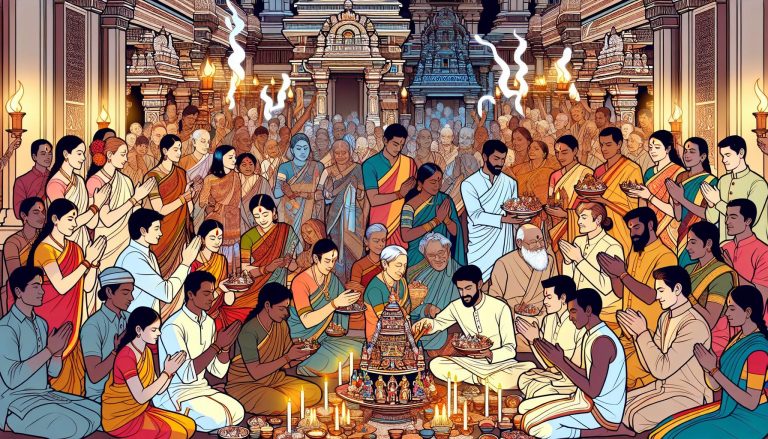
I’ve always been intrigued by the intricate details and profound significance behind these ceremonies. Whether it’s the rhythmic chanting of mantras, the fragrant offerings of flowers and incense, or the colorful processions, every element plays a crucial role in the spiritual journey of a Hindu devotee. Let’s explore the essence of these captivating traditions and uncover the layers of meaning they hold.
Overview of Hindu Religious Ceremonies
Hindu religious ceremonies encompass a diverse range of rituals and festivals, each with its unique significance. These ceremonies often reflect the intricate social, cultural, and spiritual fabric of Hinduism. They aren’t mere traditions but pathways connecting devotees to their cultural roots and the divine.
Daily Rituals
Daily rituals, or Nitya Karma, serve as the cornerstone of Hindu worship. Examples include performing the Sandhyavandanam, reciting the Gayatri Mantra, and lighting a lamp at the household altar. These rituals create a spiritual rhythm that anchors everyday life in devotion.
Lifelong Ceremonies
Lifelong ceremonies, known as Samskaras, mark important life stages. Examples like the Namakarana (naming ceremony), Upanayana (sacred thread ceremony), and Vivaha (marriage ceremony) are conducted with precise rites to invoke blessings for transitional life phases. They guide individuals through moral and ethical living.
Seasonal Festivals
Seasonal festivals bring communities together in vibrant celebrations. Festivals such as Diwali (Festival of Lights), Holi (Festival of Colors), and Navratri (Nine Nights) are celebrated with elaborate rituals, dances, and communal feasts. They often correspond to agricultural cycles, emphasizing the connection between humans and nature.
Pilgrimages
Pilgrimages hold significant importance. Devotees travel to sacred sites like Varanasi, Rameswaram, and the Char Dham for spiritual merit and to seek divine blessings. These journeys, often challenging, serve as acts of devotion and penance.
Spiritual Ceremonies
Spiritual ceremonies, such as Yajnas and Pujas, involve detailed rituals to honor deities. Yajnas often include offerings into sacred fire, while Pujas may involve idols, mantras, and offerings like flowers and fruits. These ceremonies help devotees express reverence and seek divine favor.
Funerary Rites
Funerary rites, or Antyesti, play a crucial role in the Hindu belief in reincarnation. Ceremonies like the cremation ritual and subsequent rites for the departed soul ensure a smooth transition to the next life. Family members perform these rites to honor and remember their loved ones.
The complexity and variety of Hindu religious ceremonies showcase the rich world of beliefs and practices in Hinduism, binding individuals to their faith and community.
Major Hindu Ceremonies
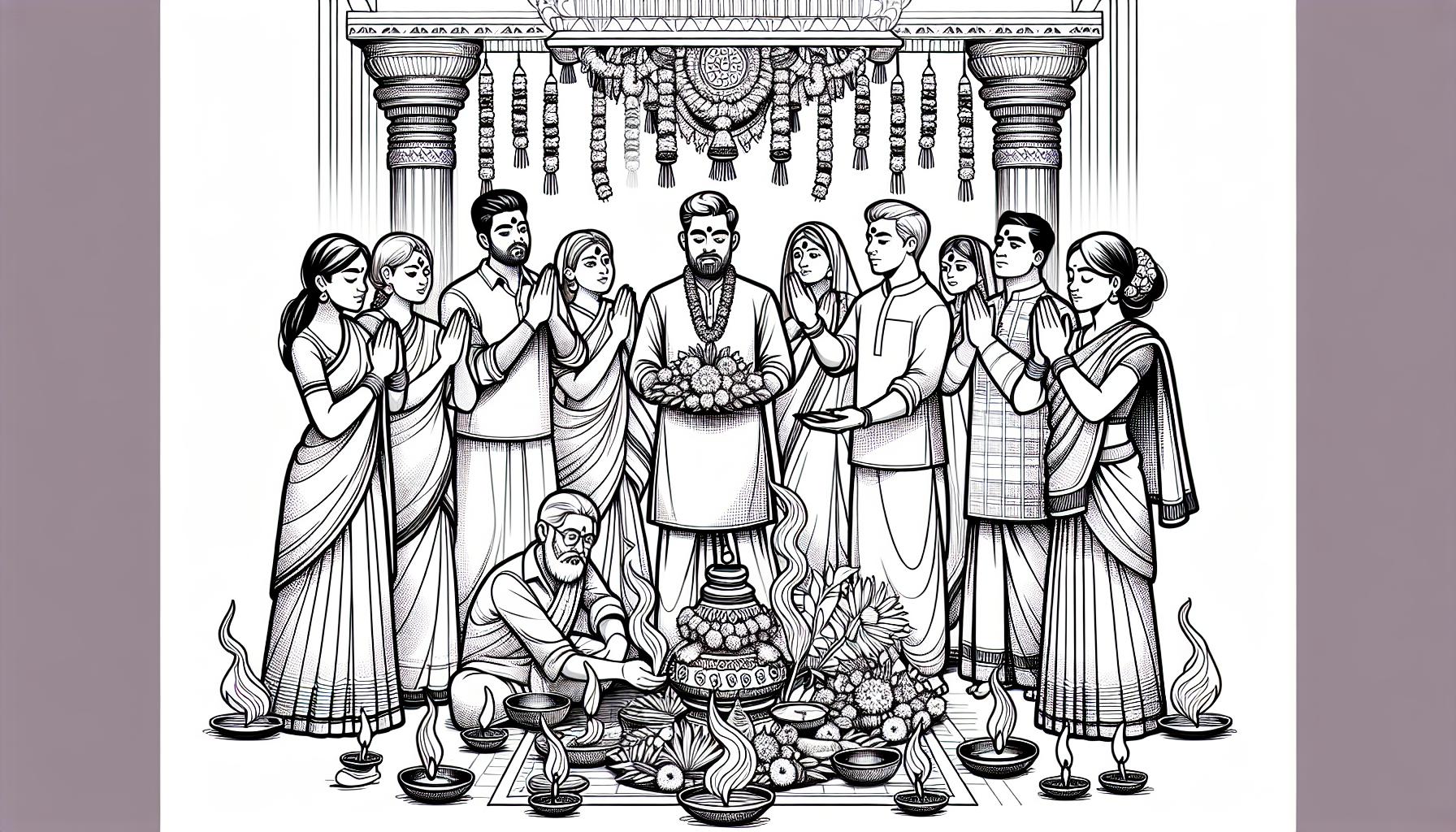
Hindu ceremonies, known for their deep spiritual significance, anchor devotees to their faith and tradition. Here’s a closer look at a few major Hindu ceremonies:
Puja
Puja, a worship ritual, is central to Hindu practice. Devotees offer prayers, food, and flowers to deities. Specific times like sunrise and festivals see grand pujas. For instance, Fridays are special for worshiping Goddess Lakshmi. Puja involves chanting mantras, lighting diyas, and ringing bells.
Havan
Havan, a fire ritual, purifies and sanctifies the surroundings. It involves offering ghee, herbs, and wood into a sacred fire. Performed during major ceremonies like weddings and housewarmings, havan invokes divine blessings and eliminates negative energy. Priests chant Vedic hymns during the ritual. Specific herbs like sandalwood and camphor are frequently used.
Aarti
Aarti, a devotional song, concludes many Hindu rituals. Devotees light a ghee lamp and circle it before the deity. They sing praises of gods and goddesses. Aarti typically happens twice daily, at dawn and dusk. It symbolizes dispelling darkness and bringing in light. Devotees often conclude by touching the flame and bringing its warmth to their eyes and forehead.
Life-Cycle Ceremonies
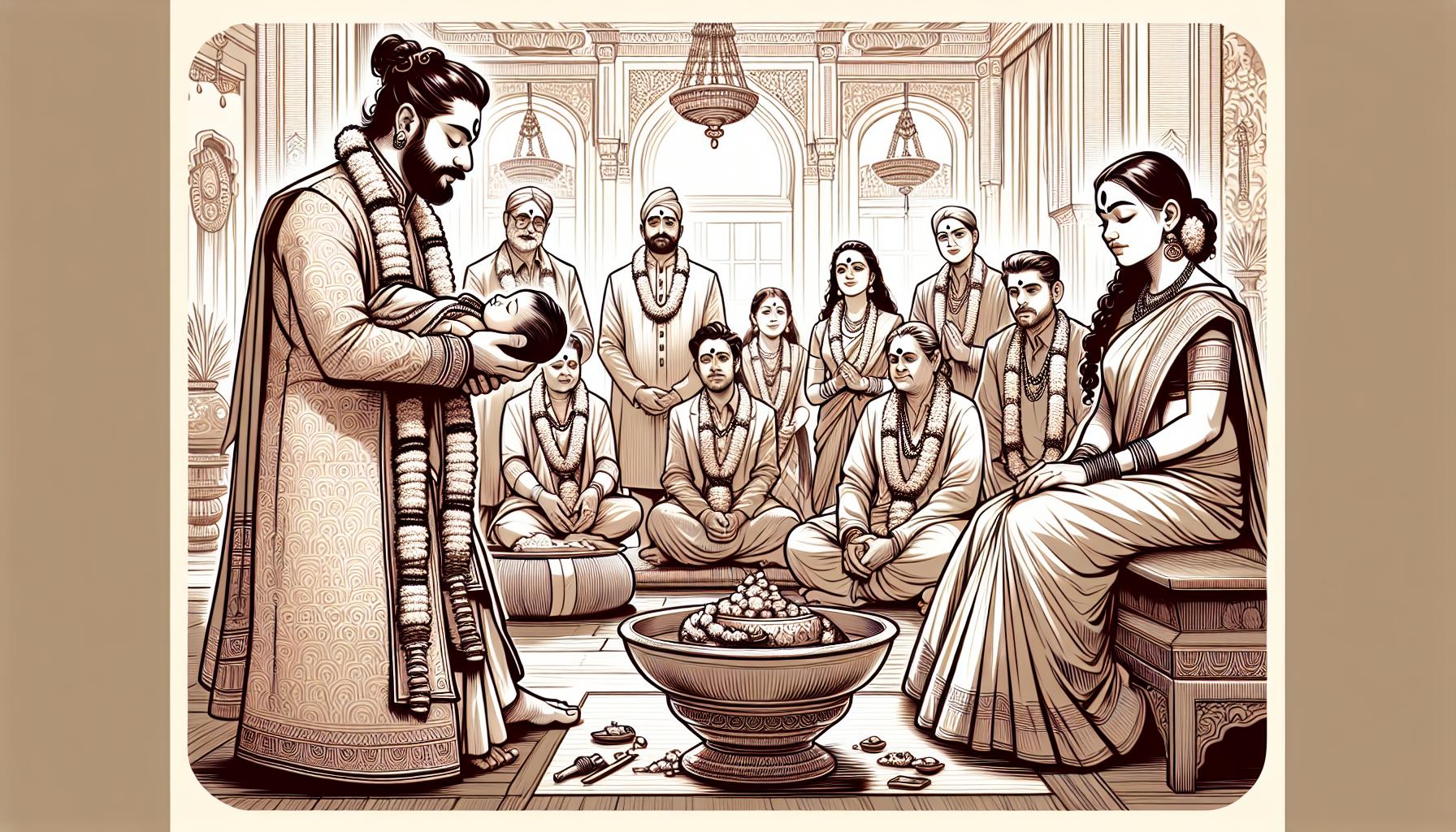
Hindu life-cycle ceremonies mark significant stages in a person’s life, connecting them to cultural roots and spirituality.
Namkaran (Naming Ceremony)
Namkaran is traditionally performed on the 11th day after birth. This ceremony involves choosing a name based on astrological charts. Family members and friends gather to bless the child and celebrate. The priest usually chants mantras, seeking blessings for the child’s health and future.
Vivah (Marriage Ceremony)
Vivah signifies a major milestone. It features rituals, including Kanyadaan (giving away the bride), Saptapadi (seven steps), and Mangalsutra ceremony. The groom ties a sacred thread around the bride’s neck, symbolizing their union. These rituals ensure the couple’s prosperity and happiness.
Antyesti (Funeral Rites)
Antyesti is the final rite of passage. The family performs cremation, followed by rituals like Asthi Visarjan (immersion of ashes). These practices honor the deceased and aid their soul’s journey to the afterlife. Priests recite mantras and perform rituals, providing comfort to the bereaved family.
Seasonal and Festival Ceremonies
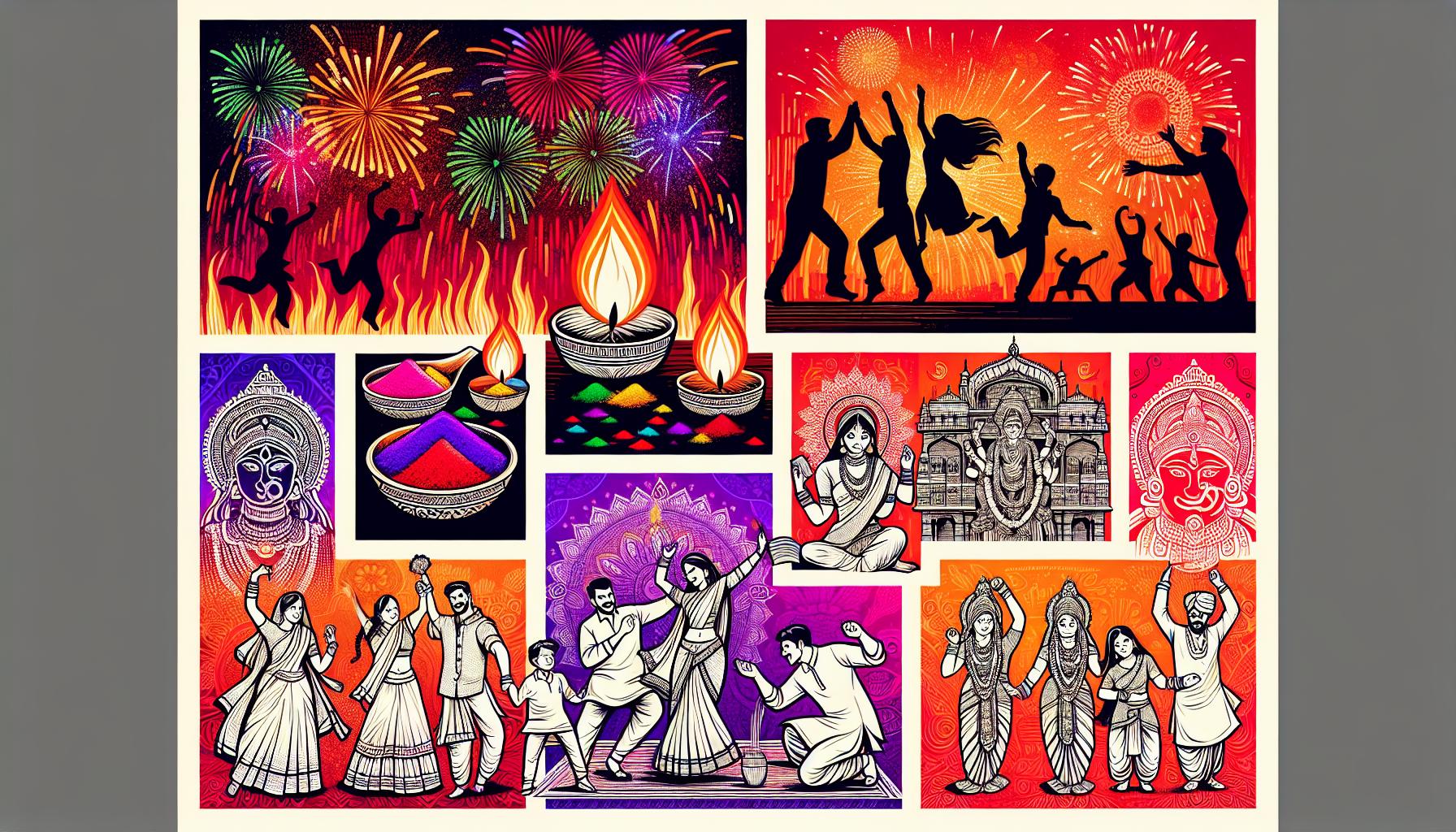
Seasonal and festival ceremonies hold a prominent place within Hindu religious practices. I find these rituals to be vibrant and deeply rooted in cultural traditions.
Diwali
Diwali, the Festival of Lights, celebrates the triumph of light over darkness. I observe families illuminating their homes with oil lamps and candles, symbolizing the removal of spiritual darkness. Fireworks, gift exchanges, and feasts mark this joyous occasion. Traditionally, devotees perform Laxmi – The Goddess of Wealth Puja to honor the goddess of wealth and prosperity.
Holi
Holi, the Festival of Colors, signifies the arrival of spring. Participants splash colored powders and water on each other, creating a kaleidoscope of colors. Rows of bonfires, symbolizing the triumph of good over evil, illuminate the night sky. Singing, dancing, and festive foods add to the celebratory atmosphere.
Navaratri
Navaratri spans nine nights dedicated to worshiping the goddess Durga. Each night, I notice devotees performing various rituals and dances like Garba and Dandiya, celebrating feminine divinity. Daily prayers and fasting are common, culminating in Vijayadashami, which celebrates Durga’s victory over the buffalo demon Mahishasura – Buffalo Demon.
Regional Variations in Ceremonies
Hindu religious ceremonies vary significantly across India‘s diverse regions. Each region has its unique traditions and rituals shaped by historical, cultural, and environmental factors.
North India
North Indian ceremonies often feature elaborate decorations and rituals. Weddings, for instance, include the Baraat where the groom arrives on a horse accompanied by musicians. During Diwali, homes are adorned with intricate Rangoli patterns and oil lamps.
South India
In South India, simplicity and devotion mark ceremonies. Weddings typically begin with the Kanyadanam, where the bride’s father gives her away. Pongal, celebrated in Tamil Nadu, involves boiling the first harvested rice with milk to thank the sun god.
East India
East Indian ceremonies combine local traditions with broader Hindu practices. Durga Puja, prevalent in West Bengal, celebrates Goddess Durga’s victory over Mahishasura. Elaborate clay idols, pandal decorations, and cultural performances are prominent features.
West India
West Indian ceremonies showcase rich cultural heritage through music and dance. During Navratri in Gujarat, Garba and Dandiya Raas dances are integral to the celebrations. Ganesh Chaturthi sees the installation of Ganesh idols in homes and public spaces, followed by processions and immersion in water bodies.
Central India
In Central India, tribal influences blend with Hindu rituals. Madhya Pradesh’s Bhagoria festival includes community fairs and mutual bride selection among tribal communities. Teej, celebrated mainly by women, involves fasting and praying for marital bliss.
North-East India
North-East India’s ceremonies often reflect tribal customs alongside mainstream Hindu traditions. Bihu, marking the Assamese new year, combines agrarian rituals with Hindu prayers. Dances and festivities highlight the region’s rich cultural diversity.
These regional variations enrich the world of Hindu religious ceremonies, illustrating the adaptability and cultural depth of Hinduism.
Conclusion
Hindu religious ceremonies offer a profound glimpse into the rich world of traditions and practices that define this ancient religion. From daily rituals to grand festivals each ceremony holds a unique significance that enriches the spiritual lives of millions. The regional variations further highlight the adaptability and cultural depth of Hinduism making it a truly diverse and inclusive faith. By understanding these ceremonies we gain a deeper appreciation of the values and beliefs that have shaped Hindu culture for centuries.
Sources & further reading
These themes are explored in greater depth across the following authoritative resources:
- Britannica, Yoga in Hinduism
- Britannica, Puja
- Harvard Pluralism Project, Hindu Practice
- Internet Sacred Text Archive, Yoga Sutras of Patanjali
- Diana L. Eck, Banaras: City of Light (Princeton University Press, 1982)
External resources for further reading. Apam Napat is not affiliated with these publishers; citation does not imply endorsement.
Based on the classical texts of Hindu mythology, see our sources.