
Exploring the mythological origins of yoga can transform your practice from a physical routine into a spiritual experience. By understanding the stories of gods, sages, and celestial beings, you’ll find a new appreciation for each asana. Join me as we unravel the intriguing area where yoga meets mythology, and discover how these ancient narratives can enrich your journey on the mat.
The Interconnection Between Yoga And Mythology
Yoga integrates with mythology seamlessly, creating a spiritual world woven from ancient Indian culture and Hinduism. It dates back over 5,000 years, first mentioned in the Rig Veda, a seminal sacred text in Sanskrit.
Many yoga poses bear names from mythology. Hanumanasana (Monkey Pose) embodies Hanuman, a deity with immense strength due to his devotion and yoga practice. Similarly, Virabhadrasana (Warrior Pose) reflects the warrior Virabhadra, created by Shiva. These mythological connections infuse each asana with deeper meaning.
Symbolism in yoga poses conveys concepts like death, rebirth, and maya (illusion). For instance, the story behind Natarajasana (Dancer Pose) represents the cosmic dance of creation and destruction by the god Shiva. By engaging with these symbols, practitioners connect deeper with the philosophical roots of their practice.
Yoga’s origins and mythological influences create a holistic experience. Whether through stories or asanas, the blend of yoga and mythology offers a richer, more profound practice.
Ancient Myths And Their Influence On Yoga

Ancient mythology profoundly influences yoga, interweaving with ancient Indian traditions. Key mythologies from Hinduism, Buddhism, and Jainism have left an indelible mark on yoga practices.
Hindu Mythology
Hindu mythology offers a rich world of stories shaping yoga. The Upanishads, ancient texts, contain mythological tales still used in modern practices. Shiva, considered the first yogi, is a central figure. Shiva’s dance, symbolizing the cosmic cycle of creation and destruction, is reflected in various poses and practices like Natarajasana.
Buddhist Mythology
Buddhist mythology, although distinct, shares common themes with Hinduism. Stories of the Bodhisattvas and Buddhas provide moral and spiritual lessons that guide yoga practitioners. The tale of Siddhartha’s enlightenment under the Bodhi tree embodies the meditative and mindful aspects of yoga, reminding practitioners to seek inner peace and enlightenment.
Jain Mythology
Jain mythology emphasizes non-violence and self-discipline, core principles in yoga practice. Stories of the Tirthankaras, spiritual teachers, underscore these values. The teaching of Ahimsa (non-violence) influences the ethical foundation of yoga, integrating moral conduct with physical practice.
Iconic Figures In Yoga Mythology
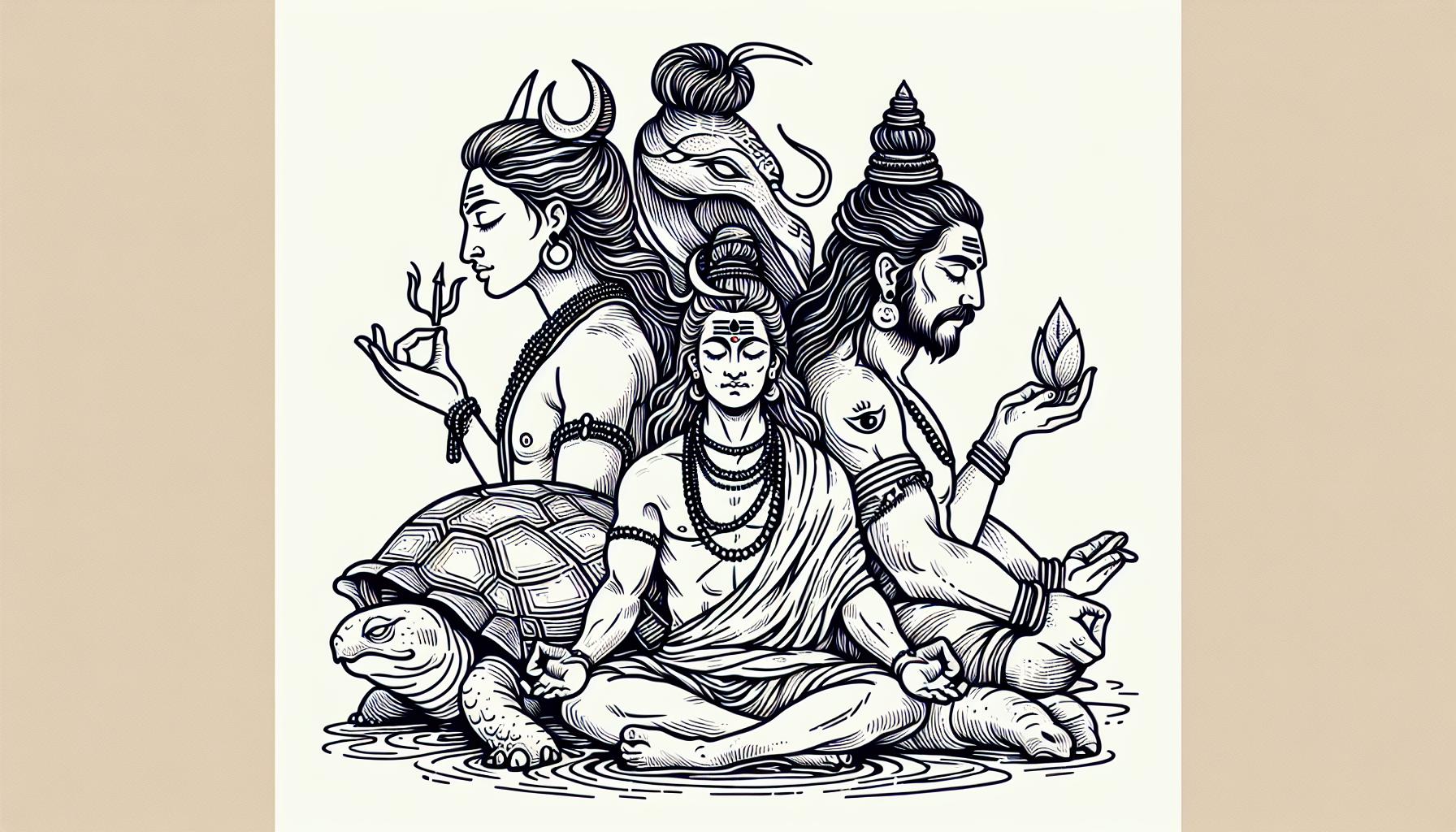
Yoga and mythology share a deep connection, with many iconic figures greatly contributing to the development of yoga. Some of the significant figures in yoga mythology include Shiva, Vishnu – The Protector, and the sage Patanjali.
Shiva
Shiva holds a central place in Hinduism and yoga mythology. Recognized as the “Adi Yogi” or the first yogi, Shiva embodies higher consciousness and spiritual awakening, symbolized by his third eye. He’s depicted as a meditating ascetic, teaching yoga to his consort, Parvati – The Consort of Shiva. His teachings have been passed down through generations, shaping the foundations of various yoga practices followed today.
Vishnu
Vishnu, a major deity in Hinduism, plays a pivotal role in preserving the universe. In yoga mythology, Vishnu symbolizes balance and harmony, essential elements of a yoga practice. His avatars, such as the fish (Matsya) and the tortoise (Kurma), represent the balance between the physical and spiritual realms. These forms offer insights into achieving equilibrium in yoga, blending strength and serenity.
The Sage Patanjali
The sage Patanjali is revered as the author of the “Yoga Sutras,” a foundational text on yoga philosophy and practice. His work codifies the principles of yoga into an eight-limbed path known as Ashtanga Yoga, encompassing ethical guidelines, physical postures, breath control, and meditation. Patanjali’s contributions provide a structured framework for understanding and practicing yoga, making his teachings integral to modern yoga studies.
Symbolism And Archetypes In Yoga Practice
Understanding the symbolism and archetypes in yoga practice can enrich our spiritual journey. Two key symbols stand out: the lotus flower and serpent power (Kundalini).
The Lotus Flower
The lotus flower symbolizes spiritual growth, purity, and enlightenment. It represents the ability to rise above worldly impurities. In Buddhism, the lotus is one of the eight auspicious symbols, denoting spiritual perfection. Different lotus colors have meanings: white for spiritual purity and red for heartfelt compassion and love.
In Hinduism, the lotus signifies fertility, prosperity, and eternity. It’s often depicted with gods and goddesses like Lakshmi, the goddess of prosperity and wealth. In yoga, the lotus pose (Padmasana) stands out as an advanced posture requiring hip flexibility, mirroring the flower’s symbolism of spiritual elevation.
Serpent Power (Kundalini)
Kundalini, often referred to as serpent power, represents dormant energy coiled at the base of the spine. Awakening Kundalini is said to lead to spiritual enlightenment and a higher state of consciousness. This concept of serpent power is prominent across various spiritual traditions, especially in yoga and Tantra.
In yoga, practices like meditation, pranayama (breath control), and asanas (postures) aim to activate Kundalini energy. As this energy ascends through the body’s chakras, it brings transformative spiritual experiences and profound insights. Practitioners often describe this ascent as a journey toward self-realization and inner awakening.
By embracing these symbols, we can deepen our yoga practice, bridging the ancient wisdom of mythology with our personal spiritual growth.
Mythology In Modern Yoga Practices
Mythology enriches modern yoga practices by connecting ancient stories to contemporary life. Yoga poses often embody tales from Hindu epics.
Popular Myths Integrated Into Yoga
Yoga poses frequently relate to Indian mythology. For example, “vimanasana” (airplane pose) stems from Sita’s abduction story in the Ramayana – Epic of Hinduism. Engaging with these myths deepens understanding and encourages self-reflection. Teachers can incorporate these narratives to help students connect physically and spiritually.
Cultural Adaptations And Misinterpretations
Cultural shifts have altered the portrayal of mythology in yoga. Sometimes, misinterpretations arise when ancient stories are simplified for modern contexts. It’s essential to honor the origins while adapting the practices. Mindful integration of myths can maintain authenticity and respect Indian cultural heritage.
Mythology’s integration in yoga adds layers of depth, blending physical postures with rich narratives. This connection can transform both personal practice and teaching methodologies, bridging the past with the present.
Personal Interpretations Of Myths Through Yoga
Interpreting myths through yoga brings metaphorical truths. These truths aren’t empirically verified; they offer psychological, experiential, or emotional understanding. When practicing yoga, myths provide an internal grounding, contextualizing life’s mysteries and complexities.
Myths in yoga act as metaphors that illuminate the human experience. They offer clues to understand both the world and ourselves. By aligning our practice with these stories, we create a context in which our personal journey becomes more relatable and meaningful.
Mythology plays a crucial role in enriching yoga. It connects our personal experiences with the sacred aspects of the practice. Understanding the cultural significance behind poses deepens their meaning and enhances the overall yoga experience.
Conclusion
Exploring the rich world of mythology within yoga has deepened my appreciation for this ancient practice. By connecting with stories of deities like Shiva and Vishnu and understanding Patanjali’s teachings I’ve found a new layer of meaning in my yoga journey. Each pose tells a story bridging the past with the present and making my practice more profound. Embracing these myths has transformed my yoga experience into a more relatable and sacred journey. Through this integration I’ve discovered that yoga is not just a physical exercise but a path to spiritual and emotional growth.
Sources & further reading
These themes are explored in greater depth across the following authoritative resources:
- Britannica, Yoga in Hinduism
- Britannica, Puja
- Harvard Pluralism Project, Hindu Practice
- Internet Sacred Text Archive, Yoga Sutras of Patanjali
- Diana L. Eck, Banaras: City of Light (Princeton University Press, 1982)
External resources for further reading. Apam Napat is not affiliated with these publishers; citation does not imply endorsement.
Frequently asked questions
How is yoga connected to Hindu mythology?
Why is Shiva called the first yogi?
What is Hanumanasana named after?
What is the story behind Virabhadrasana?
How does Buddhist mythology relate to yoga practice?
Based on the classical texts of Hindu mythology, see our sources.