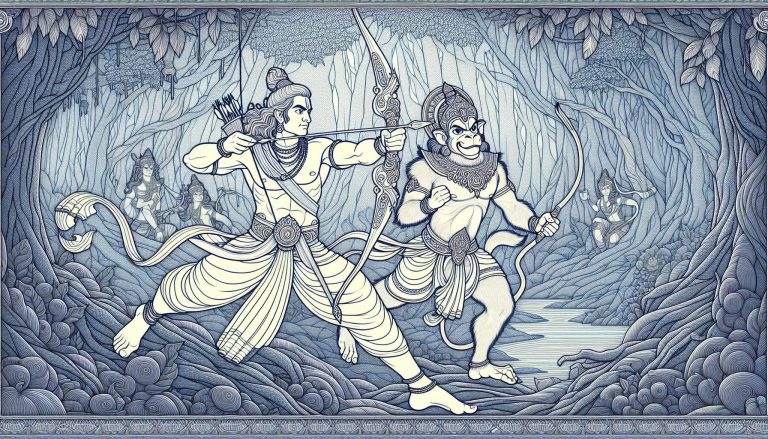
As someone who’s always been fascinated by storytelling, I find it incredible how these adaptations breathe new life into the epic. They not only preserve the essence of the original story but also make it accessible to a global audience. Whether you’re a long-time admirer of the Ramayana or a newcomer, these multimedia adaptations offer something for everyone, blending traditional narratives with modern technology.
Historical Context of the Ramayana
The Ramayana, composed in Sanskrit by sage Valmiki – Composer of Ramayana around the 5th century BCE, ranks among India’s greatest epics. It narrates the story of Prince Rama, his wife Sita, and his loyal companion Hanuman. This foundational text shaped Indian culture, ethics, and religious values significantly.
Multiple regional versions exist, each adding unique elements to the epic. In Telugu, the Sri Ranganatha Ramayanam stands out, while the Assamese version, the Saptakanda Ramayana, offers another notable retelling. These adaptations prove the epic’s versatility and enduring appeal across different linguistic groups.
Southeast Asia also embraced the Ramayana, creating its own versions in Javanese, Balinese, and Thai. These adaptations influenced local art, literature, and theater, showcasing the epic’s profound cultural impact. For instance, the Thai Ramakien features similar core elements but incorporates local lore and traditions.
By the 1980s, Ramanand Sagar’s television adaptation brought the Ramayana to an even wider audience. Based on the Ramcharitmanas and Valmiki’s Ramayana, this series captivated millions, securing the epic’s place in contemporary popular culture.
Evolution of Ramayana Adaptations
Over the years, the Ramayana has undergone several transformations, each adapting to new mediums and audiences. Here’s a look at how this epic has evolved in film, television, and animated formats.
Early Film Adaptations
Early film adaptations of the Ramayana began in the early 20th century. One notable example is the silent film “Rama Rajya” (1918), directed by Suchet Singh. Indian cinema witnessed feature films like “Lanka Dahan” (1917) by Dadasaheb Phalke, which was among the first to bring mythological narratives to the silver screen. These films used innovative techniques for their time, such as painted backdrops and exaggerated expressions to depict the story’s grandeur.
Television Series Adaptations
Television series adaptations have significantly impacted the Ramayana’s reach and popularity. Ramanand Sagar’s “Ramayan” (1987-1988), broadcast on Doordarshan, was a game-changer. It captivated millions, becoming a cultural phenomenon. More recent adaptations, like “Ramayan” (2008-2009) produced by Sagar Arts, utilized advanced visual effects and modern storytelling techniques to attract younger audiences. These series brought the epic to living rooms, making it accessible to a broader demographic.
Animated Versions
Animated versions of the Ramayana have introduced the story to a new generation of viewers. The 1992 Indo-Japanese collaboration “Ramayana: The Legend of Prince Rama” is a notable example. Its high-quality animation and direction by Yugo Sako set a new standard. More recent animated films like “Hanuman” (2005) and “Ramayana: The Epic” (2010) have used cutting-edge animation to appeal to children and adolescents. These adaptations often include educational elements, enhancing their appeal to parents and educators.
The Evolution of Ramayana Adaptations shows how the epic has remained relevant by embracing new formats, each bringing its own flavor to the timeless tale.
Contemporary Multimedia Adaptations
Ramayana’s rich narrative continues to inspire a wide array of multimedia adaptations. These new formats bring the epic to life in innovative ways.
Web Series and Digital Platforms
Ramayana web series adaptations have gained traction on various digital platforms. The flexibility of streaming services allows creators to explore intricate details and subplots. Although no specific research exists on Ramayana web series, platforms like YouTube and Netflix have provided a space where this ancient tale can be presented in episodic formats. These digital renditions enable a broader audience reach, making the story accessible to younger generations.
Video Games
Though specific research on Ramayana video games is lacking, the infusion of virtual reality (VR) technology in gaming provides an immersive experience. VR gaming explores deeper body involvement, enhancing user engagement. Games inspired by the Ramayana can offer players the chance to experience Prince Rama’s quests, battles, and adventures firsthand. Such adaptations allow for interactive storytelling, fostering a more personal connection to the narrative.
Virtual Reality Experiences
Virtual reality experiences have the potential to revolutionize how audiences interact with the Ramayana. While no specific studies focus on Ramayana VR experiences, the broader application of VR in education and entertainment is significant. Users could virtually step into the world of Ayodhya, engage in battles alongside Hanuman, or witness the epic’s pivotal moments up close. These immersive experiences provide an unparalleled depth of engagement, making the Ramayana more vivid and impactful for modern audiences.
Cultural Impact and Reception
Ramayana multimedia adaptations have left a profound mark on global culture. They’ve captured diverse audiences and fostered a deeper appreciation of the epic.
Regional Variations
Regional variations of the Ramayana reflect unique cultural nuances. In India, each state interprets the epic differently. For example, Tamil Nadu’s Kamba Ramayanam offers a distinct rendition, while Uttar Pradesh celebrates the Ramlila performance. Southeast Asia also presents notable adaptations. Thailand’s Ramakien and Indonesia’s Ramayana Ballet showcase local adaptations that blend the epic with indigenous art forms. These regional interpretations highlight the epic’s adaptability and influence.
International Audience
Ramayana adaptations have resonated with international audiences. Animated series like “Ramayana: The Legend of Prince Rama” have reached global viewers, introducing them to Indian mythology. Streaming platforms like Netflix and YouTube have broadened access, making the Ramayana more accessible to non-Indian audiences. The use of English translations in multimedia adaptations ensures comprehension. This cross-cultural reach has led to increased interest and scholarly discourse surrounding the epic.
Critical Analysis
Ramayana multimedia adaptations have transcended cultural boundaries while preserving the epic’s core essence. A nuanced examination reveals varying degrees of adherence to the original text and creative liberties taken by creators.
Faithfulness to the Source Material
Adaptations strive to maintain fidelity to the original epic, yet they inevitably introduce variations. Animated series like “Ramayana: The Legend of Prince Rama” (1992) retain key plot points and character arcs, ensuring an authentic portrayal. Television shows, such as the 1987 Doordarshan series “Ramayan”, follow Valmiki’s text closely, offering detailed narratives and traditional portrayals of characters. Films like “Sampoorna Ramayana” (1961) emphasize epic’s spiritual themes, reflecting the source material’s values and morality. These adaptations help preserve cultural heritage, engaging audiences with the timeless story of Prince Rama.
Creative Interpretations
Contemporary adaptations often prioritize creativity, infusing unique elements while capturing the epic’s spirit. The animated film “Sita Sings the Blues” (2008) combines modern music with ancient narratives, crafting a distinct retelling. Web series on platforms like YouTube reimagine characters and settings to resonate with younger audiences, blending myth with contemporary themes. Virtual reality (VR) adaptations extend creative boundaries, providing immersive storytelling experiences. These adaptations enable new perspectives, enriching the Ramayana’s legacy and expanding its relevance in the digital age.
Conclusion
Exploring the Ramayana through various multimedia adaptations has been a fascinating journey. Each medium, whether it’s film, television, web series, or virtual reality, offers a unique lens to experience this timeless epic. These adaptations not only preserve the cultural heritage of the Ramayana but also breathe new life into its narratives, making it accessible and engaging for modern audiences.
The balance between staying true to the original text and introducing creative interpretations ensures that the Ramayana remains relevant and captivating. As technology continues to evolve, I look forward to seeing how future adaptations will further enrich and expand the epic’s legacy.
Sources & further reading
These themes are explored in greater depth across the following authoritative resources:
- Internet Sacred Text Archive, Mahabharata (Ganguli translation)
- Internet Sacred Text Archive, Ramayana of Valmiki
- Britannica, Mahabharata
- Britannica, Ramayana
- Bibek Debroy, The Mahabharata (10 vols., Penguin, 2010 to 2014)
External resources for further reading. Apam Napat is not affiliated with these publishers; citation does not imply endorsement.
Based on the classical texts of Hindu mythology, see our sources.