
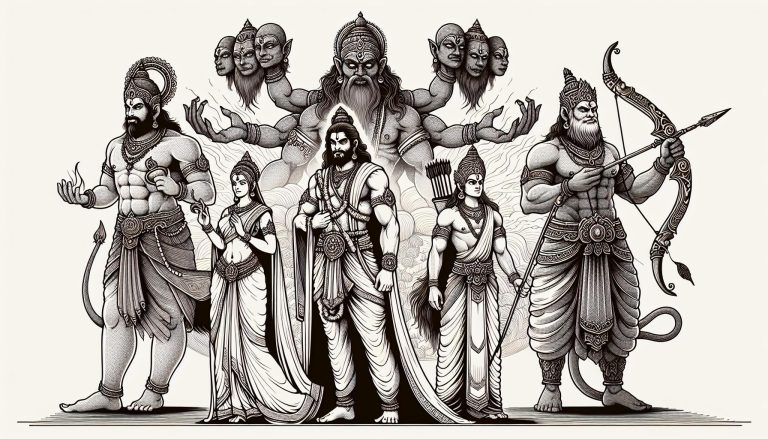
As I dive into the world of these mythological figures, I can’t help but marvel at their complexity and depth. Each character in the Ramayana serves a unique purpose, shaping the narrative in ways that reflect the human experience. Whether you’re familiar with the epic or new to its wonders, exploring these characters will offer fresh insights and a deeper appreciation for this legendary tale.
Overview Of The Ramayana
The Ramayana, a grand Hindu epic, tells the story of Rama, an avatar of the god Vishnu. It’s composed of 24,000 verses divided into seven books called kandas. Attributed to the poet Valmiki, this epic explores themes of duty, honor, and devotion.
- Rama: The protagonist, seventh avatar of Vishnu, exemplifies heroism and virtue. As the son of King Dasaratha and Queen Kausalya – Mother of Rama, his journey represents the struggle between good and evil.
- Sita: Rama’s wife, the incarnation of goddess Lakshmi, plays a central role. Kidnapped by Ravana, her plight ignites Rama’s quest to rescue her.
- Lakshmana: Rama’s half-brother and loyal companion, he symbolizes the ideal brotherly bond, willingly accompanying Rama into exile.
- Ravana: The demon king of Lanka, known for his formidable power, ten heads, and ten pairs of arms. His abduction of Sita marks him as the primary antagonist.
- Hanuman: A devoted monkey ally serving Sugreeva – The King of Monkeys, he becomes instrumental in Rama’s mission, embodying dedication and strength.
These characters drive the narrative of the Ramayana, each adding depth and insight into human virtues and vices. Their interactions and development make the Ramayana a timeless tale, offering lessons on morality and duty.
Rama: The Prince Of Ayodhya

Rama, the epic hero of the Ramayana, epitomizes virtue and bravery. His tale teaches the timeless values of dharma and righteousness.
Birth And Early Life
Rama was born in Ayodhya to King Dasaratha and Queen Kausalya. He was the eldest among four brothers, including Lakshmana, Bharata, and Shatrughna – Twin of Laxmana. Known for his bravery and wisdom from a young age, Rama showed remarkable adherence to dharma.
Virtues And Skills
Rama, seen as the perfect son, husband, and king, exemplified many virtues. His strength and courage were legendary, most notably demonstrated by his ability to string the giant bow of Sita’s father, King Janaka. This feat showcased his exceptional skill in archery that no other suitor could match.
Exile And Adventures
Banished to the forest for 14 years by his father, King Dasaratha, at the behest of his stepmother, Kaikeyi, Rama’s exile marked a significant chapter in his life. Accompanied by his devoted wife, Sita, and loyal brother, Lakshmana, Rama faced various challenges, further solidifying his reputation for righteousness and steadfastness.
Sita: The Epitome Of Virtue

Sita exemplifies virtue, purity, and devotion in the Ramayana. Her story captures the essence of an ideal wife, daughter, and queen.
Early Life And Marriage
Sita, revered for her beauty and purity, was the daughter of King Janaka of Mithila. Found in a furrow during a plowing ritual, her name means “furrow” in Sanskrit. She married Rama, prince of Ayodhya, in a grand ceremony, epitomizing the virtues of a devoted and loyal partner. Sita’s unwavering commitment to her husband and family makes her a central figure in Hindu mythology.
Trials And Tribulations
Sita’s life was marked by numerous challenges, particularly during her exile with Rama. Her devotion shone when she insisted on joining Rama in exile. Abducted by Ravana, the king of Lanka, she endured captivity with unyielding purity and faith in her husband’s return. These trials underscored her steadfastness and elevated her status as an epitome of virtue.
Legacy And Departure
Sita’s legacy transcends her lifetime, remaining a symbol of ideal womanhood, devotion, and resilience. After returning from exile, societal doubts led to another test of her purity. Choosing to return to her mother, Mother Earth, Sita’s departure encapsulates her purity and strength in the face of relentless trials. Her story continues to inspire countless individuals, emphasizing the enduring virtues of faith and loyalty.
Lakshmana: The Loyal Brother
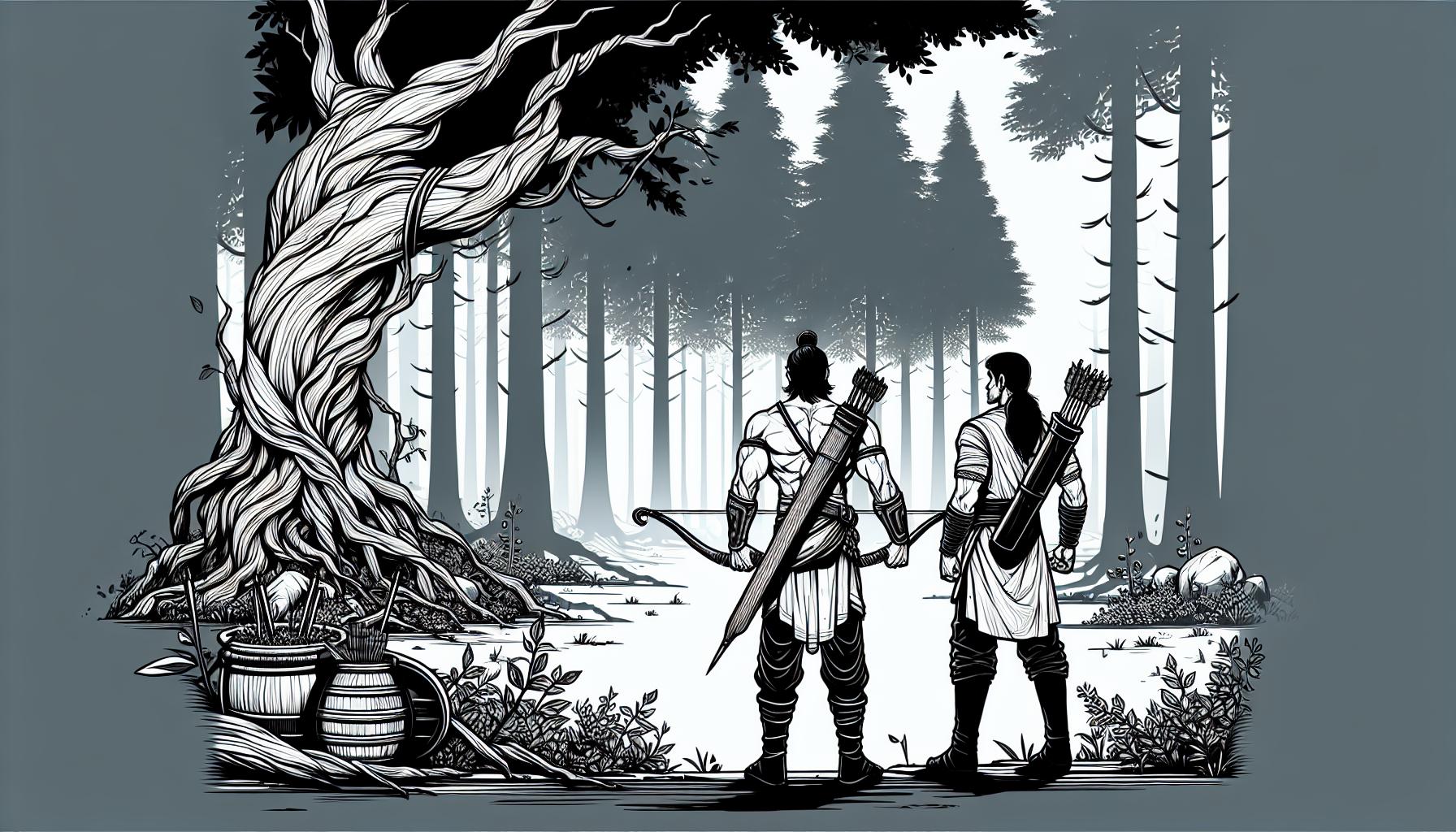
Lakshmana, the younger brother of Lord Rama, embodies loyalty, sacrifice, and valor in the epic Ramayana. His dedication to Rama and his significant role in the narrative make him a revered figure.
Devotion to Rama
Lakshmana’s unwavering devotion to Rama stands as a testament to his loyalty. He consistently prioritized Rama’s well-being and happiness over his own desires. From accompanying Rama during his exile to offering guidance and support, Lakshmana epitomized selflessness. His sacrifices highlight the profound bond between the brothers and underscore his commitment to family and duty.
Key Adventures
- Accompanying Rama to Exile: Lakshmana chose to join Rama during his 14-year exile, abandoning the royal luxuries of Ayodhya. This decision showcased his sense of duty and deep love for his brother.
- Sacrifice for Rama: To protect Rama and Sita, Lakshmana injured Surpanakha, Ravana’s sister. This act marked the beginning of crucial events, including Sita’s abduction. His courage and decisiveness in moments of danger highlighted his role as a protector.
- Battle Against Ravana: Lakshmana fought valiantly in the battle against Ravana, aiding Rama’s mission to rescue Sita. His contributions were pivotal in overcoming the formidable adversaries they faced.
Legacy
Lakshmana’s legacy extends beyond the epic’s events. His stories of bravery and unyielding devotion inspire the values of loyalty, sacrifice, and righteousness. Lakshmana’s character continues to evoke admiration and respect, deeply influencing cultural and spiritual teachings associated with the Ramayana.
Hanuman: The Devoted Servant
Hanuman stands as a central figure in the Ramayana, embodying devotion and strength. Known by various names like Maruti, Bajrangabali, and Anjaneya, Hanuman’s legacy is influential in Hindu mythology.
Origins And Powers
Hanuman’s origins are deeply rooted in Hindu mythology. As the child of a nymph and the wind god Vayu, he was named Anjaneya. Legend recounts that as an infant, Hanuman mistook the Sun for a fruit and attempted to fly up to grab it. Indra, king of gods, struck him with a thunderbolt on his jaw, giving rise to the name Hanuman.
Various deities endowed Hanuman with extraordinary powers:
- Agni granted immunity to fire.
- Surya gifted the ability to change his body’s size.
- Yama blessed him with good health and immortality.
- Vishwakarma – The Architect of the Devas ensured he was invulnerable to death.
Powerful sages cursed him to forget these abilities until reminded, making his prowess both latent and potent.
Role In The Ramayana
Hanuman plays a pivotal role in the Ramayana. His loyalty to Lord Rama and his unfaltering bravery are central to his character:
- Hanuman discovered Sita in Lanka, overcoming immense obstacles.
- He leaped across the ocean to carry Rama’s message to Sita.
- His feats included burning Lanka with his tail set aflame and showcasing immense strength in battles.
Hanuman’s actions were instrumental in Rama’s efforts to defeat Ravana and rescue Sita, highlighting his role as a devoted servant and fierce warrior.
Worship And Legacy
Devotion to Hanuman extends beyond the pages of the Ramayana. Temples dedicated to him are widespread, with devotees seeking his blessings for strength and protection. His legacy is celebrated widely:
- The Hanuman Jayanti festival marks his birth, drawing vast numbers of faithful.
- Iconography often depicts him opening his chest to reveal Rama and Sita inside, symbolizing unwavering devotion.
Hanuman’s tales continue to inspire, reinforcing virtues of loyalty and courage in Hindu tradition.
Ravana: The Antagonist
Ravana, the primary antagonist in the Ramayana, stands out with his complex and multifaceted personality. Known as the Rakshasa King of Lanka, his story adds layers of intrigue to the epic.
Rise to Power
Ravana’s ascent to power began with his birth as the son of Vishrava and Kaikashi. Displaying exceptional strength, bravery, and intelligence from a young age, he overthrew his half-brother Kubera, the god of wealth, to claim the throne of Lanka. His rise was marked by strategic victories and a relentless pursuit of power.
Traits and Skills
Ravana, a skilled warrior and sorcerer, possessed ten heads symbolizing his vast knowledge and power. Each head represented mastery over the four Vedas and the six Vedangas, showcasing his intellectual and spiritual prowess. Additionally, he demonstrated musical talent, often depicted playing the veena. His multifaceted skills made him a formidable and respected figure.
Downfall and Death
Ravana’s downfall began with the abduction of Sita, Rama’s wife. This act ignited a fierce war between Ravana and Rama. Despite his immense power and strategic acumen, Ravana met his demise in this battle, ultimately killed by Rama. His death marked the end of his reign and highlighted the consequences of hubris and moral transgressions.
Conclusion
The Ramayana’s characters offer timeless lessons about duty, devotion, and the consequences of one’s actions. Each figure, from Rama’s righteousness to Ravana’s tragic flaws, enriches the epic’s narrative and provides profound insights into human nature. The enduring appeal of these mythological characters lies in their complexity and the moral teachings they embody. Through their stories, we gain a deeper understanding of the values and principles that continue to resonate in today’s world. The Ramayana remains a powerful source of inspiration and reflection, reminding us of the eternal struggle between good and evil.
Sources & further reading
These themes are explored in greater depth across the following authoritative resources:
- Internet Sacred Text Archive, Mahabharata (Ganguli translation)
- Internet Sacred Text Archive, Ramayana of Valmiki
- Britannica, Mahabharata
- Britannica, Ramayana
- Bibek Debroy, The Mahabharata (10 vols., Penguin, 2010 to 2014)
External resources for further reading. Apam Napat is not affiliated with these publishers; citation does not imply endorsement.
Based on the classical texts of Hindu mythology, see our sources.