
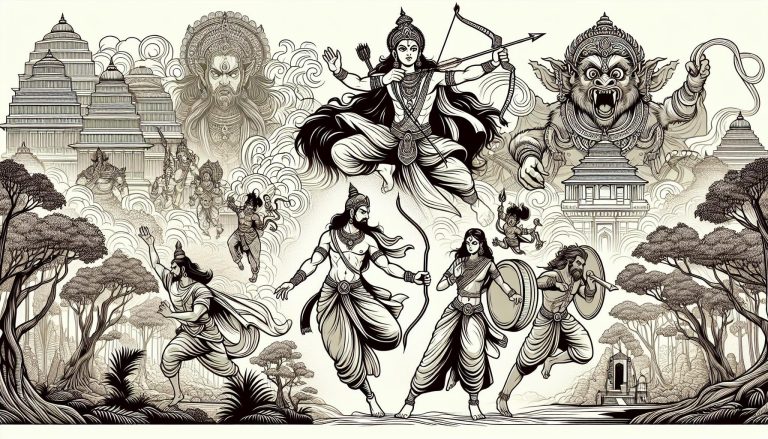
From the unwavering righteousness of Lord Rama to the devoted loyalty of Hanuman, the Ramayana offers timeless lessons on virtue, duty, and devotion. Exploring these symbols not only enriches our understanding of the epic but also provides valuable insights into the human condition and the divine principles guiding our lives.
Major Themes in Ramayana Symbolism
Ramayana is rich with themes that convey deep religious and moral lessons. These themes guide individuals on their spiritual and ethical journeys.
Dharma and Righteousness
The Ramayana emphasizes the importance of dharma, which embodies truth, justice, and duty. Rama, the protagonist, stands as the epitome of dharma, showcasing unwavering commitment to his responsibilities as a son, husband, and king. His life offers a template for others to follow, emphasizing duty and moral integrity.
Righteousness is another cardinal theme portrayed through Rama’s character. As the perfect man, Rama exemplifies virtues like generosity, justice, and mercy. His actions underscore the value of sacrifice and commitment to moral ideals. For instance, Rama’s decision to go into exile to honor his father’s word reflects his righteousness and dedication to dharma.
Good vs Evil
The Ramayana powerfully illustrates the battle between good and evil. Rama, representing good, confronts Ravana – The Demon King, who embodies evil. This conflict is central to the epic, symbolizing the eternal struggle between virtue and vice. Through Rama’s triumph over Ravana, the narrative asserts that goodness, bolstered by dharma and righteousness, ultimately prevails over evil forces.
The characters within the epic further delineate this theme. Lakshmana, Hanuman, and Sita support righteousness, while Ravana and his followers exemplify moral corruption. This dichotomy reinforces the message that adhering to ethical values leads to victory over malevolent entities.
Key Symbols in the Ramayana
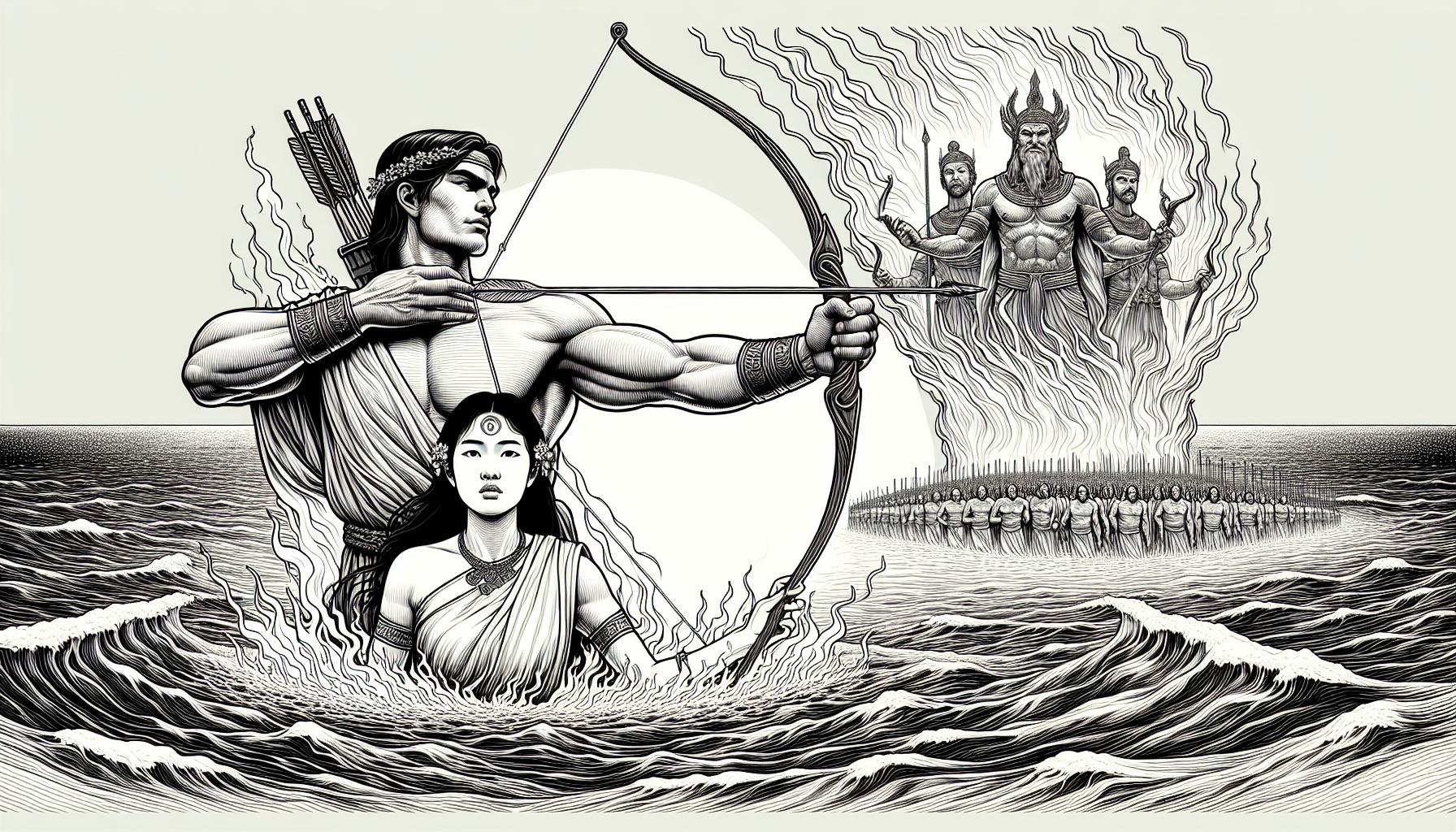
The Ramayana uses rich symbolism to convey deep religious meanings. These symbols offer insights into the characters’ virtues and divine qualities.
The Bow and Arrow
The bow and arrow symbolize Rama’s strength and protective role. Rama’s bending of Shiva – The Destroyer’s mighty bow at the bridegroom tournament demonstrates his divine power and suitability for kingship. This act links to his responsibility to protect dharma.
The Fire of Sita’s Purity
The fire ordeal that Sita undergoes symbolizes her purity and chastity. This trial showcases her unwavering devotion to Rama, proving her loyalty and innocence despite adversity. It also highlights her strong moral integrity.
The Bridge to Lanka
The bridge built by Rama and the vanaras to cross the Palk Strait represents connection and unity. This construction symbolizes the link between the human and divine realms, emphasizing cooperation and divine intervention in human affairs.
Symbolic Characters in the Ramayana
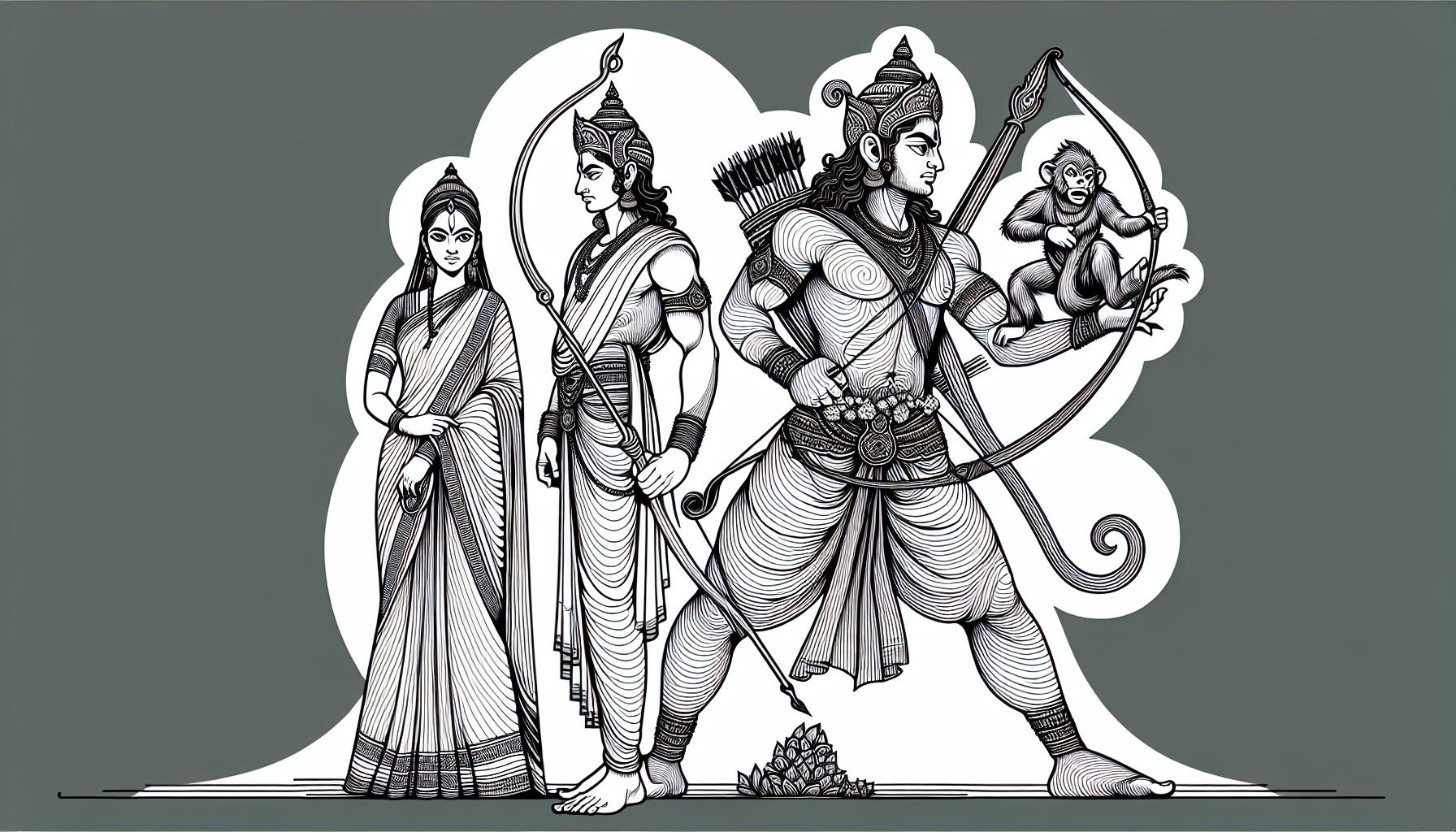
The Ramayana features characters representing various virtues and ideals, making it rich in religious symbolism.
Rama as an Ideal Man
Rama, the protagonist, embodies the ideal man and a human incarnation of Lord Vishnu – The Protector. He represents dharma by fulfilling his duties as a son, husband, and king. Rama’s life serves as a model for virtuous living according to Hindu principles.
Sita as Purity and Devotion
Sita, Rama’s wife, symbolizes purity, courage, and devotion. She epitomizes a devoted wife, daughter, and mother, showcasing loyalty, sacrifice, and strength. Sita’s life, filled with trials yet marked by unwavering devotion to Rama, makes her an ideal figure for women in Hindu society.
Hanuman as Devotion and Strength
Hanuman, a loyal follower of Rama, represents devotion and physical strength. His unwavering dedication to Rama and his incredible feats of strength highlight his role as the epitome of selfless service. Hanuman’s character inspires those who seek to emulate his devotion and resilience.
Symbolism in Key Events

The Ramayana uses pivotal events to convey deep religious and moral teachings. These key events unravel the intricate layers of human behavior, divine principles, and moral imperatives.
The Exile of Rama
Rama’s exile signifies the paramount value of duty (dharma). By accepting his banishment, Rama honors his father’s promise, prioritizing duty and loyalty over personal desires. This act underscores the importance of adhering to one’s responsibilities, regardless of personal sacrifice.
Additionally, Rama’s departure from the comforts of royal life and his transition to the forest symbolize renunciation and self-control. By giving up worldly pleasures, he demonstrates that true virtue lies in controlling desires and living a simple, principled life. This aspect of the story highlights the necessity of self-discipline and the pursuit of a virtuous existence.
The Abduction of Sita
Sita’s abduction by Ravana illustrates the struggle between virtue and temptation. Her capture represents the lure of evil and the trials faced by individuals in maintaining virtue amidst adversity. Sita’s steadfastness during captivity reflects the strength and resilience required to uphold moral integrity.
This event also portrays the consequences of yielding to temptation, with Ravana’s downfall serving as a reminder of the destructive power of unchecked desires. Through Sita’s ordeal, the Ramayana emphasizes the triumph of virtue over vice.
The War with Ravana
The war with Ravana epitomizes the eternal battle between good and evil. Rama’s confrontation with Ravana signifies the fight to restore dharma and righteousness. It symbolizes the continuous struggle against malevolence and the efforts required to uphold moral order.
In this war, characters like Hanuman and Lakshmana represent unwavering dedication and support in the pursuit of justice. Their actions reinforce the idea that collective effort and unity are vital in combating evil and restoring harmony. The defeat of Ravana ultimately showcases the victory of righteousness and the restoration of moral balance.
Conclusion
The Ramayana’s rich tapestry of religious symbolism offers timeless wisdom and moral guidance. By examining the lives and actions of its characters, we uncover profound insights into human nature and divine principles. The epic’s depiction of dharma, righteousness, and the eternal battle between good and evil resonates deeply with readers, providing a spiritual and ethical framework that’s relevant even today. Through its powerful storytelling and symbolic events, the Ramayana continues to illuminate the path to virtue, duty, and devotion, inspiring us to strive for moral excellence in our own lives.
Sources & further reading
These themes are explored in greater depth across the following authoritative resources:
- Internet Sacred Text Archive, Mahabharata (Ganguli translation)
- Internet Sacred Text Archive, Ramayana of Valmiki
- Britannica, Mahabharata
- Britannica, Ramayana
- Bibek Debroy, The Mahabharata (10 vols., Penguin, 2010 to 2014)
External resources for further reading. Apam Napat is not affiliated with these publishers; citation does not imply endorsement.
Based on the classical texts of Hindu mythology, see our sources.