
I’ve always found the interplay between these two ideas intriguing. Can we really control our fate through good deeds, or are we merely actors playing out a script written long before we were born? Exploring these age-old questions can offer profound insights into how we live our lives and perceive our journey.
Understanding Karma And Destiny
Karma, a Sanskrit term, translates to “action” or “deed”. It signifies the spiritual principle of cause and effect. In simple terms, our actions generate corresponding outcomes. For instance, positive actions often result in favorable events, while negative actions typically lead to adverse results.
Destiny, on the other hand, refers to a predetermined course of events. Often associated with fate, it suggests that certain aspects of our lives are preordained. Many people believe that even though our efforts, some events occur according to a divine plan.
Differences Between Karma And Destiny
- Concept: Karma focuses on actions and their repercussions. Destiny emphasizes a pre-set path.
- Control: Karma offers a degree of control through ethical behavior. Destiny presents events as inevitable.
- Outcome: Karma leads to changes based on our deeds. Destiny delineates outcomes independent of our actions.
Interplay Of Karma And Destiny
While karma and destiny appear distinct, they interact in significant ways. If we consider karma as influencing our life’s unfolding, destiny might integrate past actions into its framework. For example:
- Actions (moral choices) influence personal development.
- Predetermined events (life milestones) align with cumulative karma.
Cultural Perspectives On Karma And Destiny
Different cultures interpret karma and destiny uniquely:
- Hinduism: Emphasizes reincarnation and the accumulation of karma across lifetimes.
- Buddhism: Focuses on individual actions shaping one’s path towards enlightenment.
- Western Views: Often blend destiny with notions of free will and personal responsibility.
Practical Implications
Understanding these concepts affects daily life:
- Decision-Making: Recognizing karma encourages thoughtful actions.
- Resilience: Accepting destiny can foster a calm acceptance of inevitable events.
- Growth: Balancing both ideas promotes personal and spiritual growth.
Reflecting on karma and destiny, one can find guidance in exploring life’s journey while aligning actions with moral values.
Historical Perspectives
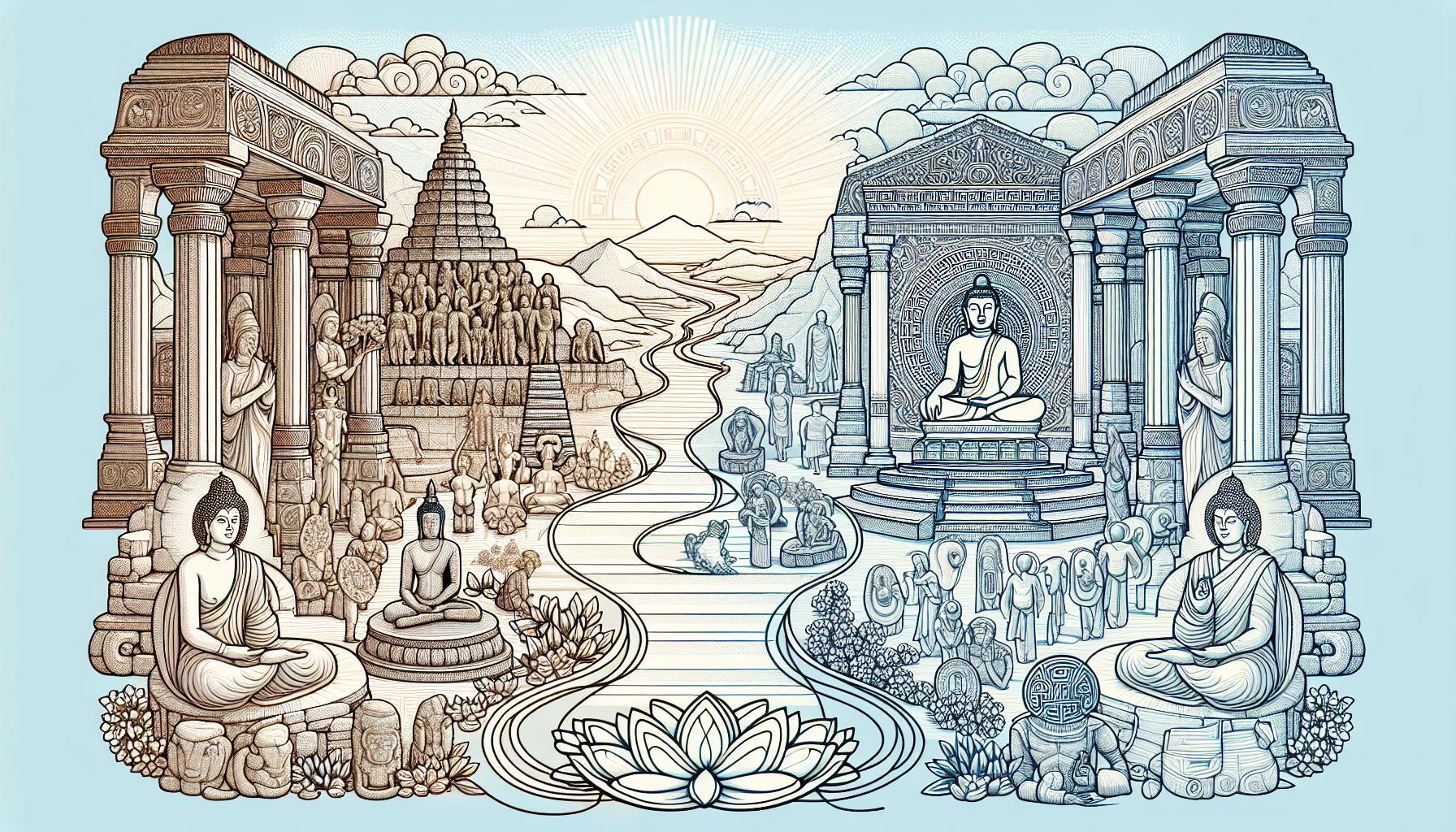
Exploring historical perspectives on karma and destiny provides a deeper understanding of how these concepts evolved.
Eastern Philosophies
Eastern philosophies like Hinduism and Buddhism offer rich interpretations of karma and destiny. In Hinduism, karma centers on the idea that actions in this life influence future reincarnations. Good deeds lead to positive outcomes in subsequent lives, while negative actions result in less favorable reincarnations. The Bhagavad Gita, an important Hindu text, underscores the balance between karma and dharma (duty), emphasizing personal responsibility in shaping one’s destiny.
Buddhism shares the concept of karma but integrates it with the path to enlightenment. According to the Buddha’s teachings, karma affects not only rebirth but also one’s journey toward nirvana, the ultimate liberation from the cycle of birth and death. Ethical behavior and mindfulness play crucial roles in accumulating good karma and progressing on the path to enlightenment.
Western Views
Western views on karma and destiny often differ significantly from Eastern philosophies. Ancient Greek philosophy, for instance, introduced the concept of fate, with thinkers like Aristotle and Plato discussing predestination and free will. Greek mythology frequently referenced the Moirai, or Fates, who controlled the destinies of both gods and humans.
In Christianity, destiny is often linked to divine providence and the will of God. The notion of predestination, especially prominent in Calvinism, suggests that God has predetermined the salvation or damnation of individuals. But, many Christian denominations also emphasize free will and the capacity for human choice, echoing the dual themes of karma and destiny in a different cultural context.
The Interplay Between Karma And Destiny
Understanding the relationship between karma and destiny reveals how our actions and beliefs shape our life’s journey. I’ll explore how these concepts interconnect, influencing our experiences and paths.
Karma: Cause And Effect
Karma refers to the idea that every action, thought, or deed has consequences that impact an individual’s future experiences. It emphasizes the principle of cause and effect, where each individual’s actions shape their future outcomes. There are four types of karma: thoughts, desires, words, and actions. Thoughts are significant because they shape our desires, words, and actions, eventually determining our karma. Karma accumulates over time, influencing one’s life journey. Good deeds lead to positive outcomes, while bad deeds result in negative outcomes.
Destiny: Predetermined Paths
Destiny often implies predetermined events that shape an individual’s life, suggesting that some aspects of our journey are beyond our control. While karma focuses on the cause-and-effect relationship of actions, destiny suggests a certain preordained trajectory influenced by factors like one’s birth, environment, and cosmic order. The balance between karma and destiny varies across different philosophical and spiritual traditions, with some emphasizing personal responsibility and others highlighting the inevitability of certain life events.
Modern Interpretations
Modern interpretations of karma and destiny have evolved, influenced by contemporary culture and thought.
Psychological Approaches
Psychological approaches often frame karma as the mental patterns we create. Cognitive-behavioral perspectives view actions and consequences as part of our mental framework. For instance, nurturing positive thoughts can lead to better mental health outcomes. Conversely, negative thinking often results in stress and anxiety. Behavioral psychologists look at actions as habit-forming. Engaging in altruism creates positive feedback loops, reinforcing beneficial behaviors. These theories highlight personal responsibility and the power of mindset in shaping one’s destiny.
Spiritual Movements
Spiritual movements integrate karma and destiny into their belief systems. New Age philosophies often blend these concepts, suggesting that we’re co-creators of our reality. For example, the Law of Attraction emphasizes alignment between thoughts and the universe to manifest desires. Modern Hindu and Buddhist scholars reinterpret traditional teachings to fit contemporary life, focusing on personal growth. The Soka Gakkai International (SGI) movement promotes the idea of changing karma through chanting and positive action, emphasizing individual empowerment. This blend of personal agency and cosmic principles forms a central theme in many spiritual practices today.
Real-Life Examples
Karma and destiny often manifest in our lives through various real-life examples. Here, I’ll explore cultural stories and personal experiences that illustrate these concepts.
Cultural Stories
In many cultures, stories illustrate karma and destiny to convey moral lessons. In Hindu mythology, the story of Prince Rama captures the essence of karma and destiny. Even though adversities, his righteousness ensures his eventual triumph, demonstrating that noble actions lead to a favorable destiny.
In Greek mythology, the tale of Oedipus highlights destiny’s inescapable nature. Predetermined by prophecy, Oedipus’s fate unfolds even though efforts to avoid it, reflecting the belief in unavoidable destiny.
Personal Experiences
Real-life experiences also highlight the impact of karma and destiny. I observed that individuals who consistently practice kindness often encounter positive outcomes. A friend dedicated to community service received unexpected career opportunities, exemplifying karma’s principle of cause and effect.
Conversely, some recount how unforeseen events shaped their lives, indicating destiny’s role. One person I know planned a different career path but stumbled into a fulfilling profession due to an accidental encounter, suggesting destiny guided their journey.
Influence On Daily Life
Karma and destiny impact myriad aspects of our everyday existence, guiding decisions and shaping our moral frameworks. These principles provide a roadmap for living purposefully and ethically.
Decision Making
Decisions gain significance under the influence of karma and destiny, shaping outcomes based on actions. When deciding, I consider the potential consequences, knowing my actions can lead to either positive karma or negative repercussions. For example, choosing honesty over deceit reinforces positive behavior patterns, aligning with the cosmic law of karma. This understanding encourages me to act thoughtfully, weighing short-term benefits against long-term impacts on my destiny.
Ethical Living
Ethical living becomes intrinsic when acknowledging karma and destiny’s roles. These concepts remind me to live with integrity, compassion, and mindfulness. Knowing that my actions reverberate through time, I strive to adhere to ethical standards. Practicing kindness, truthfulness, and fairness not only fosters a harmonious life but also aligns me with a positive karmic path, influencing my destiny favorably. For instance, regular acts of kindness, such as helping a neighbor or volunteering, demonstrate how ethical living can cultivate a supportive community, reinforcing the interconnectedness of karma and destiny.
Conclusion
Understanding karma and destiny offers a profound lens through which we can view our lives and decisions. By recognizing the balance between our actions and the universe’s response we can navigate our paths with greater awareness. Embracing ethical living and mindful choices not only fosters positive karma but also aligns us with our destined journey. Whether through ancient stories or personal experiences the interplay of karma and destiny remains a powerful guide in shaping our lives and moral compass.
Sources & further reading
These themes are explored in greater depth across the following authoritative resources:
- Britannica, Yoga in Hinduism
- Britannica, Puja
- Harvard Pluralism Project, Hindu Practice
- Internet Sacred Text Archive, Yoga Sutras of Patanjali
- Diana L. Eck, Banaras: City of Light (Princeton University Press, 1982)
External resources for further reading. Apam Napat is not affiliated with these publishers; citation does not imply endorsement.
Based on the classical texts of Hindu mythology, see our sources.