
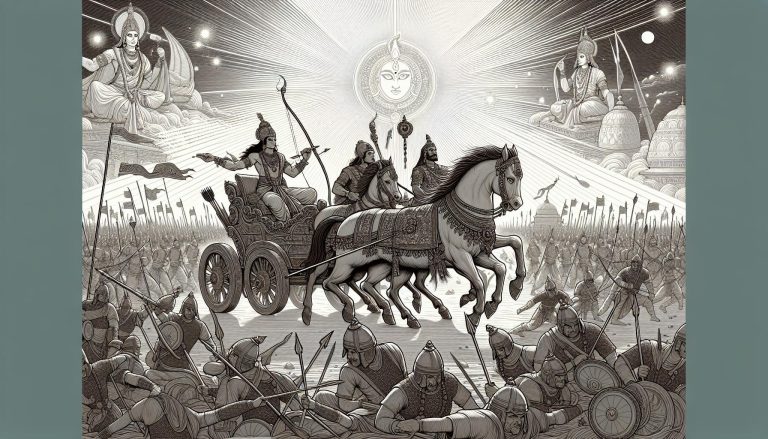
When I first delved into the Mahabharata, the intricate descriptions of the Kurukshetra War and other conflicts drew me in. Each battle scene is a study in the complexities of human nature and the consequences of choices made under pressure. Join me as I explore the epic battles of the Mahabharata, where every clash tells a deeper story about duty, honor, and destiny.
Overview Of The Mahabharata Epic
The Mahabharata is an ancient Indian epic centered on the struggle for the throne of Hastinapura between the Pandavas and the Kauravas. Composed of 100,000 verses, it’s the longest epic poem ever written and dates back to the 4th century BCE or earlier. The complexity of its narrative weaves together devotion, duty, and destiny, providing readers with a profound understanding of life and human nature.
The Kurukshetra War
The Kurukshetra War is the central event of the Mahabharata, spanning 18 intense days. The conflict is between the Pandavas, led by Yudhishthira, and the Kauravas, led by Duryodhana. The Pandavas gain support from multiple kingdoms including Panchala, Dwaraka, Kasi, Kekaya, Magadha, Matsya, Chedi, Pandyas, Telinga, and the Yadus of Mathura. On the other side, the Kauravas receive aid from kings of Pragjyotisha, Anga, Kekaya, Sindhudesa, Mahishmati, Avanti, Madra, Gandhara, and Bahlika among others.
Key Characters
- Yudhishthira: Eldest of the Pandavas, embodying righteousness
- Duryodhana: Leader of the Kauravas, symbolizing ambition and pride
- Arjuna: Famed archer of the Pandavas, guided by Lord Krishna
- Bhishma: Grandsire of both sides, bound by duty to fight for the Kauravas
- Dronacharya: Revered teacher and warrior, also aligned with the Kauravas
Ethical Dilemmas
The Mahabharata vividly portrays the ethical struggles faced by its characters. For instance, Arjuna hesitates to fight against his kin. Lord Krishna imparts the Bhagavad Gita, a spiritual discourse, to address his moral quandary and guide him toward his duty as a warrior. The epic continually challenges characters to navigate duty, righteousness, and personal desire.
Legacy And Influence
The Mahabharata’s influence stretches far beyond its origins. It’s not only a compelling narrative but also a foundational text in Hindu philosophy. It has informed countless adaptations in literature, theater, and film worldwide. Historical figures and leaders often draw from its lessons in leadership, strategy, and ethics, highlighting its timeless relevance.
The Importance Of Battles In Mahabharata

Battles in the Mahabharata carry immense significance, extending beyond physical conflict. They symbolize the struggle between dharma (righteousness) and adharma (unrighteousness), reflecting the cosmic battle between good and evil.
Representation of Dharmayuddha
The Mahabharata intricately weaves the concept of dharmayuddha, or just war, into its narrative. The Kurukshetra War exemplifies this idea, where the Pandavas, adhering to ethical principles, challenge the Kauravas, who have disregarded moral conduct. Arjuna’s hesitation to fight against his kin leads to Lord Krishna’s discourse on duty, setting the stage for the Bhagavad Gita. The dharmayuddha underscores the moral significance of fighting for justice and righteousness.
Political and Social Dimensions
The epic battles highlight political ambitions and alliances. The participation of various kingdoms and clans, such as Panchala, Dwaraka, and Magadha, illustrates the extensive reach of the conflict. These battles underscore the importance of political strategy and the repercussions of alliances on the outcome of wars. The involvement of diverse regions demonstrates the Mahabharata’s grasp on the socio-political landscape of ancient India.
Individual Valor and Sacrifice
Characters like Bhishma, Arjuna, and Karna showcase individual heroism and sacrifice. Bhishma’s vow to protect the throne of Hastinapura at any cost and Arjuna’s unparalleled skills in archery highlight personal valor. These narratives emphasize the warrior ethos and the importance of personal duty in the larger context of communal goals.
Ethical and Moral Lessons
The battles serve as a medium to convey ethical lessons. Arjuna’s moral dilemma and Krishna’s guidance lead to philosophical discourse, highlighting the importance of upholding righteousness even in the face of adversity. These ethical teachings resonate beyond the battlefield, offering timeless wisdom on human conduct and decision-making.
Spiritual Significance
The Mahabharata endows battles with a spiritual dimension. The Kurukshetra War is not merely a quest for power but also a platform for spiritual awakening. Lord Krishna’s role as Arjuna’s charioteer elevates the conflict to a divine plane, where human struggles mirror cosmic principles. This spiritual layer adds depth to the narrative, making it a profound epic that transcends mere historical recounting.
In essence, the battles in the Mahabharata serve as conduits for exploring profound themes, making them pivotal to the epic’s enduring legacy. Through physical conflict, the Mahabharata delves into ethical, political, and spiritual realms, offering rich insights into human nature and societal values. Here’s a breakdown showcasing kings and regions involved in the battles:
| Kingdoms | Notable Allies |
|---|---|
| Panchala | Drupada, Dhrishtadyumna |
| Dwaraka | Krishna, Balarama – Brother of Krishna |
| Kasi | King Vrata |
| Kekaya | Five brothers aligned with Pandavas |
| Magadha | King Jayatsena |
| Matsya | King Virata |
| Chedi | King Shishupala – The King of Chedi |
| Pandyas | Supported Pandavas |
| Telinga | Fought for Kauravas |
| Yadus | Mainly allied with Pandavas |
These participants underscore the epic’s vast scale and the deep-rooted significance of its battles.
The Kurukshetra War
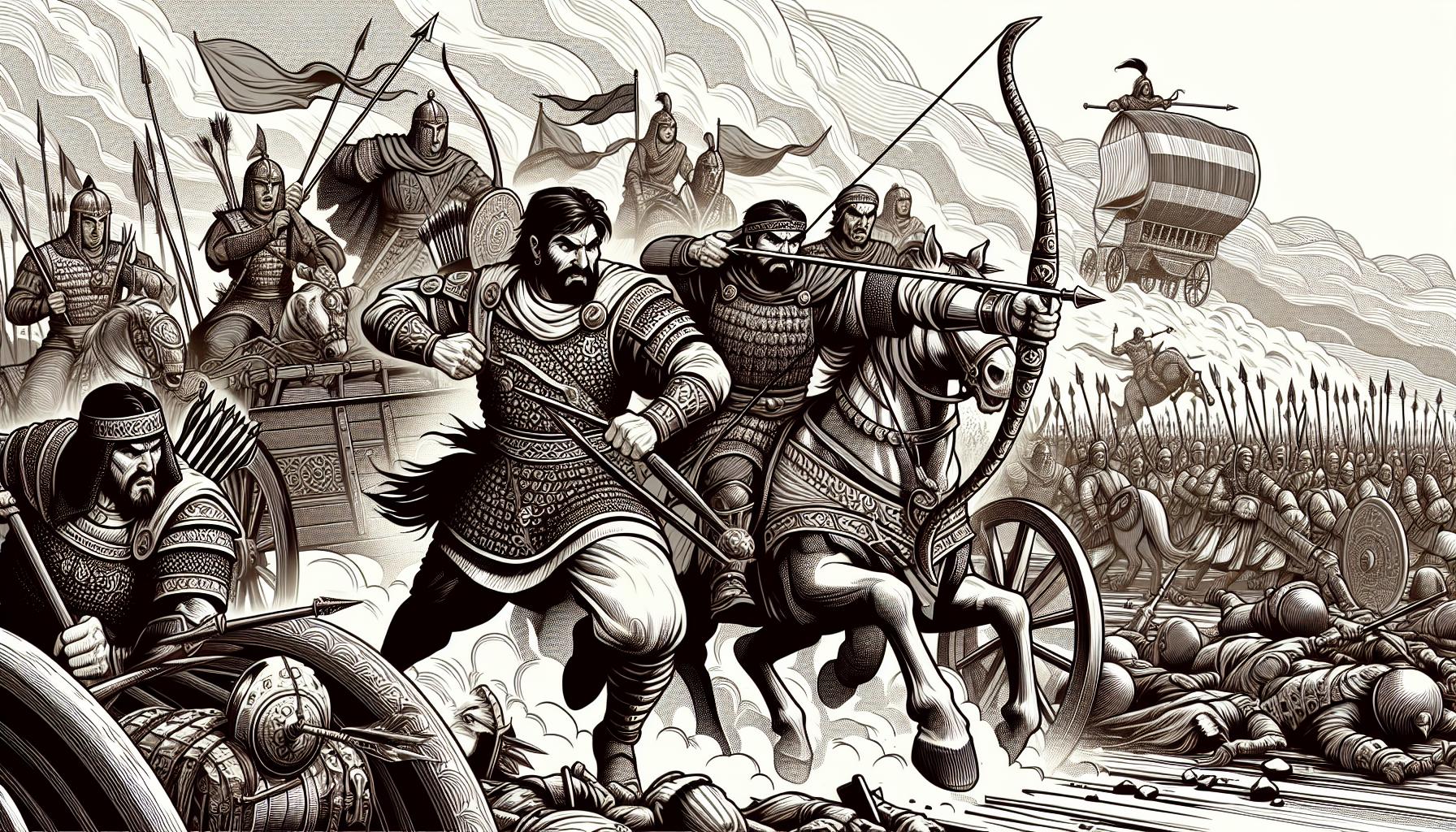
The Kurukshetra War stands as the central conflict in the Mahabharata. It spans 18 intense days, shaping the destiny of the Pandavas and the Kauravas.
Key Warriors
Key warriors from both sides define the Kurukshetra War’s significant moments.
- Pandavas: Yudhishthira prioritizes righteousness, Arjuna exhibits exceptional archery skills, Bhima showcases raw strength, Nakula, and Sahadeva offer strategic insights. Their allies include powerful figures like Drupada, and Satyaki.
- Kauravas: Duryodhana leads with ambition, Karna displays unparalleled valor, Bhishma and Dronacharya contribute vast experience, Ashwatthama – Son of Drona shows fierce resolve, and Shakuni influences strategies.
Major Phases Of The Battle
The Kurukshetra War divides into various phases, each critical.
- Opening Days (Days 1-4): Bhishma leads the Kauravas, causing significant Pandava losses. Arjuna’s valor stands out.
- Middle Days (Days 5-10): Fierce engagements with notable duels. Bhishma falls, affecting Kaurava morale.
- Leadership Shift (Days 11-15): Dronacharya commands the Kauravas. The Pandavas adapt tactics, culminating in Dronacharya’s fall.
- Penultimate Days (Days 16-17): Karna takes command. Desperate, intense fights ensue, leading to Karna’s death.
- Final Day (Day 18): Duryodhana’s final confrontation. Bhima defeats him, marking the war’s end.
Turning Points
Several turning points dictate the Kurukshetra War’s outcome.
- Bhishma’s Fall: Disabling Bhishma shifts momentum to the Pandavas.
- Abhimanyu – The Brave Young Warrior’s Death: Arjuna’s son’s death ignites a fierce resolve in the Pandavas.
- Dronacharya’s Demise: Drona’s fall disheartens the Kauravas.
- Karna vs. Arjuna: Arjuna kills Karna, tilting the balance.
- Duryodhana’s Defeat: Bhima’s victory over Duryodhana seals the Kauravas’ fate.
Battle Of Kurukshetra: Day By Day Breakdown
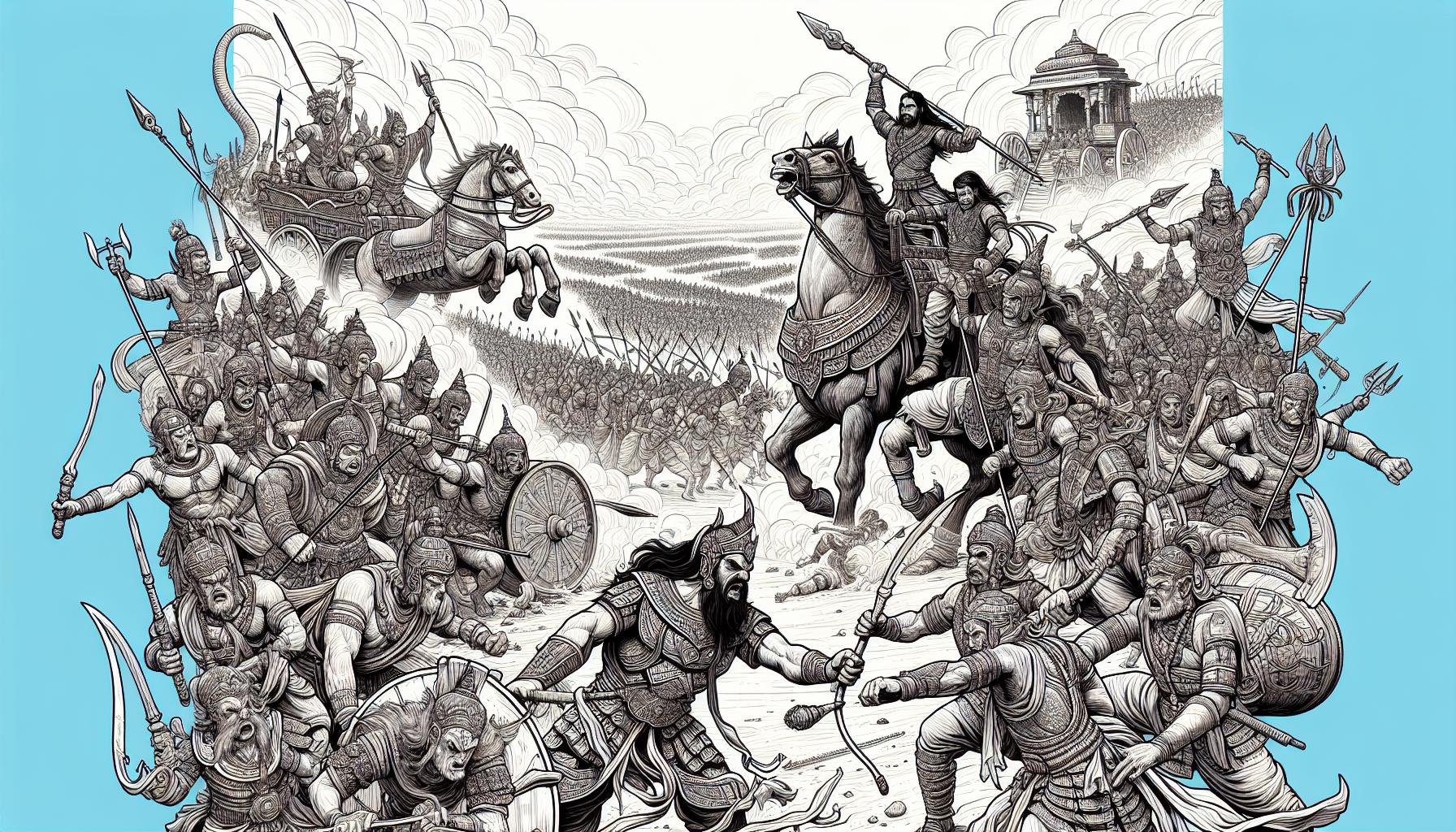
The Kurukshetra War, central to the Mahabharata, unfolds over 18 days, highlighting key battles and strategies. This breakdown covers the initial, mid-phase, and final days of this epic conflict.
Initial Days
Day 1
The battle begins with both sides, the Pandavas and the Kauravas, assembled and ready to fight. Bhishma Pitamah, the commander of the Kaurava army, makes an announcement allowing warriors to change sides if they wish. Yuyutsu, one of Dhritarashtra’s sons, decides to join the Pandavas. Conch shells are blown, and prayers are chanted to start the battle.
Day 2-3
Arjuna, troubled by the prospect of fighting his own family and friends, seeks guidance from Lord Krishna. Krishna advises Arjuna of his duty as a Kshatriya to fight for a righteous cause. This discourse is presented as the Bhagavad Gita, providing Arjuna the clarity and resolve needed to engage in battle.
Mid-Phase Struggles
Day 4-6
The battle intensifies, with both sides suffering significant losses. Key warriors, including Bhishma and Dronacharya, play pivotal roles. Each side deploys various military formations, showcasing strategic prowess and martial skills.
Final Days
Day 7-18
As the days progress, the intensity escalates. Major turning points occur, including Bhishma’s fall on the tenth day, Abhimanyu’s death on the thirteenth day, and Dronacharya’s demise. Karna and Arjuna’s duel on the seventeenth day stands out as a decisive encounter. The war culminates with Duryodhana’s defeat, marking the end of the conflict and the Pandavas’ victory.
Notable Duels And Confrontations
The Mahabharata epic battles feature legendary duels that captivate readers and underscore themes of valor and destiny.
Arjuna Vs Karna
Arjuna and Karna, two of the greatest warriors, engage in a fierce duel on the 17th day of the Kurukshetra War. Born as brothers yet raised apart, their rivalry culminates in a battle marked by unmatched skill and divine weaponry. Arjuna, guided by Lord Krishna, defeats Karna after exploiting the curse that causes Karna’s chariot wheel to sink.
Bhima Vs Duryodhana
Bhima’s duel with Duryodhana signifies the culmination of the Pandavas’ quest for justice. Facing each other on the final day, the duel is brutal and personal. Bhima, fulfilling his vow to Draupadi, uses his immense strength to break Duryodhana’s thighs, securing a decisive victory for righteousness.
Ghatotkacha Vs Ashwatthama
Ghatotkacha, the son of Bhima, confronts Ashwatthama, Drona’s son, in a dramatic night battle. Utilizing his rakshasa powers, Ghatotkacha significantly hampers the Kaurava forces. Ashwatthama, less known for such direct combats, is pivotal in offsetting Ghatotkacha’s onslaught by supporting Karna, who eventually kills Ghatotkacha using the Indrastra.
The Role Of Divine Interventions
Divine interventions in the Mahabharata significantly impacted the outcome of battles, often turning the tide in favor of righteousness. These interventions showcased the cosmic influence on human affairs.
Krishna’s Strategems
Krishna’s tactics were vital in shaping the Kurukshetra War. As Arjuna’s charioteer and guide, Krishna provided constant counsel and strategic advice. One notable instance is when he advised Arjuna to aim for Karna’s chariot wheel, leading to Karna’s defeat. Additionally, Krishna’s counsel during the Bhagavad Gita steered Arjuna out of his moral dilemma, enabling him to fight resolutely.
The Role Of Other Deities
Several other deities also influenced the battles. Indra, the king of gods, aided the Pandavas by gifting Arjuna his celestial weapon, the Vajra. On the other hand, the Kauravas received support from Shiva through Ashwatthama, who carried out a night attack after the war’s official end. These divine interventions underscored how celestial forces aligned with the principles of dharma, guiding the war’s outcome.
Lessons And Legacy Of The Mahabharata Battles
The battles in the Mahabharata offer enduring lessons and significantly impact history and culture.
Moral And Ethical Lessons
The Mahabharata battles present complex moral dilemmas. Arjuna’s hesitation to fight his kin highlights the conflict between personal ethics and duty. Krishna’s counsel in the Bhagavad Gita teaches the importance of performing one’s duty without attachment. Yudhishthira’s commitment to truth and dharma, even in the face of great adversity, exemplifies ethical leadership. Bhishma’s loyalty to his vow, despite supporting Duryodhana’s unrighteous cause, underscores the consequences of rigid adherence to promises without considering moral implications. The epic illustrates just war principles, emphasizing that ends don’t justify the means.
Historical And Cultural Impact
The Mahabharata’s battles have shaped Indian history and culture. The Kurukshetra War marks a pivotal point, influencing ancient Indian socio-political structures. Various kingdoms and clans’ involvement in the war reflects the geopolitical dynamics of the era. The epic’s narratives contribute to Indian cultural heritage, offering timeless wisdom on life, leadership, and righteousness. Temples, festivals, and literature rooted in the Mahabharata’s stories reinforce these cultural values. The Mahabharata’s portrayal of cosmic struggles aligns with Hindu beliefs, intertwining divine principles with historical events, making it a cornerstone of Indian civilization.
Conclusion
The Mahabharata’s epic battles offer more than just tales of war; they provide profound insights into duty, righteousness, and leadership. Through its complex characters and divine interventions, the narrative imparts timeless wisdom on human conduct and ethical dilemmas. The Kurukshetra War and the spiritual guidance of the Bhagavad Gita continue to resonate, influencing socio-political structures and cultural heritage in India. This epic remains a cornerstone of Indian civilization, with its lessons on life and leadership enduring through temples, festivals, and literature. The Mahabharata’s legacy is a testament to its profound impact on history and culture.
Sources & further reading
These themes are explored in greater depth across the following authoritative resources:
- Internet Sacred Text Archive, Mahabharata (Ganguli translation)
- Internet Sacred Text Archive, Ramayana of Valmiki
- Britannica, Mahabharata
- Britannica, Ramayana
- Bibek Debroy, The Mahabharata (10 vols., Penguin, 2010 to 2014)
External resources for further reading. Apam Napat is not affiliated with these publishers; citation does not imply endorsement.
Based on the classical texts of Hindu mythology, see our sources.