
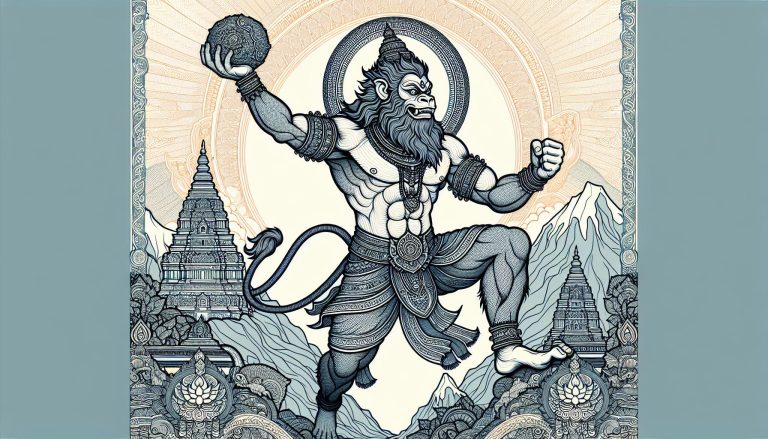
When I first delved into Hanuman’s depictions, I was struck by the variety and depth of his portrayal. Whether he’s shown leaping across the ocean to Lanka or holding a mountain in his hand, each image tells a story of courage and faith. Let’s explore how artists and devotees over the centuries have captured the essence of Hanuman through their art.
Historical Background
Hanuman’s iconography has a rich historical background, reflecting his importance in Hindu mythology. The earliest known sculptures of Hanuman date back to the Gupta Empire, around 500 CE. Initially, he wasn’t depicted as a standalone figure. Instead, he appeared as part of larger narrative scenes.
From approximately 700 CE, free-standing statues (murtis) of Hanuman started to emerge. These early representations typically showed him with one hand raised, one foot suppressing a demon, and an erect tail.
Additionally, Hanuman’s iconic imagery often includes other central figures from the Ramayana – Epic of Hinduism, such as Rama, Sita, and Lakshmana. He carries distinct weapons, like a gada (mace) and thunderbolt (vajra). His raised hand occasionally supports a mountain of healing herbs, symbolizing his role in retrieving medicinal plants for Rama’s army.
Symbolism In Hanuman’s Iconography
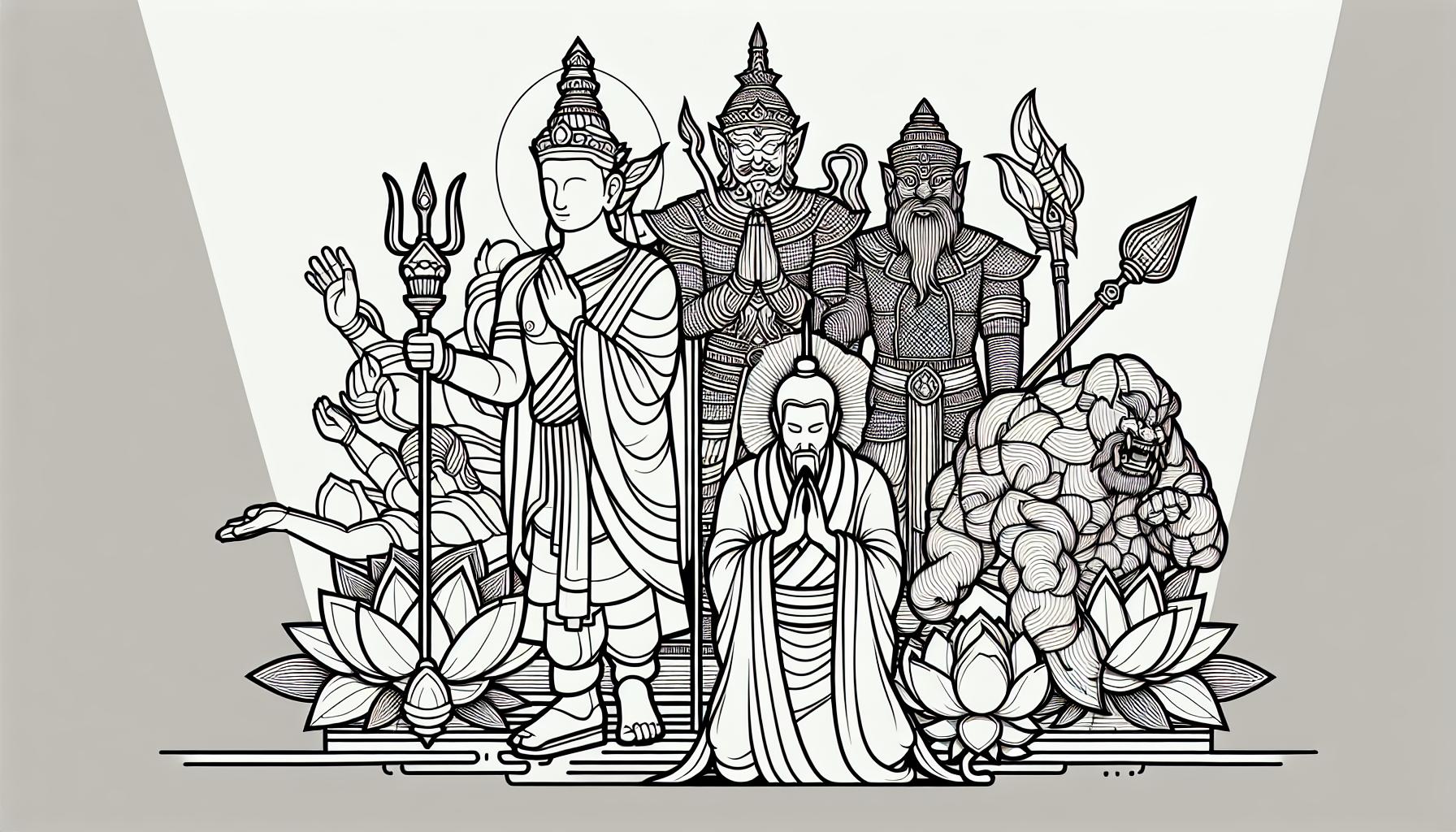
Hanuman’s iconography in Hindu mythology reflects his extraordinary powers, devotion, and wisdom. His images symbolize several virtues revered by his devotees.
Depiction of Strength and Devotion
Hanuman’s imagery often emphasizes his commitment and loyalty to Lord Rama. He’s typically shown kneeling with folded hands in front of Rama, Sita, and Lakshman, or tearing open his chest to reveal their image inside. This act symbolizes his deep devotion and readiness for selfless service. Such depictions are not just artistic expressions but embodiments of Hanuman’s role as a servant of Rama, stressing the purity of his devotion and unparalleled strength.
Representation of Wisdom and Courage
Hanuman’s wisdom and courage are key elements in his iconography. He’s frequently portrayed holding a mace (gada) and a lotus flower. The mace exemplifies his physical power, while the lotus symbolizes purity and wisdom. Another common image shows Hanuman carrying a mountain, alluding to the legend where he lifts an entire hill of medicinal herbs to save Rama’s forces. These depictions reinforce his sharp intellect, bravery, and resourcefulness in overcoming challenges.
Symbol of Protection
Devotees often worship Hanuman as a protector. His image is believed to guard against negative energies and bring blessings of strength and courage. People turn to Hanuman for protection from evil forces, dangers, and adversities. This protective symbolism makes Hanuman an omnipresent figure in many homes and temples, providing solace and security to his followers.
Hanuman’s iconography serves as a constant reminder of his virtues and the ideals he represents, inspiring millions across the globe.
Artistic Depictions Over Centuries
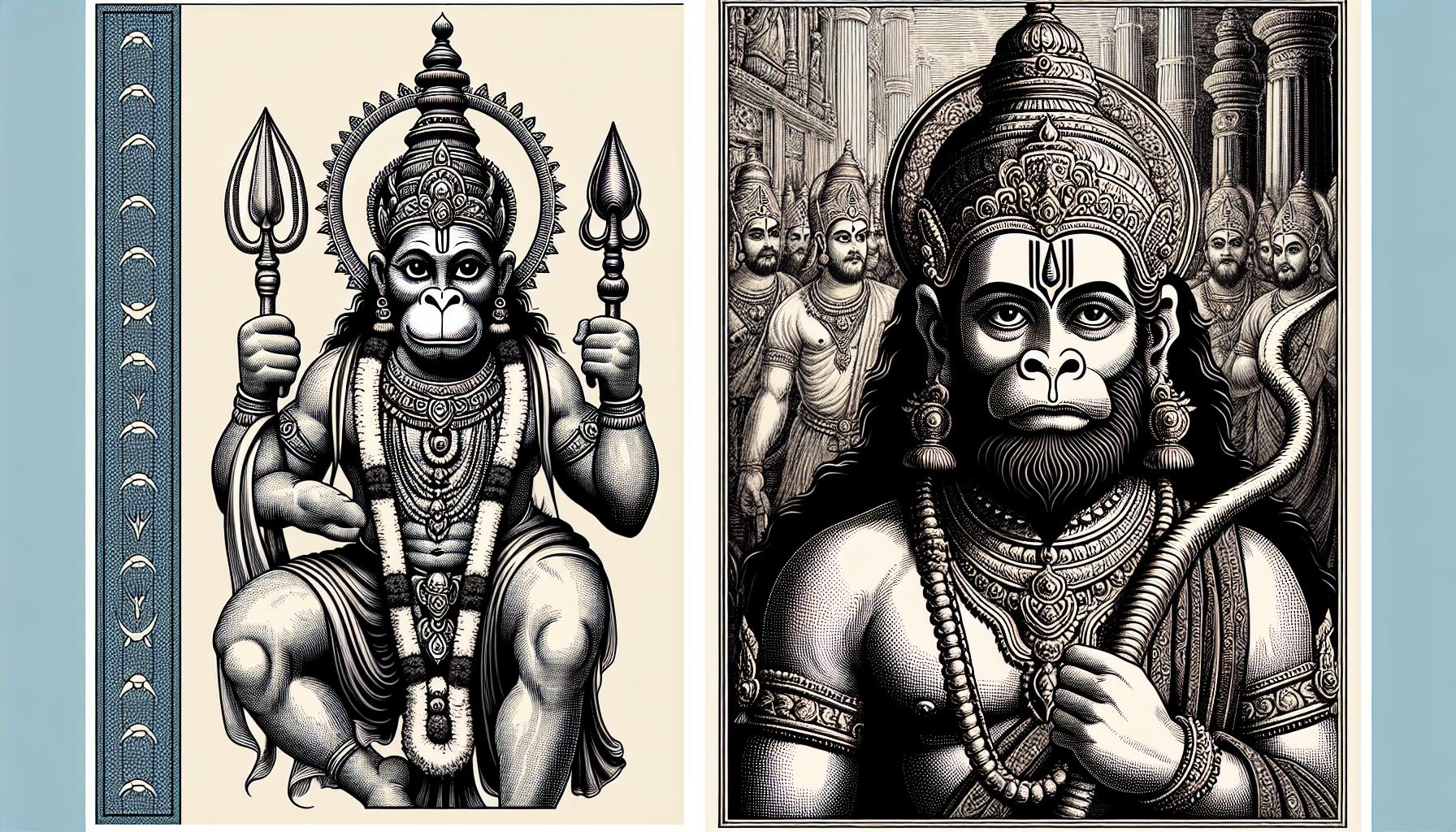
Hanuman’s iconography has undergone significant evolution from ancient times through the medieval period, reflecting diverse artistic styles and cultural influences.
Ancient Sculptures And Reliefs
Hanuman, the monkey god and loyal devotee of Lord Rama, appears in ancient Indian sculptures and reliefs from the 1st century BCE to the 5th century CE. These early depictions often present Hanuman as a strong, muscular figure with a monkey’s face and body. The emphasis lies on his physical strength and agility, which symbolize his extraordinary powers. Such sculptures, found in temples and ancient sites, highlight his prowess and heroic attributes.
Medieval Paintings And Manuscripts
In the medieval period, Hanuman’s iconography continued to transform. Illuminated manuscripts and paintings from the 10th to the 16th century frequently depict him as a devoted servant of Lord Rama, displaying his loyalty and devotion. These artworks often show Hanuman with a more human-like face, highlighting his emotional and spiritual aspects. The medieval representations focus on his role as a humble devotee, emphasizing his internal virtues rather than physical might.
Regional Variations In Imagery
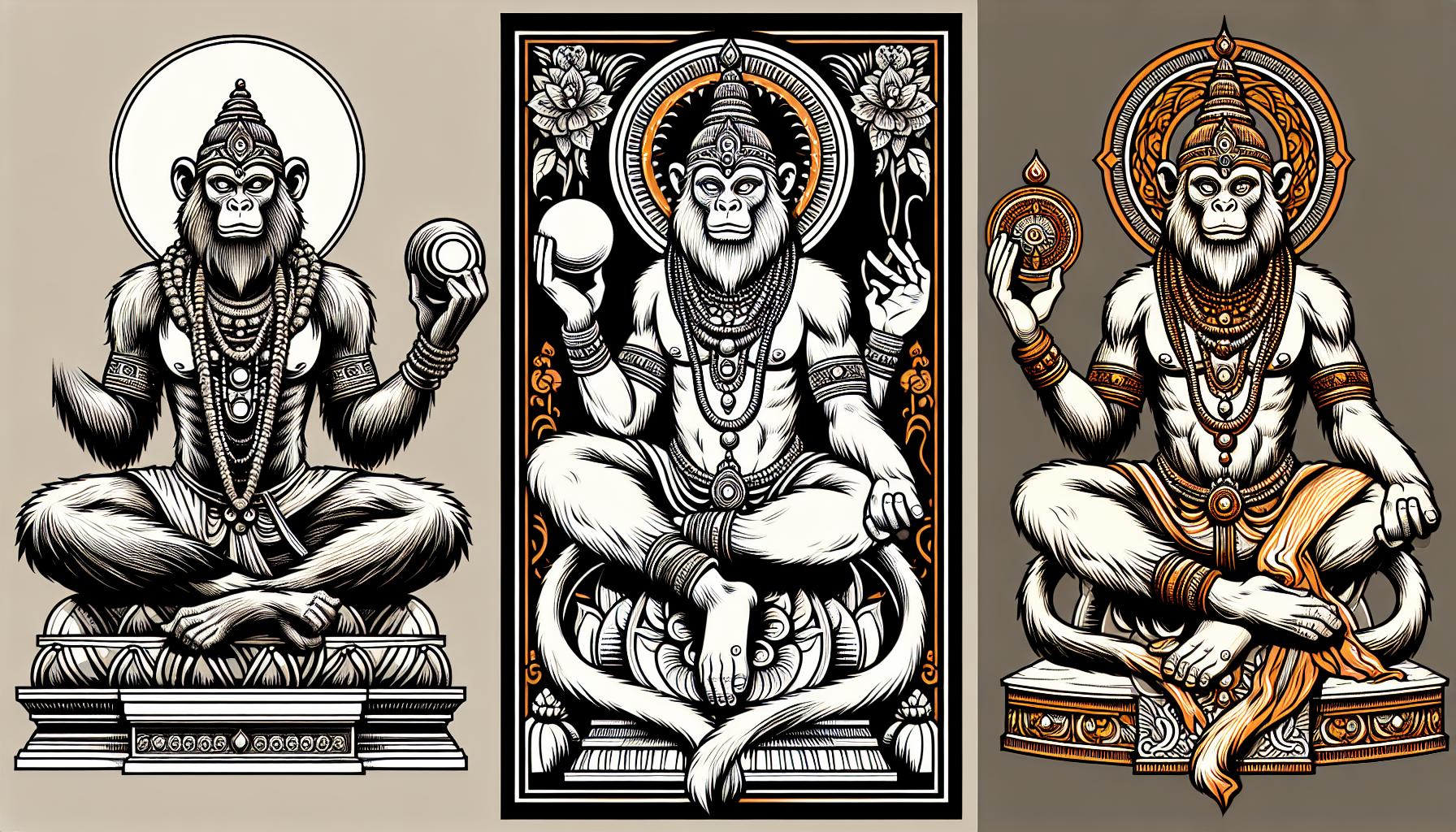
Hanuman’s iconography varies significantly across different regions, reflecting diverse cultural interpretations and artistic styles.
North Indian Interpretations
In the 17th century, Hanuman emerged as a central figure in north and western India. The Bhakti movement, emphasizing personal devotion and yoga, influenced his depiction. Hanuman’s iconography in this region portrayed him as the ideal spiritual devotee. Stories and folk traditions highlighted him as a divine being, a descendant of deities, and an avatar of Shiva – The Destroyer.
In north India, artists often depict Hanuman holding a round stone, a tool used by yogis to focus on his abstract aspects. This symbolic representation emphasizes Hanuman’s spiritual significance and his connection to devotional practices.
South Indian Styles
In south India, Hanuman’s imagery takes on a more human-like form. Artists typically depict him with less fur, highlighting cherished virtues and internal values. This style symbolizes Hanuman’s wisdom, strength, and unwavering devotion.
South Indian temples frequently feature intricate sculptures of Hanuman in dynamic poses, showcasing his physical prowess and heroic exploits. These representations emphasize the god’s multifaceted personality, combining both his divine and human attributes.
Western Depictions
Western interpretations of Hanuman are relatively modern phenomena. Artists in the West often emphasize his role as a symbol of strength and perseverance. Various media, including literature, films, and comics, portray Hanuman in ways that resonate with global audiences.
These depictions frequently blend traditional elements with contemporary aesthetics, creating a unique fusion. This modernized imagery extends Hanuman’s appeal beyond cultural boundaries, making his virtues of loyalty, courage, and devotion universally relatable.
Modern Portrayals In Media And Popular Culture
Hanuman’s enduring appeal extends into modern media and popular culture, reaching audiences through movies, television, literature, and graphic novels.
Movies And Television
Hanuman-centric movies began influencing popular culture in 1976 with the Hindi biopic starring wrestler Dara Singh. This milestone was followed by the beloved animated “Bal Hanuman” series, running from 2006 to 2012.
Television also brought Hanuman’s stories to life. The TV series “Jai Hanuman,” released in 1997 on Doordarshan, captivated viewers with its portrayal of his legendary feats. His influence continued in films like the 2015 Bollywood hit “Bajrangi Bhaijaan” and in the Marvel Cinematic Universe, where references to Hanuman appear in “Black Panther” (2018) and its sequel “Black Panther: Wakanda Forever” (2022).
Recent films have reimagined Hanuman’s character for contemporary audiences. The 2022 movie “Hanuman White Monkey” combines cutting-edge special effects with the traditional Thai masked pantomime performance style known as Khon. The film “Ram Setu,” also from 2022, subtly hints that the character “AP” embodies Hanuman.
Literature And Graphic Novels
Hanuman’s heroics and wisdom have found new life in modern literature and graphic novels. Numerous authors have explored his stories, expanding on his adventures and virtues in creative ways. Graphic novels often portray him with a blend of traditional artistry and modern comic styles, attracting a wide range of readers.
Titles like “Hanuman: The Epitome of Devotion” and “Hanuman: God and Epic Hero” rich in detailed illustrations, present Hanuman’s epic journeys in a visually compelling format. These narratives blend mythology with contemporary storytelling, making his timeless virtues accessible to a modern audience.
In these portrayals, Hanuman continues to inspire, showcasing his strength, loyalty, and devotion across various forms of media.
Cultural And Religious Significance
Hanuman holds a central place in Hindu mythology. His stories are part of ancient texts like the Ramayana and Mahabharata – The Great Epic. Hanuman’s imagery serves not just as artistic representation but also as a spiritual symbol. Each element in his iconography has deep cultural and religious significance.
Monkey Form
Hanuman’s monkey form is highly symbolic. It connects him to nature and its harmony. This form also highlights his role as a messenger for Lord Rama. In Hinduism, monkeys represent mischievousness coupled with devotion. Hanuman embodies these traits but in a divine manner.
Strength and Power
Physical prowess is another focal point of Hanuman’s depiction. His immense strength is shown through acts like flying across the ocean or lifting entire mountains. This strength serves as a reminder of his divine abilities. Believers look up to Hanuman for courage and fortitude, especially during challenging times.
Devotion and Loyalty
Hanuman is the epitome of devotion and loyalty. Scenes often show Hanuman kneeling before Rama, Sita, and Lakshman, or revealing an image of Rama and Sita within his chest. These depictions deeply resonate with worshippers. They signify the importance of loyalty and unconditional love in one’s life.
Hanuman’s iconography is more than mere visuals; it’s a window into his divine attributes and virtues. Such imagery helps devotees connect with his qualities on a spiritual level. This, in turn, reinforces cultural values and religious beliefs.
Conclusion
Hanuman’s iconography is a rich tapestry of cultural and spiritual symbolism. Each depiction, whether in traditional or modern contexts, serves as a powerful reminder of his virtues and divine attributes. His imagery not only captivates the eye but also inspires the heart, encouraging believers to embrace strength, devotion, and loyalty in their own lives. Through his various forms and stories, Hanuman continues to be a beacon of courage and unwavering faith, bridging the gap between the divine and the human. His enduring presence in art and mythology underscores the timeless values he represents, making him a revered figure across cultures and generations.
Sources & further reading
These themes are explored in greater depth across the following authoritative resources:
- Encyclopaedia Britannica, Hindu Mythology
- Internet Sacred Text Archive, Hinduism
- Mythopedia, Hindu Mythology
- Harvard Pluralism Project, Hindu Tradition
- Wendy Doniger, The Hindus: An Alternative History (Penguin, 2009), ISBN 978-0143116691
External resources for further reading. Apam Napat is not affiliated with these publishers; citation does not imply endorsement.
Based on the classical texts of Hindu mythology, see our sources.