

As I investigate into the rich world of ancient meditation traditions, I’ll explore how these age-old practices have shaped modern mindfulness. Whether you’re a seasoned meditator or just curious about its origins, understanding these ancient roots can deepen your practice and appreciation for this timeless art. Let’s journey through history to uncover the wisdom and insights that continue to inspire millions today.
Origins Of Meditation
Meditation’s origins can be traced back thousands of years across diverse ancient civilizations. Early forms of meditation appeared in India around 1500 BCE, as part of the Vedic tradition. The Vedas, a collection of sacred texts, include several references to methods of meditation, highlighting the practice’s deep roots in Hindu spirituality.
Plus to the Vedic tradition, ancient China also developed meditation practices independently. Taoism, dating back to the 6th century BCE, incorporated meditation as a cornerstone. Taoist texts describe various meditation techniques to cultivate inner peace, align with nature, and achieve spiritual enlightenment.
Similarly, Buddhism, emerging in the 5th century BCE, emphasized meditation. The Buddha’s teachings, preserved in the Pali Canon, outline numerous meditation practices designed to attain enlightenment. Mindfulness and concentration form the core of these techniques.
Besides, meditation found a place in ancient Egyptian and Greek cultures. Egyptian texts like the Book of the Dead suggest rituals and meditative practices intended to prepare individuals for the afterlife. Greek philosophers, including Pythagoras and Plato, also explored meditation, seeking knowledge through introspection.
Overall, these early developments indicate a universal human quest for self-awareness and spiritual growth, uniting different traditions under a common purpose.
Meditation In Ancient India
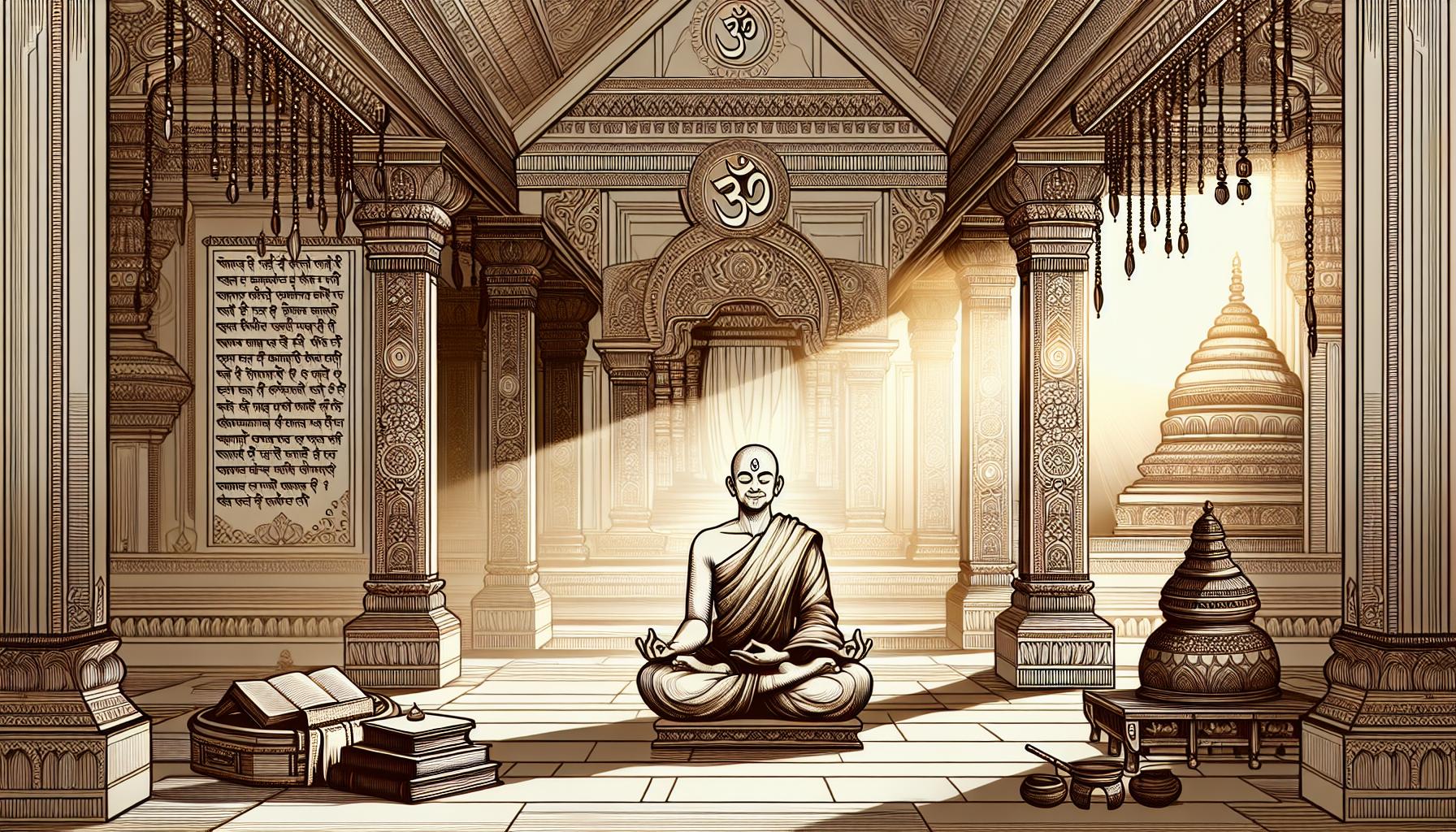
Ancient India remains one of the pivotal origins of meditation practices. Various traditions such as Vedic and Buddhist have deeply influenced global meditation techniques.
Vedic Practices
Vedic traditions, dating back to around 1500 BCE, formed the foundation of meditation in ancient India. The earliest texts, the Vedas, contain hymns and rituals that emphasize mindfulness and devotion. Within these texts, the practice of Dhyana, or meditation, aimed to attain a deeper state of spiritual awareness. Mantras, such as “Om,” were chanted to maintain focus and connect with the divine essence of the universe. The Upanishads, later Vedic texts, further elaborated on meditative practices, exploring concepts like Pranayama (breath control) to control prana (life force).
Buddhist Meditation
Around the 5th century BCE, Buddhist meditation practices evolved in ancient India with the teachings of Siddhartha Gautama, the Buddha. Key forms include Vipassana and Samatha. Vipassana, or insight meditation, focuses on observing thoughts and sensations to gain profound self-knowledge and enlightenment. Samatha, or tranquility meditation, involves concentrating on a single object, often the breath, to calm the mind and achieve mental stability. The Eightfold Path, central to Buddhism, identifies Right Mindfulness and Right Concentration as integral to meditative practices, aiming to foster ethical conduct, mental discipline, and wisdom.
Meditation In Ancient China
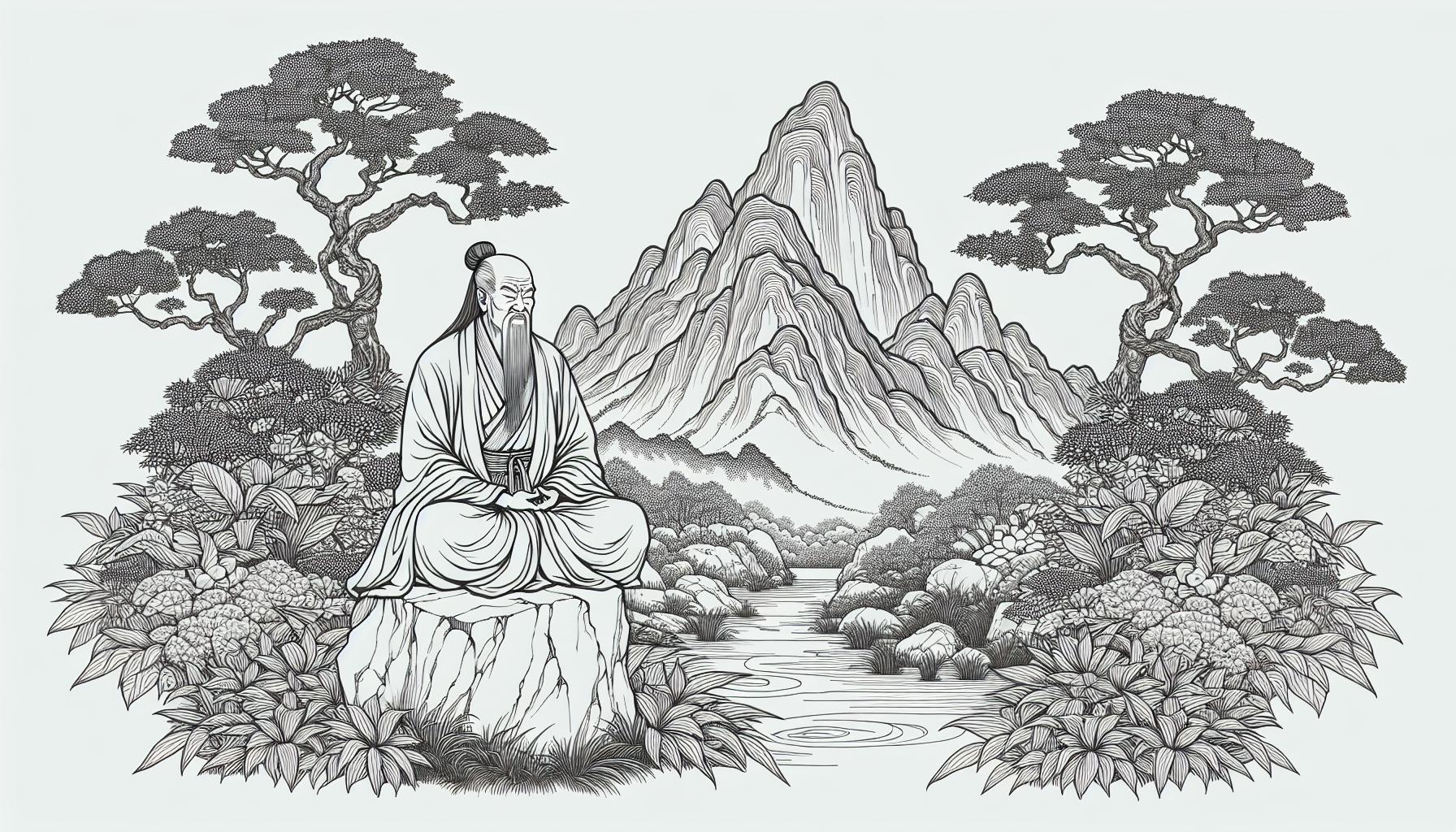
In ancient China, meditation practices formed an essential part of life. Rooted in Taoist and Confucian philosophies, these practices aimed at harmonizing body and mind.
Taoist Meditation
Taoist meditation, guided by principles in the Tao Te Ching, emphasized aligning with the Tao, or the natural way of the universe. Techniques included breathing exercises, visualization, and inner alchemy (Neidan). Practitioners believed these methods cultivated qi, the vital life force. Inner alchemy aimed at transforming the body’s energies to attain immortality. The Zuowang technique focused on sitting and forgetting mundane concerns, reaching a state of profound internal tranquility.
Confucian Meditation
Confucian meditation, rooted in Confucius’ teachings from the Analects, aimed at moral cultivation. Unlike Taoist practices, it emphasized ethical self-improvement and social harmony. Techniques included quiet sitting (Jing Zuo), reflecting on one’s thoughts and actions. The goal was to attain a balanced mind and embody virtues like benevolence and righteousness. Meditation in Confucianism served as a tool for personal development and societal betterment, integrating philosophy with daily life practices.
Meditation In Ancient Egypt
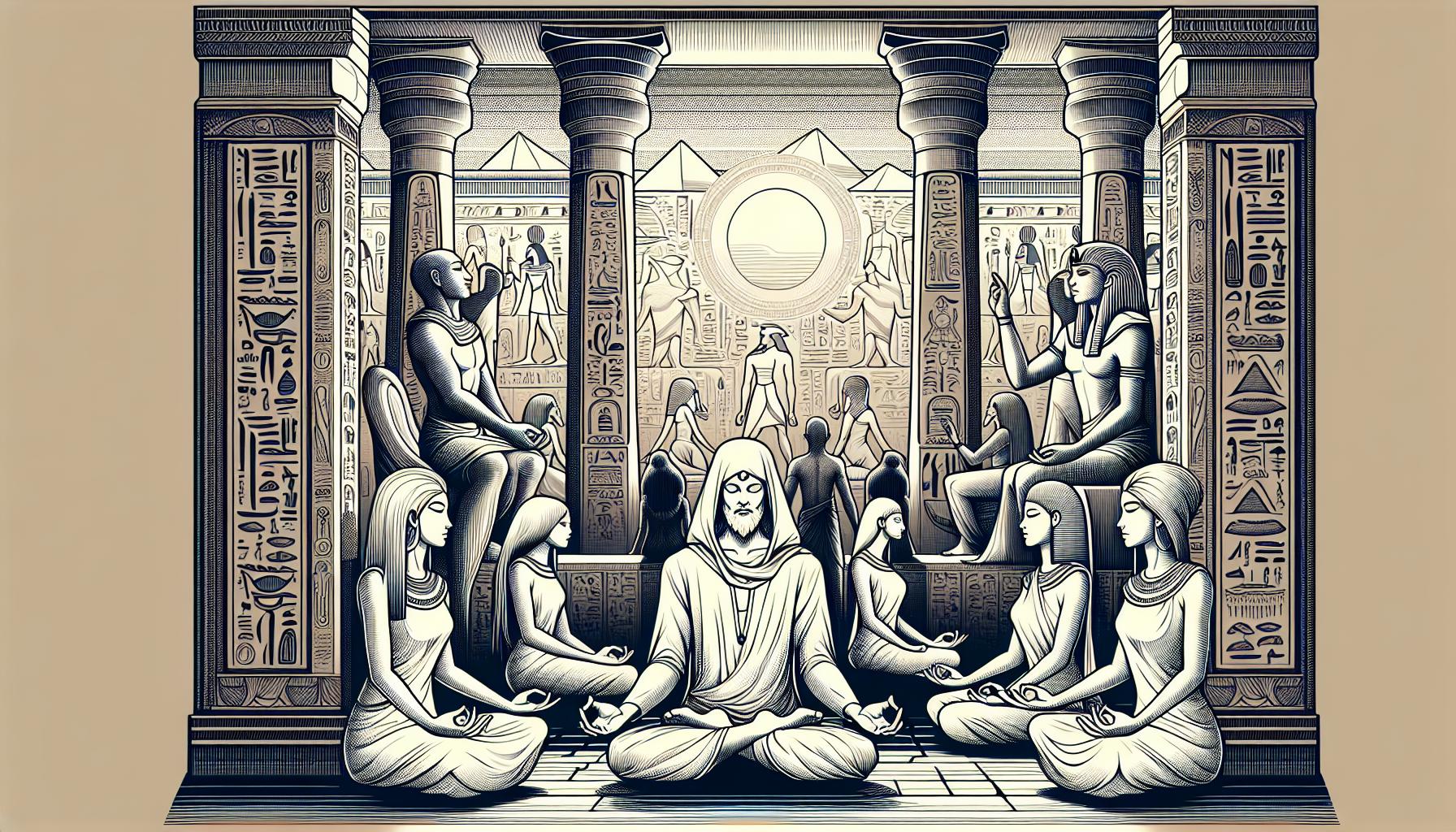
In ancient Egypt, meditation held significant cultural and spiritual importance. Egyptians integrated meditation practices into their spiritual and daily lives for mental clarity and connection to the divine.
Techniques And Practices
Egyptian meditation techniques often involved guided imagery and visualization. Priests and priestesses frequently used temple rituals to enter meditative states, focusing on deities and natural elements. Breathing exercises and chants were common, facilitating deeper relaxation and spiritual connection. Hieroglyphs and sacred texts also played roles in meditation, guiding practitioners through symbolic visualizations and introspection.
Influence On Modern Meditation
Modern meditation draws elements from ancient Egyptian practices. Guided imagery and visualization remain popular, reflecting techniques used in ancient temple rituals. Incorporating breathing exercises in modern practice echoes the methods used by Egyptian priests and priestesses to achieve relaxation and focus. Sacred symbols and texts continue to inspire contemporary meditation, demonstrating the lasting impact of Egyptian traditions on today’s spiritual practices.
Meditation In Ancient Greece
Ancient Greece, known for its rich philosophical tradition, also practiced meditation. It served as a tool for achieving intellectual clarity and inner peace.
Philosophical Meditation
Philosophical meditation in ancient Greece aligned closely with Stoicism and Epicureanism. Stoics, like Marcus Aurelius and Epictetus, used meditation for self-examination and moral discipline. They reflected on daily actions to cultivate virtue and tranquility. Epicureans, such as Epicurus, focused on meditative practices to achieve pleasure and avoid pain, emphasizing a life of moderation and contemplation.
Influence On Western Thought
Ancient Greek meditation profoundly shaped Western thought. Philosophers like Socrates, Plato, and Aristotle integrated meditative practices into their teachings. Plato’s dialogues often explored reflective practices for understanding truth and reality. Aristotle emphasized achieving eudaimonia (fulfillment) through contemplative life. These methods influenced later Western philosophers, contributing to the foundation of modern meditative practices.
Comparison Of Ancient Traditions
Several ancient civilizations developed meditation practices that provided spiritual and intellectual benefits. While each tradition had unique elements, many commonalities and distinctions highlight their diversity and shared purpose.
Similarities
Ancient meditation practices often aimed for inner peace. In India, China, Egypt, and Greece, individuals used meditation to attain spiritual growth and self-awareness. Many traditions emphasized the cultivation of mindfulness. Indian yogis, Chinese Daoists, and Greek philosophers practiced introspection and self-examination. Meditation frequently involved controlled breathing. Techniques such as pranayama in India and qigong in China incorporated breath regulation to enhance focus and relaxation. Silence and solitude were common motifs. Many practices encouraged retreating from daily life to quiet the mind and foster contemplation.
Differences
Meditation methods varied across cultures. In India, techniques like dhyana aimed at merging with a higher consciousness, while in China, Daoist meditation focused on harmonizing with natural energy (qi). Objectives of meditation differed significantly. For instance, Egyptian meditation often centered on aligning individual energy with cosmic forces, contrasting with the Greek focus on intellectual clarity and moral discipline through philosophical meditation. Rituals and practices showed regional uniqueness. Indian meditation frequently involved chanting mantras, whereas Chinese practices included physical exercises like tai chi to achieve mindfulness.
Conclusion
Meditation’s ancient traditions reveal a rich world of practices that have shaped human thought and spirituality across cultures. From India’s dhyana to China’s Daoist meditation and Greece’s philosophical contemplation each tradition offers unique insights into achieving inner peace and self-awareness. These diverse practices share a common goal of enhancing mindfulness and personal growth. By understanding these ancient techniques we can appreciate their lasting influence and incorporate their wisdom into our modern lives. Embracing these time-honored practices can lead to a deeper connection with ourselves and a more balanced existence.
Sources & further reading
These themes are explored in greater depth across the following authoritative resources:
- Britannica, Yoga in Hinduism
- Britannica, Puja
- Harvard Pluralism Project, Hindu Practice
- Internet Sacred Text Archive, Yoga Sutras of Patanjali
- Diana L. Eck, Banaras: City of Light (Princeton University Press, 1982)
External resources for further reading. Apam Napat is not affiliated with these publishers; citation does not imply endorsement.
Based on the classical texts of Hindu mythology, see our sources.