
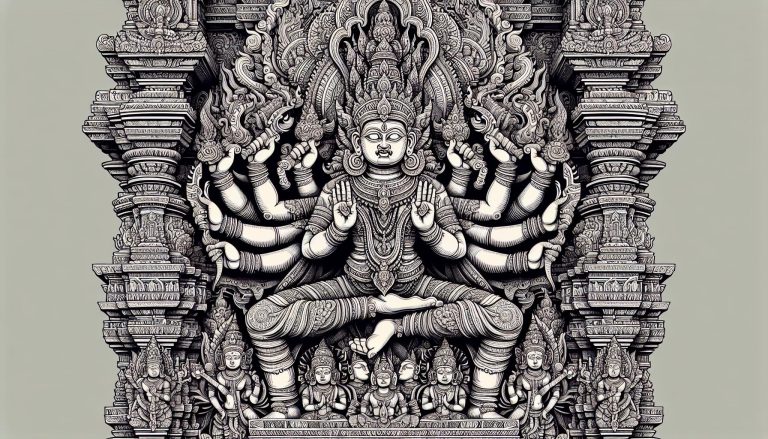
Hindu artists have long used their craft to express complex philosophical ideas. Through symbolic motifs and intricate designs, they invite us to contemplate life’s deeper meanings. As I investigate into the connection between Moksha and Hindu art, I uncover how these visual masterpieces serve as a bridge between the material world and the divine, guiding seekers on their spiritual journey.
Understanding Moksha in Hindu Philosophy
Moksha is a central concept in Hindu philosophy, referring to the ultimate goal of human life: liberation from the cycle of birth, death, and rebirth (samsara). This liberation represents a state of perfect freedom and self-realization. Scholars provide various explanations of moksha, emphasizing its epistemological and psychological dimensions.
Deutsche views moksha as transcendental consciousness, a perfect state of being where one realizes the whole universe as the Self. This perspective aligns with the Upanishadic notion of absolute unity. Klaus Klostermaier suggests that moksha involves setting free fettered faculties and removing obstacles to an unrestricted life, allowing a person to achieve their true potential.
Many Hindu schools view moksha as a state of perfection. It goes beyond the moral and ethical duties (dharma) prescribed in life. Moksha signifies the ultimate emancipation, providing complete liberation from material limitations, leading to the realization of a higher spiritual existence.
Historical Significance of Moksha in Hindu Art
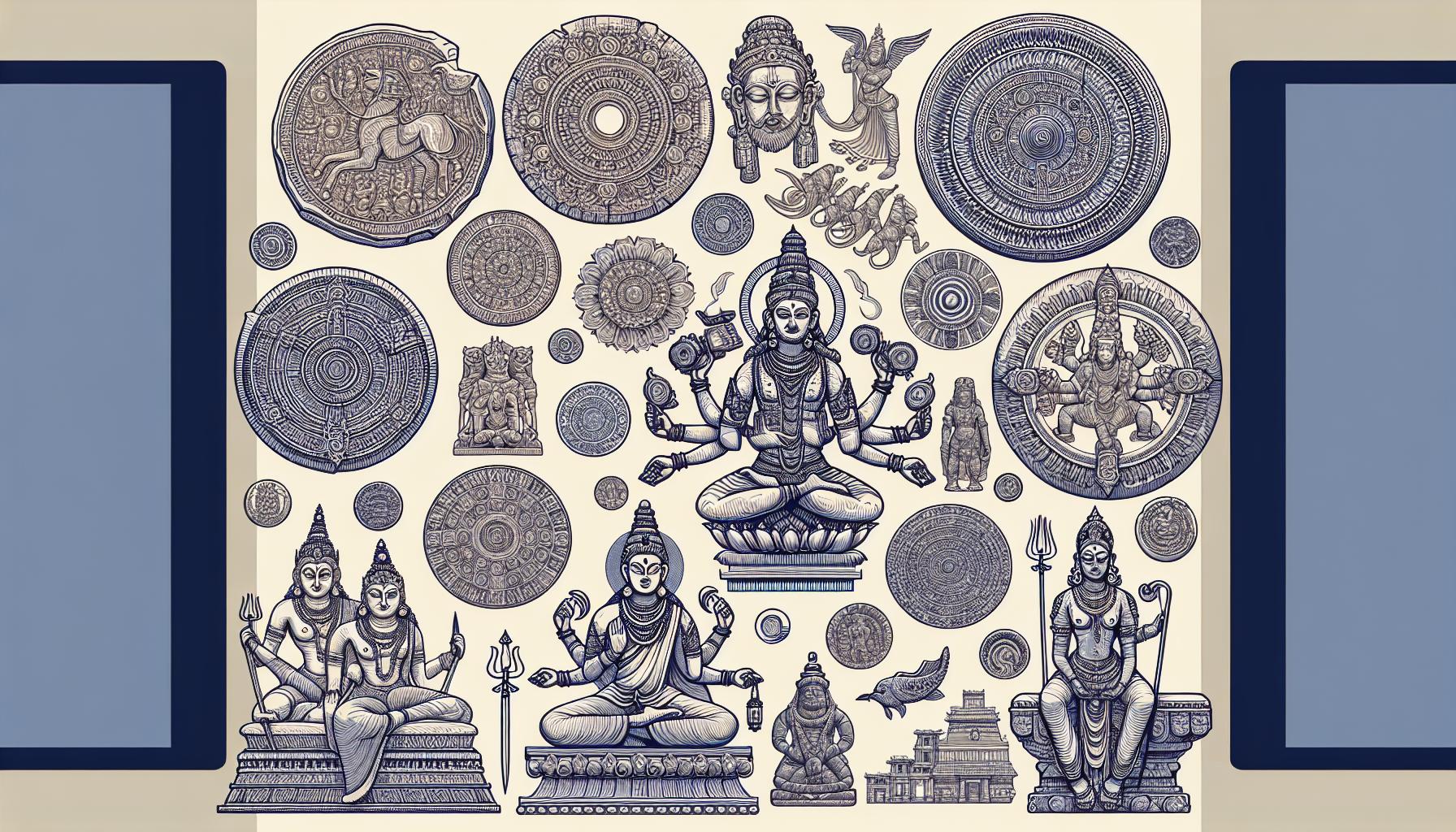
Moksha, the ultimate goal of liberation in Hindu philosophy, has profoundly influenced Hindu art. Artists have visually depicted this pursuit for centuries, embedding deep philosophical meanings into sculptures, paintings, and architecture.
Early Representations
The earliest known Hindu art emerged during the 3rd-2nd centuries BCE. Coins from the Mauryan Empire and Indo-Greek king Agathocles featured images of deities like Balarama – Brother of Krishna and Vasudeva – The Father of Krishna–Krishna – An Incarnation of Vishnu. These initial representations incorporated symbolic motifs, setting the stage for future art dedicated to Moksha. In these depictions, divine figures symbolized the transcendence over material existence.
Medieval Depictions
In the Gupta period (4th-6th century CE), Hindu art experienced significant growth. Statues of Vishnu – The Protector, often showcasing multiple arms and heads, became prevalent. These features represented Vishnu’s omnipotence and his various attributes. The artwork from this era emphasized spiritual liberation and the multiplicity of divine forms, reinforcing the philosophical pursuit of Moksha.
Modern Interpretations
Today, contemporary artists continue to draw inspiration from the concept of Moksha. Modern Hindu art often blends traditional icons with abstract themes, reflecting modern philosophical interpretations. This approach allows artists to convey Moksha’s timeless relevance and its evolving understanding in today’s context. By integrating past traditions with contemporary aesthetics, modern artists maintain the profound legacy of Moksha in Hindu art.
Symbolism of Moksha in Sculptures

Moksha, representing liberation in Hindu philosophy, profoundly influences sculptural art. Examining the intricate details and motifs in Hindu sculptures reveals the spiritual depth of this concept.
Key Iconography
Hindu sculptures often highlight the deity’s omnipresence and omnipotence through multiple arms and heads. These attributes symbolize the various abilities and aspects of the deities:
- Multiple Arms: Sculptures frequently show deities with multiple arms, especially when depicting combative acts. Each arm may hold different weapons or items, showcasing the deity’s power to perform numerous actions simultaneously.
- Multiple Heads: Deities with multiple heads often appear in sculptures to represent their multifaceted nature, each head reflecting a different aspect of the divine character.
Famous Sculptures
Several renowned sculptures epitomize the theme of Moksha:
- Dancing Shiva – The Destroyer (Nataraja) Statue: Capturing the Cosmic Dance of creation and destruction, the Nataraja symbolizes the rhythmic movement towards Moksha. The upraised leg in the statue points to liberation.
- Vishnu Ananta-Shesha Sculpture: Depicting Vishnu reclining on the serpent Ananta, these sculptures symbolize the eternal cycle of time and the deity’s control over creation and dissolution.
- Kali in Her Fierce Form: Sculptures of Kali with multiple arms and terrifying countenance represent the destruction of ego, leading the devotee towards Moksha by eliminating ignorance.
Each of these masterpieces captures the essence of spiritual liberation, reflecting the deep interplay between art and Hindu philosophy.
Depiction of Moksha in Hindu Paintings
Hindu art, particularly in paintings, encapsulates the concept of moksha through rich symbology and narratives. Moksha, representing liberation from the endless cycle of death and rebirth, finds prominent expression in these traditional and contemporary art forms.
Traditional Styles
In traditional Hindu paintings, various elements symbolize moksha. These artworks use specific iconography and narrative scenes to present this philosophical concept.
- Iconography: Hindu paintings often feature deities in symbolic poses known as murti, representing divine power’s victory over evil. For instance, a painting of Shiva dancing below an elephant skin signifies his triumph over the elephant demon. These icons not only embody power but also illuminate the pathway to moksha by defeating ignorance and evil.
- Narrative Scenes: Many paintings depict scenes from Hindu mythology. The stories of Krishna and the gopis, for example, represent the eternal act of creation and the union of opposites. Such depictions narratively express the philosophical underpinnings of moksha, illustrating the soul’s journey towards ultimate liberation through allegorical storytelling.
Contemporary Approaches
Contemporary Hindu painters integrate modern techniques and perspectives while respecting traditional symbolism. They often explore moksha using abstract visuals and vibrant palettes that appeal to present-day sensibilities.
- Abstract Representations: Modern artists use abstract forms to represent moksha, focusing on the emotional and psychological dimensions. By utilizing bold colors and unique compositions, they convey the concept’s depth and multifaceted nature. These paintings often move away from literal depictions, encouraging viewers to engage personally with the artwork’s spiritual message.
- Fusion of Styles: Some contemporary works combine traditional and modern elements, creating a fusion that honors the past while looking towards the future. Artists might juxtapose classical iconography with contemporary techniques to present moksha in a refreshed context, making the ancient concept resonate with today’s audiences.
These depictions in Hindu art, both traditional and contemporary, offer a rich visual narrative of the journey to moksha, blending timeless symbolism with evolving artistic expressions.
Influence of Moksha on Hindu Temple Architecture
Hindu temple architecture deeply embodies the principles and pursuit of moksha. The sacred structures serve as physical conduits for spiritual liberation.
Structural Elements
Hindu temples symbolically reconstruct the universe, forming a microcosm of cosmic principles. Architects use a square grid foundation incorporating geometric shapes like circles and squares. This symmetry in design mirrors the interconnectedness of all existence, reflecting the unity needed for moksha. The central core of the temple, often empty or adjacent to the deity, symbolizes the Purusa, representing the Supreme Principle or ultimate reality. The temple layout guides devotees through stages of consciousness toward spiritual realization.
Thematic Representations
Thematic representations within temple architecture also resonate with moksha. Intricate carvings, symbolic depictions, and elaborate sculptures tell stories of divine figures and spiritual journeys. Temples frequently showcase scenes from sacred texts, illustrating the path to liberation. Deity sculptures with multiple arms or heads demonstrate divine omnipresence and transcendence, aligning with the soul’s journey to moksha. Every artistic element within the temple, from murals to reliefs, serves to inspire and guide devotees toward ultimate spiritual freedom.
Conclusion
Moksha’s profound influence on Hindu art is undeniable. From ancient carvings to contemporary paintings the concept of spiritual liberation shapes artistic expressions in powerful ways. These artworks not only depict the journey towards enlightenment but also serve as a guide for devotees seeking spiritual freedom. The intricate details in sculptures and symbolic elements in temple architecture reflect a deeper understanding of the universe and our place within it. By exploring the rich world of Hindu art we gain insights into the timeless quest for Moksha and the enduring human desire for ultimate liberation.
Sources & further reading
These themes are explored in greater depth across the following authoritative resources:
- Stanford Encyclopedia of Philosophy, Hindu Philosophy
- Britannica, Moksha
- Britannica, Brahman
- Internet Sacred Text Archive, Upanishads
- Sarvepalli Radhakrishnan, Indian Philosophy (2 vols., Oxford University Press, 1923)
External resources for further reading. Apam Napat is not affiliated with these publishers; citation does not imply endorsement.
Frequently asked questions
What is moksha in Hindu philosophy?
How does Hindu art express moksha?
How do scholars define moksha?
What role does art play in the pursuit of moksha?
Based on the classical texts of Hindu mythology, see our sources.