
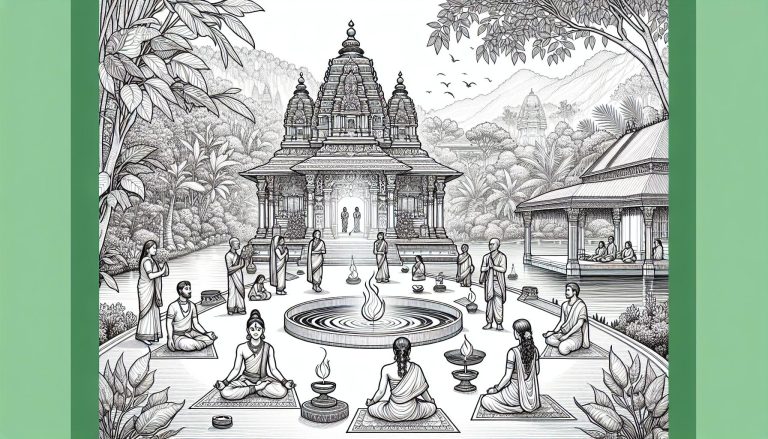
In Hindu teachings, achieving Moksha means transcending earthly desires and realizing one’s true self. It’s not just about escaping the cycle of reincarnation but also about attaining a state of eternal bliss and unity with the divine. Understanding Moksha can offer valuable insights into the broader spiritual framework of Hinduism and its emphasis on inner peace and self-realization.
Understanding Moksha
Moksha, derived from the Sanskrit word “muc,” means “to free.” It’s the state of liberation from samsara, the cycle of life, death, and rebirth. This cycle, driven by karma, determines the nature of an individual’s future lives based on their accumulated good and bad deeds. Eventually, Moksha is about the soul (Atman – The Soul) achieving unity with the universal Brahman – The Supreme Truth, freeing itself from the material world and rebirth.
Achieving Moksha involves various paths:
- Self-Realization: This involves understanding one’s essential sameness with all living beings and the divine. By gaining insight into one’s true nature, individuals can transcend ego and align with the universal consciousness.
- Meditation and Detachment: Focusing on meditative practices and detachment from material desires helps develop a deep knowledge of the soul and the universe. Individuals practicing this path cultivate an inner calm that aids in transcending the physical plane.
Each path offers unique methods for spiritual growth, allowing individuals to progress toward the ultimate goal of liberation.
Historical Context of Moksha in Hinduism
The concept of moksha, integral to Hinduism, signifies liberation from samsara—the cycle of rebirth. Emerging in ancient India, it reflects a profound quest for spiritual freedom.
Ancient Scriptures and Texts
The earliest Vedic literature laid moksha’s foundation. The Rigveda, dating back to around 1500 BCE, touches on the impermanence of life and the soul’s journey. The Upanishads, composed between 800 and 200 BCE, explicitly discuss moksha, emphasizing self-realization and unity with Brahman. In these texts, three stages of life are described: studentship, householdship, and retirement. This progression forms a part of the broader spiritual journey toward liberation.
Evolution of the Concept
Moksha evolved through historical and philosophical developments. In the first millennium BCE, alongside the rise of Buddhism and Jainism, moksha became a response to the perceived bondage of samsara. Both these religions shared the view of life as a cycle of suffering, with moksha representing an escape. Over time, Hinduism integrated various paths to achieve moksha, including devotion, knowledge, and disciplined practice.
These historical and textual foundations underscore moksha as a core objective in Hindu spirituality.
The Path to Moksha
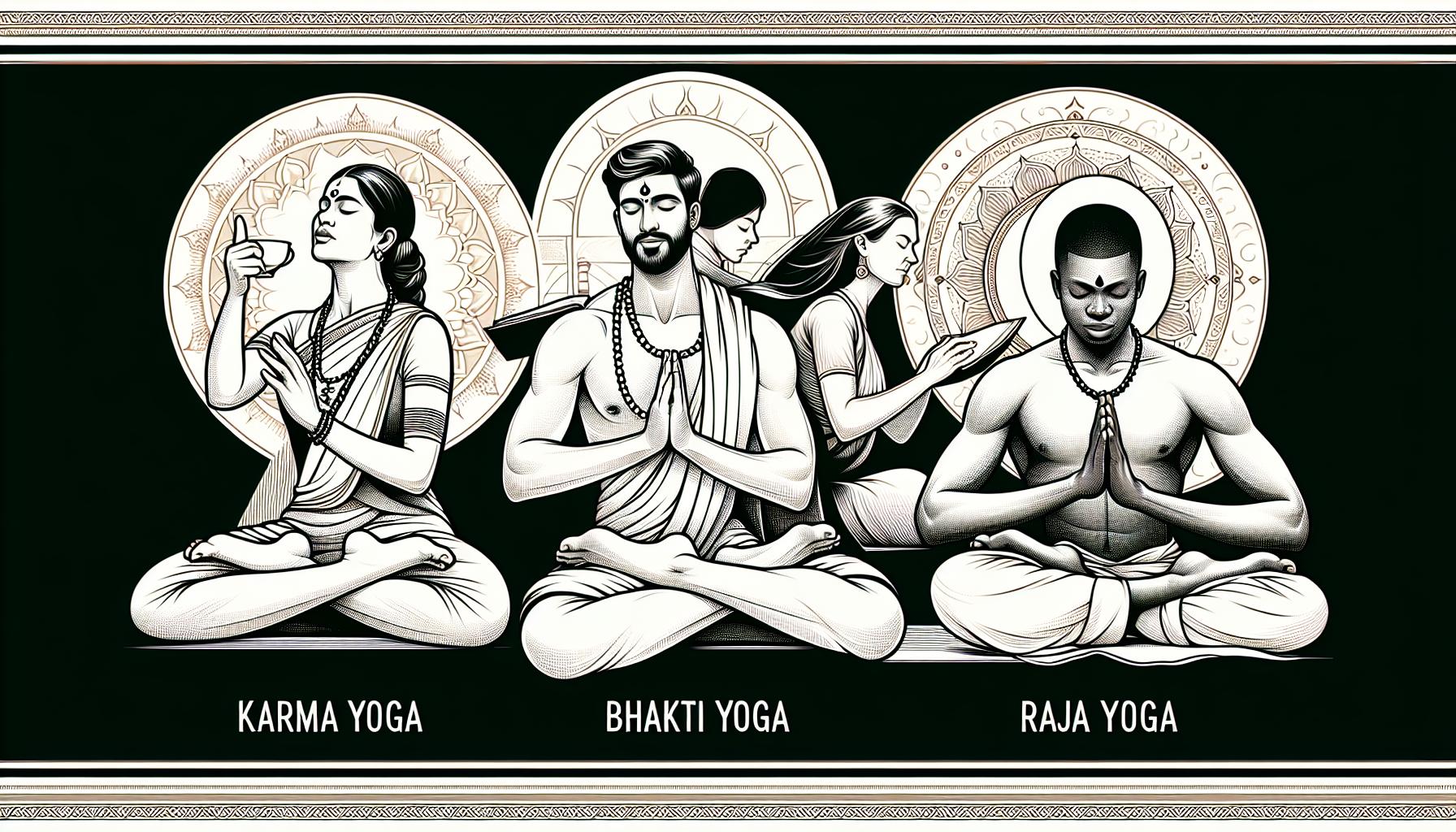
Achieving Moksha in Hinduism involves following various spiritual and disciplined practices. These paths, rooted deeply in Hindu philosophy, guide individuals toward liberation from the endless cycle of birth and death (samsara).
Karma Yoga
Karma Yoga, the path of selfless action, emphasizes performing one’s duties without attachment to the outcomes. By focusing on the act itself and not the result, practitioners purify their hearts and free themselves from the bonds of karma. This path advocates dedication and integrity in every action, fostering spiritual growth and leading to the ultimate liberation.
Bhakti Yoga
Bhakti Yoga, the path of devotion, centers on intense love and surrender to a personal deity. Through prayer, rituals, chanting, and other devotional practices, individuals develop a deep emotional connection with the divine. This profound devotion purifies the heart and mind, helping practitioners transcend ego and achieve oneness with God, so attaining Moksha.
Jnana Yoga
Jnana Yoga, the path of knowledge, involves the pursuit of wisdom and understanding of the ultimate reality. Practitioners engage in deep contemplation, studying sacred texts, and practicing self-inquiry to discern the difference between the eternal soul (atman) and the material world. This intellectual process leads to self-realization and unity with Brahman, liberating the soul from samsara.
Raja Yoga
Raja Yoga, the royal path, encompasses the practice of meditation and mindfulness to control the mind and senses. It follows an eightfold path (Ashtanga), which includes moral disciplines, physical postures (asanas), breath control (pranayama), and meditative concentration (dhyana). This structured approach promotes mental clarity, inner peace, and direct experience of the divine, guiding practitioners to Moksha through disciplined spiritual practice.
Influential Philosophies and Schools of Thought
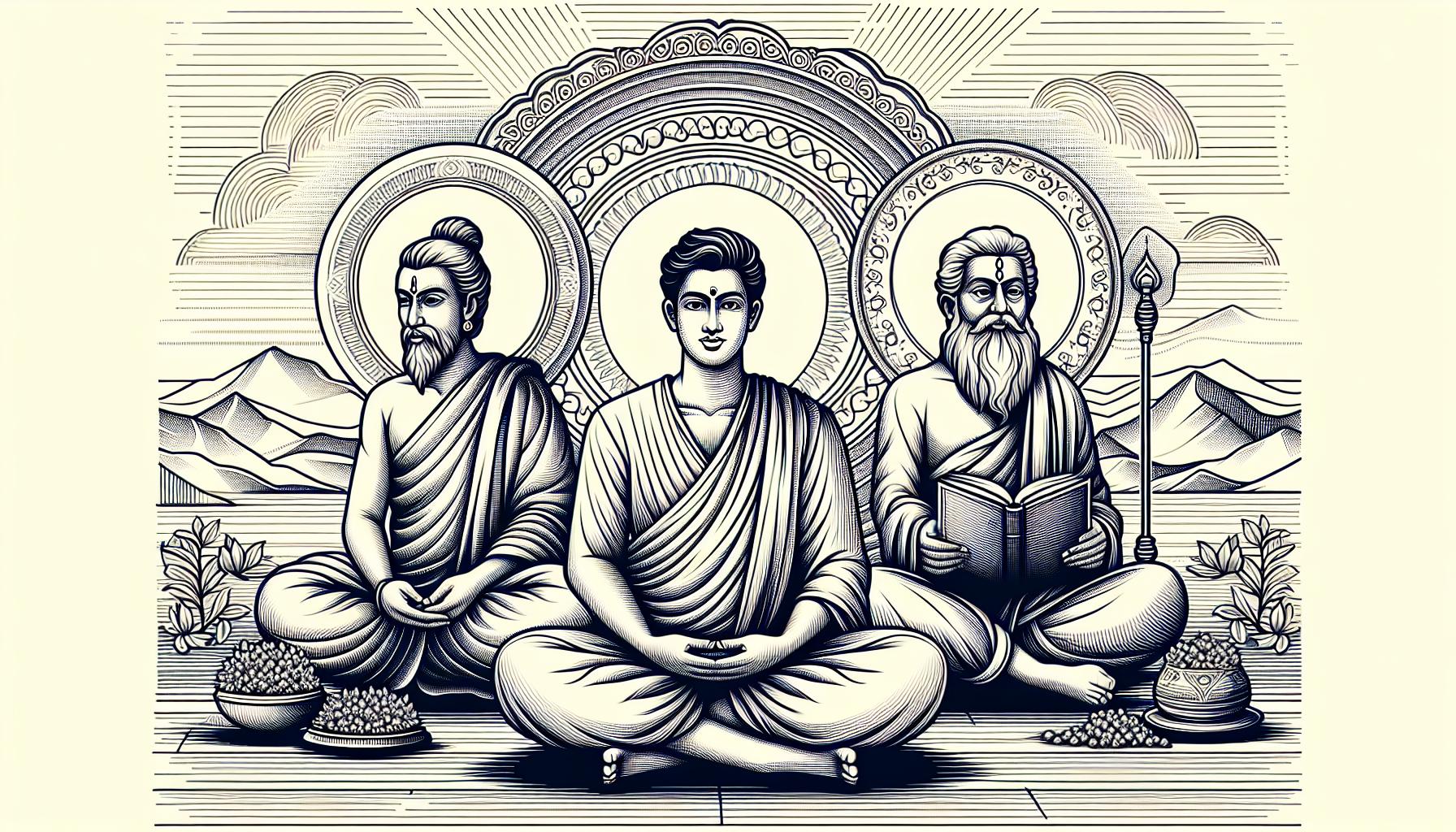
Hinduism contains several influential philosophies and schools of thought that interpret Moksha uniquely. These perspectives provide diverse paths towards achieving liberation.
Advaita Vedanta
Advaita Vedanta, proposed by Adi Shankaracharya, teaches non-dualism. According to Advaita Vedanta, the individual soul (atman) and the universal Brahman are identical. Liberation occurs when one realizes that they are not separate from Brahman. This philosophy emphasizes knowledge (Jnana Yoga) as the path to Moksha. Practitioners seek to dispel ignorance through self-inquiry, meditation, and understanding.
Dvaita Vedanta
Dvaita Vedanta, established by Madhvacharya, advocates a dualistic view. In Dvaita Vedanta, the individual soul (atman) and the universal Brahman are distinct entities. Liberation involves complete devotion (Bhakti Yoga) to a personal deity, often Vishnu – The Protector. Practitioners believe that salvation is achieved through unwavering faith and adherence to the teachings of the deity.
Vishishtadvaita Vedanta
Vishishtadvaita Vedanta, developed by Ramanujacharya, posits qualified non-dualism. According to this philosophy, the soul and Brahman are distinct yet inseparable, similar to a body-soul relationship. Moksha involves both knowledge and devotion. Practitioners strive to recognize the oneness with Brahman while maintaining a personal relationship with a deity, typically Vishnu, through Bhakti Yoga and Jnana Yoga.
These three schools provide varied yet profound pathways towards the ultimate goal of Moksha.
Moksha in Contemporary Hindu Practice
In contemporary Hindu practice, Moksha remains central. It’s pursued through various rituals and personal spiritual practices aimed at achieving liberation.
Rituals and Practices
Rituals in contemporary Hinduism help Moksha. Devotees frequently engage in yoga and meditation. Yoga practices like Bhakti Yoga involve ritualistic devotion to deities. Participants often chant mantras, sing devotional hymns, and observe fasts during significant Hindu festivals. Meditation, focusing on breathing and mental stillness, also figures prominently.
Another key ritual is puja. This involves offering prayers and performing ceremonial acts to honor deities, creating an atmosphere conducive to spiritual reflection. Many Hindus undertake pilgrimage to sacred sites like Varanasi and Rishikesh, which are believed to hold the potential for purifying the soul and aiding in the quest for Moksha.
Satsang, or congregational worship, provides a communal way to pursue spiritual goals. Gathering with others to listen to spiritual discourses and sing devotional songs supports collective efforts towards liberation.
Personal Stories and Experiences
Across contemporary Hindu society, personal journeys towards Moksha offer unique insights. Individuals like Swami Vivekananda have chronicled their path to spiritual enlightenment, emphasizing self-discipline and deep introspection. In various autobiographies, modern spiritual leaders narrate experiences of profound meditation or divine vision, serving as inspirational guides.
Regular followers also share their testimonies. Some recount transformative moments during meditation retreats, while others point to life-changing insights gained on pilgrimages. These personal stories reflect diverse yet convergent paths towards Moksha, illustrating how contemporary Hindu practice roots traditional principles in everyday life.
Online forums and spiritual workshops have emerged, where practitioners share and discuss their journeys. These platforms provide community support, fostering a shared commitment to achieving Moksha.
Conclusion
Understanding Moksha in Hinduism offers profound insights into the soul’s journey toward ultimate liberation. The rich world of philosophies and practices provides multiple pathways for spiritual growth. Whether through meditation, self-realization, or communal worship, the pursuit of Moksha remains a deeply personal and transformative try. By integrating ancient wisdom with modern practices, we continue to explore and embrace this timeless quest for spiritual freedom and unity with the universal Brahman.
Sources & further reading
These themes are explored in greater depth across the following authoritative resources:
- Stanford Encyclopedia of Philosophy, Hindu Philosophy
- Britannica, Moksha
- Britannica, Brahman
- Internet Sacred Text Archive, Upanishads
- Sarvepalli Radhakrishnan, Indian Philosophy (2 vols., Oxford University Press, 1923)
External resources for further reading. Apam Napat is not affiliated with these publishers; citation does not imply endorsement.
Frequently asked questions
What does the word Moksha mean?
What is the ultimate goal of Moksha?
What practices lead to Moksha?
When did the concept of Moksha first appear?
Based on the classical texts of Hindu mythology, see our sources.