Exploring the mythology behind these rituals reveals a world where gods and humans interact, where every action has cosmic significance. Whether it’s invoking the blessings of Ganesha before starting a new venture or offering prayers to Lakshmi for prosperity, these rituals weave mythology into everyday life, making the mundane sacred. Join me as I investigate into the captivating stories and profound meanings behind some of the most cherished Hindu rituals.
Historical Context Of Hindu Rituals
The historical context of Hindu rituals anchors them in ancient societal structures. Originating in the Vedic period (1500-500 BCE), these rituals permeated daily life. Texts like the Rigveda, Yajurveda, Samaveda, and Atharvaveda detail various ceremonies. These texts, known collectively as the Vedas, serve as the foundational scriptures for Hindu practices.
During the Vedic period, yajnas (sacrificial rituals) were central. Brahmins, the priestly class, performed these rituals to invoke divine favor. Specific rituals, like the Agnihotra, involved offerings to the fire god Agni. Others, like the Rajasuya, were royal consecration ceremonies aimed at prosperity and power.
The epic periods of the Ramayana – Epic of Hinduism and Mahabharata – The Great Epic (circa 500 BCE-400 CE) enriched the ritualistic world. These texts introduced new deities and hero-worship, such as the rites honoring Rama and Krishna. Rituals from this era embody themes of duty and righteousness, mirroring societal norms of the time.
The Gupta era (circa 320-550 CE) saw a formalization of temple rituals. Temples became centers of cultural and religious activity. Complex rituals like abhisheka (anointment of deities) and arati (ritual of lights) evolved, reflecting an intricate synthesis of devotional practices.
Continuing to the medieval and post-medieval periods, Bhakti and Tantric movements introduced personal and esoteric practices. Bhakti rituals emphasized devotion over formality, with songs and offerings reflecting personal connection with the divine. Tantric rituals, often secretive, focused on achieving spiritual liberation through specialized techniques.
Over the millennia, rituals adapted to societal changes but retained their core mythological significances. Even though regional and temporal variations, the mythological and ritualistic continuity underscores the lasting heritage of Hindu traditions.
Core Tenets In Hindu Mythology
Hindu mythology offers a rich world of beliefs that guide rituals and daily practices. Several core tenets provide the foundation for these traditions.
Sacred Texts And Scriptures
Vedas, Upanishads, and Puranas form the primary scriptures in Hindu mythology. Vedas, dating back to 1500 BCE, contain hymns praising deities. Upanishads explore philosophical concepts like Brahman (ultimate reality). Puranas consist of narratives about gods. For example, the Bhagavata Purana details tales of Lord Krishna.
Deities And Their Roles
Hinduism features a plethora of deities, each manifesting unique aspects of the divine. Brahma, Vishnu, and Shiva constitute the Trimurti, symbolizing creation, preservation, and destruction. Saraswati – The Goddess of Learning and Wisdom, Lakshmi, and Parvati represent knowledge, prosperity, and power. Stories of gods like Durga defeating Mahishasura – Buffalo Demon emphasize good conquering evil. These deities’ roles in mythology influence various rituals and ceremonies.
Major Hindu Rituals And Their Mythological Origins
Hindu rituals, integral to spiritual and daily life, derive their significance from ancient texts and mythological tales. Each ritual, from daily worship to significant life events, holds deep cultural and religious meanings.
Puja (Worship)
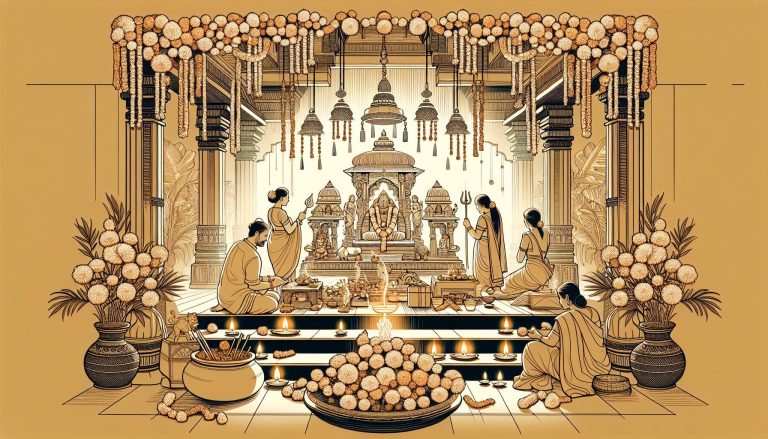
Puja, a Hindu worship ritual, venerates deities through offerings and prayers. Originating from the Vedic traditions, it emphasizes invoking divine presence. The epic Bhagavad Gita highlights Lord Krishna advocating puja to please gods for cosmic balance. Ritual elements include lighting lamps, offering flowers, chanting mantras like “Om Namah Shivaya” for Shiva. The myth of goddess Lakshmi visiting homes during Diwali exemplifies the puja’s auspiciousness.
Yajna (Sacrificial Rite)
Yajna, a ceremonial act of sacrifice, honors deities through fire offerings. Rooted in Rigveda hymns, it symbolizes cosmic order (Rta) and sustenance. Vedic sages performed elaborate yajnas to invoke prosperity and purify the atmosphere. The Mahabharata recounts King Yudhishthira’s Rajasuya Yajna, marking sovereignty and divine favor. Participants offer ghee, grains, and soma juice into the sacred fire while reciting verses like “Svaha” to appease gods like Agni, the fire deity.
Samskaras (Rites Of Passage)
Samskaras, significant life-cycle rituals, mark key stages from birth to death. Derived from ancient Dharma Shastra texts, they ensure spiritual development and societal integration. The Upanayana (sacred thread ceremony) signifies educational initiation, with boys reciting the Gayatri Mantra during the ritual. The Ramayana describes Rama’s Ashvamedha Yajna, signifying regal authority and dharma adherence. Other samskaras include Simantonnayana (prenatal rite) and Antyeshti (funeral rites), ingraining cultural values and cosmic purpose.
Symbolism And Significance In Rituals
Symbolism in Hindu rituals serves as a bridge between the material and the spiritual, reflecting deeper meanings and cosmic truths. Each ritual employs various symbols, mantras, and chants, enriching the spiritual experience.
Use Of Symbols
Symbols play a crucial role in Hindu rituals. They are often represented by specific objects and actions. For example, the conch shell signifies auspiciousness and the cosmic sound, while fire represents purity and divine energy. The lotus flower embodies purity and spiritual enlightenment, associated with deities like Lakshmi and Saraswati.
Offerings like fruits and flowers symbolize surrender and devotion. The vermilion (kumkum) marks the energy center, invoking Shakti (divine feminine power). Geometric patterns, or Yantras, invite specific deities’ presence. Each symbol, whether ritualistic objects or geometric designs, channels divine attributes and enhances the sacred ambiance.
Role Of Mantras And Chants
Mantras and chants embody the vibrational essence of divine elements in Hindu rituals. Reciting them aligns the mind and soul with higher spiritual frequencies. Sanskrit mantras, often derived from Vedic texts, possess phonetic and rhythmic qualities that help concentration and resonance with cosmic energies.
During Puja, chants like “Om Namah Shivaya” invoke Lord Shiva’s blessings. In Yajna, the Gayatri mantra honors the Sun’s life-giving force. Each chant not only invokes deity-specific attributes but also purifies the environment and the individual’s mind. Through precise articulation and intent, mantras amplify the ritual’s transformative power, linking human consciousness with the divine.
Contemporary Practices And Challenges
Although deeply rooted in ancient traditions, Hindu rituals have evolved to meet contemporary societal needs.
Adaptation Over Time
Hindu rituals have morphed significantly over centuries, adapting to the social, political, and environmental contexts of different eras. While ancient texts prescribe complex ceremonies requiring specific knowledge and time, today’s rituals incorporate simpler practices. For example, traditional Yajna ceremonies, historically elaborate sacrificial rites, now often occur as straightforward community events with basic offerings and recitations. This evolution ensures rituals remain accessible even though modern life’s busy schedules and urban settings.
Modern-Day Relevance
In modern times, Hindu rituals continue to provide spiritual solace and cultural identity amid rapid globalization and technological advances. For instance, Diwali, once limited to lamps and prayers, now includes digital greetings and online financial exchanges. But, practitioners face challenges, such as balancing ritualistic authenticity with contemporary convenience, which can dilute the original spiritual essence. Environmental concerns also arise, like pollution from ritualistic materials, prompting a shift towards eco-friendly practices. Even though these challenges, Hindu rituals maintain their relevance by evolving and addressing current societal issues.
Conclusion
Understanding the mythology behind Hindu rituals offers a profound insight into their enduring relevance and adaptability. These rituals, rooted in ancient traditions, have evolved to meet the demands of modern society while maintaining their spiritual essence. They continue to serve as a bridge between the material and spiritual worlds, providing solace and cultural identity. As we navigate contemporary challenges, the shift towards eco-friendly practices ensures that these rituals remain meaningful and sustainable. Embracing both tradition and innovation, Hindu rituals will undoubtedly continue to adapt and thrive in our ever-changing world.
Sources & further reading
These themes are explored in greater depth across the following authoritative resources:
- Britannica, Yoga in Hinduism
- Britannica, Puja
- Harvard Pluralism Project, Hindu Practice
- Internet Sacred Text Archive, Yoga Sutras of Patanjali
- Diana L. Eck, Banaras: City of Light (Princeton University Press, 1982)
External resources for further reading. Apam Napat is not affiliated with these publishers; citation does not imply endorsement.
Frequently asked questions
When did Hindu rituals originate?
What is a yajna in Hindu ritual?
How did temple rituals develop in the Gupta era?
How did the Bhakti movement change Hindu rituals?
Based on the classical texts of Hindu mythology, see our sources.