
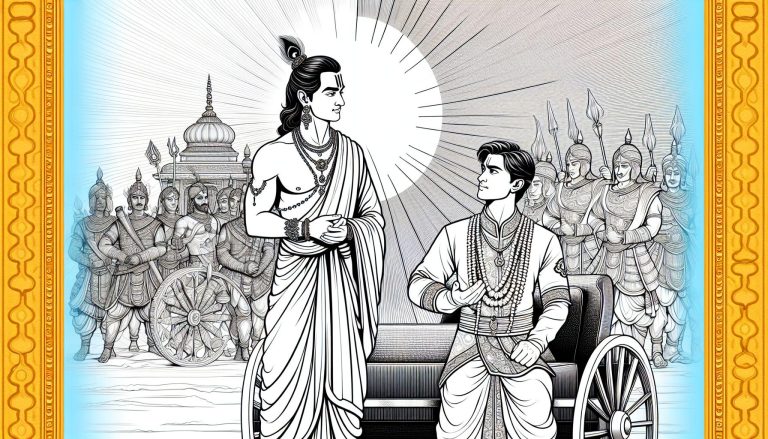
Krishna – An Incarnation of Vishnu’s teachings to Arjuna – The Peerless Archer unravel this complex idea, emphasizing how maya binds us to material existence and distracts us from our spiritual path. Understanding maya isn’t just an intellectual exercise; it’s a transformative journey that can shift how we view our lives and our place in the universe. Let’s explore how the Bhagavad Gita illuminates this profound concept and offers wisdom to transcend it.
Understanding Maya
Maya, a central concept in Hindu philosophy, holds profound significance in the Bhagavad Gita. This force shapes our perception of reality, masking true understanding.
Definition of Maya
Maya, in Advaita Vedanta, initially referred to a divine magic that illusioned humans. Over time, it evolved to represent the force creating the cosmic illusion, making the transient phenomenal world seem real. Maya deceives us, rendering the infinite Brahman – The Supreme Truth finite and tangible.
Importance of Maya in Hindu Philosophy
Maya plays a vital role in Hindu philosophy, particularly within the Bhagavad Gita. Lord Krishna describes it as the Prakriti formed by Him, composed of three gunas: sattva (goodness), rajas (passion), and tamas (darkness). On an individual level, Maya manifests as ignorance (ajnana), mistakenly aligning the self with the empirical ego rather than recognizing its true unity with Brahman.
Maya in the Bhagavad Gita

Maya in the Bhagavad Gita represents the cosmic illusion that distorts our understanding of reality. It binds individuals to the material world and prevents spiritual enlightenment.
References to Maya in the Text
BG 7.14 describes Maya as the divine energy of Lord Krishna, made up of the three modes of nature: sattva, rajas, and tamas. This verse emphasizes Maya’s profound influence, stating it’s challenging to surpass. But, surrendering to Krishna allows one to transcend this illusion effortlessly.
Interpretation by Different Scholars
Adi Shankara views Maya through the lens of Advaita Vedanta, a nondualistic tradition. He stresses shifting focus from impermanent external objects to the eternal Atman – The Soul-Brahman-Vasudeva – The Father of Krishna within all beings. This internal shift breaks the illusion created by Maya.
Bhaskara, in contrast, interprets Maya from the Bhedabheda tradition. He critiques Shankara’s monist perspective by focusing on the simultaneous difference and non-difference between the world and the ultimate reality. He suggests experiencing unity with Brahman while acknowledging the material world’s validity.
The Role of Maya in Human Life

Maya plays a central role in human life, according to the Bhagavad Gita. This concept reveals how our perceptions are shaped and often distorted, keeping us tethered to the material world.
Illusions of the Material World
Maya, often translated as “illusion,” suggests the material world we perceive through our senses isn’t true reality. The Bhagavad Gita teaches that this world is temporary and ever-changing, while our true nature is eternal, transcending physical existence. Maya creates a veil of ignorance, leading us to misidentify with the body and mind, rather than our spiritual essence. For example, we might see happiness in material gains, which is fleeting and leads to further yearning and dissatisfaction.
Detachment and Enlightenment
The Gita emphasizes detachment from the material world as a path to spiritual enlightenment. Attachment to objects, desires, and outcomes fosters dependency and suffering. By understanding and practicing detachment, one can overcome the deceptive allure of maya. This process involves shifting focus from external impermanent objects to the eternal essence within. Detachment doesn’t mean renouncing the world but acknowledging its transient nature and realigning our priorities towards spiritual growth. Key teachings from Lord Krishna to Arjuna highlight this journey towards understanding maya and achieving enlightenment.
Overcoming Maya

Overcoming Maya involves deep spiritual practice and devotion. Krishna, in the Bhagavad Gita, teaches various methods to transcend this cosmic illusion.
Techniques and Practices
The Bhagavad Gita outlines several techniques and practices to help overcome Maya:
- Bhakti Yoga: This path emphasizes loving devotion and surrender to Krishna. By focusing the mind and heart on loving service to Krishna, one can transcend the material world and connect with the divine.
- Meditation: Regular meditation helps purify the mind and remove the distractions caused by Maya. By meditating on Krishna, one can attain inner peace and clarity.
- Selfless Service: Performing selfless service (karma yoga) without attachment to the results helps individuals rise above the influence of Maya. By dedicating actions to Krishna, one purifies the heart.
- Scriptural Study: Studying sacred texts like the Bhagavad Gita helps build wisdom and awareness of Maya’s nature. Understanding these teachings provides the knowledge needed to transcend illusions.
Teachings of Krishna
Krishna’s teachings in the Bhagavad Gita provide the framework for overcoming Maya. He advises Arjuna to:
- Surrender to Him: Surrendering to Krishna’s will allows one to break free from Maya’s grip. Krishna explains that those who seek refuge in Him can cross the ocean of illusion.
- Cultivate Knowledge: Krishna stresses the importance of self-knowledge and discrimination. Recognizing the eternal self (atma) within helps one perceive the temporary nature of the material world.
- Practice Detachment: Detachment from material desires and outcomes is essential. Krishna teaches that one should perform duties without attachment, focusing on the larger spiritual goal.
- Develop Devotion: Krishna encourages developing a personal and loving relationship with Him. Through devotion, one strengthens their spiritual connection and easily overcomes Maya.
By following Krishna’s guidance and incorporating these techniques into daily practice, one can overcome Maya and progress towards spiritual liberation.
Conclusion
Understanding maya in the Bhagavad Gita has deepened my appreciation for the intricate balance between material existence and spiritual growth. It’s clear that maya isn’t just an abstract concept but a profound force influencing our daily lives and perceptions. By recognizing its impact, I can better navigate my spiritual journey, focusing on the eternal essence within. Krishna’s teachings offer practical guidance through Bhakti Yoga, meditation, and selfless service, providing a clear path to transcend maya. Embracing these practices, I find myself more aligned with spiritual truths, moving closer to the ultimate goal of liberation.
Sources & further reading
These themes are explored in greater depth across the following authoritative resources:
- Stanford Encyclopedia of Philosophy, Hindu Philosophy
- Britannica, Dharma
- Britannica, Karma
- Internet Sacred Text Archive, Bhagavad Gita
- A. K. Ramanujan, Speaking of Siva (Penguin Classics, 1973)
External resources for further reading. Apam Napat is not affiliated with these publishers; citation does not imply endorsement.
Frequently asked questions
What is Maya according to the Bhagavad Gita?
How does Krishna describe Maya in the Bhagavad Gita?
What does Bhagavad Gita 7.14 say about Maya?
How can one transcend Maya according to the Gita?
Based on the classical texts of Hindu mythology, see our sources.