
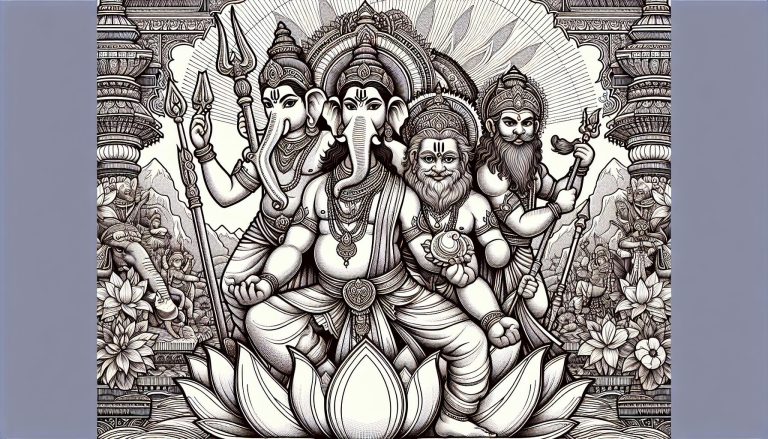
Exploring the Puranic pantheon isn’t just about understanding gods and goddesses; it’s about uncovering the profound symbolism and lessons they embody. From the mighty Vishnu, the preserver of the universe, to the fierce yet compassionate Kali, each deity plays a crucial role in the cosmic order. Join me as we journey through this mystical world, discovering the timeless wisdom and vibrant narratives that continue to inspire millions.
Overview Of The Puranic Pantheon
The Puranic pantheon stands as a vast and intricate tapestry of deities, each embodying unique attributes and narratives within Hindu mythology. Rooted in ancient texts known as the Puranas, these gods and goddesses offer a complex yet cohesive representation of cosmic principles and moral lessons.
Main Deities:
- Brahma – Known as the creator, Brahma holds a critical role in the cosmic cycle of creation, preservation, and destruction.
- Vishnu – Renowned as the preserver, Vishnu’s ten avatars (e.g., Krishna, Rama) symbolize his interventions to restore dharma (cosmic order).
- Shiva – Representing destruction and regeneration, Shiva is revered for his transformative power, symbolizing the end of one cycle and the beginning of another.
Goddesses and Other Notable Figures:
- Lakshmi – The goddess of wealth and prosperity, Lakshmi is often depicted as bringing fortune to her devotees.
- Saraswati – The Goddess of Learning and Wisdom – Embodying knowledge and wisdom, Saraswati is venerated by scholars and students.
- Durga and Kali – Representing power and fierce compassion, Durga and Kali play pivotal roles in battling evil and protecting righteousness.
- Ganesha – Widely worshiped as the remover of obstacles, Ganesha is invoked at the start of new ventures.
- Hanuman – Celebrated for his unwavering devotion and strength, Hanuman’s tales offer lessons in loyalty and bravery.
- Indra – As the king of gods, Indra governs weather and war, often appearing in stories that highlight his valor and flaws.
These deities exemplify diverse human traits and universal principles, enabling devotees to connect with them on multiple levels. In understanding this pantheon, one gains insight into the moral and ethical fabric that these divine figures represent.
Major Deities
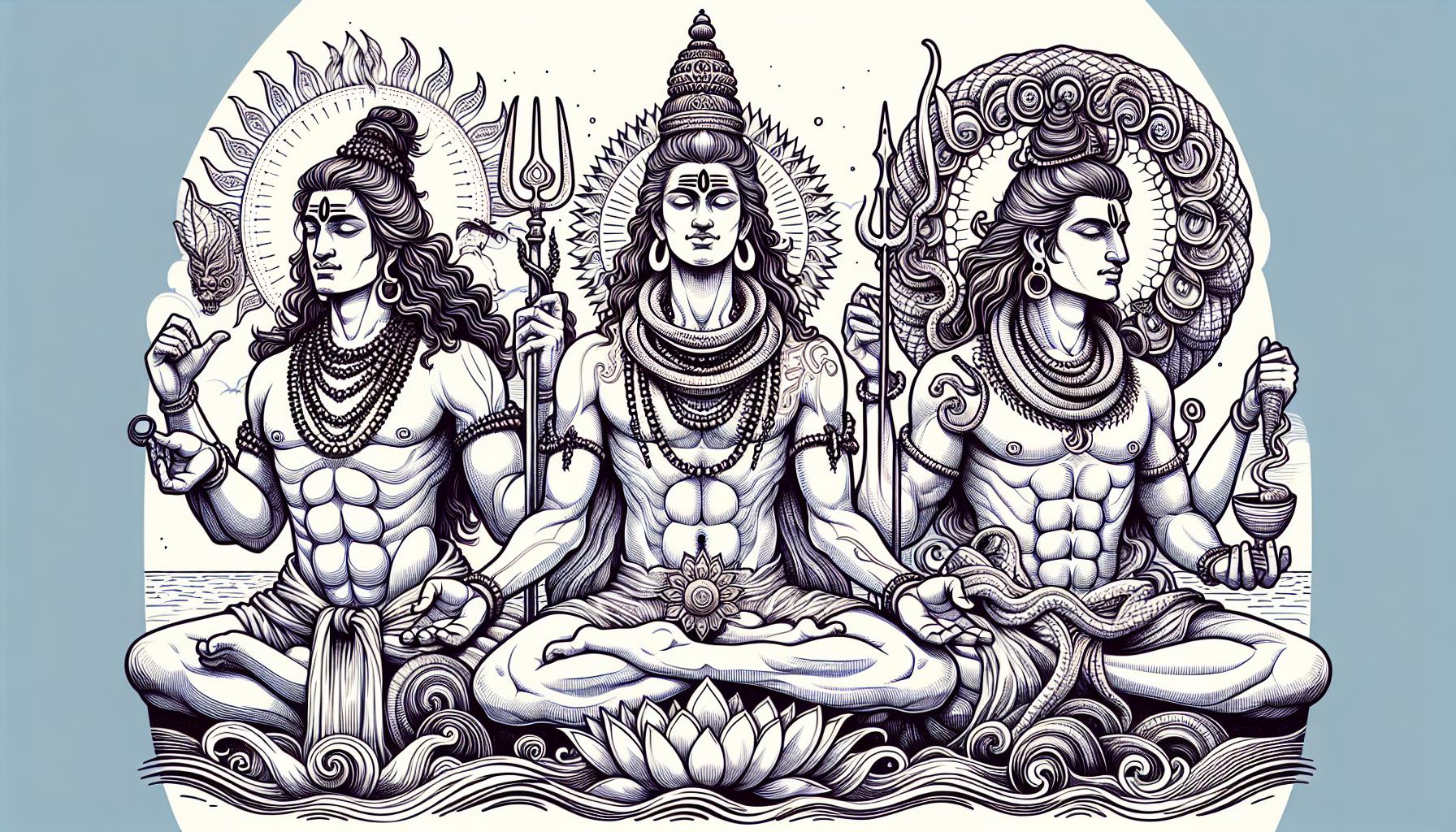
In the Puranic pantheon, several deities stand out due to their profound impact on Hindu cosmology and devotional practices. Three of the most significant gods are Vishnu, Shiva, and Brahma.
Vishnu
Vishnu, known as the preserver of the universe, embodies mercy and goodness. He descends to earth in various avatars (Krishna, Rama) when cosmic balance deviates. Devotees celebrate his actions in texts like the Bhagavad Gita and the Vishnu Purana. He teaches righteousness and devotion, depicted with attributes like the conch, discus, and lotus.
Shiva
Shiva, the destroyer, represents both creation and destruction. His paradoxical nature reflects in his forms as the meditative ascetic and the dynamic Nataraja (Lord of the Dance). Devotees revere Shiva for his transformative energy in texts like the Shiva Purana. Symbols associated with him include the trident, snake, and sacred river Ganga.
Brahma
Brahma, the creator, is often depicted with four heads and four arms, signifying his control over the cardinal directions. He introduces the universe’s complex structures, guiding creation as described in the Brahma Purana. Although not as widely worshipped in contemporary times, Brahma remains integral to understanding the cycle of birth and rebirth in Hindu cosmology.
Goddess Tradition
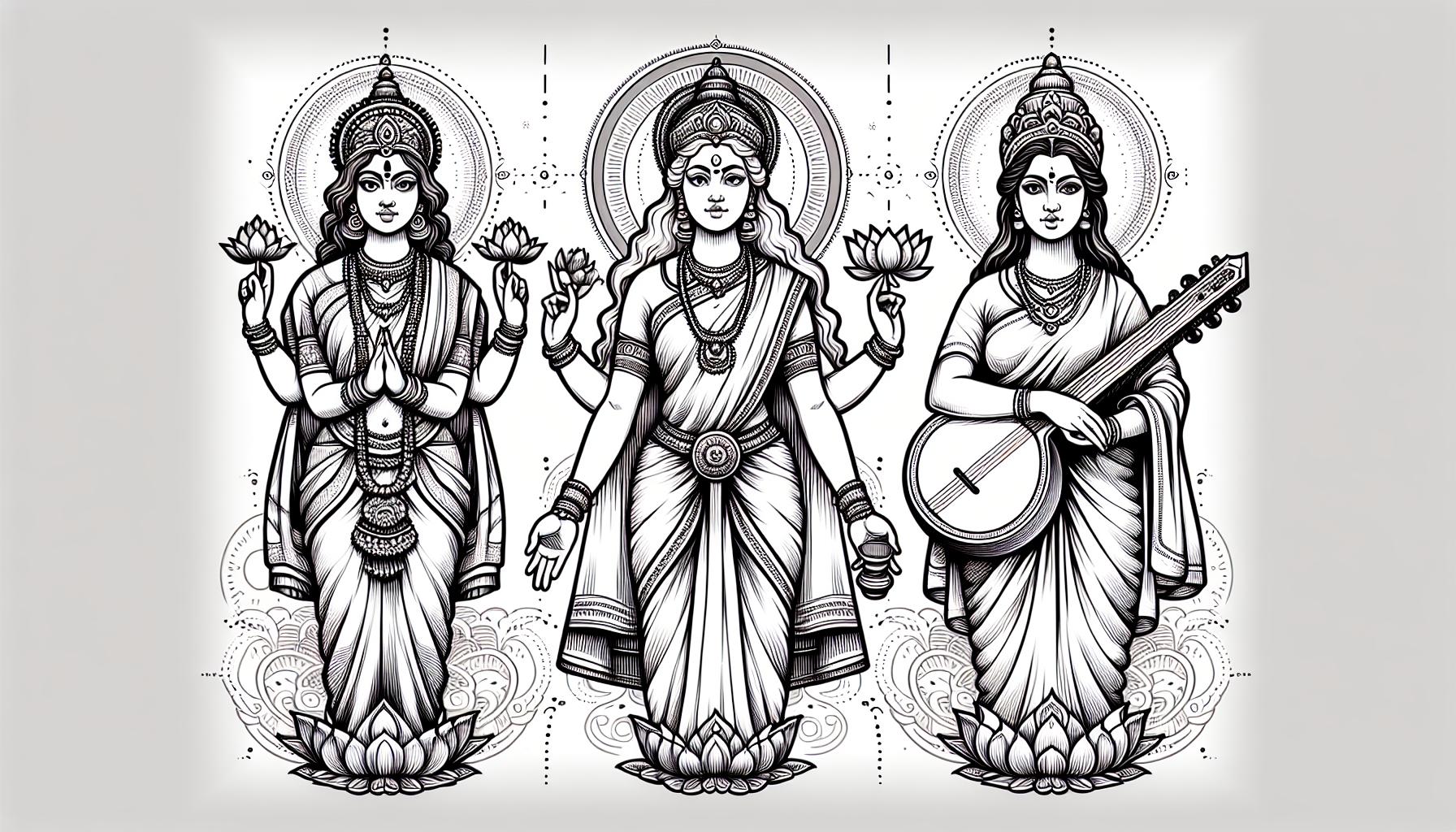
In Hindu mythology, the Goddess tradition plays a vital role in the Puranic pantheon. Goddesses embody various aspects of the divine feminine and represent different cosmic principles. Below, I explore three prominent goddesses: Lakshmi, Parvati, and Saraswati.
Lakshmi
Lakshmi, the goddess of wealth and prosperity, holds a crucial place in Hindu worship. Depicted with four hands, she symbolizes wealth, virtue, and auspiciousness. Her association with Vishnu underscores her role in ensuring household and spiritual prosperity. Festivals like Diwali and Kojagiri Purnima celebrate her, invoking blessings for abundance and well-being.
Parvati
Parvati, the goddess of love, fertility, and devotion, is a central figure in Hindu traditions. As Shiva’s consort, she signifies balance and harmony in the cosmic order. Parvati’s various forms, such as Durga, Kali, and Annapurna, highlight her dynamic nature. Temples and festivals, including Navaratri and Maha Shivaratri, honor her role as the compassionate and powerful mother goddess.
Saraswati
Saraswati, the goddess of knowledge, music, and arts, inspires many through her wisdom and creativity. Often depicted holding a veena and scriptures, she signifies the pursuit of learning and artistic expression. Her veneration, especially during the festival of Vasant Panchami, emphasizes the importance of education and intellectual growth in Hindu culture.
Lesser-Known Deities
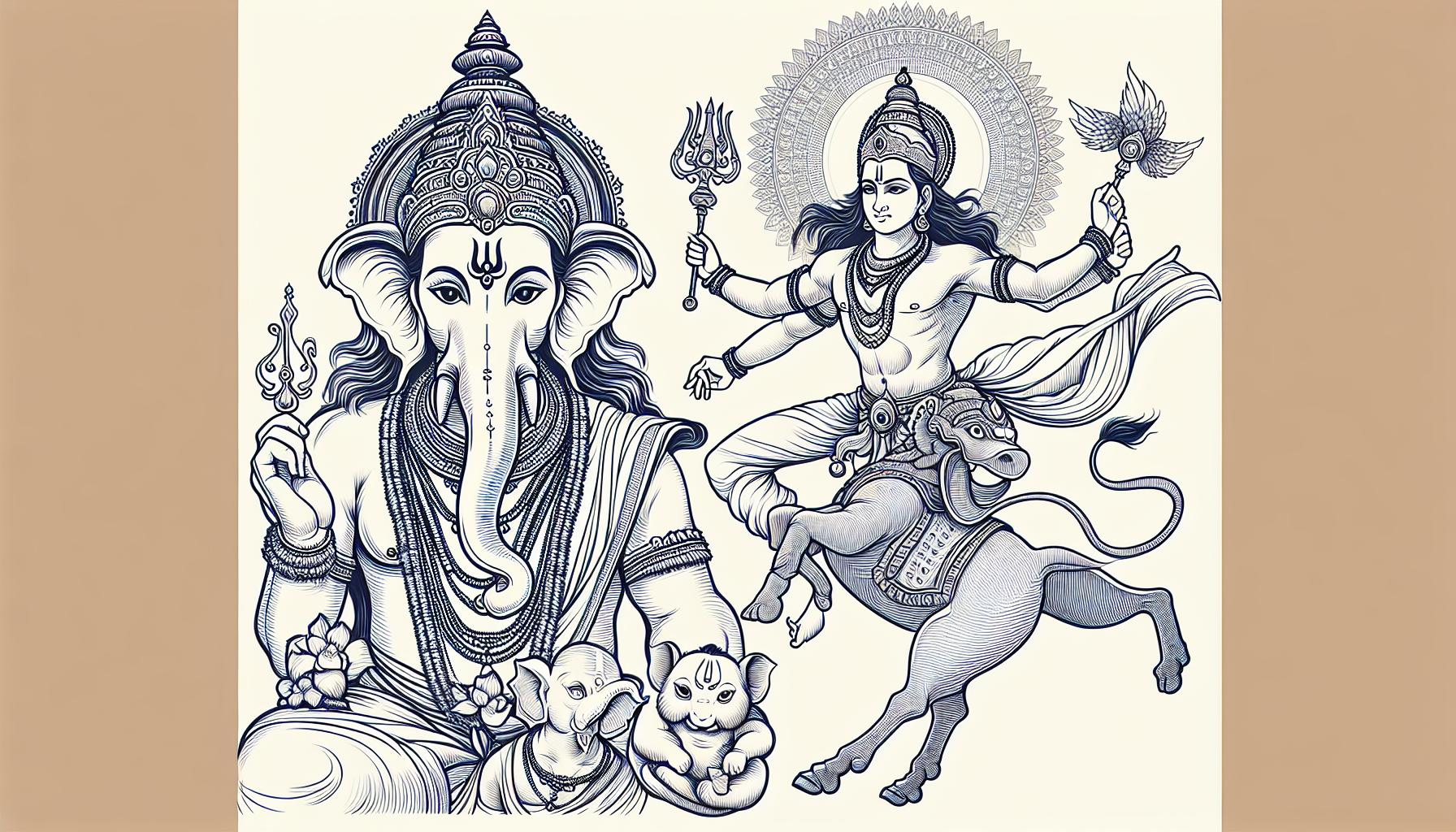
While the prominent goddesses are widely recognized, several lesser-known deities also hold significant roles in the Puranic pantheon. Exploring these deities offers a deeper understanding of Hindu mythology.
Ganesha
Ganesha, the elephant-headed god, is the remover of obstacles and the patron of arts and sciences. Devotees often invoke Ganesha at the beginning of new ventures. Ganesha’s attributes include a large elephant head symbolizing wisdom, a trunk representing adaptability, and a small mouse indicating humility. Hindus celebrate Ganesh Chaturthi to honor his birth.
Kartikeya
Kartikeya, also known as Skanda or Murugan, is the god of war and son of Shiva and Parvati. He commands an army of divine beings and is often depicted with six faces and twelve arms. His mount is a peacock, symbolizing majesty and victory. In South India, devotees celebrate Thaipusam to honor Kartikeya’s bravery against evil forces.
Hanuman
Hanuman, the monkey god, is a central figure in the epic Ramayana – Epic of Hinduism. Known for his devotion to Lord Rama, Hanuman epitomizes strength, loyalty, and perseverance. His most famous feat includes leaping across the ocean to Lanka. Hanuman Chalisa, a devotional hymn, praises his valor and is recited by millions for courage and protection.
Symbolism And Iconography
Symbols and icons in Hindu mythology carry deep meanings, offering insights into the attributes and stories of the deities they represent.
Common Symbols
Common symbols in the Puranic pantheon reflect the spiritual and divine attributes of the deities. The lotus flower represents purity and detachment, often shown with deities like Lakshmi and Vishnu. The trident (trishul) symbolizes the trinity of creation, maintenance, and destruction, commonly associated with Shiva. The conch shell (shankha) signifies the primordial sound of creation, frequently held by Vishnu. Each symbol connects to specific aspects of Hindu philosophy and cosmology.
Iconographic Representations
Iconographic representations of deities present complex and detailed imagery, conveying their divine nature and functionalities. Ganesha’s elephant head symbolizes wisdom and understanding, while his large belly signifies the ability to digest all the good and bad in life. Kartikeya often appears with six faces, representing his omnipresence and warrior nature. Hanuman’s iconography, featuring a monkey face and a muscular body, exemplifies his strength, devotion, and agility. These representations help devotees visualize and connect with the divine attributes of each deity.
Influence On Indian Culture
The Puranic pantheon deeply impacts Indian culture, influencing various aspects of daily life, traditions, and artistry.
Festivals And Rituals
Many Hindu festivals center around the Puranic deities, integrating religious practices into everyday life. For example, Ganesha Chaturthi celebrates Ganesha’s birth with vibrant processions and rituals. During Kartik Purnima, devotees honor Kartikeya with ceremonies and prayers. Hanuman Jayanti, marking Hanuman’s birth, involves recitations of the Hanuman Chalisa and devotional offerings. These festivals bring communities together, reinforcing cultural values and shared heritage.
Literature And Arts
Puranic lore significantly shapes Indian literature and arts, embedding rich narrative traditions into these mediums. Texts like the Mahabharata – The Great Epic and Ramayana narrate Puranic stories, perpetuating moral lessons and cultural ideals. Classical Indian dance forms, such as Bharatanatyam and Kathak, often depict episodes from these texts, merging performance with storytelling. In visual arts, temple carvings and sculptures intricately illustrate scenes involving deities, enhancing both religious devotion and artistic expression.
Conclusion
Exploring the Puranic pantheon reveals a rich tapestry of deities, symbols, and stories that deeply influence Hindu worship and Indian culture. The intricate iconography and meaningful symbols offer profound insights into Hindu philosophy, while the vivid depictions of deities help devotees connect with their divine nature.
The Puranic pantheon’s impact extends beyond religious practices, shaping Indian literature, arts, and daily traditions. From the grand narratives of the Mahabharata and Ramayana to classical dance forms and visual arts, these ancient stories continue to inspire and enrich cultural expression.
Understanding this pantheon not only enhances our appreciation of Hinduism but also highlights the enduring legacy of these timeless traditions in contemporary life.
Sources & further reading
These themes are explored in greater depth across the following authoritative resources:
- Internet Sacred Text Archive, Mahabharata (Ganguli translation)
- Internet Sacred Text Archive, Ramayana of Valmiki
- Britannica, Mahabharata
- Britannica, Ramayana
- Bibek Debroy, The Mahabharata (10 vols., Penguin, 2010 to 2014)
External resources for further reading. Apam Napat is not affiliated with these publishers; citation does not imply endorsement.
Frequently asked questions
What is the Puranic pantheon in Hinduism?
Why is the Puranic pantheon significant?
Where are Puranic deities described?
What can we learn from the Puranic pantheon?
Based on the classical texts of Hindu mythology, see our sources.