
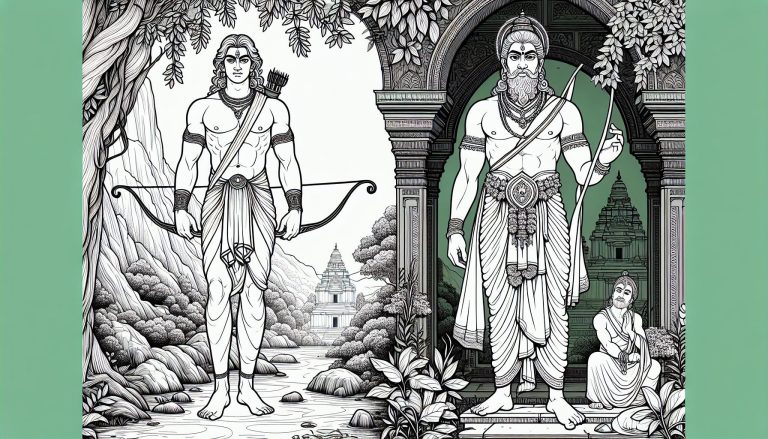
What strikes me most about the Ramayana is its ability to blend profound spiritual insights with captivating storytelling. Characters like Rama, Sita, and Hanuman aren’t just heroes; they’re embodiments of virtues we all aspire to. Through their journeys, the Ramayana offers a roadmap for leading a life of integrity and purpose.
Historical Context of the Ramayana
The Ramayana, composed by the sage Valmiki – Composer of Ramayana, dates back to approximately 500 BCE, though some scholars propose an earlier date. Recognized as one of the two major Sanskrit epics of ancient Indian literature, alongside the Mahabharata – The Great Epic, it has profound cultural and religious significance. The epic details the life of Prince Rama of Ayodhya, his wife Sita, and his unwavering journey to rescue her from the demon king Ravana – The Demon King.
Geographically, the narrative spans the Indian subcontinent, with key locations including Ayodhya, Mithila, and Lanka. Each place bears its own historical and mythological importance, reflecting the social and political landscape of the time. These locations remain pilgrimage sites today, attracting devotees and scholars alike who seek to connect with the Ramayana’s timeless wisdom.
Historically, the Ramayana’s influence extends beyond India’s borders, shaping the cultural and spiritual landscapes of Southeast Asian countries. Nations like Thailand, Indonesia, and Cambodia have their versions of the epic, adapted into local narratives, arts, and traditions. The Ramayana’s adaptation across diverse cultures highlights its universal themes of virtue, loyalty, and duty.
Authored during a period when oral traditions dominated storytelling, the Ramayana was passed down through generations in verse form. It served not only as a spiritual guide but also as a reflection of the socio-political dynamics of ancient India. The epic underscores the ideals of dharma (righteousness), karma (action), and moksha (liberation), encapsulating the spiritual essence of Hindu philosophy.
Key Characters and Their Spiritual Significance
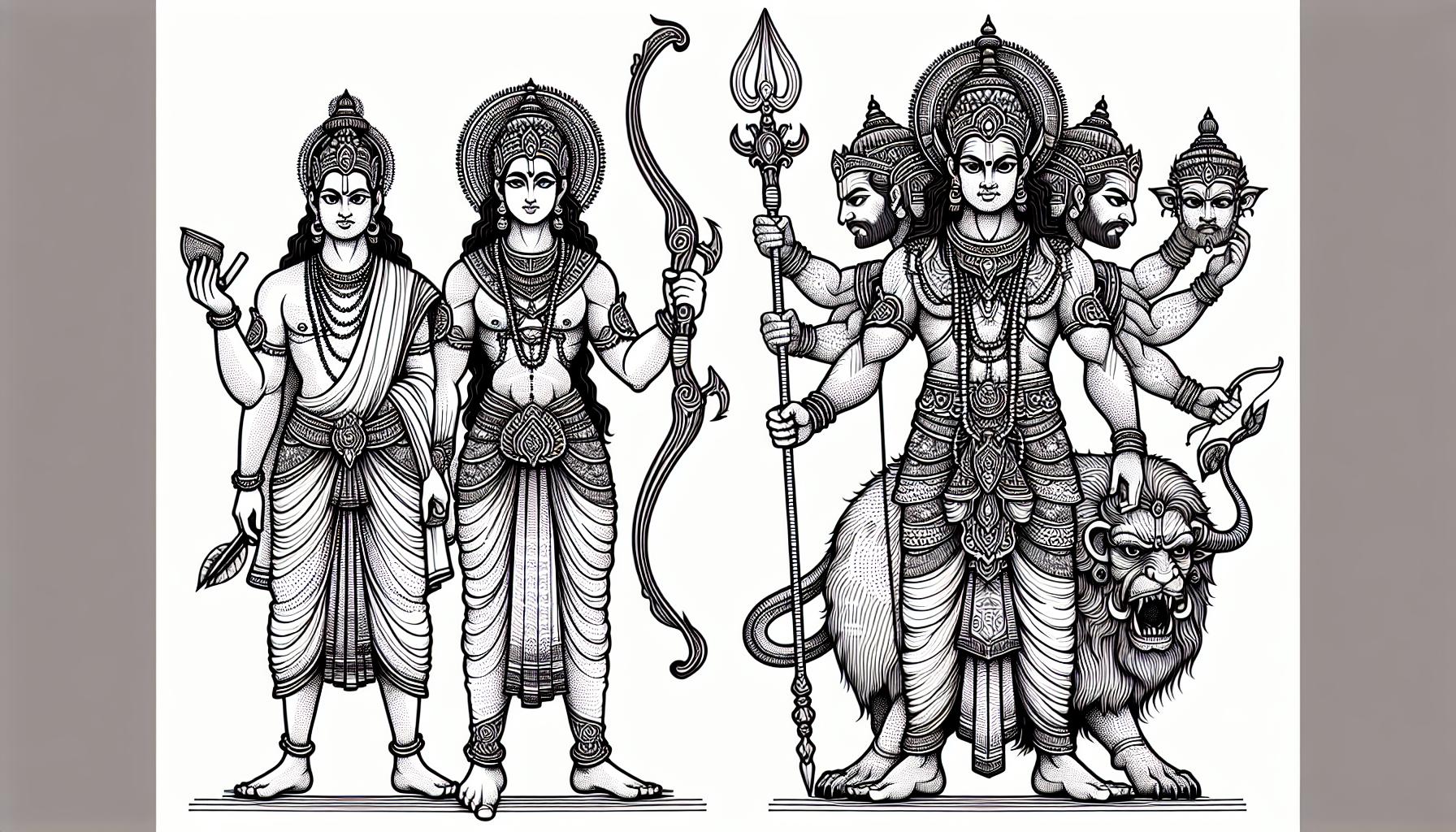
The Ramayana’s spiritual teachings are deeply intertwined with its key characters, each embodying unique virtues and lessons.
Lord Rama
Lord Rama exemplifies righteousness and dharma. As the main protagonist, he upholds moral and ethical principles even in adversity. For instance, his unwavering commitment to truth and duty is evident when he willingly accepts his exile to honor his father King Dasharatha’s promise.
Sita
Sita symbolizes purity, devotion, and resilience. Her abduction by Ravana and subsequent trials highlight her unwavering faith and strength. Her loyalty to Rama and dedication to virtue make her a paragon of feminine integrity and virtue.
Hanuman
Hanuman represents devotion, courage, and selfless service. His unwavering loyalty to Rama is exemplified in his daring journey to Lanka to find Sita. Hanuman’s actions demonstrate the power of devotion and the importance of serving a higher cause with humility.
Ravana
Ravana, though often seen as the antagonist, teaches profound lessons. His scholarly abilities and devotion to Lord Shiva show the duality of human nature. Ravana’s downfall, driven by arrogance and desire, underscores the consequences of deviating from dharma.
Core Spiritual Teachings of the Ramayana

The Ramayana provides profound spiritual teachings that guide one towards a life of righteousness, devotion, and compassion. These teachings, derived from the actions and virtues of its characters, remain timeless.
Dharma (Righteousness)
Dharma or righteousness forms the foundation of Lord Rama’s actions throughout the Ramayana. Valmiki’s narrative showcases Rama’s unwavering commitment to duty and moral principles, serving as a blueprint for ethical living. For instance, Rama honors his father King Dasharatha’s word by willingly accepting exile, demonstrating ultimate adherence to dharma.
Bhakti (Devotion)
Bhakti, or devotion, is exemplified by Hanuman’s unwavering loyalty to Lord Rama. Hanuman’s actions reflect pure devotion without expecting anything in return. His journey to Lanka to find Sita and his fearless confrontation with Ravana illustrate the power of selfless service and faith.
Karma (Action)
Karma in the Ramayana underscores the significance of actions aligned with dharma and divine will. Characters’ actions in the epic, both virtuous and otherwise, lead to corresponding consequences. For example, Ravana’s misdeeds capture how straying from righteous action results in downfall. Conversely, Rama’s dutiful actions restore order and justice.
Forgiveness and Compassion
Forgiveness and compassion are pivotal in the Ramayana, often illustrated through Sita and Rama’s actions. Sita forgives the demoness Trijata, showing resilience and empathy despite her suffering. Similarly, Rama’s act of forgiving Vibhishana – Brother of Ravana, despite him being Ravana’s brother, highlights the strength of compassion over vengeance.
Relevance in Modern Times

Ramayana’s teachings resonate powerfully today, offering profound insights into personal growth, ethical living, and conflict resolution.
Personal Growth
Ramayana’s characters exemplify the virtues needed for personal growth. Rama’s unwavering adherence to dharma inspires steadfastness in pursuing one’s principles. His journey emphasizes patience and resilience. Hanuman’s devotion signifies the importance of selfless service and courage, teaching individuals to find strength in dedication. Their stories encourage self-reflection and continuous self-improvement in today’s fast-paced world.
Ethical Living
Ethical living forms a core aspect of Ramayana’s teachings. Lord Rama’s actions consistently reflect fairness and justice. His life underscores the necessity of ethical behavior in leadership and daily life. Sita’s purity and moral fortitude remind us of the value of integrity, even in adversity. These lessons promote honesty, responsibility, and moral clarity, guiding people toward a more ethical existence.
Conflict Resolution
Ramayana offers valuable insights into conflict resolution. Rama addresses disputes with wisdom and patience, favoring dialogue over violence. His interactions with allies and adversaries stress collaboration and understanding. When conflict arises, he prioritizes righteousness and compassion. These examples guide modern approaches to resolving disputes, advocating for peaceful negotiations and empathy in challenging situations.
Conclusion
The Ramayana’s timeless wisdom continues to resonate deeply in our lives today. Its teachings on righteousness, devotion, and compassion offer a guiding light for personal and ethical growth.
By embodying the virtues of characters like Rama and Hanuman we can navigate modern challenges with grace and integrity. The epic’s lessons on conflict resolution and ethical living are invaluable tools for fostering a more harmonious world.
Embracing the spiritual teachings of the Ramayana can transform our lives and lead us toward a path of inner peace and fulfillment.
Sources & further reading
These themes are explored in greater depth across the following authoritative resources:
- Internet Sacred Text Archive, Mahabharata (Ganguli translation)
- Internet Sacred Text Archive, Ramayana of Valmiki
- Britannica, Mahabharata
- Britannica, Ramayana
- Bibek Debroy, The Mahabharata (10 vols., Penguin, 2010 to 2014)
External resources for further reading. Apam Napat is not affiliated with these publishers; citation does not imply endorsement.
Based on the classical texts of Hindu mythology, see our sources.