
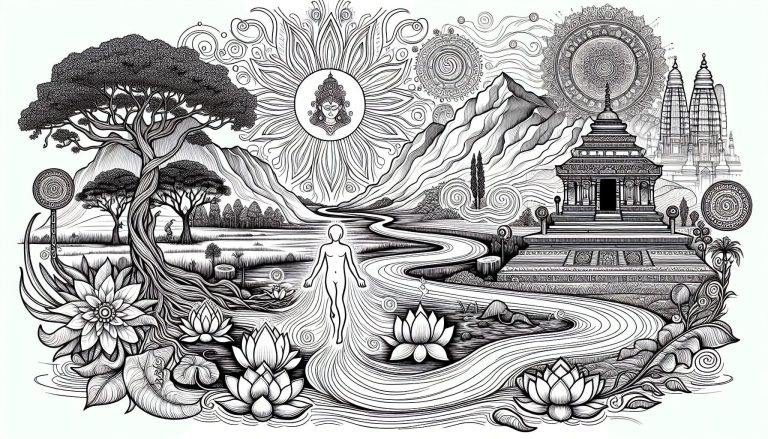
I find it intriguing how this belief influences daily life, karma, and spiritual growth in Hindu culture. Each life is seen as an opportunity to learn, evolve, and eventually achieve moksha, or liberation from the cycle of rebirth. Understanding reincarnation in Hinduism provides a deeper appreciation of its profound impact on followers’ lives and their spiritual journeys.
Historical Background
Reincarnation has roots in ancient Hindu texts dating back thousands of years. The concept is prominently detailed in the Vedas, particularly the Rigveda, which is considered one of the oldest scriptures in human history. These texts describe the soul’s journey through multiple lives and stress the importance of karma in shaping future existences.
The Upanishads further expand on the idea of reincarnation. Composed between 800 and 200 BCE, these philosophical texts investigate deeper into the nature of the atman (soul) and its relationship with Brahman – The Supreme Truth (the ultimate reality). They emphasize that escaping the cycle of rebirth, or samsara, is achievable through spiritual knowledge and self-realization.
The Bhagavad Gita, a key component of the Mahabharata – The Great Epic epic, also addresses reincarnation. It provides a dialogue between Prince Arjuna – The Peerless Archer and the deity Krishna – An Incarnation of Vishnu, who explains the eternal nature of the soul. Krishna outlines that death is merely a transition to another physical form and highlights the importance of living a righteous life to improve one’s future births.
Throughout history, various Hindu philosophers and scholars, such as Adi Shankaracharya and Ramanuja, have contributed to the understanding and interpretation of reincarnation. Their teachings and commentaries have solidified its place as a central doctrine in Hinduism, influencing believers’ perspectives on life, death, and spiritual growth.
Core Beliefs
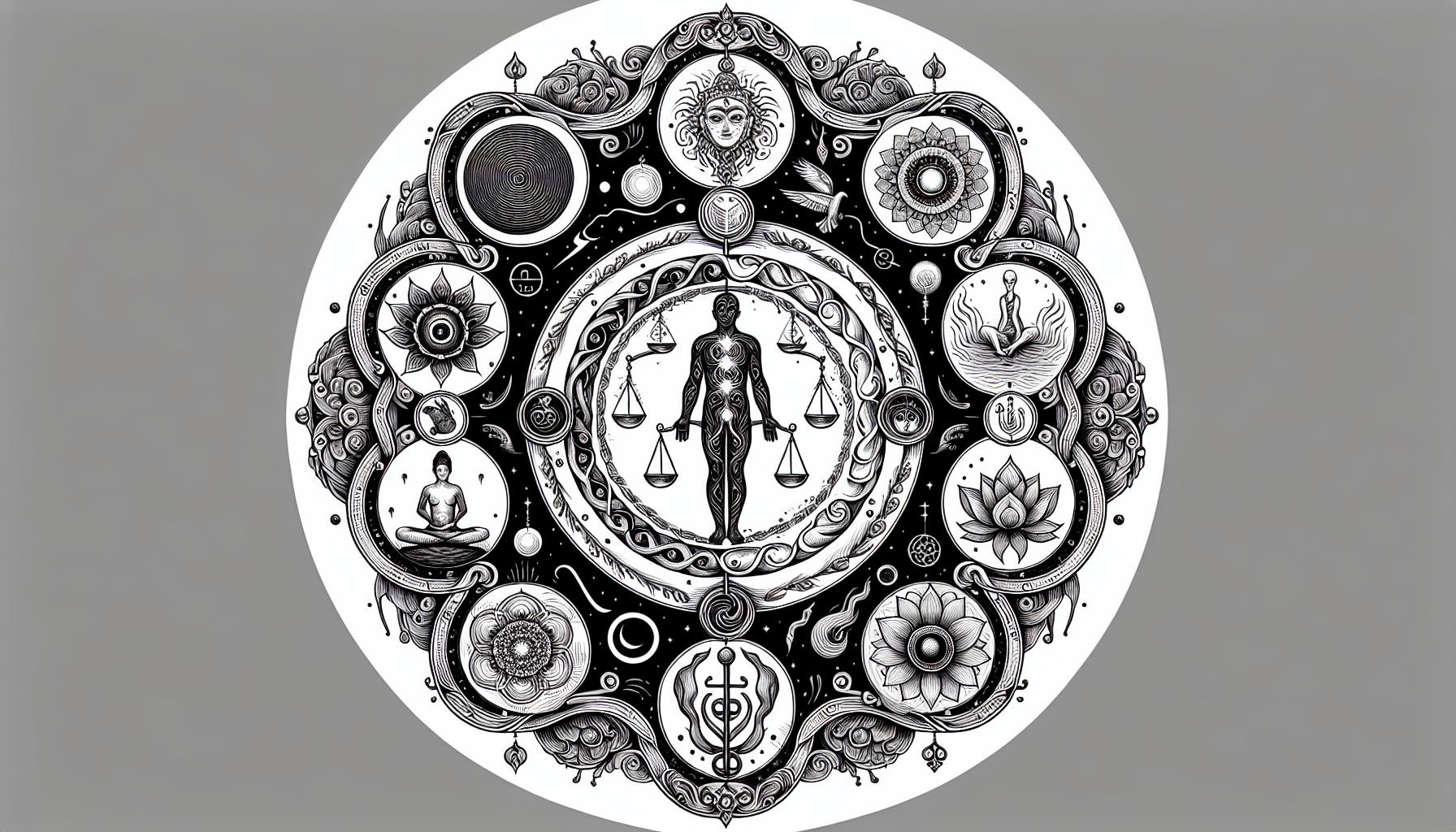
Reincarnation in Hinduism centers around key concepts that define the soul’s journey. Here, I’ll detail the cycle of Samsara and the impact of karma.
The Cycle of Samsara
Samsara represents the continuous cycle of birth, death, and rebirth. Every soul, known as Atman, undergoes countless lives, evolving spiritually in each incarnation. Hinduism believes that the material world is transient, and humans must transcend it through multiple lifetimes to reach moksha, or liberation. During each life, the soul acquires knowledge and learns lessons, inching closer to spiritual freedom.
Karma and Its Impact
Karma, meaning action, influences the quality and circumstances of each reincarnation. Every deed, thought, and intention carries consequences, shaping future experiences and lives. Good actions lead to positive outcomes, while harmful actions result in suffering. Karma works as a moral compass, guiding individuals towards righteous living to achieve a favorable rebirth. Understanding karma also instills awareness of one’s actions and their spiritual implications, reinforcing the path to moksha.
Scriptural References

The doctrine of reincarnation in Hinduism finds its roots in various ancient scriptures that form the bedrock of Hindu philosophy.
The Vedas
The Vedas, composed between 1500 and 500 BCE, are the oldest Hindu texts referencing reincarnation. The Rigveda mentions the concept of the soul’s journey after death. Verses like Rigveda 10.16.3 explore the continuation of life after physical death, suggesting an enduring soul.
The Upanishads
The Upanishads investigate deeper into reincarnation, emphasizing the cycle of Samsara and the role of karma. Chandogya Upanishad 5.10.7 speaks about the soul transmigrating to a new body based on its past deeds. The Katha Upanishad addresses the partnership between the soul and the body, elucidating the spiritual objective of breaking free from the cycle of rebirth.
The Bhagavad Gita
The Bhagavad Gita, a 700-verse scripture part of the Mahabharata, details the mechanics of reincarnation. In Chapter 2, Verses 13 and 22, Lord Krishna explains to Arjuna how the soul transitions from one body to another, likened to changing clothes. The text also underscores the significance of karma and dharma in shaping one’s future births, insisting on righteous living to attain moksha.
Influence on Culture and Society
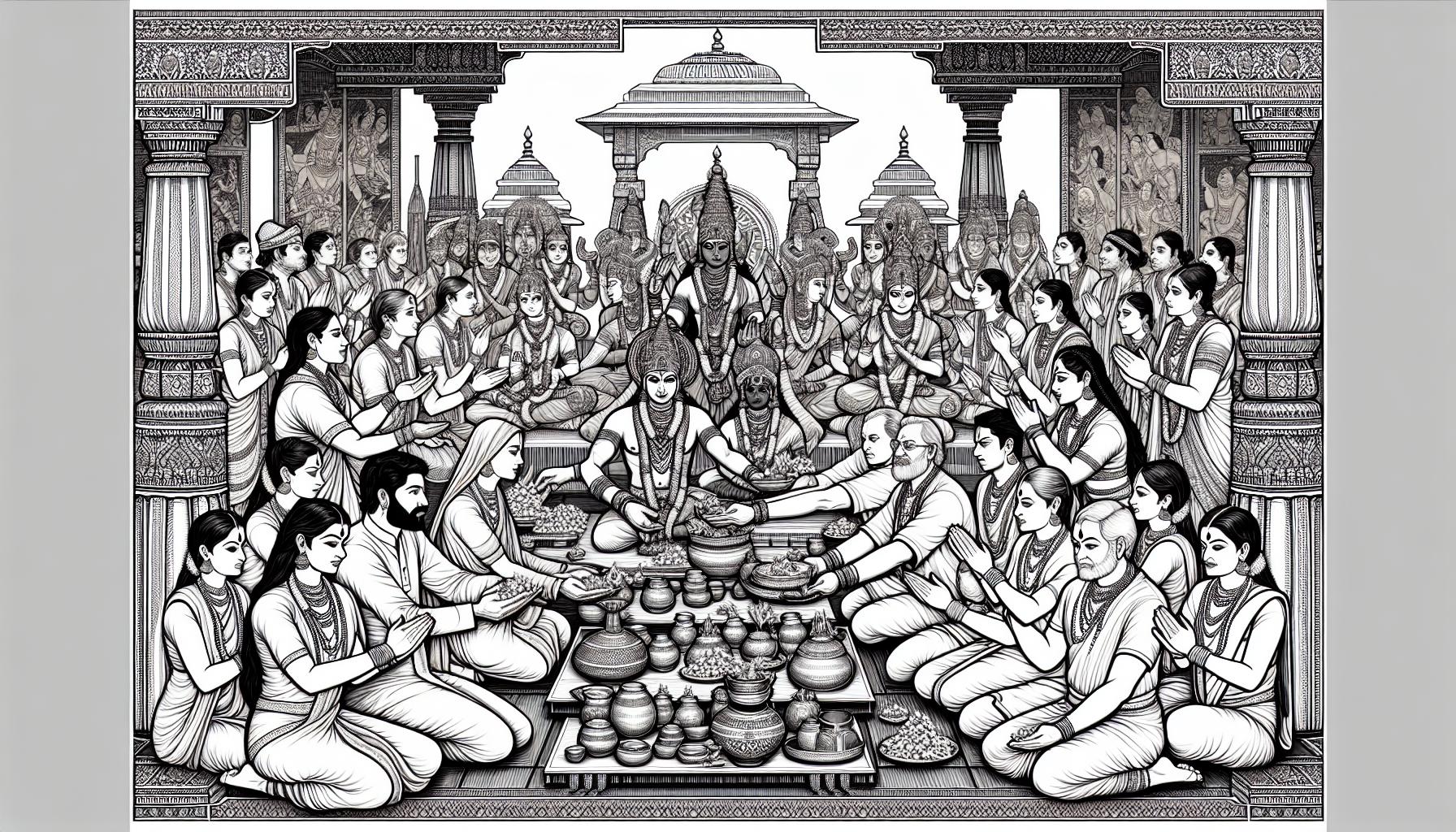
Reincarnation deeply impacts Hindu culture and society. Its principles shape rituals, arts, literature, and daily practices.
Rituals and Practices
Rituals hinge on the belief in reincarnation, intertwining with every aspect of Hindu life. Ceremonies like Shraddha honor ancestors, reflecting the aspiration for a favorable rebirth. Daily pujas and rites acknowledge karma’s role, seeking to accumulate positive karma for better future lives. Cremation practices mirror beliefs, ensuring the soul’s transition in the cycle of Samsara. Rites of passage, such as Upanayana, emphasize spiritual learning to guide the soul towards moksha.
Influence on Arts and Literature
Reincarnation themes permeate Hindu arts and literature. Literary works like the Ramayana – Epic of Hinduism and Mahabharata intertwine reincarnation and karma, crafting intricate narratives. Classical dances and dramas, like Bharatanatyam and Kathakali, depict divine avatars that embody the cycle of rebirth. Paintings and sculptures capture figures reflecting the soul’s journey. Modern Indian cinema continues this tradition, weaving reincarnation into contemporary storytelling. These cultural elements reflect the profound influence of reincarnation on Hindu society.
Comparison with Other Religions
Reincarnation is a central concept in several Eastern religions. Here’s how it compares in Hinduism, Buddhism, and Sikhism.
Buddhism
In Buddhism, the concept of reincarnation is referred to as “rebirth.” Unlike Hinduism, which emphasizes an unchanging soul (atman), Buddhism focuses on the continuity of consciousness. In the cycle of Samsara, individuals undergo successive lives influenced by karma. The ultimate goal differs; instead of seeking moksha, Buddhists aim for Nirvana, the cessation of suffering and release from the cycle of rebirth. In texts like the Pali Canon and the Mahayana Sutras, rebirth is essential to understanding the path to enlightenment.
Sikhism
Sikhism acknowledges reincarnation, but it has a unique approach. The Guru Granth Sahib teaches that the soul passes through various life forms until it achieves human birth, seen as a crucial opportunity for spiritual progress. Unlike Hinduism, which involves numerous rituals and societal structures, Sikhism emphasizes devotion to Waheguru (God) and righteous living. The religion teaches that liberation (mukti) is attained through God’s grace rather than repeated cycles of life and death, rendering the rebirth concept more focused on moral and spiritual conduct.
Modern Interpretations and Beliefs
With time, reincarnation in Hinduism has seen diverse interpretations. Modern Hindu thought reflects this richness, showing how ancient beliefs adapt to contemporary contexts.
Contemporary Hindu Thought
Hinduism’s diversity allows for multiple interpretations of reincarnation. Some modern Hindus explore the relationship between karma and personal growth. They believe that each life provides opportunities to learn and improve, making karma a tool for self-betterment. Others focus on achieving moksha by detaching from material desires and leading a spiritually fulfilling life.
There are also those who merge scientific theories with reincarnation. For instance, they draw parallels between the conservation of energy and the perpetual cycle of birth and death. With these varied perspectives, Hindu reincarnation beliefs continue to evolve and find relevance in today’s world.
Global Perspectives
Global perspectives on Hindu reincarnation are also noteworthy. Western scholars and spiritual seekers have shown interest in these concepts, leading to a cross-cultural exchange of ideas. Reincarnation is often discussed in the context of near-death experiences and past-life regression therapy. Such approaches bring Hindu concepts into broader spiritual dialogues.
In some cases, these perspectives influence Hindu communities outside India. For example, diaspora communities might integrate local cultural elements with traditional Hindu beliefs, resulting in unique interpretations of reincarnation. Through these interactions, the core Hindu beliefs on reincarnation adapt and persist in diverse global contexts.
Conclusion
Reincarnation in Hinduism offers a profound and intricate view of life, death, and spiritual evolution. The ancient scriptures provide a rich world of beliefs and practices that continue to shape Hindu culture and individual lives. Modern interpretations bring fresh perspectives, blending traditional views with contemporary thought and even scientific parallels. This dynamic and evolving understanding of reincarnation invites both Hindus and global spiritual seekers to explore deeper questions about existence and the soul’s journey. By embracing these teachings, we can gain insights into our own lives and the greater cosmic cycle.
Sources & further reading
These themes are explored in greater depth across the following authoritative resources:
- Britannica, Yoga in Hinduism
- Britannica, Puja
- Harvard Pluralism Project, Hindu Practice
- Internet Sacred Text Archive, Yoga Sutras of Patanjali
- Diana L. Eck, Banaras: City of Light (Princeton University Press, 1982)
External resources for further reading. Apam Napat is not affiliated with these publishers; citation does not imply endorsement.
Based on the classical texts of Hindu mythology, see our sources.