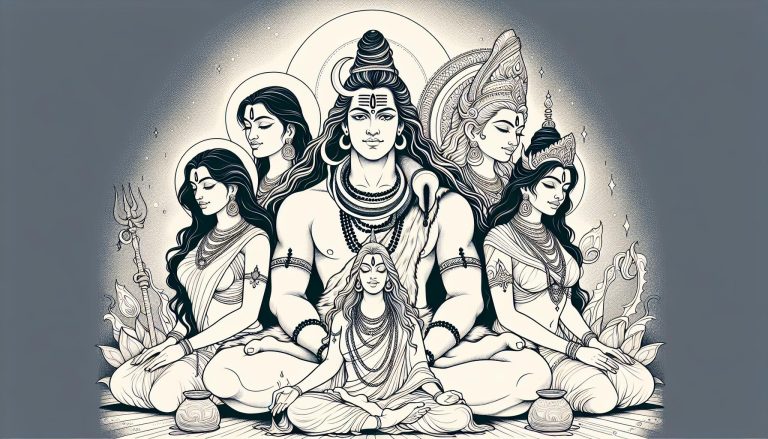
Exploring these divine relationships reveals deeper insights into balance and duality. Parvati’s nurturing grace contrasts beautifully with Kali’s fierce protection, while Durga’s warrior spirit showcases strength and resilience. Their stories aren’t just mythological tales; they offer timeless wisdom about life’s complexities and the interplay of opposing forces.
Understanding Shiva: The Destroyer and Transformer
Shiva, revered as The Destroyer and Transformer, holds a pivotal role in Hinduism. Destruction here signifies the annihilation of ignorance and the paving of the path for transformation and growth. Shiva’s symbolism extends beyond destruction, encompassing various attributes and tools that highlight his divine powers and cosmic responsibilities.
Consorts of Shiva
- Parvati: Shiva’s primary consort and divine counterpart. Representing his creative energy, Parvati manifests in multiple forms such as Uma, Sati, Durga, and Kali. Each incarnation reflects different facets of feminine strength and cosmic balance.
- Shakti: The personification of power and energy. As an integral figure in Shiva’s life, Shakti complements his masculine traits with her feminine energy, embodying the concept of balance within the universe.
- Third Eye: Symbolizes higher consciousness and the ability to eradicate negative forces. Often depicted on Shiva’s forehead, the third eye represents enlightenment, inner vision, and the power to overcome inner and outer adversaries.
- Trident (Trishul): A significant weapon in Hindu iconography. The trident’s three prongs symbolize the Trinity – Shiva, Vishnu and Brahma of Brahma – The Creator, Vishnu – The Protector, and Shiva, encapsulating creation, preservation, and destruction. This weapon also signifies balance and harmony among these forces.
Together, the consorts and symbolic attributes of Shiva depict a complex, multi-dimensional divine figure central to understanding the cyclical nature of existence and the interplay between creation and destruction.
Parvati: The Loving and Devoted Wife
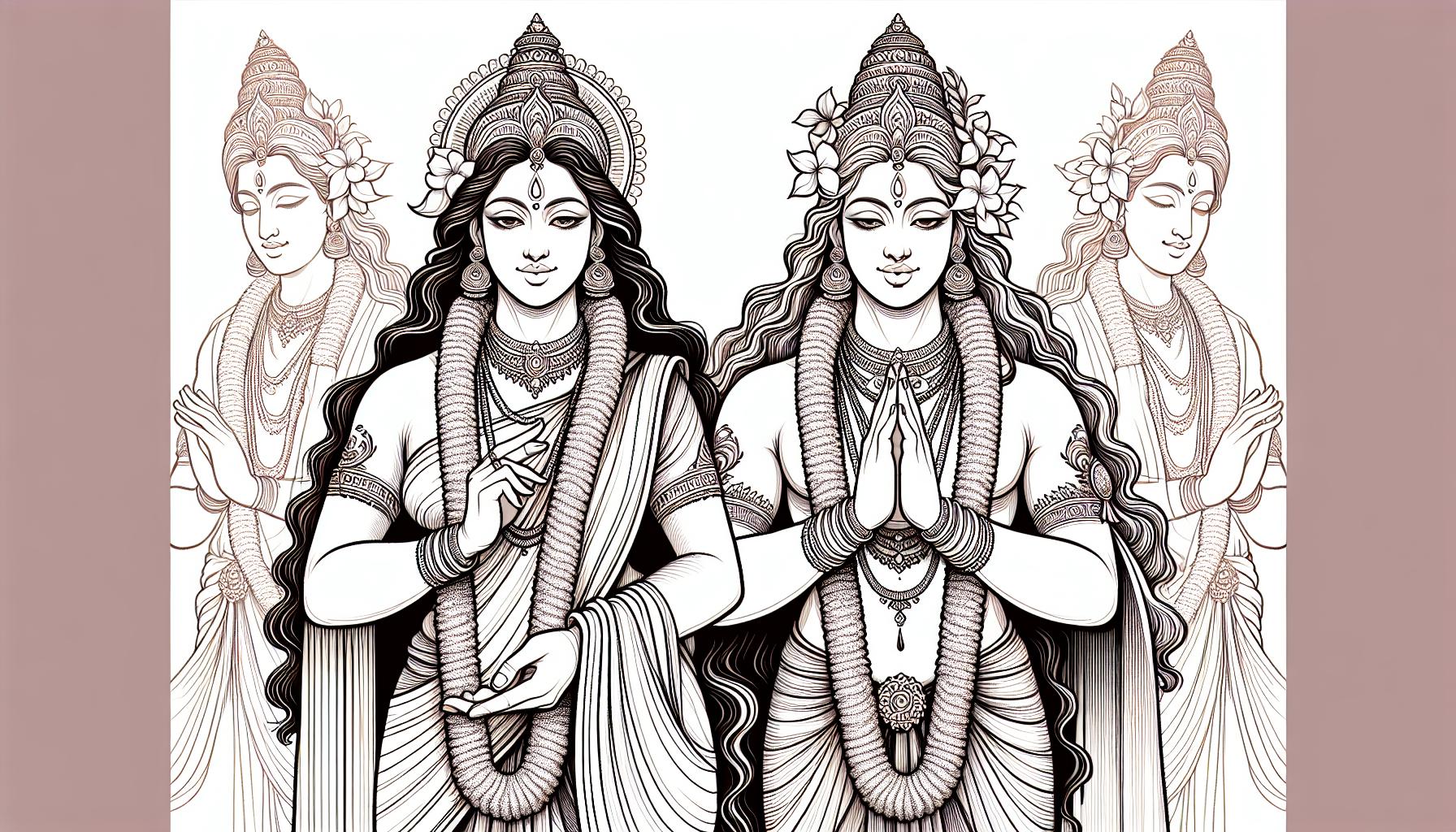
Parvati stands as a symbol of love, devotion, and nurturing grace in Hindu mythology. Her relationship with Shiva encompasses various dimensions of cosmic energy and balance.
Symbolism of Parvati
Parvati embodies the epitome of feminine energy, known as Shakti. She symbolizes fertility, love, and devotion. Her presence balances Shiva’s destructive and transformative energy with creation and nurturing aspects. Parvati is often depicted with attributes that signify harmony and familial bliss. Her icons frequently include items like flowers or a veil, reinforcing her role as the personification of domestic tranquility.
Relationship and Role in Hindu Mythology
Parvati’s relationship with Shiva illustrates an inseparable bond of love and mutual respect. She often engages in penance and devotion, reflecting the energy and perseverance required to unite with the divine. Their union is essential in Hindu mythology, demonstrating the necessity of balance between masculine and feminine energies. Together, they parent two significant deities: Ganesha, the remover of obstacles, and Kartikeya, the god of war. Parvati’s role extends beyond her relationship with Shiva, influencing devotees to seek harmony and devotion in their lives.
Sati: The First Consort
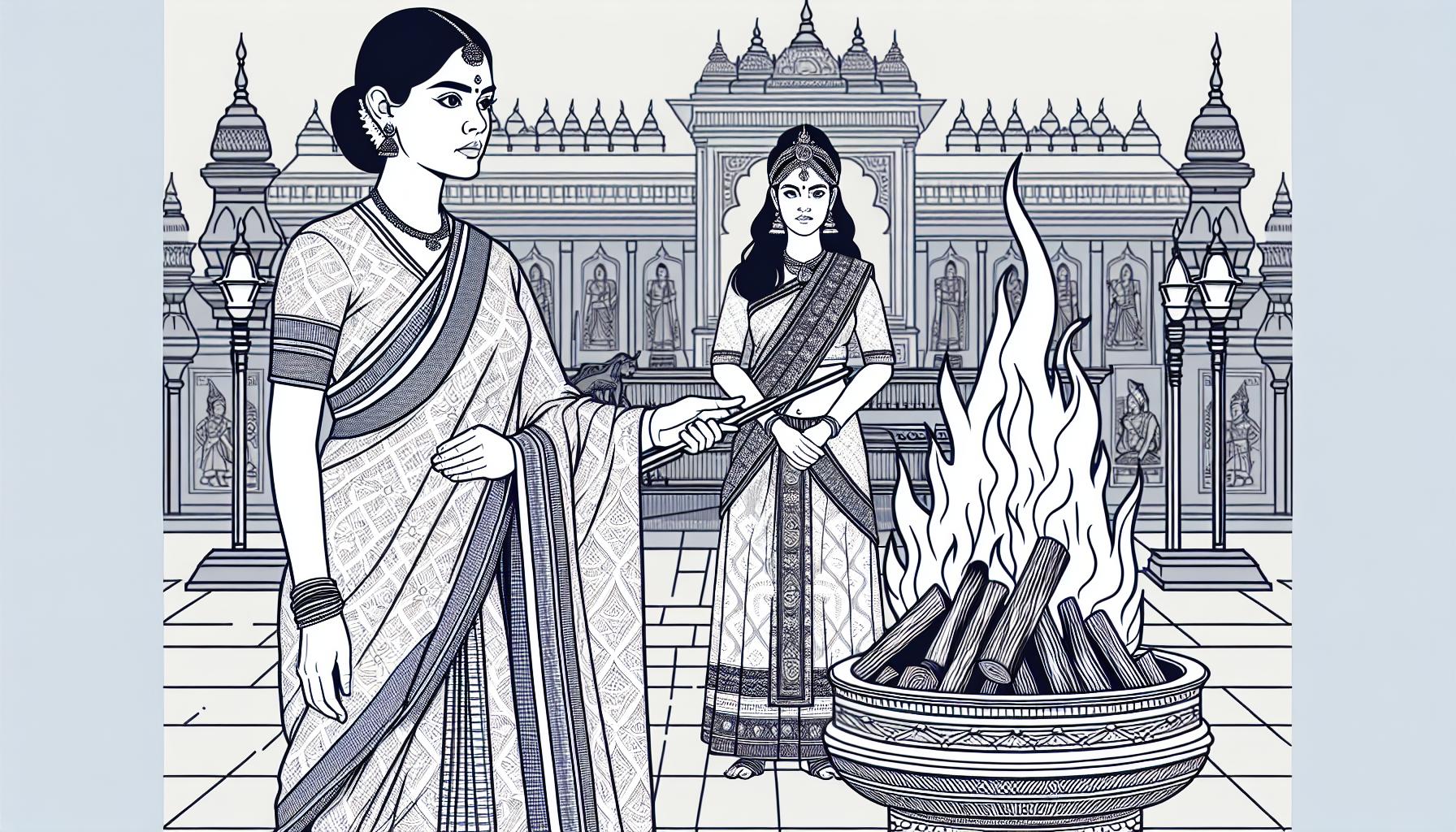
Sati, the first consort of Shiva, holds significant importance in Hindu mythology for her devotion and ultimate sacrifice. Her story sets the stage for understanding the deeper symbolism in the narrative of Shiva and his consorts.
The Story of Sati
Sati, daughter of King Daksha, was deeply devoted to Shiva. Despite her father’s disapproval, she married Shiva. Daksha’s antipathy toward Shiva culminated in a great sacrificial ceremony where Daksha insulted Shiva by not inviting him. Furious and humiliated, Sati decided to sacrifice herself by immolating in the sacrificial fire, unable to bear the disgrace shown to her husband.
Shiva, in his grief and rage, performed the Tandava (cosmic dance of destruction). To quell Shiva’s fury, Vishnu dismembered Sati’s burnt body, scattering her parts across the earth, creating sacred Shakti Peethas (holy shrines). This act transformed Sati’s death into a revered religious symbol.
Symbolic Significance of Her Rebirth
Sati’s rebirth as Parvati symbolizes the cyclical nature of life, death, and rebirth in Hinduism. By reincarnating, she underscores the eternal union of Shiva and Shakti. Parvati’s emergence from Sati’s self-sacrifice signifies transformation, resilience, and the enduring power of devotion.
Through Sati’s narrative and her eventual reincarnation, devotees learn about the potent interconnectedness of love, sacrifice, and the cosmic energies represented by Shiva and his consorts.
Durga: The Warrior Goddess
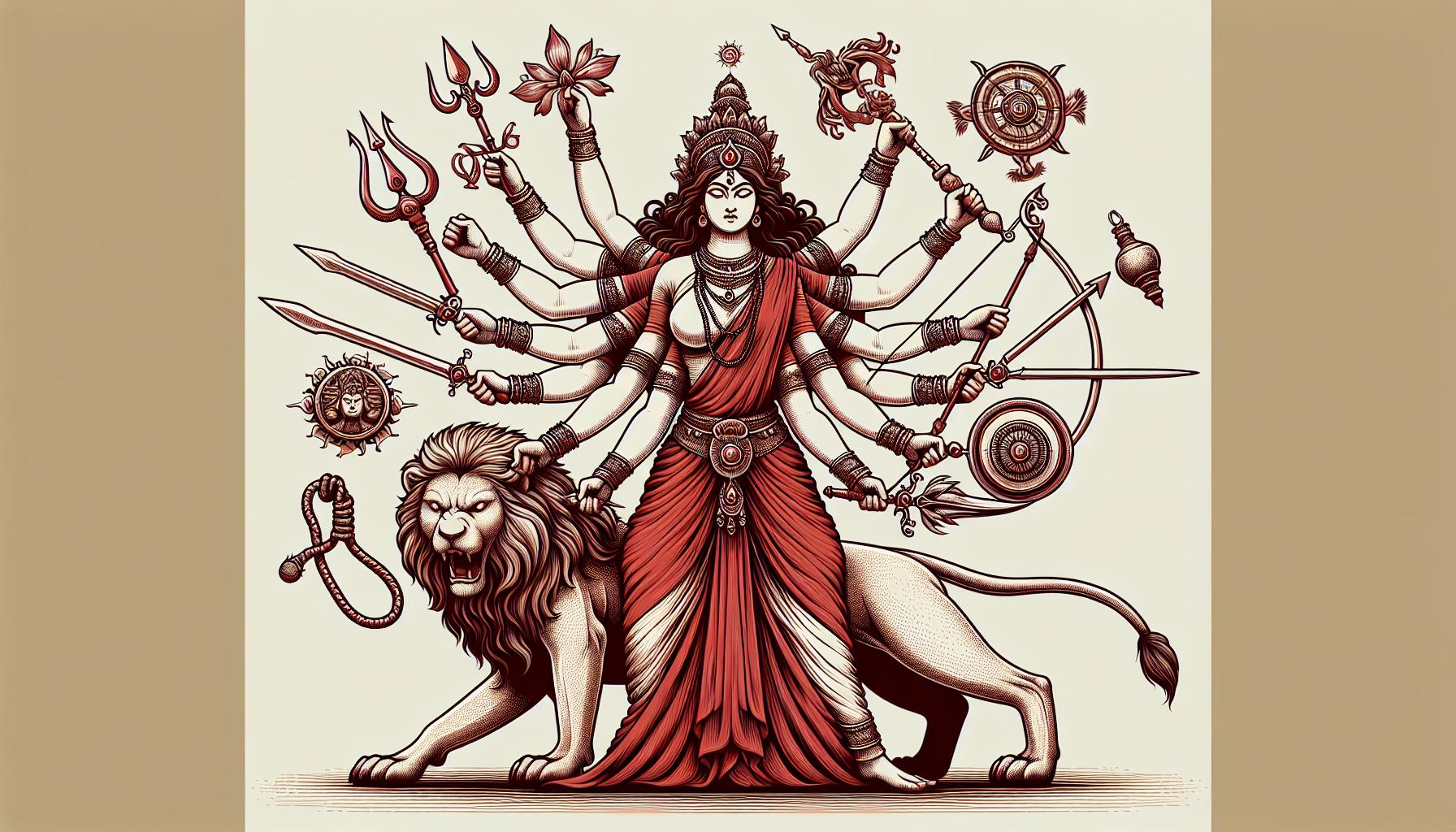
Durga, revered as a powerful warrior goddess, symbolizes strength, protection, and resilience. She embodies the fierce aspect of the divine feminine, standing as a protector of the righteous.
Mythological Tales of Durga
Durga’s mythology centers around her battle with the buffalo demon Mahishasura – Buffalo Demon. This demon, who could not be defeated by any man, posed a great challenge to the gods. In response, the gods created Durga, imbuing her with their collective power and weaponry. Clad in red, she rode into battle on a lion or tiger. With valor and strategic acumen, Durga ultimately vanquished Mahishasura, restoring cosmic order. This victory is celebrated annually during the festival of Durga Puja, emphasizing her role as a divine protector against chaos and evil.
Symbols and Attributes of Durga
Durga is often depicted with eight to ten arms, each holding a weapon. These weapons symbolize various divine attributes:
- Trishul (Trident): Represents courage, strength, and power to destroy evil.
- Conch: Signifies the call to battle, representing sound energy.
- Discus (Chakra): Emblematic of time, its spinning motion represents the universe’s cyclical nature.
- Bow and Arrow: Symbolize focus, concentration, and aim.
- Sword: Stands for wisdom, removing ignorance and evil.
- Javelin: Highlights Durga’s precision in warfare.
- Shield: Denotes protection and defense.
- Noose: Represents control over destructive forces.
These symbols convey Durga’s readiness to combat any threat, protecting her devotees and ensuring the triumph of good over evil.
Kali: The Fierce Protector
Kali, the fiercest manifestation of Shakti, embodies destruction and transformation. Known as the dark mother, Kali transcends dualities, representing time and change.
Legends Surrounding Kali
Numerous legends highlight Kali’s formidable aspect. One notable story involves the demon Raktabija, who regenerates from each drop of his blood. Kali’s unparalleled prowess becomes evident as she consumes Raktabija’s blood before it touches the ground, ensuring his final demise. In another account, Kali emerges from Durga’s forehead during the battle with Shumbha and Nishumbha, showcasing her integral role in cosmic warfare.
The Symbolic Meaning of Kali
Kali’s symbolism extends beyond her fierce demeanor. Her blue-black complexion signifies the infinite night of dissolution, dissolving the ego and superficial reality. The garland of skulls around her neck represents wisdom and the transcendence of human limitation. Standing on Shiva’s supine body, Kali illustrates the interplay of destruction and regeneration, crucial for maintaining cosmic balance.
Symbolism in Shiva’s Consorts
Shiva’s consorts embody deep symbolism rooted in Hindu mythology and philosophy. Each consort reveals different facets of divine feminine energy, adding layers of meaning to Shiva’s character and the cosmic balance.
Representation of Feminine Energy (Shakti)
Shakti, often depicted as the divine feminine energy, symbolizes the universe’s creative power. She is the dynamic force, representing vitality and change. Associated with fertility and nurturing, Shakti embodies manifestation energy. Her cycles of birth, life, and rebirth foster growth and evolution.
The Balance of Destruction and Creation
Shiva represents masculine energy through stillness and consciousness. He embodies detachment and renunciation, dissolving material world limitations. Paired with Shakti, Shiva’s meditative ascetic nature balances the destructive and creative forces, maintaining cosmic equilibrium.
Conclusion
Understanding Shiva’s consorts and their symbolism offers profound insights into the balance of cosmic energies. Each goddess—Parvati Sati Durga and Kali—brings unique attributes that complement Shiva’s meditative nature. This dynamic interplay of feminine and masculine energies reflects the complexity and beauty of the universe.
Exploring these mythological figures deepens our appreciation for the spiritual and cultural richness of Hinduism. It reminds us that balance and harmony are essential for maintaining cosmic equilibrium.
Sources & further reading
These themes are explored in greater depth across the following authoritative resources:
- Encyclopaedia Britannica, Hindu Mythology
- Internet Sacred Text Archive, Hinduism
- Mythopedia, Hindu Mythology
- Harvard Pluralism Project, Hindu Tradition
- Wendy Doniger, The Hindus: An Alternative History (Penguin, 2009), ISBN 978-0143116691
External resources for further reading. Apam Napat is not affiliated with these publishers; citation does not imply endorsement.
Based on the classical texts of Hindu mythology, see our sources.