

As I explored deeper, I found that Vedic mysticism bridges the gap between the seen and unseen, the known and unknown. It invites us to unravel the mysteries of life through meditation, sacred texts, and a deeper understanding of cosmic laws. Whether you’re a seasoned spiritual seeker or someone curious about ancient wisdom, Vedic mysticism has something profound to offer.
Understanding Vedic Mysticism
Vedic mysticism, an ancient system rooted in the Vedas, seeks to unravel the mysteries of existence. It’s not limited to rituals or chants. Instead, it provides a profound journey into the essence of being. The Vedas, composed around 1500-500 BCE, form the foundation of this esoteric knowledge.
The Core Texts
The Vedas consist of four main texts:
- Rigveda: Hymns dedicated to various deities.
- Samaveda: Melodies and chants used in rituals.
- Yajurveda: Instructions for performing rituals.
- Atharvaveda: Spells and incantations for daily life.
Each text adds unique insights into cosmic and metaphysical principles.
Key Concepts
- Atman – The Soul and Brahman – The Supreme Truth: Atman refers to the individual soul, whereas Brahman refers to the universal soul. Vedic mysticism explores their interconnectedness.
- Maya: The illusion that veils our perception of reality. Understanding Maya unveils the true nature of existence.
- Karma and Dharma: Karma pertains to actions and their consequences. Dharma refers to the cosmic order and duty. Both concepts are integral to Vedic thought.
Practices
- Meditation: Vital for connecting the self with the universal consciousness. Techniques vary, but the goal remains the union of Atman with Brahman.
- Mantras: Sacred chants that invoke spiritual energy. Examples include the Gayatri Mantra and Om.
- Yoga: Practices extend beyond physical postures, involving breath control and ethical principles to achieve spiritual growth.
Role of Gurus
Gurus play a crucial role in guiding seekers through Vedic mysticism. They offer personalized teachings based on ancient wisdom, aiding in the individual’s spiritual journey.
By understanding Vedic mysticism’s core principles, practitioners can deepen their comprehension of existence and foster a harmonious connection between the self and the universe.
Historical Context

Vedic mysticism has roots that trace back thousands of years to ancient India. The rich world of this tradition unfolds through a historical lens.
Origins of Vedic Mysticism
Vedic mysticism emerged around 1500 BCE, aligning with the composition of the first Vedic texts. These were orally passed down by the Aryans, a group migrating to the Indian subcontinent. The mysticism within these texts reflects the spiritual practices and philosophical inquiries of those early inhabitants. Scholars believe the Rigveda, the oldest Veda, encapsulates early forms of metaphysical thought and ritualistic practices that later evolved into the esoteric elements of Vedic mysticism.
Key Texts and Manuscripts
Four primary texts, known as the Vedas, form the foundation of Vedic mysticism. Each Veda serves a unique purpose:
- Rigveda: Consisting of hymns, it explores cosmic principles and divine entities.
- Samaveda: Focuses on melodies for chanting, emphasizing the sensory experience in rituals.
- Yajurveda: Contains prose mantras for ceremonial purposes, guiding the execution of sacred rites.
- Atharvaveda: Covers spells, charms, and mystical texts, highlighting the esoteric side of Vedic tradition.
Also, the Upanishads, regarded as the concluding part of the Vedas, investigate deeper into philosophical discourses and metaphysical ideas. These texts address concepts like Atman (soul), Brahman (universal consciousness), and the nature of reality. The Upanishads play a crucial role in shaping the spiritual and mystical dimensions of Vedic practices.
Core Concepts
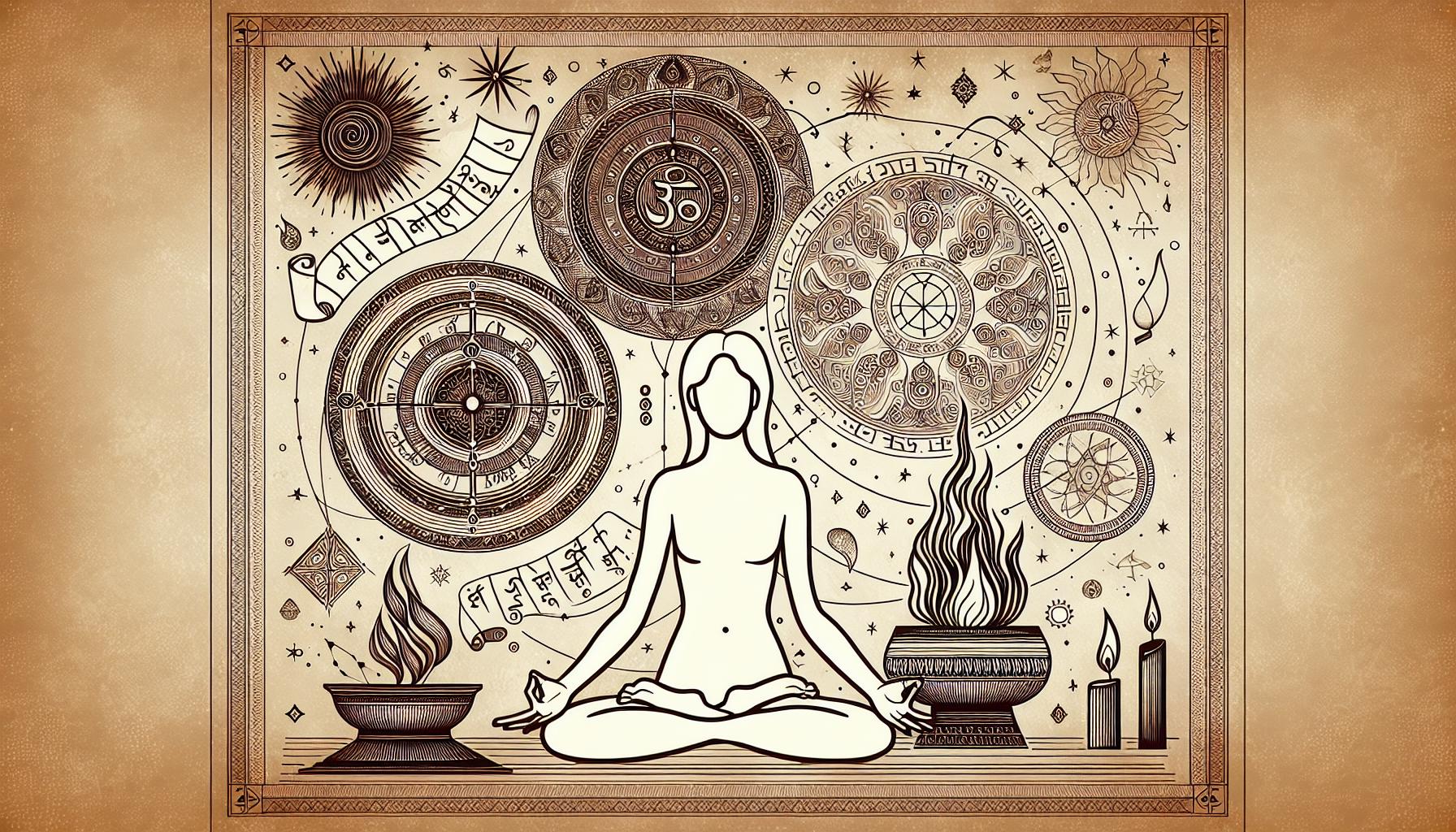
Vedic mysticism, rooted in ancient scriptures, encompasses several core concepts vital to understanding its depth and practices. Let’s explore these foundational elements.
The Vedas: Sacred Writings
The Vedas form the bedrock of Vedic mysticism. Comprising four main texts – Rigveda, Samaveda, Yajurveda, and Atharvaveda – these writings cover various aspects of metaphysics and rituals. The Rigveda contains hymns praising deities and delving into early cosmology. Samaveda focuses on melodic chants used in rituals. Yajurveda comprises prose mantras for ceremonial use. Atharvaveda includes spells and incantations addressing everyday life, health, and spirituality. Each text contributes uniquely to the world of Vedic wisdom, offering insights into cosmic principles and the nature of existence.
Esoteric Practices and Beliefs
Esoteric aspects of Vedic mysticism involve practices and beliefs that transcend ordinary ritualistic worship. These include meditation, chanting specific mantras, and performing intricate rituals aimed at attaining higher states of consciousness. Key concepts like Atman (the inner self or soul) and Brahman (the ultimate reality or universal spirit) are central to these practices. Meditation focuses on realizing the unity of Atman and Brahman, breaking the cycle of rebirth and leading to Moksha (liberation). The use of Agnihotra (fire worship) and other specific rites exemplifies how practitioners connect with cosmic elements, seeking harmony and enlightenment beyond the physical area.
Major Practices

Vedic mysticism employs various practices to attain higher consciousness and spiritual enlightenment. Among these, rituals and ceremonies, along with meditation and chanting, stand out as essential methods.
Rituals and Ceremonies
Rituals in Vedic mysticism embody symbolic acts to connect with cosmic forces. Agnihotra, a fire ritual, exemplifies the pursuit of harmony through offerings to Agni, the fire deity. This practice, performed at sunrise and sunset, aims to purify the environment and mind. Another notable ceremony is the Soma Yajna, which involves the offering of the Soma plant’s essence, believed to induce divine insights and exalted states of awareness. These rituals require precise recitations from the Vedas, symbolizing a profound alignment with cosmic principles.
Meditation and Chanting
Meditation serves as a critical tool in Vedic mysticism for attaining self-realization. Through Dhyana, practitioners focus their attention inward to connect with the Atman, the inner self. This practice often includes breath control techniques, or Pranayama, to harmonize mind and body. Chanting mantras amplifies this process by using sacred sounds to evoke spiritual energy. The Gayatri Mantra, one of the most revered, exemplifies seeking divine illumination and wisdom. Regular practice of these techniques promotes clarity, tranquility, and a deeper understanding of one’s existential purpose.
Influences on Modern Spirituality
Vedic mysticism’s profound insights continue to shape modern spirituality, integrating ancient wisdom into contemporary practices.
Comparison with Western Esoteric Traditions
Vedic mysticism shares similarities with Western esoteric traditions, though they differ in origins and expressions. Both emphasize connecting with higher realities and inner transformation.
- Hermeticism: Focuses on achieving gnosis or direct knowledge of the divine, akin to Vedic concepts of self-realization through Atman.
- Theosophy: Merges Eastern and Western spiritual insights, incorporating Vedic elements like karma, reincarnation, and meditation.
- Alchemy: Pursues spiritual purification and enlightenment, paralleling Vedic rituals that aim for cosmic harmony and divine alignment.
Impact on Contemporary Spiritual Practices
Vedic mysticism significantly influences contemporary spiritual practices, promoting holistic well-being and elevated consciousness.
- Yoga: Originates from Vedic traditions, popular globally, focuses on physical, mental, and spiritual practices to achieve unity with the self.
- Meditation: Essential in Vedic mysticism, practiced widely to attain mental clarity, emotional stability, and spiritual awakening.
- Mindfulness: Derived partly from Vedic practices, integrates awareness into daily activities, fostering a balanced and harmonious life.
These practices demonstrate the enduring relevance of Vedic mysticism in modern spirituality.
Notable Figures and Scholars
Understanding Vedic mysticism esoteric traditions requires acknowledging influential figures who have played pivotal roles. Among these, Vyasa – Composer of the Mahabharata holds a prominent place. As the compiler of the Vedas and author of the Mahabharata – The Great Epic, Vyasa’s works form the cornerstone of Vedic literature.
Sage Patanjali, known for the Yoga Sutras, significantly impacts the spiritual world. His contributions emphasize meditation and self-discipline, influencing both ancient and modern practices.
Adi Shankaracharya, the proponent of Advaita Vedanta, simplifies complex Vedic philosophies. His commentaries on classical texts like the Upanishads and the Bhagavad Gita make profound concepts accessible to many.
Swami Vivekananda, in the 19th century, introduces Vedic mysticism to the Western world. His speeches and writings at the Parliament of the World’s Religions in Chicago in 1893 create a bridge between Eastern and Western spiritual traditions.
Maharishi Mahesh Yogi, founder of Transcendental Meditation, merges ancient Vedic practices with modern scientific principles. His methods gain widespread recognition, attracting global followers, including notable figures like The Beatles.
Contemporary scholars investigate into Vedic mysticism’s esoteric aspects. Dr. David Frawley, an American Vedic teacher, and author, explores Ayurveda, Yoga, and Vedic astrology. His works help a deeper understanding of Vedic wisdom in the context of modern well-being.
Sanskrit and Vedic scholar David Frawley sheds light on these esoteric traditions. His translations and interpretations of key texts provide valuable insights into Vedic practices and their relevance today.
By recognizing these figures and their contributions, the profound insights within Vedic mysticism get highlighted, showcasing its significance and widespread influence.
Conclusion
Vedic mysticism offers a profound pathway to understanding the self and the universe. Its rich traditions and practices continue to inspire and guide spiritual seekers worldwide. The wisdom of ancient sages and modern scholars alike highlights the timeless relevance of these teachings. By integrating Vedic principles into our lives we can achieve greater harmony and spiritual insight. Exploring these esoteric traditions can lead to a deeper connection with the divine and a more meaningful existence.
Sources & further reading
These themes are explored in greater depth across the following authoritative resources:
- Internet Sacred Text Archive, Rig Veda (Griffith translation)
- Internet Sacred Text Archive, Upanishads
- Britannica, Veda
- Britannica, Upanishad
- Patrick Olivelle, The Early Upanishads (Oxford University Press, 1998)
External resources for further reading. Apam Napat is not affiliated with these publishers; citation does not imply endorsement.
Based on the classical texts of Hindu mythology, see our sources.