
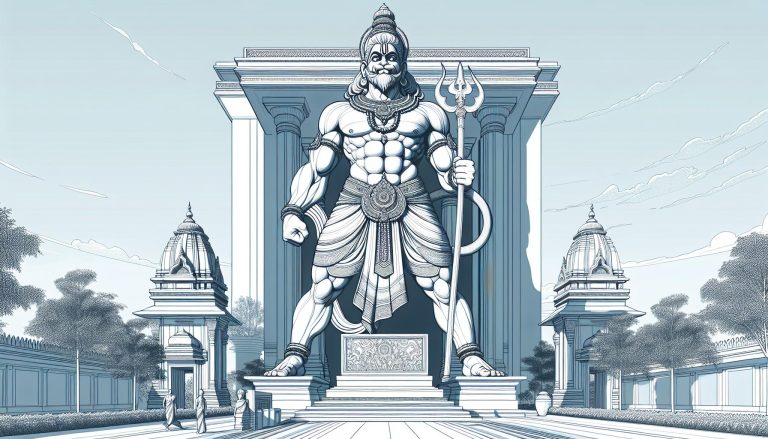
As I explored various temples and monuments, I noticed how Hanuman’s imagery and symbolism are intricately woven into the very fabric of these structures. From towering statues to intricate carvings, his presence is a testament to the cultural and spiritual significance he holds in Indian society. This architectural homage not only showcases artistic brilliance but also reflects the enduring legacy of Hanuman in India’s rich heritage.
Historical Background of Hanuman
Hanuman’s origin dates back to ancient Hindu epics, primarily the Ramayana – Epic of Hinduism and Mahabharata – The Great Epic. As a devoted follower of Lord Rama, Hanuman played pivotal roles in these texts. His tales highlighted his strength, loyalty, and wisdom, making him a revered figure.
Hanuman’s influence spread as his worship grew. By the Gupta period (320-550 CE), temples dedicated to him started emerging. These structures often incorporated intricate carvings and statues depicting Hanuman, underscoring his importance. The Chola dynasty (300s-1279) and Vijayanagara Empire (1336-1646) further promoted this architectural trend, embedding Hanuman’s imagery in their monumental designs.
The Mughals also interacted with Hanuman-themed architecture. Though primarily Islamic, they admired and patronized local arts, including Hanuman motifs in some instances. Examples can be seen in mixed architectural sites where Hindu and Mughal styles coexist.
Depictions of Hanuman in Indian Architecture

Hanuman, the revered monkey god, significantly influences Indian architecture. His depictions in temples and monuments highlight his strength, devotion, and loyalty.
Temples Dedicated to Hanuman
Numerous temples across India celebrate Hanuman. Each temple showcases unique architectural features and historical significance. One notable example is the Hanuman Temple in Connaught Place. Located in New Delhi, this ancient temple is claimed to be one of the five temples from the Mahabharata days in Delhi. This historical temple stands as a testament to Hanuman’s enduring legacy.
Hanuman in Sculptures and Reliefs
Hanuman’s images are ubiquitous in Indian architecture. Sculptures, reliefs, and paintings in temples and shrines frequently depict his iconic features. His red face, erect posture, and gada (mace) are prominent in these depictions. For instance, at the Hampi temples in Karnataka, intricate reliefs showcase Hanuman’s heroic deeds, emphasizing his vital role in mythology and cultural heritage.
Architectural Styles Influenced by Hanuman

Hanuman’s influence on Indian architecture extends to various styles across regions. His imagery is not just symbolic but also defines architectural features.
Dravidian Style
Dravidian architecture, predominant in southern India, incorporates Hanuman motifs extensively. Temple towers (gopurams), often include intricate carvings of Hanuman, symbolizing strength and devotion. The Virupaksha Temple in Hampi prominently features Hanuman statues, showcasing detailed relief works of his heroic deeds. The Chola dynasty significantly embedded Hanuman’s image into temple pillars, showcasing his importance in mythological narratives.
Nagara Style
In northern India, the Nagara style architecture also reflects Hanuman’s influence. Characterized by beehive-shaped towers (shikharas), many temples dedicated to Hanuman exhibit carvings and statues of him, reinforcing his cultural significance. The Sankat Mochan Hanuman Temple in Varanasi demonstrates this with its distinctive shikhara adorned with Hanuman’s imagery. Relief sculptures in Nagara temples often depict Hanuman holding his gada (mace), emphasizing his role as a protector and devotee.
Symbolism and Iconography

Hanuman’s representation in Indian architecture showcases his profound symbolism in Hindu mythology. His depictions convey strength, courage, and unwavering devotion, integrating these themes into various architectural elements.
Hanuman as a Symbol of Strength and Devotion
Hanuman’s imagery often displays him in acts of strength and devotion. Temples dedicated to Rama frequently portray him kneeling with folded hands or pulling apart his chest to reveal images of Rama and Sita. These visuals underscore his devotion and valor, themes that resonate deeply in Hindu belief systems.
Iconography in Hindu Temple Architecture
Hanuman’s iconography integrates deeply with Hindu temple architecture. His image often functions as part of the design and ornamentation in temples. This placement underscores his role as a protector and guardian of divine entities. Typically, Hanuman appears carved on temple doorways and sanctum walls, visually asserting his protective presence.
Common Themes and Motifs
Hanuman’s motifs commonly include depictions of his monkey form performing heroic deeds. Examples often show him holding a mountain or flying. These symbols emphasize his heroic nature and superhuman capabilities. Architectural elements also frequently display him in scenes from the Ramayana, highlighting his role in Hindu epics.
Ritualistic Significance
Temples featuring Hanuman not only display his imagery but often incorporate rituals centered around his worship. His statues are frequently the focal point of these rituals, which often involve offerings, chants, and prayers. This ritualistic focus further embeds Hanuman’s spiritual significance within Indian architecture.
Contemporary Interpretations
Hanuman’s influence isn’t just historical; it continues to shape modern Indian architecture in various innovative ways. New temples, sculptures, and art forms reflect his timeless appeal.
Modern Temples and Constructions
Modern temples dedicated to Hanuman incorporate contemporary architectural styles with traditional elements. For example, the Hanuman statue in Paritala, Andhra Pradesh, stands at 135 feet, blending modern engineering with ancient symbolism. Such structures often use reinforced concrete and steel to create monumental statues that are both durable and visually stunning. Additionally, modern materials like glass and LED lighting accentuate traditional motifs, providing a fresh perspective while retaining spiritual significance.
Artistic Representations
Contemporary artists frequently reinterpret Hanuman in their works, melding classical imagery with modern aesthetics. Murals of Hanuman can be seen on urban walls, incorporating graffiti techniques that attract a younger audience. Digital artists also contribute, with high-resolution artworks available for online sharing, blending traditional poses with modern design elements. Jewelry designers create intricate pendants and bracelets featuring Hanuman, appealing to contemporary tastes while preserving his iconic features.
Conclusion
Hanuman’s influence on Indian architecture is both profound and enduring. From ancient temples to modern structures his presence is a testament to the timeless appeal of his virtues. The blend of traditional and contemporary elements in recent constructions highlights the adaptability of Hanuman’s symbolism in Indian culture.
His depictions in various forms of art and architecture continue to inspire reverence and creativity. This enduring legacy ensures that Hanuman remains a central figure in India’s architectural narrative. Whether through grand statues or intricate temple carvings his spirit of strength courage and devotion is immortalized for generations to come.
Sources & further reading
These themes are explored in greater depth across the following authoritative resources:
- Encyclopaedia Britannica, Hindu Mythology
- Internet Sacred Text Archive, Hinduism
- Mythopedia, Hindu Mythology
- Harvard Pluralism Project, Hindu Tradition
- Wendy Doniger, The Hindus: An Alternative History (Penguin, 2009), ISBN 978-0143116691
External resources for further reading. Apam Napat is not affiliated with these publishers; citation does not imply endorsement.
Based on the classical texts of Hindu mythology, see our sources.