
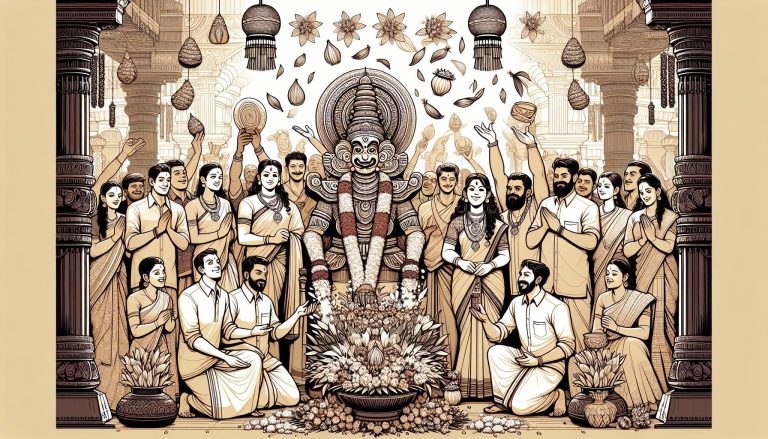
I find the duality in Asura worship fascinating. While mainstream narratives cast them as antagonists, many communities revere them for their strength and wisdom. This blend of fear and respect offers a unique lens through which to explore spirituality and human nature.
Historical Origins of Asura Worship
Asura worship has ancient roots in early Vedic texts. The Rigveda, a key scriptural text in Hinduism, mentions Asuras frequently. These beings possessed great power and wisdom, often engaging in cosmic battles with the Devas.
In the early Vedic period, Asuras were not viewed exclusively as malevolent. Rather, they embodied complex qualities, including both virtuous and destructive traits. For example, Varuna, initially depicted as an Asura, eventually became a deity of the oceans and moral law.
During the later Vedic period, the perception of Asuras began to shift. They increasingly represented chaos and opposition to divine order. Texts such as the Mahabharata – The Great Epic and the Puranas solidified this antagonistic view. Even though this shift, some sects continued to honor Asuras for their strength and intelligence.
In South India, for instance, local traditions often venerated specific Asuras. Communities worshiped figures like Mahabali, who, according to legend, ruled Kerala with justice before being overthrown by Vamana – The Dwarf, a Vishnu avatar.
Historically, Asura worship illustrates the duality of human belief. Early scriptures reflect a more nuanced understanding of these beings, recognizing their contributions to cosmic balance. As perceptions evolved, the worship practices adapted, maintaining relevance across different eras and regions.
Key Asura Deities
Key Asura deities feature prominently in various texts and traditions, embodying both positive and negative aspects.
Asura Rahu
Rahu, a severed head of the immortal asura Svarbhanu, symbolizes the eclipses. According to legend, Rahu attempted to drink the elixir of immortality, leading to his decapitation by Vishnu. Even though his physical separation, Rahu’s head continued to exist, causing lunar and solar eclipses by swallowing the sun and moon. Rahu, often invoked in astrological contexts, impacts personal and global events. Devotees worship Rahu to mitigate its malefic effects, seeking relief from suffering and obstacles.
Asura Ketu
Ketu represents the tail of Svarbhanu, the counterpart to Rahu. Unlike Rahu, Ketu aligns more with spiritual tendencies and enlightenment. In mythology, Ketu symbolizes the process of material loss leading to spiritual gain. Astrologically, Ketu influences psychic abilities, wisdom, and detachment. Worship of Ketu focuses on overcoming life’s challenges and attaining spiritual growth. Devotees believe that Ketu’s influence can turn initial misfortunes into positive transformations.
Asura Vritra
Vritra, the mighty serpent asura, embodies chaos and drought. In Vedic mythology, Vritra blocked the rivers, causing massive droughts, until Indra, the king of gods, defeated him and released the waters. Vritra’s defeat by Indra is a central myth in the Rigveda, representing the triumph of order over chaos. Even though his negative depiction, some traditions honor Vritra for his formidable strength. Worship of Vritra, although less common, highlights respect for natural forces and their cyclical nature.
Rituals and Practices
Asura worship involves a variety of rituals, each designed to honor and appease these complex beings. The practices below highlight how devotees connect with Asuras through offerings, prayers, and celebrations.
Offerings and Prayers
Devotees perform specific offerings to seek blessings from Asuras like Rahu, Ketu, and Vritra. Fruits, flowers, incense, and lamps are common elements. For instance, Rahu worship involves blue and black items to resonate with its celestial attributes. Ketu, associated with spirituality, receives mustard seeds and cloth offerings to symbolize enlightenment. Prayers, chanted in ancient languages, serve to invoke these deities and mitigate negative influences. For Vritra, rituals often include water elements to counteract drought symbolism.
Festivities and Celebrations
Communities celebrate Asura worship through vibrant festivities. During the Onam festival in Kerala, Mahabali is honored with grand feasts, traditional games, and dances, highlighting his reign’s prosperity. Rahu and Ketu receive special observances during solar and lunar eclipse periods, where elaborate fire rituals and collective prayers help protect from adverse effects. Local fairs and cultural performances celebrate Vritra, focusing on his strength and the cyclical nature of chaos and order. These events reinforce community bonds and cultural heritage, integrating Asuras into the social fabric.
Regional Variations
Asura worship varies significantly across regions, reflecting local beliefs and cultural influences.
Asura Worship in India
In India, Asura worship persists predominantly in South India. Communities in Kerala honor Mahabali, a revered Asura king, during the Onam festival. This harvest festival includes rituals like flower arrangements (Pookalam), traditional feasts (Sadhya), and boat races, showcasing Mahabali’s rule as a time of prosperity. In Tamil Nadu, devotees worship Rahu and Ketu, two shadow planets linked to lunar and solar eclipses, at specific temples like the Rahu Stalam and Ketu Stalam. These temples offer special prayers and rituals on lunar and solar eclipse days, combining astronomy with mythology.
Asura Worship in Southeast Asia
In Southeast Asia, Asura worship integrates into Buddhist and Hindu traditions. In Thailand, Asuras appear in temple guardians and sculpture, symbolizing protection against evil. The famous Wat Arun temple in Bangkok features Asura statues guarding its entrance, blending local folklore with Asura mythology. In Cambodia, the Asura deity Bali finds reverence in classical dance and theater, symbolizing moral lessons and virtues. Balinese Hinduism in Indonesia also incorporates Asura elements, particularly in rituals involving Barong and Rangda, embodying the balance of good and evil forces. These practices reflect the dynamic interplay between local culture and ancient Asura traditions.
Cultural and Literary Depictions
Asura worship has left a significant imprint on both ancient and modern cultural narratives. These depictions span mythological stories, literature, and media, providing a rich world of Asura’s influence.
Mythological Stories
Ancient texts like the Mahabharata, Ramayana – Epic of Hinduism, and Puranas feature Asuras prominently. In the Mahabharata, tales of Asura King Vritra’s battle against Indra illustrate themes of struggle and valor. The Ramayana portrays Ravana, an Asura king, as both a formidable antagonist and a learned ruler, reflecting the duality of Asura characterizations. The Bhagavata Purana recounts the story of Hiranyakashipu, who challenges divine authority, and his son Prahlada, whose devotion symbolizes the victory of faith over tyranny. These stories, through epic battles and complex characters, underscore the profound moral lessons embedded in Asura worship.
Modern Literature and Media
Modern literature and media continue to draw inspiration from Asura mythology. In contemporary novels, characters like Mahabali and Ravana are reimagined to explore themes of rebellion, justice, and redemption. Anand Neelakantan’s “Asura: Tale of the Vanquished” offers a narrative from Ravana’s perspective, providing a nuanced view of these ancient figures. Visual media also engage with Asura mythology; for instance, Indian television serials and films frequently dramatize these epic tales, bringing Asura characters to life for contemporary audiences. Graphic novels and animated series further expand this cultural depiction, blending traditional elements with modern storytelling techniques. Through these mediums, the enduring legacy of Asura worship continues to evolve and resonate.
Conclusion
Asura worship, with its deep roots in ancient texts and diverse regional practices, continues to be a significant cultural and spiritual tradition. It’s fascinating to see how communities have preserved and adapted these rituals, celebrating Asuras like Mahabali, Rahu, and Ketu. These practices not only honor the complex nature of Asuras but also reinforce cultural heritage and community bonds. From the vibrant Onam festival in Kerala to the unique observances in Southeast Asia, Asura worship remains a dynamic and evolving part of our collective mythology and spiritual world.
Frequently asked questions
Where is Asura worship practiced today?
Who is Mahabali and why is he worshipped?
What is the connection between Rahu and the eclipses?
What does Ketu represent in Asura worship?
Sources & further reading
These themes are explored in greater depth across the following authoritative resources:
- Britannica, Asura
- Britannica, Naga
- Mythopedia, Hindu Mythology
- Internet Sacred Text Archive, Mahabharata
- Wendy Doniger, Hindu Myths (Penguin Classics, 1975)
External resources for further reading. Apam Napat is not affiliated with these publishers; citation does not imply endorsement.
Based on the classical texts of Hindu mythology, see our sources.