
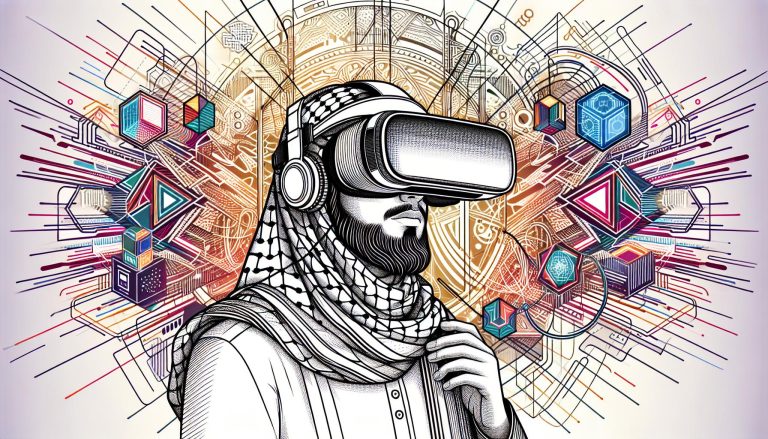
As I investigate into this fascinating topic, I’ll explore how our brains construct our reality and why these constructions can sometimes be deceptive. Understanding the illusion of reality not only broadens our perspective but also helps us navigate a world filled with both genuine and artificial experiences. Let’s uncover the layers of perception and discover what lies beneath the surface of our everyday experiences.
Understanding the Concept of Illusion of Reality
The illusion of reality arises when our brains interpret sensory information, creating a perception that doesn’t match objective reality. Cognitive processes, such as pattern recognition and memory, shape these perceptions. For instance, optical illusions exploit how our visual system processes images, leading us to see things that aren’t there.
Perceptual illusions are common in everyday life. Visual illusions, such as the Müller-Lyer illusion and the dress color debate (blue/black or white/gold), highlight how context and surrounding information affect our visual interpretation.
Auditory illusions also exemplify the illusion of reality. The McGurk effect shows that seeing conflicting visuals can change what we hear. When watching a video where a person’s lip movements don’t match the spoken words, our brains blend the sensory inputs, creating a new, incorrect perception.
Technological advancements enhance these illusions. Virtual reality (VR) and augmented reality (AR) immerse users in synthetic environments, tricking the brain into experiencing a constructed reality. In VR, users can interact with a completely artificial world, while AR overlays digital information on the real world.
Understanding the illusion of reality helps us navigate complex perceptual environments. By recognizing the brain’s role in shaping our experiences, we can better appreciate the distinction between perception and objective reality.
Historical Perspectives
Exploring the origins of the “illusion of reality” concept reveals varied interpretations across time periods.
Early Philosophical Ideas
Early philosophers like Plato and Descartes engaged in deep explorations of reality and perception. In “The Allegory of the Cave,” Plato illustrated how perceptions could deceive, showing prisoners mistaking shadows for real objects. Descartes, in his Meditations, questioned the certainty of sensory experiences, asking how one could distinguish dreams from waking life. These foundational ideas set the stage for future inquiries into the nature of reality and illusion.
Modern Psychological Interpretations
In modern psychology, understanding perceptions and illusions has evolved through empirical research. The Gestalt psychologists, beginning in the early 20th century, emphasized that our brains organize sensory inputs into wholes rather than parts. Such principles explain phenomena like the Müller-Lyer illusion. Later, cognitive psychology focused on how memory, attention, and expectations shape our perceptions. Neuroscientists today use advanced imaging techniques to study brain activity, revealing how specific neural processes contribute to the perception of reality. This interdisciplinary approach deepens our grasp of how and why illusions occur.
Illusion of Reality in Art and Media
Both visual arts and media like film and television explore the illusion of reality, providing different pathways to experience and understand this concept.
Visual Arts
Illusion in visual arts isn’t a limitation but a strength. Art uses illusions to show truth by constructing new modalities for understanding reality. Artists often employ types of illusions, such as optical, graphic, emotional, and physiological, each enhancing the art’s depth. For instance, optical illusions can make two-dimensional images appear three-dimensional.
Artistic expression relies on illusion to capture the essence of an object or experience. When re-presenting something through sound, sight, and motion, artists seek the core of those experiences. This approach allows viewers to perceive and interpret deeper meanings beyond the surface reality.
Film and Television
In film and television, the illusion of reality becomes even more pronounced. Directors and producers use various techniques like special effects, CGI (computer-generated imagery), and immersive soundscapes to create believable worlds. These elements trick the audience into accepting the film’s or show’s version of reality.
A notable example is the use of CGI in movies like “Avatar,” which transports viewers to the fictional world of Pandora. This illusion of reality engages the audience, making the experience more immersive and impactful. Similarly, TV series use these techniques to sustain viewers’ engagement through multiple episodes.
By exploring these themes, both visual arts and media challenge our perceptions and enhance our understanding of what constitutes reality.
Impact on Human Perception
The illusion of reality significantly affects how individuals perceive the world. Understanding this impact can shed light on the cognitive and perceptual mechanisms driving our experiences.
Cognitive Biases
Cognitive biases play a crucial role in shaping human perception. These biases are systematic patterns of deviation from norm or rationality in judgment, often leading us to draw illogical conclusions. For example, confirmation bias makes people favor information that confirms their preexisting beliefs, affecting their interpretation of reality. Similarly, the anchoring effect causes individuals to rely heavily on the first piece of information they receive, skewing their subsequent judgments. Understanding cognitive biases helps in explaining why people often perceive reality differently, even though being presented with the same information.
Perception versus Reality
Perception often diverges from reality, influenced by various factors such as context, expectations, and past experiences. Visual illusions, like the Müller-Lyer illusion where lines of equal length appear different, illustrate how perception can be misleading. Media and technology further blur the lines between perception and reality by creating hyper-realistic environments that deceive the senses. For instance, virtual reality (VR) systems create immersive experiences that feel real even though being entirely artificial. Recognizing the disparity between perception and reality highlights the importance of critical thinking and awareness in exploring an increasingly illusion-driven world.
Case Studies and Examples
Exploring real-world scenarios helps illuminate the concept of the illusion of reality. Two primary areas where this is evident are optical illusions and virtual reality experiences.
Optical Illusions
Optical illusions offer clear demonstrations of how our perceptions can be deceived. Artists like M.C. Escher and Salvador Dalí employed intricate designs and surreal imagery to create works that challenge viewers’ senses. These pieces often use geometrical patterns, perspective tricks, and warped shapes to create scenes that defy physical laws. Research by Adelson (1995) on lightness perception used the checker-shadow illusion to show how context affects our interpretation of shades and colors. The famous “Rotating Snakes” illusion by Akiyoshi Kitaoka, which causes still images to appear as if they are moving, also underscores how static elements can trick our visual system.
Virtual Reality Experiences
Virtual reality (VR) provides immersive environments that convincingly simulate real-world or fantastical scenarios. VR systems, like Oculus Rift and HTC Vive, use sophisticated tracking technology and high-resolution displays to create a seamless experience. For instance, “Tilt Brush” by Google allows users to paint in a three-dimensional space, challenging traditional notions of canvas and brush. Studies by Slater et al. (2006) demonstrate that users can experience a sense of presence—feeling physically located in the virtual environment. VR has applications in training, therapy, and entertainment, offering experiences that manipulate perception closely enough to trigger real emotions and reactions.
Implications for the Future
Technological advancements are rapidly evolving, influencing how illusions shape our reality. Augmented Reality (AR) and Virtual Reality (VR) technologies are becoming commonplace in education, healthcare, and entertainment. For instance, VR simulations help medical students practice surgeries without real-life risks. This trend indicates future possibilities where digital illusions could train professionals across various fields.
Artificial Intelligence (AI) also plays a pivotal role in creating believable illusions. Deepfakes, AI-generated synthetic media, present both opportunities and challenges. On one hand, they offer new creative avenues for filmmakers and artists. Conversely, the potential for misuse necessitates robust ethical guidelines and detection mechanisms. Addressing these concerns will be crucial as society increasingly interacts with AI-driven content.
The entertainment industry continues to push the boundaries of illusion. Advanced CGI in films creates hyper-realistic visual effects, blurring the lines between fiction and reality. As technology advances, we might see fully immersive cinematic experiences where viewers are active participants rather than passive observers. This shift could redefine storytelling and audience engagement.
Education benefits significantly from illusion-based technologies. AR and VR can create interactive, engaging learning environments that cater to different educational needs. Imagine history lessons where students explore ancient civilizations through VR, making learning more vivid and memorable.
The medical field sees transformative potential. AR aids surgeons by overlaying critical information during procedures, enhancing precision. Similarly, VR helps in patient rehabilitation, offering immersive environments to practice motor skills, providing both safe and effective therapy options.
In daily life, smart devices with AR capabilities offer enhanced navigation and interactive experiences. From AR-enabled smartphones guiding us through complex directions to VR-enabled remote meetings, the future is an interconnected web of digital and physical realities.
Ethical considerations need addressing as these technologies advance. The potential for misinformation and manipulation grows with sophisticated illusions. Establishing standards and educating the public on discerning reality from illusion will be key.
To conclude, the integration of illusions into various sectors promises significant advancements. But, balancing innovation with ethical practices remains paramount to harnessing the full potential of these technologies responsibly.
Conclusion
Understanding the illusion of reality isn’t just a philosophical exercise; it’s crucial for exploring our increasingly complex world. As technology continues to evolve, the lines between what’s real and what’s illusionary will blur even further. We must remain vigilant and critical in our thinking to harness these advancements responsibly. By doing so, we can ensure that the benefits of AR, VR, and AI are realized without compromising our grasp on reality.
Sources & further reading
These themes are explored in greater depth across the following authoritative resources:
- Stanford Encyclopedia of Philosophy, Hindu Philosophy
- Britannica, Dharma
- Britannica, Karma
- Internet Sacred Text Archive, Bhagavad Gita
- A. K. Ramanujan, Speaking of Siva (Penguin Classics, 1973)
External resources for further reading. Apam Napat is not affiliated with these publishers; citation does not imply endorsement.
Frequently asked questions
What is the illusion of reality?
What are optical illusions?
What is the McGurk effect?
How does virtual reality create illusions?
Why is understanding the illusion of reality important?
Based on the classical texts of Hindu mythology, see our sources.