

Exploring maya opens up fascinating questions about the nature of consciousness. Are our thoughts and perceptions merely tricks of the mind? By delving into this topic, we can uncover how ancient wisdom intersects with modern neuroscience, offering profound insights into the mysteries of our own awareness.
Understanding Maya
Maya in various Eastern philosophies refers to the veil of ignorance covering our true nature and reality. In Hinduism and Vedanta, Maya embodies the principle of ignorance that distorts our perception, making us identify with the body, mind, and ego. It fosters a false sense of self, leading to suffering and bondage. The ultimate goal of spiritual practices in this tradition is to lift this veil and realize our true nature as Brahman – The Supreme Truth, the ultimate reality.
In Buddhism, Maya holds a similar meaning of ignorance and illusion. Within Theravada Buddhism, Maya also serves as the name of the Buddha’s mother, used metaphorically to describe the consciousness aggregate. This perspective emphasizes that our perception of reality is skewed by ignorance, preventing us from achieving enlightenment.
Understanding Maya challenges not just spiritual seekers but also modern scientists exploring consciousness. Ancient wisdom and contemporary neuroscience intersect, providing deeper insights into human awareness. This interconnection suggests that what we perceive might be a deceptive facade, prompting us to question the true nature of reality and consciousness.
Historical Background
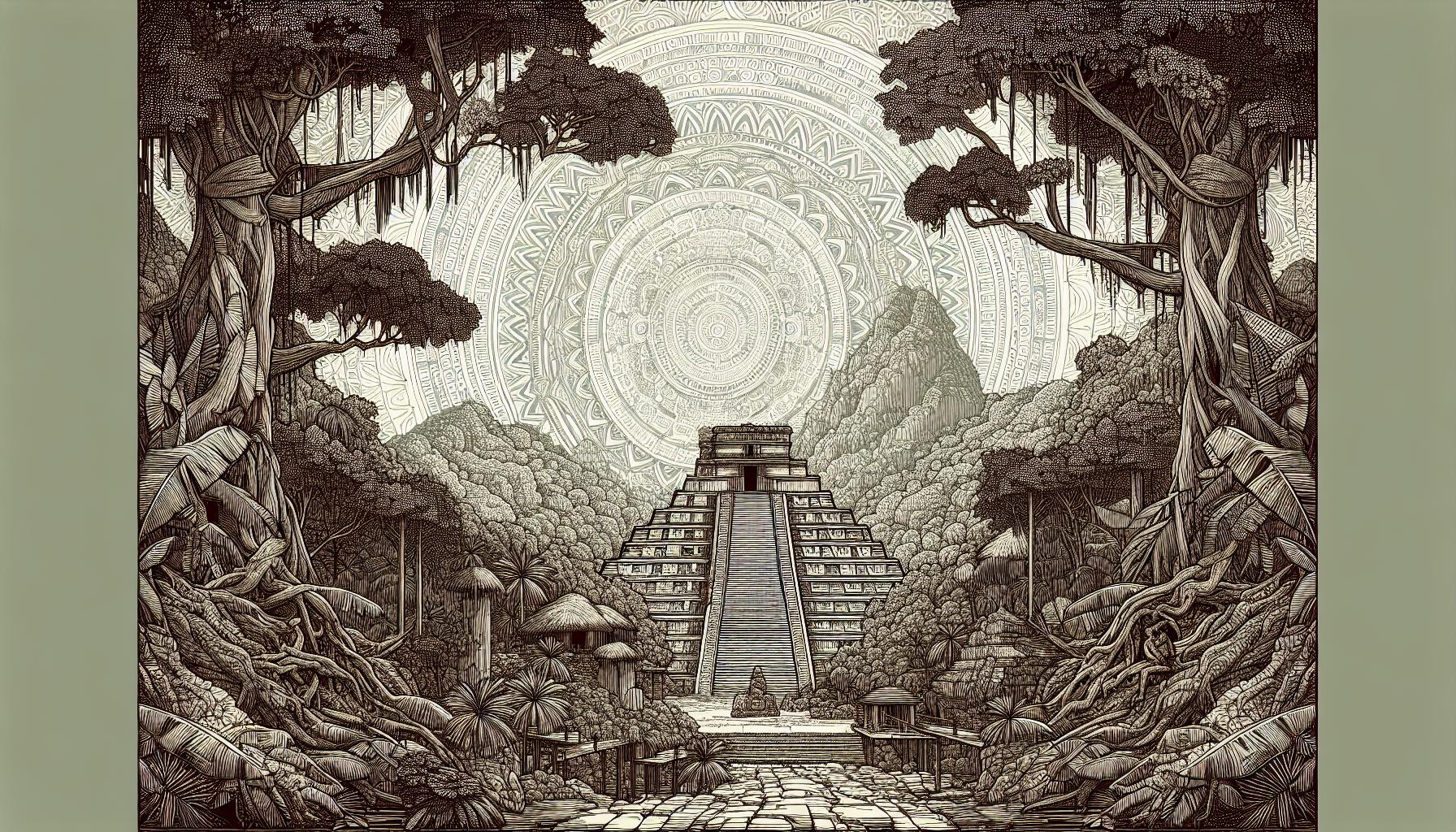
The Maya civilization, which thrived in Mesoamerica, spanned from the Preclassic period (2000 BCE – 250 CE) to the Postclassic period (900 – 1521 CE). Their society has an intricate understanding of consciousness and reality. The philosophical thought of the Maya, deeply rooted in their cultural and religious practices, highlights the interconnectedness of the material and spiritual realms.
In Hinduism, one finds the term “Maya,” which signifies the concept of illusion or ignorance masking the true nature of reality. Maya represents the principle of ignorance that keeps individuals from realizing their true self, or Atman – The Soul, and its unity with Brahman, the ultimate reality. Buddhism also employs the concept of Maya, describing the world’s illusory nature and the transience of all phenomena.
By comparing the civilizations and philosophies, one may see an underlying theme of illusion and deeper reality. Both the Maya civilization and Indian philosophies challenge perceptions and promote an understanding of consciousness that transcends the physical area.
Philosophical Perspectives
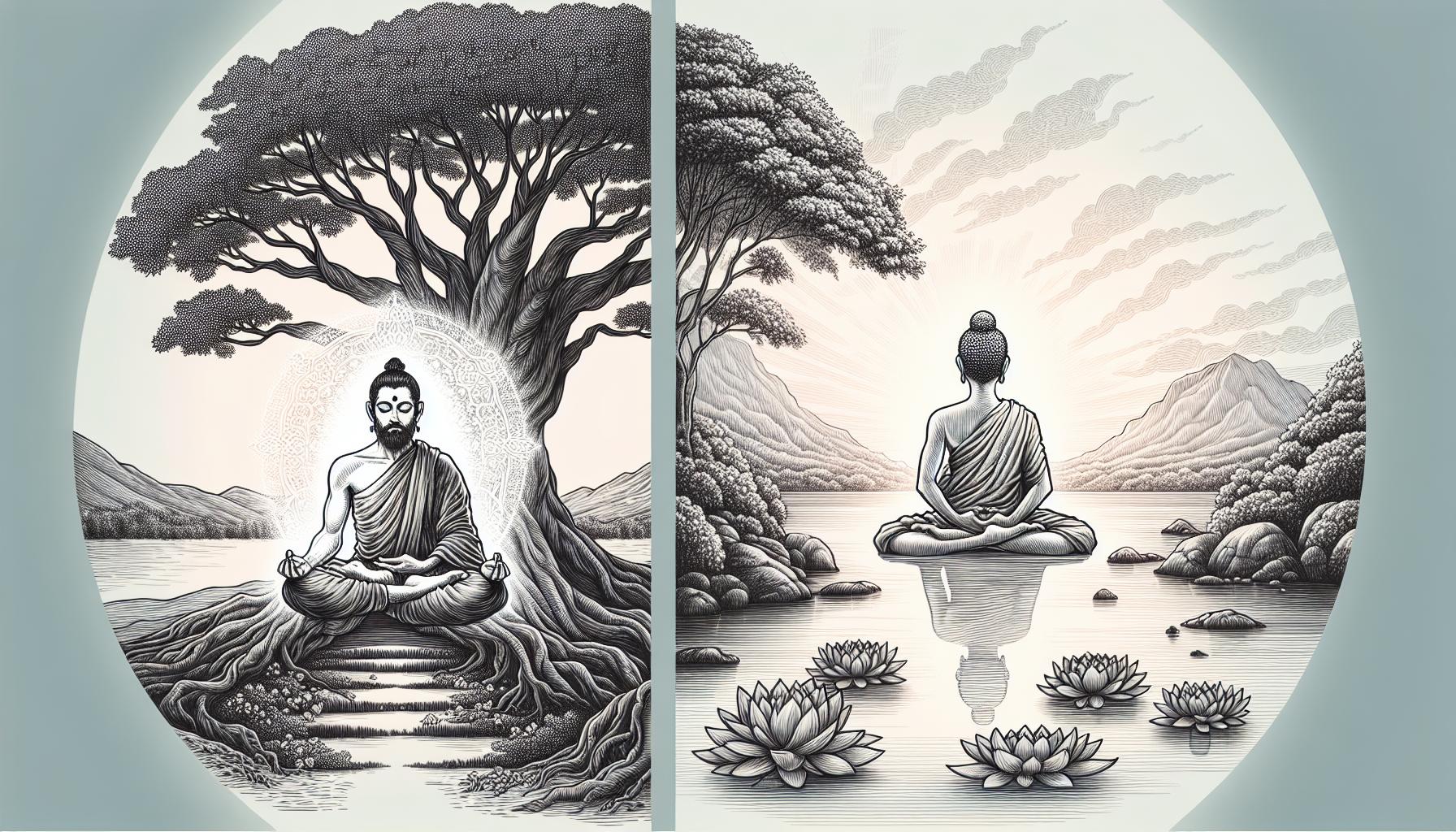
Exploring different philosophical traditions highlights diverse understandings of maya and consciousness. Two prominent perspectives come from Vedanta and Buddhist philosophies.
Vedanta Philosophy
In Vedanta philosophy, maya represents a veil of ignorance over our true nature and the world. This concept entangles consciousness, obscuring the realization of the unitary Self or Brahman – the ultimate Cosmic Spirit. Maya manifests as the empirical reality, while Brahman, the foundational cause, supports Maya. Enlightenment in Vedanta means realizing Brahman and experiencing the resplendent Oneness free from fear.
Buddhist Interpretation
In Buddhist philosophy, maya signifies ignorance or delusion that obscures the genuine nature of reality. It’s considered the root of suffering and the cycle of rebirth. Unlike Vedanta, which views maya as a cosmic illusion obscuring Brahman, Buddhism emphasizes overcoming maya to achieve enlightenment, thereby escaping the perpetual cycle of suffering and rebirth.
Modern Insights on Consciousness
Recent studies explore maya in the context of modern-day consciousness, shedding new light on ancient philosophical concepts.
Neuroscientific Approaches
Neuroscientific research underscores the brain’s role in constructing reality. Studies have demonstrated that the brain generates virtual reality simulations, not precise representations of the external world. For instance, memories are not retrieved but constructed, aligning with the philosophical notion of maya. Cognitive neuroscientists suggest our perception of reality is more about internal brain activity than external reality, echoing ancient teachings about the illusory nature of the world.
Psychological Analysis
Psychological research delves into subjective experience, crucial for understanding consciousness. The concept of maya aligns with findings that individual perception shapes reality. Cognitive biases and psychological constructs influence how we interpret the world. For example, the placebo effect illustrates how mental states affect physical health, reinforcing that our experiences and perceptions are not necessarily reflective of objective reality. This convergence of psychology and philosophy highlights the complex, constructed nature of what we consider consciousness.
Interplay Between Maya and Consciousness
The interplay between maya and consciousness is a fascinating subject central to various Eastern philosophies. Maya’s role in shaping our perception ties directly into our understanding of consciousness and reality.
Maya as Illusion
Maya, often described as illusion, impacts our perception by creating a false sense of reality. In Advaita Vedanta, maya is not reality itself but a force within Brahman, the ultimate reality. It veils our consciousness, making us see the material world as separate from Brahman. This illusion obscures the true nature of existence. For example, one might see a rope in dim light and mistake it for a snake due to maya’s influence.
Consciousness in Everyday Life
In everyday life, consciousness plays a crucial role in how we interpret and interact with the world. Consciousness projects the dream-like aspect of maya, making our experiences feel real. But, these experiences are often shaped by maya, leading to a distorted perception of reality. For instance, emotions, cognitive biases, and societal constructs influence our interpretation of events, reinforcing the illusion maya creates. By understanding maya’s role, individuals can work towards seeing through the illusion, moving closer to understanding the true nature of reality.
Practical Implications
Understanding maya and consciousness offers practical tools for personal development and mental health.
Meditation Practices
Mindfulness meditation, rooted in ancient traditions, trains attention to achieve calm concentration and positive emotions. It involves focusing on the present moment and observing sensations without judgment. This practice helps recognize the layers of illusion and perception that shape our experiences. I find that incorporating daily meditation sessions increases my awareness of my thought patterns, revealing how mental constructs influence my reality. Studies have shown that regular meditation improves emotional regulation, reduces stress, and promotes overall well-being.
Cognitive Therapies
Mindfulness-based cognitive therapy (MBCT) effectively combines mindfulness principles with cognitive behavioral therapy (CBT) techniques. It’s designed to treat depression and reduce relapse rates in people with a history of major depressive episodes. MBCT helps by encouraging present-moment awareness and acceptance, which reduces the impact of negative thought patterns. I notice that adopting these therapies creates a more objective view of emotions and thoughts, distinguishing between reality and mental projections. Research indicates that MBCT significantly lowers depression relapse rates, making it a powerful tool for mental health care.
Conclusion
Understanding maya and the nature of consciousness can profoundly impact our lives. By recognizing the illusions and perceptions that shape our reality, we can better navigate our experiences with clarity and purpose. Practices like mindfulness meditation and cognitive therapy offer practical tools to peel back these layers of illusion, enhancing our mental health and personal growth. Embracing these insights allows us to achieve greater emotional regulation and reduced stress, eventually leading to a more fulfilling and enlightened existence.
Sources & further reading
These themes are explored in greater depth across the following authoritative resources:
- Stanford Encyclopedia of Philosophy, Hindu Philosophy
- Britannica, Dharma
- Britannica, Karma
- Internet Sacred Text Archive, Bhagavad Gita
- A. K. Ramanujan, Speaking of Siva (Penguin Classics, 1973)
External resources for further reading. Apam Napat is not affiliated with these publishers; citation does not imply endorsement.
Frequently asked questions
What does Maya mean in Eastern philosophy?
How does Maya affect consciousness?
How is Maya understood in Buddhism?
What is the goal of overcoming Maya in Vedanta?
Based on the classical texts of Hindu mythology, see our sources.