
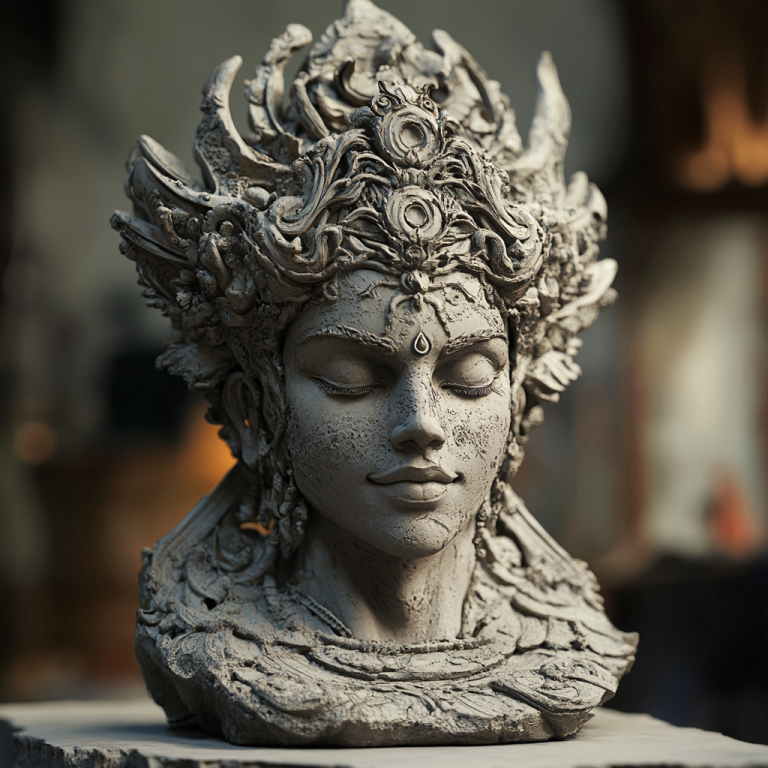
The Birth of the Maruts and the Conflict of Diti and Aditi
The Rivalry of Diti and Aditi
The sage Kashyapa – Father of the Devas and Asuras, the wish-born son of Brahma, was married to several daughters of Daksha, among whom Diti and Aditi were prominent. From these unions sprang two opposing clans:
- Aditi’s children, the Devas (gods), upheld dharma and order.
- Diti’s children, the Daityas (Asuras), often sought to challenge the gods and disrupt cosmic balance.
The Devas, with their divine strength and blessings, often triumphed in battles, leaving the Asuras defeated and decimated. This constant loss embittered Diti, who felt overshadowed by her co-wife Aditi and disheartened by the plight of her progeny.
Diti’s Request and Kashyapa’s Boon
Diti approached Kashyapa with sorrow in her heart and said,
“Dear husband, you have always favored Aditi over me. Her children are powerful and prosperous, while mine are hunted and slain. Grant me a boon so that I may bear a son who will surpass the Devas in strength and valor. Let him avenge the deaths of his brothers and become the slayer of Indra.”
Kashyapa, reluctant yet bound by her request, said,
“Your son shall be born as you desire, powerful enough to challenge and even slay Indra. However, this will come to pass only if you observe a strict vow (vrata) during your pregnancy. You must remain pure in thought and deed, free from anger and uncleanliness. Even a single lapse will endanger the fulfillment of this boon.”
Diti vowed to follow Kashyapa’s instructions rigorously, and in time, she became pregnant with the child destined to challenge Indra’s supremacy.
Aditi’s Alarm and Indra’s Plan
When Aditi learned that her sister was carrying a son who would endanger her own children, she grew anxious. She called her son Indra, the king of the gods, and said,
“Indra, your aunt Diti is carrying a child prophesied to be your slayer. If this child is born, the Devas will lose their dominance, and you will face certain death. You must act to prevent this calamity.”
Indra – The King of Heaven, distressed at this revelation, sought guidance. Aditi continued,
“Diti is observing a strict vow to ensure the fulfillment of her desire. You must find a way to disrupt her penance. Disguise yourself as her servant, earn her trust, and wait for her to falter. When she does, take the opportunity to destroy the embryo before it is born.”
Resolute, Indra disguised himself as a humble mendicant and offered to serve Diti. Trusting him completely, Diti welcomed him into her service.
Indra’s Treachery and the Birth of the Maruts
Indra patiently waited for Diti to lapse in her vow. After many days, Diti, weary and near the end of her pregnancy, accidentally went to sleep without washing her feet-an act that rendered her impure and broke the conditions of her vow.
Seeing his chance, Indra shrank himself to the size of an insect and entered her womb. Once inside, he used his Vajra (thunderbolt) to attack the embryo. As he sliced it into seven parts, the fetus began to cry. Indra, seeking to silence it, said, “Ma Ruda” (“Do not cry”). However, the pieces continued to cry, and in frustration, Indra further divided them, resulting in forty-nine fragments.
When Diti awoke, she realized what had happened. Her son, meant to avenge the Daityas, had been fragmented. However, the power of Kashyapa’s boon ensured that these fragments were not destroyed. Instead, the forty-nine pieces became the Maruts, a group of wind gods, who were destined to become Indra’s allies rather than his enemies.
Diti’s Curse
Diti, heartbroken and enraged at the treachery, cursed both Indra and Aditi for their deceit. She said,
“Indra, you have violated the sanctity of a mother’s womb and attacked an unborn child. Your reign shall be marked by struggles, and though you will remain king of the gods, your power will always be challenged.
As for you, Aditi, your offspring may dominate now, but they will face countless hardships and suffer great losses in the battles of the future.”
Despite her curse, the Maruts became divine beings and accepted their role as Indra’s companions. They were associated with the winds, storms, and cosmic energy, and their power was vital in aiding the Devas in their ongoing battles with the Asuras.
Connections to Hindu Mythology
- The Eternal Conflict of Devas and Asuras
- The rivalry between Diti’s and Aditi’s children is a recurring theme in Hindu mythology, symbolizing the struggle between order (dharma) and chaos (adharma).
- The Maruts
- The Maruts, born from the fragmented embryo, are significant in Vedic literature, sharing some elemental characteristics with the fierce Khasa – A Daughter of Daksha spirits described in ancient texts. As companions of Indra, they represent the storm deities and are often invoked in the Rigveda for their strength and ferocity.
- Indra’s Flawed Divinity
- Indra’s act of treachery, while pragmatic, underscores his flawed nature. Despite being the king of the gods, Indra often exhibits human-like emotions such as jealousy and fear, highlighting the complexities of his character.
- Diti’s Curse and Future Conflicts
- Diti’s curse foreshadows the trials faced by Indra and the Devas, including their eventual struggles during the churning of the ocean and their battles with formidable Asuras like Mahabali, Taraka, and Ravana-challenges mirrored by noble warriors like Jatayu – The Bird-Son of Kashyapa who defended dharma even in the face of overwhelming odds.
- The Role of Kashyapa
- Kashyapa’s progeny populate the cosmos, including Devas, Asuras, Nagas, and other celestial beings such as Vajranaga, a powerful figure among the serpent races.
Moral and Symbolism
- Patience and Restraint: Diti’s failure to adhere strictly to her vow highlights the importance of patience and discipline in achieving one’s goals.
- The Duality of Dharma: Indra’s actions, though treacherous, were motivated by a desire to protect the cosmos. This duality reflects the complexities of dharma, where ends sometimes justify the means.
- Cosmic Balance: The birth of the Maruts symbolizes transformation. What began as a destructive act resulted in the creation of divine beings who maintained cosmic balance.
This tale, rich with layers of meaning, illustrates the intricate interplay of destiny, divine will, and human emotion in Hindu mythology.
Sources & further reading
These themes are explored in greater depth across the following authoritative resources:
- Britannica, Asura
- Britannica, Naga
- Mythopedia, Hindu Mythology
- Internet Sacred Text Archive, Mahabharata
- Wendy Doniger, Hindu Myths (Penguin Classics, 1975)
External resources for further reading. Apam Napat is not affiliated with these publishers; citation does not imply endorsement.
Based on the classical texts of Hindu mythology, see our sources.