
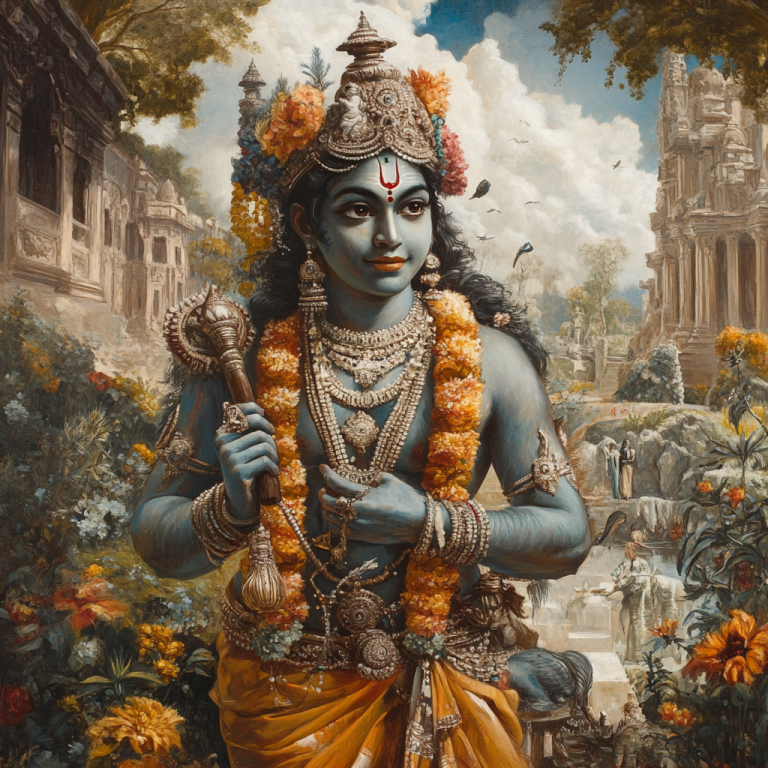
The Story of Bali and Vamana: A Tale of Devotion and Righteousness
The Rise of Bali
Bali, whose story is detailed among the legendary figures of Hindu tradition like Bali, King of the Asuras, was born to Virochana – Son of Prahalada, the son of Prahlada, and his wife Devamba. Bali exhibited greatness from a young age and became a devout follower of Vishnu, much like his grandfather. Crowned the prince of the Asuras by Prahlada, he later married Vindhyavalli, the daughter of a sage.
From his studies of history, Bali realized that the Devas triumphed over the Asuras not due to superior strength but due to their access to yogic powers and divine assistance, particularly from Vishnu. Determined to change the fate of his people, Bali undertook severe penance directed at Lord Brahma. Pleased by his devotion, Brahma granted Bali a boon that made the Asuras stronger than the Devas.
Bali’s Conquest and Rule
Empowered by Brahma’s boon, Bali became stronger than Indra, king of the Devas. As his father Prahlada retired to the forest in the Vanaprastha stage, Bali ascended the throne and soon conquered the earth. Acting on the advice of his guru Shukra, Bali performed the Vishwajit Yagna, proclaiming himself emperor of the world. Emboldened by his success, he amassed an army and launched a campaign against the heavens.
In a fierce battle, Bali and the Asuras defeated the Devas, forcing them to flee from Amravati, the celestial capital. Bali thus became the ruler of the three worlds and vowed to govern justly, offering protection and charity to all. Despite being a Danava, Bali, remembered for his righteousness in narratives such as Bali’s enduring legacy, brought prosperity and stability during his reign.
Aditi’s Despair and Vishnu’s Promise
While Bali ruled righteously, the balance of power had tilted, and the Devas, now powerless, sought refuge in Vishnu. The Lord assured them, “Fear not, for Bali’s devotion will be honored, but your rightful place in the heavens will also be restored.”
Meanwhile, Aditi, mother of the Devas and wife of Kashyapa, was heartbroken over her sons’ plight. At Kashyapa’s suggestion, she undertook the Payo Vrata, a twelve-day ritual involving fasting and prayer. Pleased by her devotion, Vishnu appeared before her and promised to be born as her son to deliver the Devas.
The Birth of Vamana
Vishnu, assuming the avatar of Vamana-one of the ten principal manifestations outlined in the roles of Vishnu’s avatars, was born to Aditi and Kashyapa in the month of Shravana, under the auspicious star of the same name. The divine child, though small in stature, radiated immense power and knowledge. Following traditional rites, the SaptaRishis conducted his Upanayana (sacred thread ceremony), where:
- Surya initiated him into the Gayatri Mantra.
- Brihaspati – The Guru of the Devas provided the sacred thread.
- Kubera gave him a begging bowl.
- Parvati offered his first alms.
- Brahma presented the sacred water pot.
Vamana, embodying the essence of the divine, performed his first Vedic ritual, dazzling the onlookers with his brilliance.
Bali’s Yagna and the Arrival of Vamana
While Bali prepared for his Ashwamedha – The Horse Sacrifice Yagna to cement his supremacy, Shukra warned him of impending danger, specifically advising him to deny any requests made by Vishnu. However, Bali, unwavering in his commitment to truth and charity, dismissed this counsel, saying, “If Vishnu himself seeks alms from me, it will be my greatest honor to give him what he desires.”
On the day of the sacrifice, Vamana entered the sacrificial hall. His small stature and serene demeanor captivated the onlookers. Bali welcomed the young Brahmana with great respect and promised to fulfill his request.
When Vamana asked for three paces of land, Bali was amused and offered more, but Vamana insisted on his modest request. Ignoring Shukra’s warnings, Bali prepared to fulfill the vow. Shukra, in a desperate attempt, blocked the spout of the ceremonial water jug in the form of an insect, but Vamana pierced it with a blade of Darba grass, blinding Shukra in one eye. The ritual proceeded, sealing the gift.
Vamana’s Transformation and Bali’s Surrender
As soon as the gift was granted, Vamana began to grow in size, revealing his cosmic form, a marvel described in traditional accounts of Vishnu’s avatars across eras. With one step, he covered the earth; with the second, he spanned the heavens. Turning to Bali, he said, “Where shall I place my third step?”
Bali, realizing the divine nature of his guest, bowed and offered his own head. Touched by Bali’s devotion and steadfastness, Vamana placed his foot on Bali’s head, pushing him into the netherworld (Patala). However, Vishnu blessed him, saying, “You shall rule Patala as its eternal king, and your glory shall remain unmatched. The Devas will regain the heavens, but your name will be immortalized.”
Legacy of Bali and Vamana
Bali’s sacrifice and Vishnu’s intervention are celebrated during Diwali in some traditions, symbolizing the victory of righteousness and devotion over pride and imbalance. Bali’s reign in Patala is remembered as a golden age, and he is revered as a just and noble ruler.
Symbolism and Connections in Hindu Mythology
- Balance of Power: Bali’s rise and fall symbolize the cosmic balance maintained by Vishnu, ensuring neither Devas nor Asuras gain absolute dominance.
- Devotion and Dharma: Bali’s unwavering commitment to his vow, even at great personal cost, exemplifies the highest form of Dharma.
- Cosmic Interplay: The story ties together multiple cosmic forces-Aditi’s devotion, Shukra’s guidance, Vishnu’s intervention, and Bali’s righteousness.
This narrative also parallels other tales where Vishnu incarnates to restore cosmic harmony, emphasizing the cyclical nature of power and justice in Hindu philosophy.
Sources & further reading
These themes are explored in greater depth across the following authoritative resources:
- Britannica, Asura
- Britannica, Naga
- Mythopedia, Hindu Mythology
- Internet Sacred Text Archive, Mahabharata
- Wendy Doniger, Hindu Myths (Penguin Classics, 1975)
External resources for further reading. Apam Napat is not affiliated with these publishers; citation does not imply endorsement.
Based on the classical texts of Hindu mythology, see our sources.