
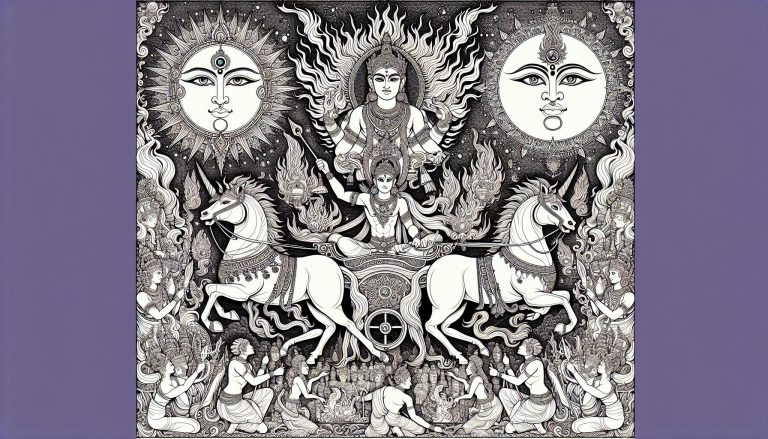
From the sun god Surya, who illuminates our world, to the moon god Chandra – The Moon, who governs the tides and our emotions, Hindu celestial deities offer a fascinating glimpse into the ancient worldview. These gods and goddesses not only personify natural forces but also guide devotees on their spiritual journeys. Let’s investigate into the rich lore and significance of these celestial beings and uncover the wisdom they impart.
Overview Of Hindu Celestial Deities
Hindu celestial deities play essential roles in Hindu mythology, linking various celestial bodies to divine entities that influence human life and the universe. These deities represent planets and natural forces, providing spiritual guidance.
The Navagraha
The Navagraha, or nine planets, form a central aspect of Hindu celestial deities. Each planet connects to a distinct god, impacting diverse life facets.
- Surya (Sun): The god Surya symbolizes the Sun, seen as the life and energy source.
- Chandra (Moon): The god Chandra represents the Moon, influencing emotions and subconscious realms.
- Mangala (Mars): The god Mangala is linked to Mars, affecting courage, strength, and aggression.
- Buddha (Mercury): The god Buddha symbolizes Mercury, associated with communication, intellect, and commerce.
Major Hindu Celestial Deities

Hinduism reveres numerous celestial deities, each embodying distinct universal aspects. Let’s explore some of the major figures.
Indra: The King of Gods
Indra stands as the king of gods in Hindu mythology, featuring prominently in the Rigveda. Connected to the Indo-European gods like German Wotan, Norse Odin, Greek Zeus, and Roman Jupiter, Indra leads divine cattle raids, brings rain as the god of thunderbolt, and conquers asuras. Often depicted riding a white elephant, Airavata, Indra exemplifies strength and leadership.
Surya: The Sun God
Surya, the solar deity in Hinduism, is significant in the Smarta tradition. Known by names such as Aditya, Bhaskara, and Suryanarayana, Surya represents the sun’s life-giving energy. He’s invoked for health, vitality, and clarity, driving away darkness and ignorance with his radiant light.
Chandra: The Moon God
Chandra governs the moon and symbolizes the mind and emotions. Adorning a crescent moon on his forehead, Chandra influences moods, fertility, and the functioning of the mind. Revered during rituals invoking peace and calm, Chandra’s phases are believed to affect human behavior and natural phenomena.
Agni: The Fire God
Agni embodies fire and stands as one of the primary deities in the Vedas. As the divine messenger, Agni bridges humans and gods through sacrificial rituals. Representing transformation and purification, Agni’s presence is pivotal in daily rituals and major yajnas, connecting the mortal area with the divine.
The Role Of Celestial Deities In Hinduism
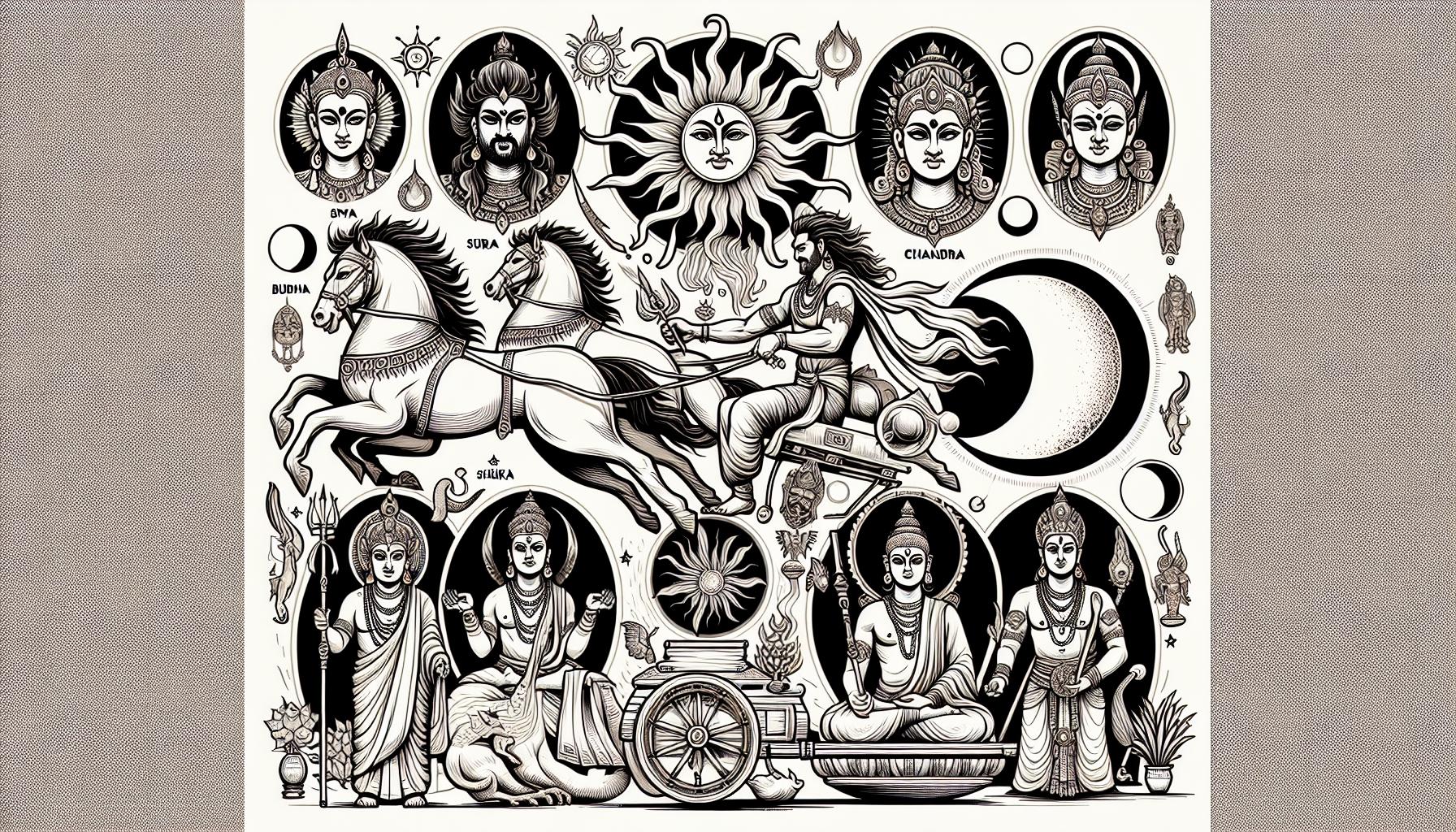
Celestial deities in Hinduism influence both the cosmos and human life. They are often linked to specific celestial bodies and play significant roles in various mythological narratives.
Mythological Significance
In Hindu mythology, celestial deities govern life and the universe. For instance:
- Surya (Sun God): Governs vitality and clarity.
- Chandra (Moon God): Influences emotions and fertility.
- Mangala (Mars God): Represents strength and courage.
- Buddha (Mercury God): Symbolizes intellect and communication.
- Guru (Jupiter God): Embodies wisdom and prosperity.
- Shukra (Venus God): Stands for love and beauty.
- Shani (Saturn God): Exercises discipline and justice.
- Rahu and Ketu (Shadow Planets): Signify karmic influences and challenges.
These deities have unique characters and powers, affecting individuals based on their celestial positions.
Rituals And Worship
Devotees honor celestial deities through various rituals and worship practices:
- Surya Namaskar (Sun Salutation): A series of yoga poses dedicated to Surya.
- Chandra Puja (Moon Worship): Performed to seek emotional balance and fertility.
- Mangalwar Vrat (Mars Fasting): Observed to gain strength and courage.
- Budhvar Puja (Mercury Worship): Conducted to enhance intellect and communication.
- Guruvar Vrat (Jupiter Fasting): Performed for wisdom and prosperity.
- Shukravar Vrat (Venus Fasting): To foster love and beauty.
- Shani Puja (Saturn Worship): Seeks discipline and relief from hardships.
- Rahu and Ketu Remedies: Include specific prayers and rituals to mitigate challenges.
These practices symbolize the worshippers’ connection to the deities and their respective celestial influences.
Symbolism And Iconography
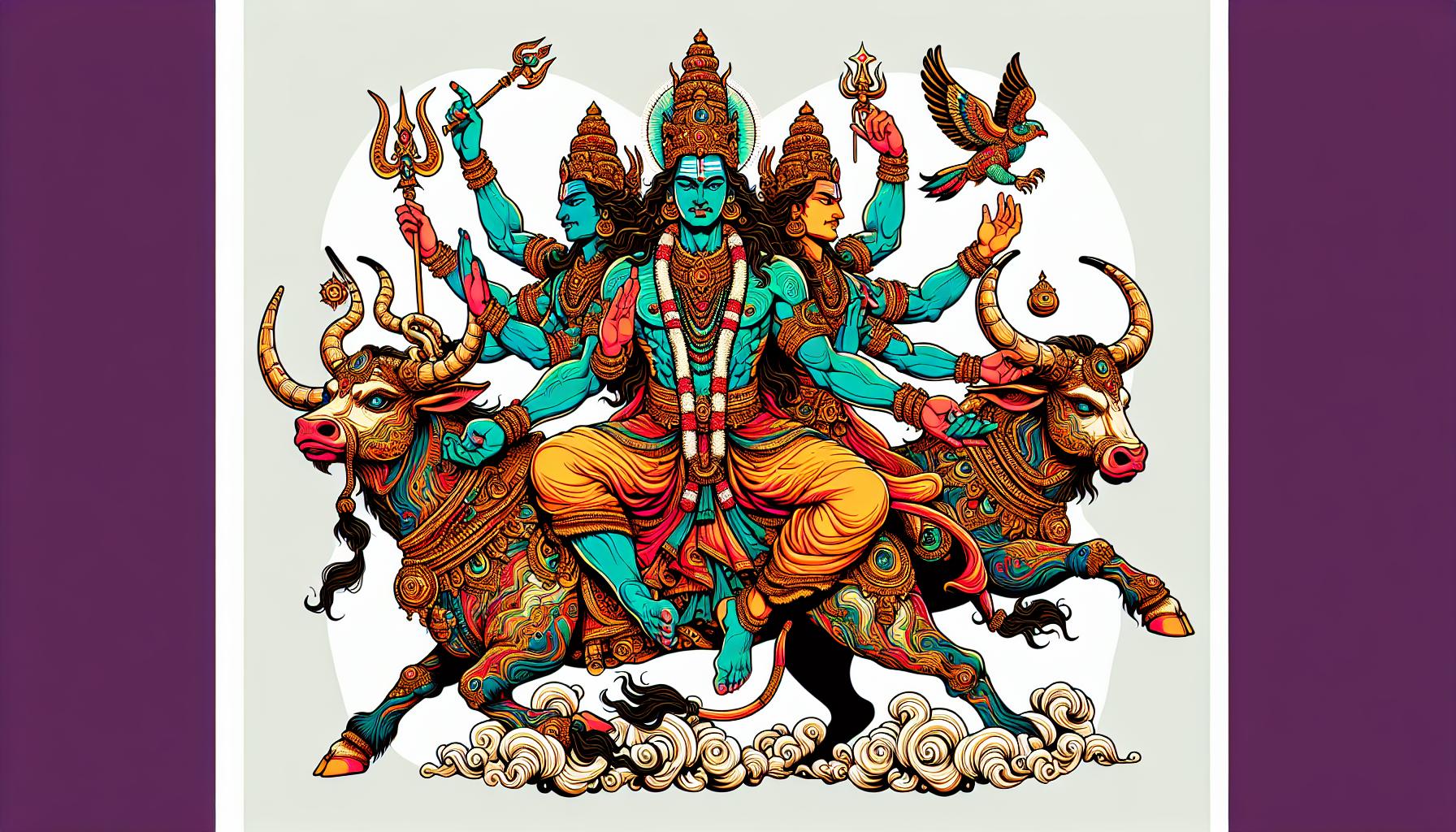
Hindu celestial deities hold profound meanings in Hinduism, with their symbols and attributes deeply ingrained in the religion’s artistic and cultural traditions.
Common Symbols
Hindu deities often carry multiple arms and heads, symbolizing their immense power and multifaceted nature. For example, goddess Durga’s multiple arms illustrate her ability to combat numerous evils simultaneously. Also, each deity is associated with a Vāhana, representing their divine attributes. Vishnu – The Protector’s eagle Garuda emphasizes his sovereignty over the skies, while Shiva’s bull Nandi symbolizes strength and fertility.
Depictions In Art
Artists frequently depict these deities in elaborate murals, statues, and paintings. The artistic representations are not merely ornamental; they communicate spiritual principles. For instance, Krishna – An Incarnation of Vishnu’s blue skin signifies his divine nature and cosmic connection. Similarly, artistic depictions of deities often display their specific Vāhanas, enhancing the symbolism. Vishnu is usually shown atop Garuda, emphasizing his role as the sustainer of the universe.
Influence On Hindu Culture And Festivals
Hindu celestial deities play an integral role in shaping Hindu culture and its numerous festivals. The reverence for these deities manifests in various celebrations and everyday practices.
Celebrations And Traditions
Festivals like Makar Sankranti, Karva Chauth, and Diwali highlight the importance of celestial deities. During Makar Sankranti, worshippers honor Surya (the Sun god), celebrating his northward journey. This festival involves kite flying and sharing sweets like tilgul, symbolizing joy and prosperity.
Karva Chauth sees married women fasting from sunrise until moonrise, seeking blessings from Chandra (the Moon god) for their husband’s well-being. The sighting of the moon marks the end of the fast, and rituals like viewing the moon through a sieve create a spiritual connection.
Diwali, the festival of lights, commemorates Lord Rama’s return after defeating the demon king Ravana – The Demon King. Devotees also worship Lakshmi, the goddess of wealth, and light oil lamps to symbolize the triumph of light over darkness. These traditions underscore the celestial influence in achieving spiritual and material balance.
Impact On Daily Life
Celestial deities influence various aspects of daily life, from rituals to dietary practices. People start their day with Surya Namaskar (Sun Salutation), greeting Surya to receive vitality and clarity. The sequence of postures harmonizes the body with solar energy, fostering physical and mental well-being.
Astrology, another significant aspect, relies on the movements of celestial deities. Individuals consult astrological charts to align major life decisions like marriage, career, and travel with favorable planetary positions. The belief that these deities impact destiny guides these choices, ensuring harmony with cosmic rhythms.
Incorporating these deities into daily routines also involves offerings and prayers. Lighting a diya (lamp) at a home altar, reciting specific mantras, and observing fasts on auspicious days establish a continuous spiritual resonance. These practices embed the celestial deities deeply into the fabric of everyday Hindu life.
Conclusion
Hindu celestial deities offer a profound connection between the cosmos and daily life. Their influence permeates through rituals, festivals, and cultural traditions, reflecting the deep spiritual resonance they hold. By understanding and honoring these deities, we gain insight into the intricate balance of the universe and our place within it. Whether through daily practices like Surya Namaskar or grand celebrations like Diwali, these celestial forces continue to guide and inspire devotees, fostering a harmonious existence. Embracing the teachings and symbolism of these deities enriches our spiritual journey and deepens our appreciation for the cosmic order.
Frequently asked questions
What is the Navagraha in Hindu mythology?
Who is Surya, the Sun God?
Who is Chandra in Hindu mythology?
What is the role of Agni in Vedic ritual?
Sources & further reading
These themes are explored in greater depth across the following authoritative resources:
- Britannica, Asura
- Britannica, Naga
- Mythopedia, Hindu Mythology
- Internet Sacred Text Archive, Mahabharata
- Wendy Doniger, Hindu Myths (Penguin Classics, 1975)
External resources for further reading. Apam Napat is not affiliated with these publishers; citation does not imply endorsement.
Based on the classical texts of Hindu mythology, see our sources.