
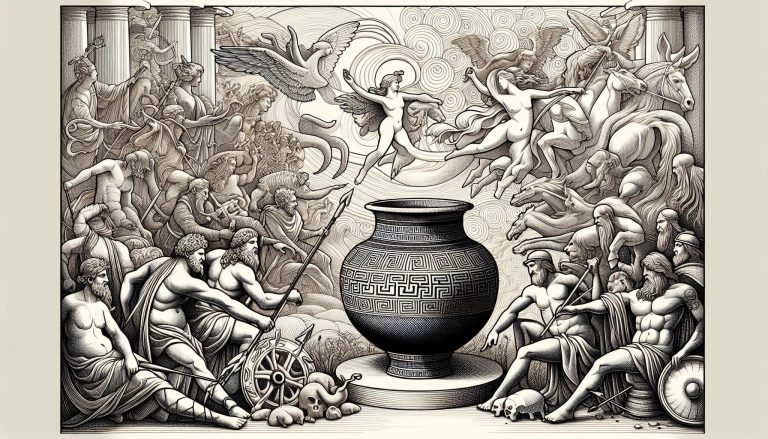
Artists have long turned to mythology for inspiration, using its vivid imagery and profound themes to create masterpieces that resonate deeply with viewers. Whether it’s a painting capturing the tragic beauty of Icarus’ fall or a sculpture embodying the strength of Hercules, mythological art invites us to explore the depths of human experience and imagination. Through these works, we connect with the past, finding relevance and meaning in stories that have endured for centuries.
Historical Significance
Mythological themes have played a crucial role in the evolution of art, shaping how various eras and civilizations express their cultural identity.
Ancient Civilizations
Ancient civilizations such as Greece, Egypt, and Mesopotamia infused their art with mythology. Greek sculptures, for example, often depicted gods like Zeus and Athena, showcasing divine attributes. Egyptian tomb paintings frequently illustrated gods like Osiris and Anubis, underscoring their roles in the afterlife. Mesopotamian cylinder seals depicted mythological scenes, highlighting the importance of deities in everyday life. These artworks not only adorned temples and tombs but also served a religious and educative purpose, immortalizing myths in the cultural consciousness.
Renaissance Era
During the Renaissance, artists revisited classical mythology to explore humanism and naturalism. Artists like Michelangelo and Botticelli drew inspiration from Greek and Roman myths, creating iconic works. Michelangelo’s “David” embodies both mythological and biblical themes, reflecting Renaissance ideals of human form and potential. Botticelli’s “The Birth of Venus” depicts the goddess Venus emerging from the sea, symbolizing beauty and love. These masterpieces bridged ancient mythology with contemporary thought, embodying the Renaissance’s quest for knowledge and artistic perfection.
Cultural Variations
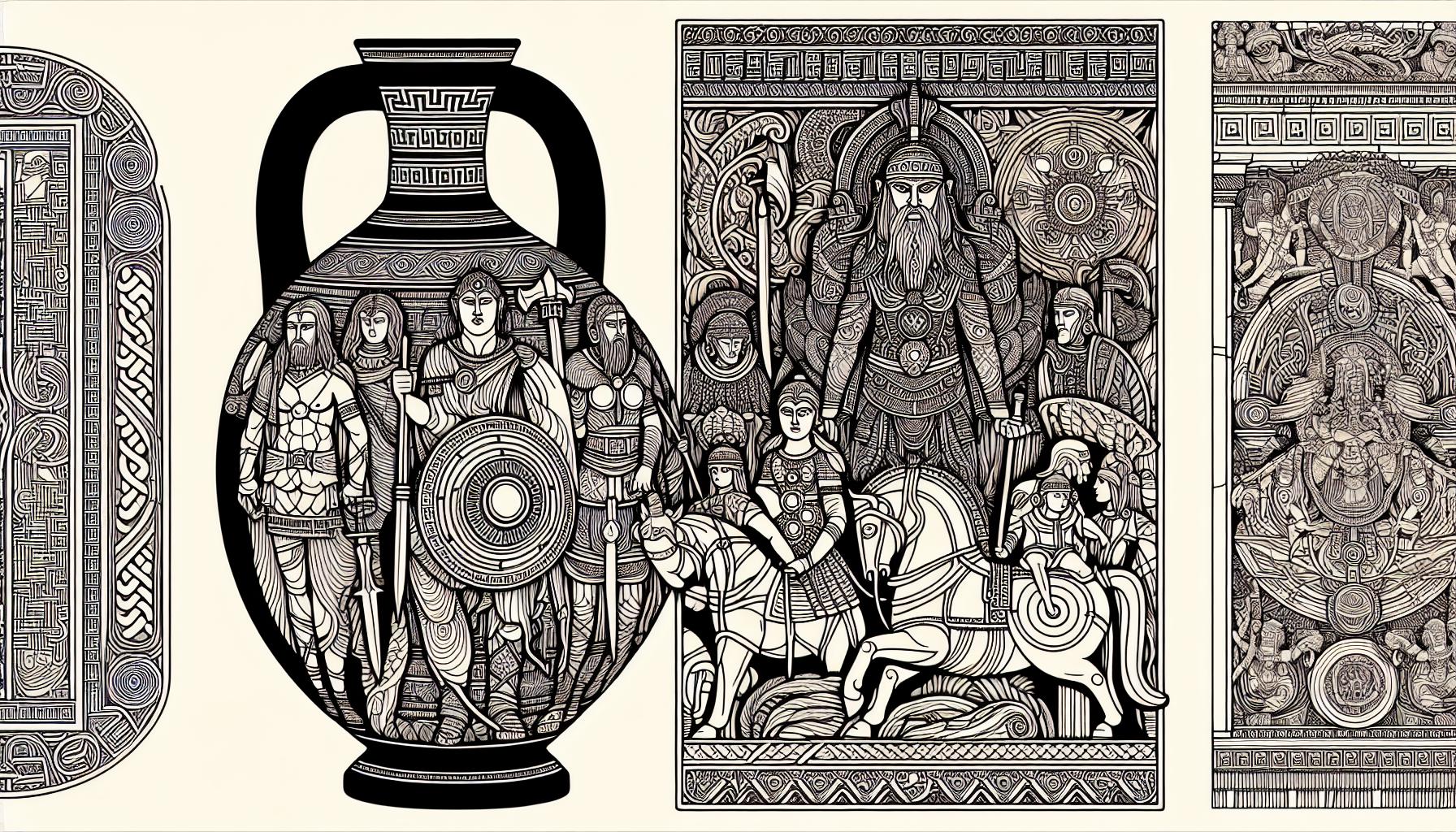
Mythological inspiration in art extends across cultures, displaying unique representations and interpretations. These variations reflect distinct beliefs, traditions, and artistic styles.
Greek Mythology
Greek mythology has significantly influenced Western art. Artistic works often depict gods, heroes, and mythological events. For example, ancient Greek pottery features scenes from myths like the labors of Hercules. During the Renaissance, artists like Michelangelo and Botticelli drew heavily on Greek themes, as seen in “David” and “The Birth of Venus”. These pieces highlight humanism, valor, and divine beauty.
Norse Mythology
Norse mythology presents distinct artistic elements seen in carvings, manuscripts, and artifacts. Viking art integrates mythical creatures like dragons and serpents. The 11th-century Uppsala Runestones depict Norse gods and legends. Modern interpretations include Richard Wagner’s “Der Ring des Nibelungen”, an opera cycle based on Norse sagas. This art forms a visual and narrative bridge to Norse mythological storytelling.
Eastern Mythologies
Eastern mythologies, including Hindu and Buddhist traditions, offer rich artistic inspiration. Hindu temple sculptures depict deities like Vishnu – The Protector and Shiva – The Destroyer in various avatars. The Ajanta Caves in India house intricate paintings of Buddha’s life, reflecting spiritual ideals. In Japan, Shinto myths appear in woodblock prints, depicting kami (spirits) and legendary tales. These art forms connect mythology with religious practices and community heritage.
Modern Interpretations
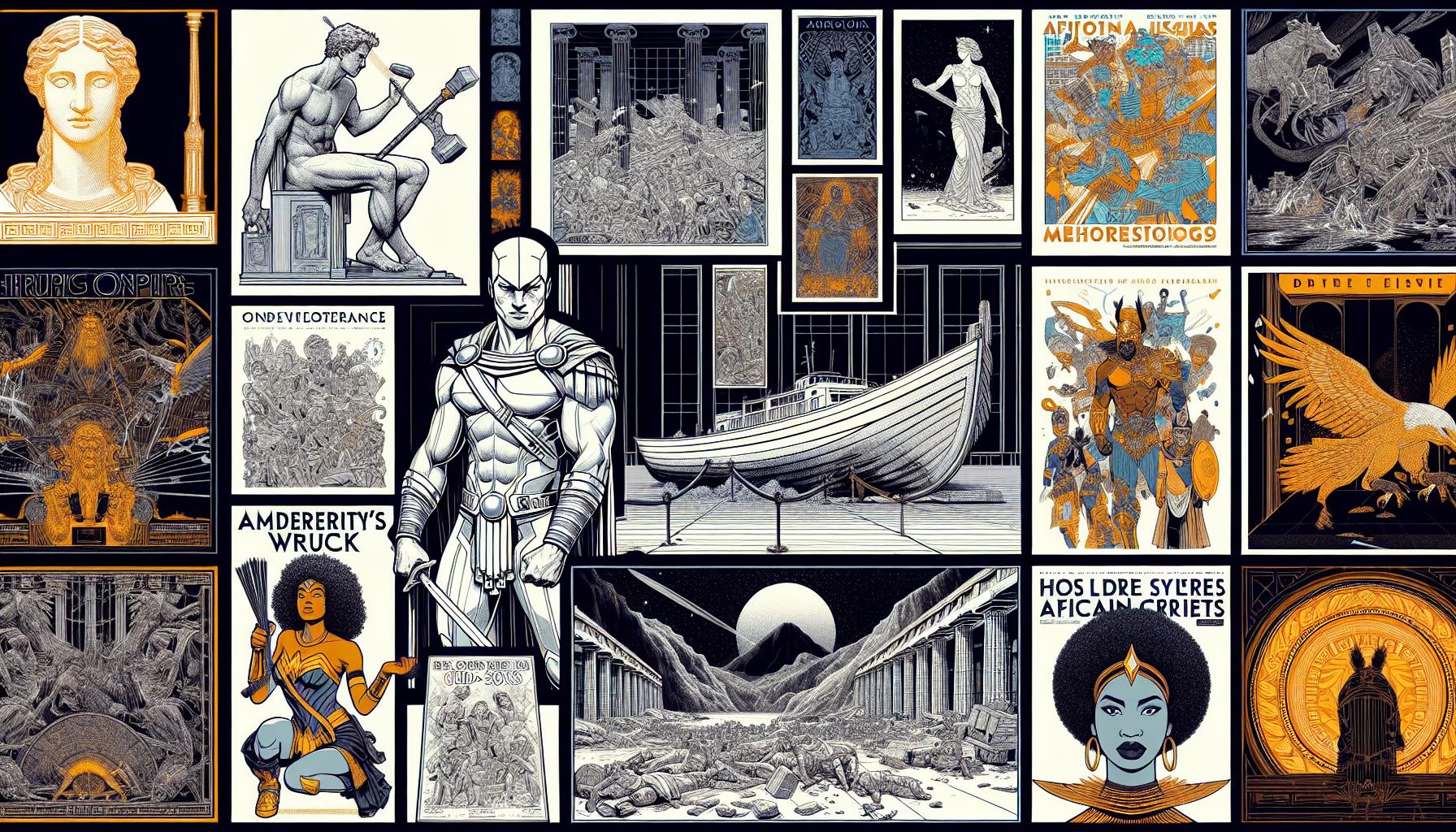
Mythological themes continue to inspire modern artists, influencing contemporary art and popular media. These modern interpretations introduce ancient myths to new audiences.
Contemporary Artists
Contemporary artists draw extensively on mythological themes for their creative work. Jeff Koons, for instance, reinterprets classical mythology through a modern lens with his “Antiquity” series. Here, he melds ancient mythology with contemporary aesthetics, creating thought-provoking pieces that bridge past and present.
Another notable example is Damian Hirst, whose exhibition “Treasures from the Wreck of the Unbelievable” presents mythological narratives as discovered artifacts. His work challenges viewers to question the boundaries between history and mythology.
Yinka Shonibare explores African mythology in his art. His installations and sculptures, such as “The British Library,” merge myths with colonial history, providing a unique cultural commentary.
Popular Media
Popular media frequently incorporate mythological elements into films, TV shows, and video games. Movies like “Thor” and “Wonder Woman” bring Norse and Greek myths to the big screen, showcasing legendary deities and heroes in modern narratives.
Television series such as “American Gods” and “Percy Jackson & the Olympians” adapt mythological stories for a contemporary audience, blending ancient lore with modern settings. These adaptations make complex myths accessible to viewers of all ages.
Video games often investigate into mythological worlds. “God of War” integrates Greek and Norse myths, allowing players to interact with gods and mythical creatures within immersive digital landscapes. Another example, “Assassin’s Creed Odyssey,” draws heavily from Greek mythology to create an engaging historical adventure.
These modern interpretations ensure mythological themes remain relevant, captivating, and educational for today’s audience.
Influential Mythological Themes
Mythological themes have profoundly influenced artistic expression through centuries of civilization. Artists often draw inspiration from creation myths, hero journeys, gods and goddesses, and mythical creatures.
Creation Myths
Creation myths narrate the origins of the world and humankind. Ancient cultures depicted these stories through elaborate paintings, carvings, and sculptures. For example, Genesis-inspired art flourished during the Renaissance, where artists like Michelangelo portrayed the Creation of Adam on the Sistine Chapel ceiling. Similarly, Hinduism’s depiction of the churning of the ocean in temple art exemplifies the richness of mythological origin stories in art.
Hero Journey
The hero journey often characterizes a protagonist’s adventure, trials, and transformation. Homer’s “Odyssey” and Virgil’s “Aeneid” have inspired countless artworks. In Renaissance art, Botticelli’s “The Birth of Venus” symbolizes the emergence of a hero figure. Modern interpretations, like those in the “Star Wars” saga, also highlight the enduring nature of this theme.
Gods and Goddesses
Depictions of gods and goddesses are prevalent in artistic traditions. Ancient Greek pottery often showcased deities like Zeus and Athena in intricate designs. During the Renaissance, artists revived interest in classical deities, evident in works such as Raphael’s “The Triumph of Galatea.” In contrast, Hindu and Buddhist art dedicated entire temples, like the Angkor Wat, to divine figures showcasing their significance in cultural narratives.
Mythical Creatures
Mythical creatures like dragons, phoenixes, and unicorns offer unique artistic inspiration. Eastern mythology frequently features dragons as symbols of power and protection, seen in Chinese dragon dance costumes and Japanese ink paintings. Western art displays creatures like the Minotaur, prominently depicted in Picasso’s works, indicating their impact on modern art.
Influential mythological themes continue to inspire diverse artistic creations, reflecting timeless narratives that resonate across cultures and eras.
Case Studies
Examining specific works and artists offers insight into how mythological inspiration shapes art.
Select Works and Artists
Leonardo da Vinci’s “Leda and the Swan” presents Greek mythology’s influence. Da Vinci depicts Leda’s encounter with Zeus, who takes the form of a swan, resulting in the birth of Helen of Troy. This work is notable for its intricate detail and lifelike anatomy.
Salvador Dalí’s “Metamorphosis of Narcissus” reimagines the Greek myth of Narcissus. Dalí incorporates surrealism to explore themes of self-love and transformation, using vibrant colors and distorted forms to emphasize psychological depth.
Henri Matisse’s “The Dance” draws from Bacchic rituals, reflecting themes of ecstasy and unity. Matisse uses bold colors and dynamic figures to convey movement and emotion, showing how mythological themes can be interpreted through modern styles.
Impact on Popular Culture
Mythological references permeate modern entertainment. The Marvel Cinematic Universe incorporates Norse mythology, with characters like Thor and Loki drawing directly from ancient myth. These movies popularize mythological figures, making them accessible to broader audiences.
Television series like “Game of Thrones” use mythological elements to build intricate worlds. Characters and creatures like dragons and white walkers echo myths, enriching the narrative with familiar themes and symbols.
Video games, such as “God of War,” integrate Greek and Norse myths, providing interactive experiences. Players engage with mythological beings, deepening their connection to these ancient stories.
Mythological inspiration in art remains a potent force, bridging ancient narratives with contemporary creativity.
Conclusion
Mythological inspiration in art offers a timeless bridge between ancient narratives and contemporary creativity. It enriches our understanding of different cultures and historical periods while fueling modern artistic expression. From classical masterpieces to pop culture phenomena mythology continues to captivate and inspire. This enduring influence underscores the power of myth to transcend time and resonate with audiences across generations.
Sources & further reading
These themes are explored in greater depth across the following authoritative resources:
- Britannica, Hindu Temple Architecture
- Met Museum, Hinduism in the Arts
- Britannica, Iconography
- Stella Kramrisch, The Hindu Temple (Motilal Banarsidass, 1946)
- Heinrich Zimmer, Myths and Symbols in Indian Art and Civilization (Princeton University Press, 1946)
External resources for further reading. Apam Napat is not affiliated with these publishers; citation does not imply endorsement.
Frequently asked questions
How has mythology inspired artists throughout history?
Which Renaissance artists drew from mythology?
How does Eastern mythology appear in art?
How do contemporary artists use mythological themes?
Which films and video games use mythology?
Based on the classical texts of Hindu mythology, see our sources.