Exploring these symbolic significances not only enriches our understanding of Hinduism but also provides timeless wisdom relevant to our lives today. By delving into the intricate layers of these stories, we uncover universal truths about human nature, morality, and the cosmos, making Hindu legends an enduring source of inspiration and guidance.
Understanding Hindu Legends
Hindu legends, or Hindu mythology, are deeply valued and sacred to the Hindu religion. These stories and narratives are found in various ancient texts and reflect profound spiritual meanings.
Historical Context
Hindu legends evolved over time, influenced by different historical periods and cultural traditions. From the Indus Valley Civilization (2600–1900 BCE) to the Vedic period (starting around 1500 BCE), these epochs shaped the narrative and symbolic elements in Hindu legends. The Vedic texts, including the Vedas, laid the foundation, containing basic principles crucial to understanding Hinduism’s core beliefs.
Common Themes
Hindu legends feature several recurring themes, each with deep symbolic significance. One common theme is the battle between good and evil, exemplified in epics like the Ramayana – Epic of Hinduism and Mahabharata – The Great Epic. Another key theme is the concept of dharma (duty/righteousness), illustrated through characters who uphold moral duties even though challenges. Legends also explore karma (cause and effect), guiding behavior with the principle that actions have consequences. Stories often portray the cycle of birth, death, and rebirth (samsara), emphasizing the pursuit of moksha (liberation). These themes collectively offer timeless insights into human nature, morality, and the cosmos.
By understanding these elements, one gains a clearer comprehension of how Hindu legends embody complex philosophical ideas, contributing to their enduring significance.
Symbolic Significance in Hindu Legends
Hindu legends, rich in symbolic meaning, convey profound spiritual and moral values. These stories, found in revered texts, are central to understanding Hindu philosophy and practice.
Symbolism in Major Hindu Texts
The Vedas, epics like the Ramayana and Mahabharata, and Puranic stories all contain deep symbolic significance.
- Vedas: The Vedas, the oldest Hindu texts, contain myths explaining the universe’s creation and the divine’s nature. The churning of the ocean of milk, for example, symbolizes the eternal struggle between good and evil and the quest for spiritual enlightenment.
- Epics: The Ramayana and Mahabharata offer stories that depict moral and spiritual struggles. Rama’s journey in the Ramayana symbolizes the path of righteousness, while the Mahabharata’s Bhagavad Gita addresses duty, righteousness, and the self’s relationship to the divine.
Interpretations by Scholars
Scholars have analyzed these texts to uncover their deeper meanings.
- A. L. Basham: A. L. Basham identified that legends like the churning of the ocean offer allegories on human effort and divine intervention, reflecting Hindu cosmology and ethics.
- Wendy Doniger: Wendy Doniger emphasized the Mahabharata’s symbolism, particularly highlighting how the dialogue between Krishna – An Incarnation of Vishnu and Arjuna – The Peerless Archer conveys universal truths about human nature and existence.
Hindu legends, through their rich symbolism, teach complex philosophical ideas in accessible narratives, deeply influencing Hindu thought and culture.
Key Symbols and Their Meanings
Hindu legend is abundant with symbols, each carrying profound meanings that reflect deeper philosophical concepts. Here are significant symbols and their interpretations.
Deities and Their Symbols
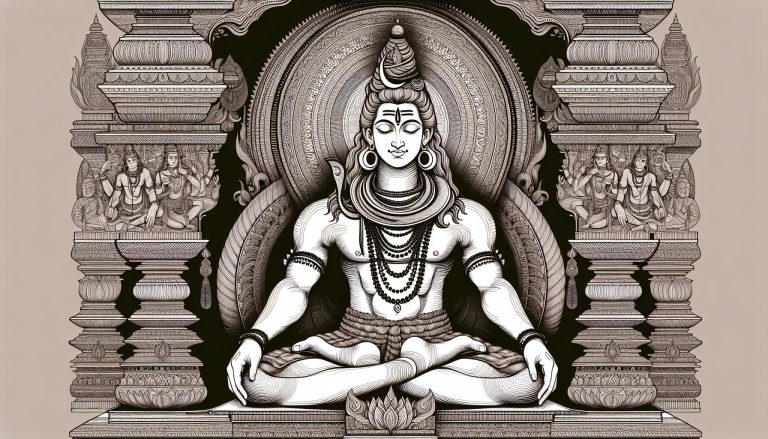
- Lingam: This cylindrical object represents Shiva. Often, it’s found embedded in a yoni, symbolizing the union of male and female principles.
- Yoni: Known as a spouted dish, it signifies the female principle and fertility.
- Nandi: As Shiva’s vehicle, the bull stands for strength and fertility.
- Trident: Shiva’s trident symbolizes creation, preservation, and destruction, reflecting the universe’s three aspects.
- Crescent Moon: Positioned on Shiva’s forehead, this symbol denotes the cyclical nature of time and divine power.
- Skull: Shiva’s garland of skulls represents life’s cycle and his control over time.
Mythological Creatures
- Naga: Serpent beings symbolize both protection and danger, depending on their context in various myths.
- Garuda: Vishnu – The Protector’s eagle mount represents speed and martial prowess; it’s often depicted fighting serpents.
- Makara: A mythological sea creature that serves as a vehicle for deities like Varuna – The Waters and Ganga, symbolizing water’s life-giving and destructive aspects.
- Kinnara: Half-human, half-bird beings, they reflect the merging of human and divine qualities through their dual nature.
- Ganges: The river Ganges embodies spiritual purification, carrying the power to cleanse sins.
- Mount Kailash: As Shiva’s abode, it stands for spiritual ascension and the pinnacle of yogic practices.
- Peepal Tree: It’s revered as sacred, symbolizing eternal life due to its extensive lifespan and association with various deities.
- Lotus: This flower represents purity and beauty, rising unstained from muddy waters, symbolizing spiritual enlightenment over material existence.
Symbols in Hindu legend, embodied in deities, creatures, and natural elements, offer insights into the universe’s deeper truths and philosophical ideas.
Cultural Impact of Symbolism
Hindu symbolism profoundly influences art, literature, and culture. Symbolic elements permeate various aspects of daily life and traditional practices.
Influence on Art and Architecture
Hindu symbolism shapes Indian art and architecture. Sculptures of deities like Shiva and Vishnu, adorned with symbols such as the trident or discus, reflect their divine attributes. Architectural marvels like the Khajuraho temples feature intricate carvings of mythological scenes, emphasizing spiritual narratives. These art forms, deeply embedded with symbols, convey philosophical ideas, connecting the material and spiritual worlds.
Role in Festivals and Rituals
Hindu festivals and rituals are rich in symbolic meaning. During Diwali, lighting lamps symbolizes the victory of light over darkness. Holi’s vibrant colors represent the arrival of spring and the joy of life. Rituals often involve offerings like flowers and fruits, each element carrying specific symbolic significance. These practices, through their symbolic gestures, reinforce cultural and spiritual values.
Modern-Day Interpretations
Modern adaptations of Hindu symbolism reflect evolving cultural contexts. Contemporary artists incorporate traditional symbols into new media forms, infusing ancient meanings with modern aesthetics. In literature, authors like R.K. Narayan use symbols like the river to depict life’s journey. These interpretations, while rooted in tradition, resonate with today’s audiences, demonstrating the enduring relevance of Hindu symbolism.
Debates and Diverse Perspectives
Hindu symbolism provides a rich world of meanings and interpretations, leading to various debates and perspectives among scholars and practitioners.
Regional Variations
Hindu legends exhibit significant regional variations, reflecting local traditions and cultural specifics. For instance, Goddess Durga’s portrayal in Bengal often includes ten arms while the South Indian depiction might illustrate fewer arms but emphasize different iconographies. These differences show regional values and historical influences. Similarly, temple designs and rituals in North India differ from those in South India, showcasing the adaptability and diversity within Hinduism.
Contemporary Views
Contemporary views on Hindu symbolism embrace both traditional interpretations and modern perspectives. Scholars like Wendy Doniger highlight that multiple arms and heads of deities aren’t mere artistic expressions but represent potent symbols of divine capabilities and multifaceted nature. Modern artists and authors, such as R.K. Narayan, reinterpret these symbols to connect ancient meanings with current societal contexts. This dual approach ensures that the symbols maintain their relevance while evolving with time.
Conclusion
Hindu legends and their symbolic significance offer a rich world of spiritual and cultural insights. These symbols, deeply rooted in ancient texts and traditions, continue to shape contemporary art, literature, and rituals. By understanding the deeper meanings behind deities and legends, we can appreciate the enduring relevance of Hindu symbolism in today’s world. As modern interpretations evolve, they ensure that these timeless symbols remain vibrant and meaningful in our ever-changing cultural world.
Sources & further reading
These themes are explored in greater depth across the following authoritative resources:
- Internet Sacred Text Archive, Rig Veda (Griffith translation)
- Internet Sacred Text Archive, Upanishads
- Britannica, Veda
- Britannica, Upanishad
- Patrick Olivelle, The Early Upanishads (Oxford University Press, 1998)
External resources for further reading. Apam Napat is not affiliated with these publishers; citation does not imply endorsement.
Frequently asked questions
When did Hindu legends evolve?
What does Hanuman symbolize in Hindu legend?
What does the Ganges river symbolize?
What is the symbolic meaning of dharma in Hindu epics?
Based on the classical texts of Hindu mythology, see our sources.