
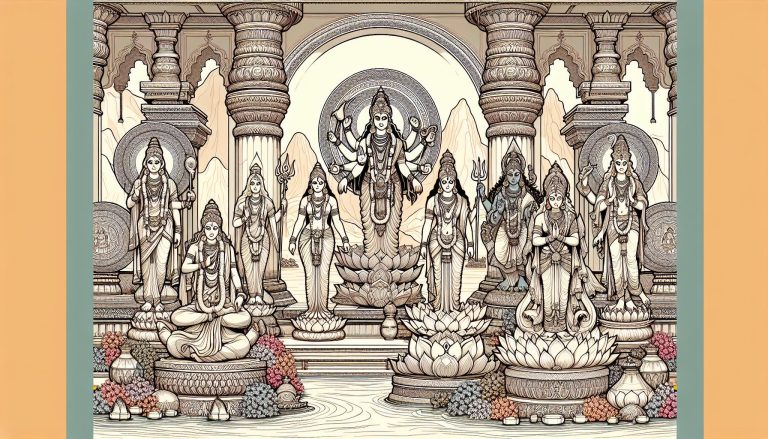
Exploring Shiva’s wives isn’t merely a journey through mythological narratives. It’s a deep dive into the essence of feminine power and the balance of cosmic forces. Each story reflects a different facet of life and spirituality, offering timeless wisdom and insight. Join me as I unravel the fascinating myths and meanings behind Shiva’s divine consorts.
Shiva And His Consorts: An Overview
Shiva, one of the main deities in Hinduism, has multiple consorts who symbolize different aspects of his power and personality.
Uma
Uma, often identified with Parvati, represents beauty and devotion. She’s depicted as a nurturing and loving wife who brings grace and balance to Shiva’s otherwise austere nature.
Sati
Sati, also known as Dakshayani, was Shiva’s first wife. Daughter of Daksha, Sati’s devotion to Shiva was unparalleled. Her story ends tragically when she self-immolated after her father’s insult, leading to her reincarnation as Parvati.
Parvati
Parvati, born to Himavan and Mina, is the reincarnation of Sati. As Shiva’s most well-known consort, Parvati embodies loyalty and devotion. Their union signifies the harmony of male and female energies.
Durga
Durga represents a fierce and protective aspect of Parvati. Known for her warrior-like qualities, Durga’s strength is often showcased in tales where she vanquishes demons and restores cosmic order.
Kali
Kali, another manifestation of Parvati, embodies the fiercer aspects of the goddess. Associated with destruction and time, Kali showcases the more intense, transformative power of feminine energy.
Together, these consorts enrich the mythology of Shiva, depicting a complex interplay of nurturing love, fierce protection, and cosmic balance.
Sati: The First Wife
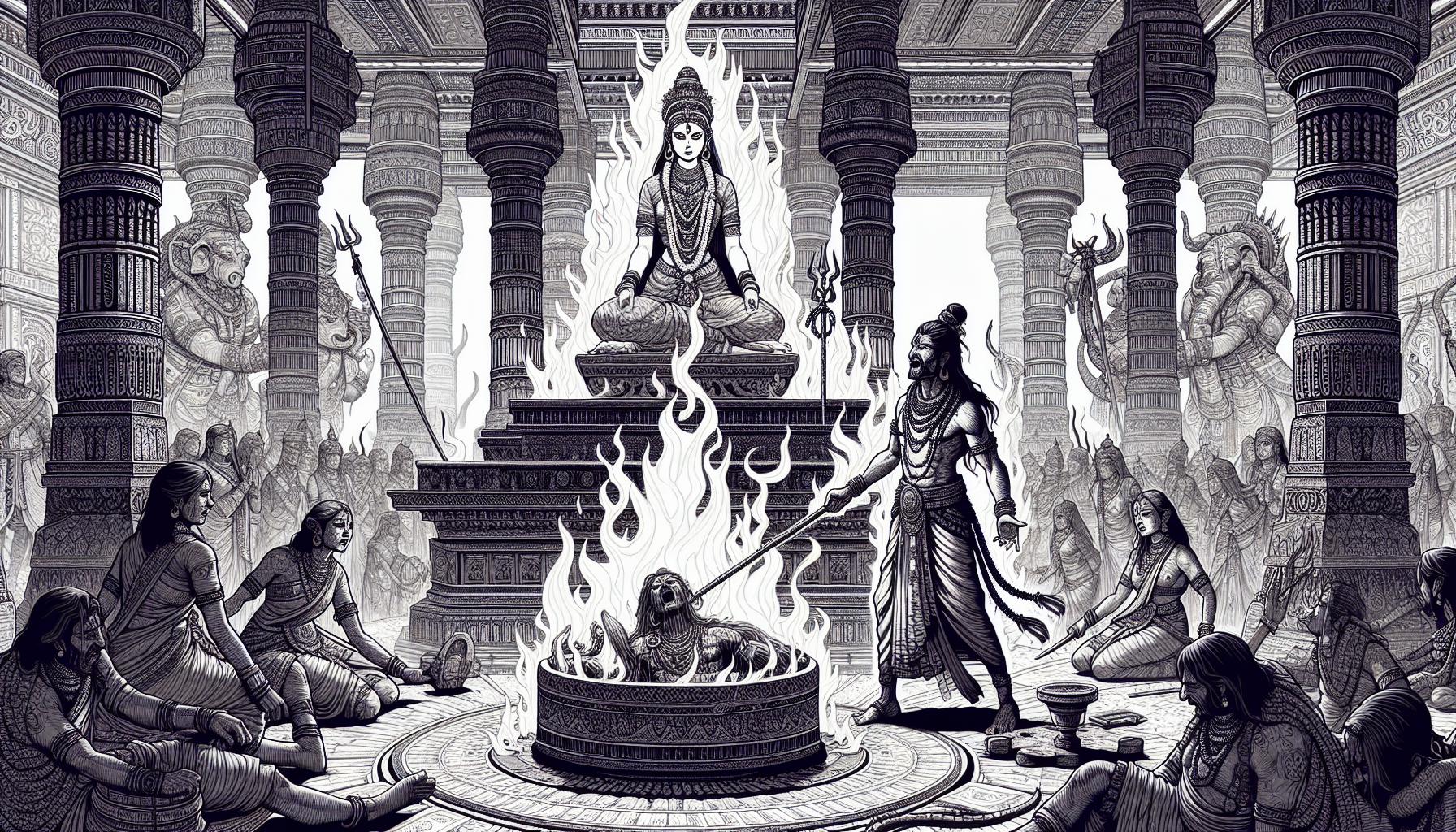
Sati, the first consort of Lord Shiva, holds a prominent place in Hindu mythology. Known for her unwavering devotion, her story is both inspiring and tragic.
The Myth of Sati’s Self-Immolation
Sati’s tale centers around her act of self-immolation. Born to the powerful King Daksha, Sati deeply loved Shiva and married him against her father’s will. Daksha’s disapproval culminated in a grand sacrifice where he invited all deities except Sati and Shiva. Despite Shiva’s warnings, Sati attended the event, hoping to see her relatives. At the gathering, Daksha humiliated her and mocked Shiva. To protest this dishonor and uphold her husband’s dignity, Sati immolated herself in the sacrificial fire.
The Rebirth as Parvati
Following Sati’s death, Shiva was engulfed in grief. He carried her lifeless body around the world, mourning her loss. The gods intervened and dismembered her corpse to help end Shiva’s sorrow. The places where her body parts fell became sacred sites known as pithas. Sati was later reborn as Parvati, who would go on to marry Shiva, continuing her story of devotion and love.
Parvati: The Reincarnation And Main Consort
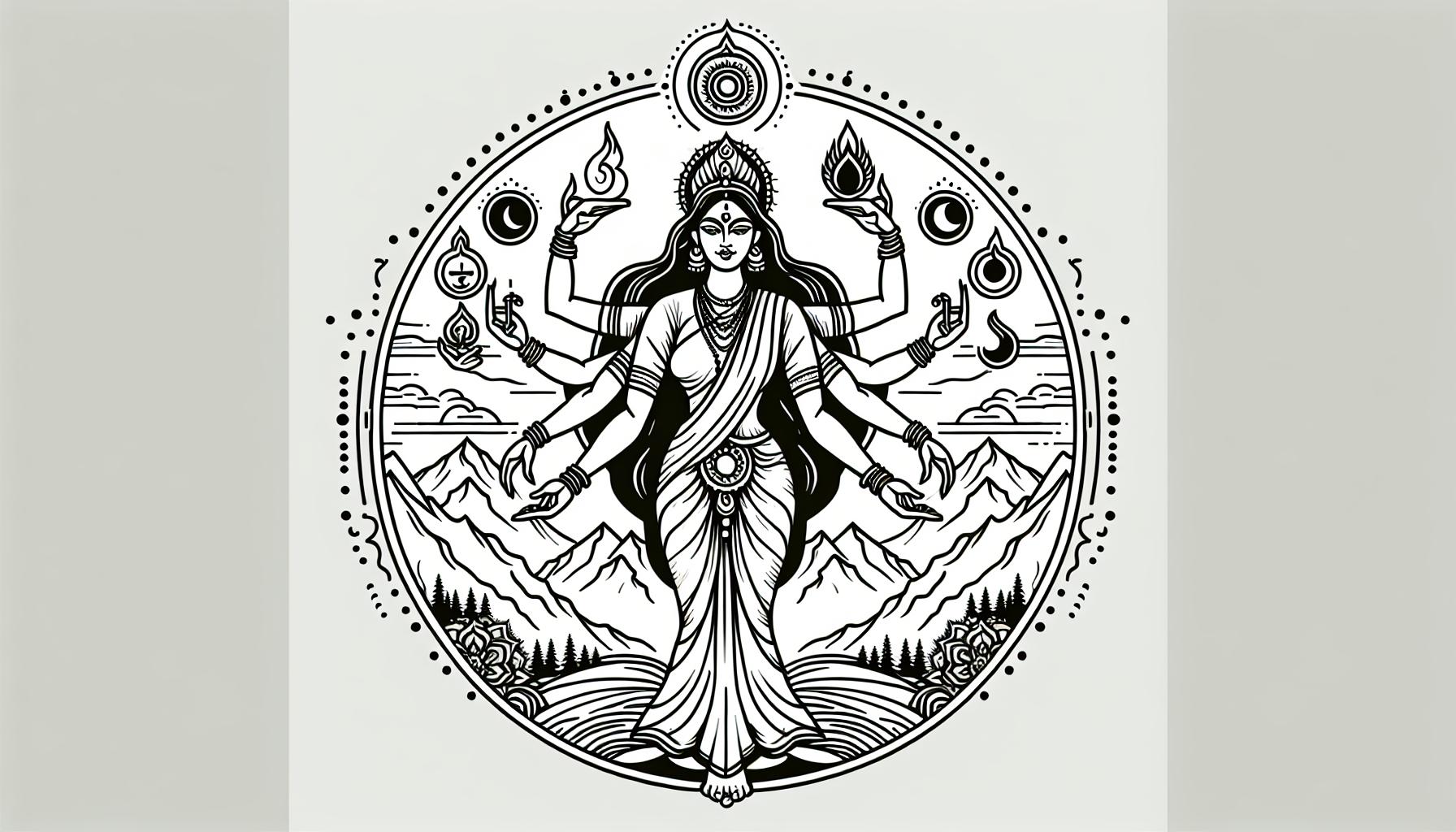
Parvati is the reincarnation of Sati and the main consort of Shiva. Her story deeply intertwines with Shiva’s, symbolizing love and devotion.
The Significance Of Parvati
Parvati embodies multiple facets, serving various roles and forms. She is the mother of Kartikeya, the celestial armies’ leader, and Ganesha, the god of wisdom. Parvati takes on forms such as Durga, the hero goddess; Kali, the maker and destroyer; and Gauri, the life and fertility goddess. Beyond her maternal roles, she represents love, growth, and devotion, balancing Shiva’s cosmic power.
Key Myths And Stories
One notable story includes Parvati’s reincarnation from Sati, showcasing her unwavering devotion. Another significant tale involves Parvati’s austerities to win Shiva’s heart, exemplifying dedication and love. Parvati also plays a critical role in the lore of Ganesha’s birth, where she creates him from clay to guard her while she bathes, leading to his famed encounter with Shiva.
Ganga: The River Goddess
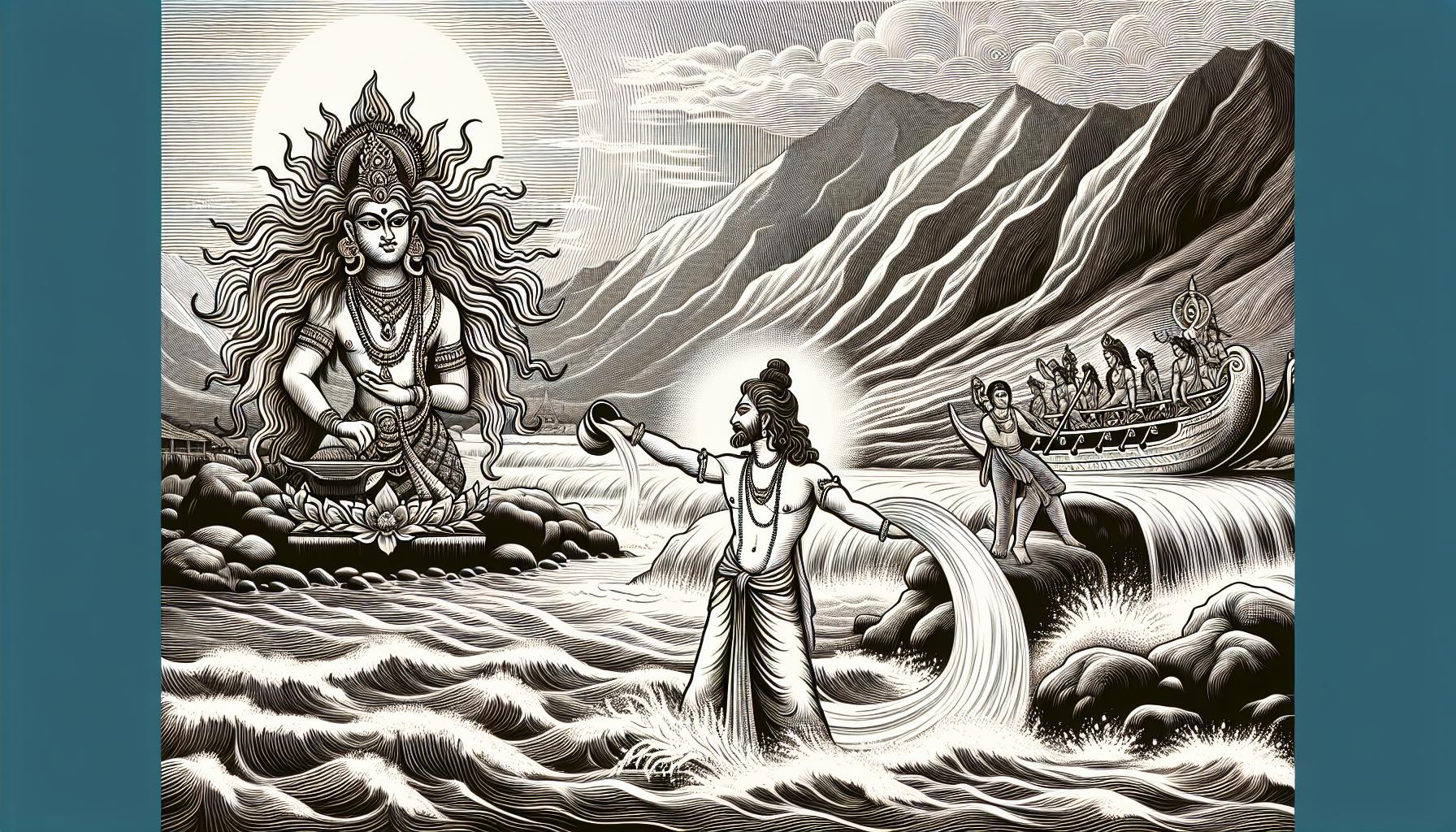
Ganga, personified as a goddess, holds a significant place in Hindu mythology. Worshipped as the deity of purification and forgiveness, her mythological tales deepen the connection between the divine and the river Ganges.
The Myth Of Ganga’s Descent
Ganga’s descent to Earth is a captivating myth. Bhagiratha, a devoted king of the Ikshvaku – An Ancestor of Rama dynasty, sought to bring Ganga from the celestial realms to Earth. His aim was to bestow nirvana upon his ancestors, who Sage Kapila – Sage Who Burned 60,000 men had cursed. Bhagiratha’s penance pleased the gods, and Ganga agreed to descend. However, her immense force threatened to destroy the Earth. Shiva intervened, capturing Ganga in his matted locks and gently releasing her, ensuring her descent was controlled and beneficial.
Relationship With Shiva
Though Ganga’s connection with Shiva is essential, it extends beyond mere mythology. When she descended from heaven, her force could’ve wreaked havoc. Shiva contained her powerful torrents within his locks, showcasing his ability to balance cosmic forces. This act of containing Ganga also symbolizes their celestial partnership. These narratives illustrate Ganga’s divine reverence and Shiva’s protective nature, further intertwining their mythological significance.
Other Lesser-Known Consorts
Shiva’s mythology includes other consorts beyond Parvati, Sati, Uma, and Durga. These lesser-known figures add depth to his complex narrative.
Shakti As A Collective Concept
Shakti, representing divine feminine power, exists collectively through Shiva’s various consorts. Each wife embodies a different aspect of this energy. Together, they form a comprehensive embodiment of shakti, manifesting through devotion, power, and transformation. Consorts like Annapurna, goddess of nourishment, and Matangi, goddess of inner wisdom, represent unique facets of shakti. These goddesses, although less commonly mentioned, contribute to a deeper understanding of the divine feminine in Hindu mythology.
Local Legends And Variations
Across different regions, local legends introduce various consorts of Shiva. For instance, in South India, Kannagi is revered as a dedicated wife who attains a divine status. In Bengal, goddesses like Manasa, the snake goddess, are seen as consorts linked to Shiva. These variations highlight the adaptability and regional influence of Hindu mythology. They show how local cultures integrate Shiva and his consorts into their spiritual narratives, adding layers of richness to the overarching mythology.
Cultural And Religious Impact
Shiva’s wives play vital roles in shaping cultural and religious practices in Hindu communities. Parvati, for instance, symbolizes devotion and marital fidelity, making her a model for married Hindu women. Rituals, festivals, and ceremonies often honor her, strengthening her representation in daily life.
Each incarnation of Parvati, including Kali and Durga, embodies unique qualities revered in various religious contexts. Kali represents the fierce aspect of the goddess, often invoked for protection and strength. Durga symbolizes power and victory over evil, celebrated during Navratri, a significant festival across India.
In different regions, Shiva’s consorts reflect local traditions and beliefs. For example, Annapurna, representing nourishment, is particularly venerated in Varanasi, where rituals emphasize the importance of feeding the hungry. Manasa, a local deity in Bengal, is associated with prosperity and protection from snakebites, showing how regional beliefs integrate with broader Hindu mythology.
These deities also influence art, literature, and socio-religious norms. Temples dedicated to Shiva and his consorts feature intricate carvings and statues, illustrating their stories and virtues. Texts like the Puranas and epics further embed their significance into Hindu culture, ensuring their enduring legacy.
The multifaceted roles of Shiva’s wives highlight the diverse expressions of divine femininity, reinforcing their impact on religious practices and cultural values. By embodying different aspects of life and spirituality, they continue to inspire and guide adherents across generations.
Conclusion
Exploring the mythology of Shiva’s wives reveals the profound depth and diversity within Hindu traditions. Each consort, from Parvati to Kali, embodies unique aspects of feminine power and cosmic balance. The regional variations and lesser-known consorts like Annapurna and Matangi enrich our understanding of Shakti’s multifaceted nature.
These deities don’t just shape religious practices; they influence art, literature, and cultural norms. Their stories and attributes continue to resonate, highlighting the adaptability and richness of Hindu mythology. By honoring these divine figures, we gain deeper insights into the enduring impact of divine femininity in shaping cultural values and spiritual beliefs.
Sources & further reading
These themes are explored in greater depth across the following authoritative resources:
- Encyclopaedia Britannica, Hindu Mythology
- Internet Sacred Text Archive, Hinduism
- Mythopedia, Hindu Mythology
- Harvard Pluralism Project, Hindu Tradition
- Wendy Doniger, The Hindus: An Alternative History (Penguin, 2009), ISBN 978-0143116691
External resources for further reading. Apam Napat is not affiliated with these publishers; citation does not imply endorsement.
Frequently asked questions
Who are Shiva's wives in Hindu mythology?
What do Shiva's wives symbolize?
Who is Shiva's most well-known consort?
Why is the mythology of Shiva's wives significant?
Based on the classical texts of Hindu mythology, see our sources.