
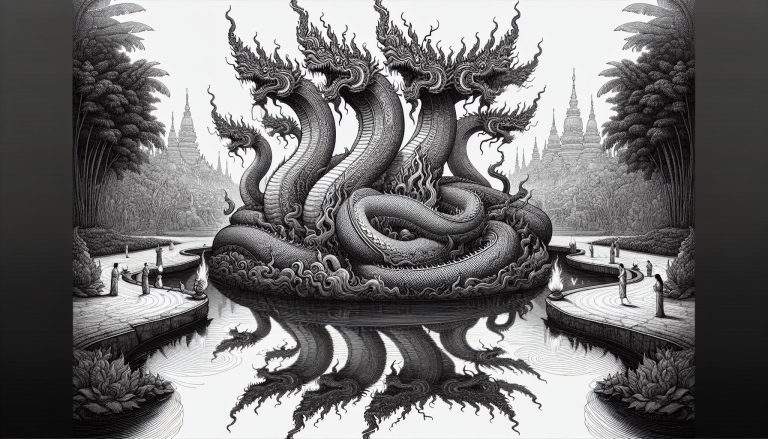
As I delved into the lore surrounding naga serpents, I discovered their multifaceted roles in mythology and religion. From representing fertility and prosperity to embodying the dual nature of creation and destruction, nagas offer a glimpse into the complex interplay between humans and the natural world. Join me as we unravel the layers of symbolism that make naga serpents so captivating and enduring in the collective imagination.
Understanding Naga Serpent Symbolism
The concept of naga serpent symbolism carries profound meaning in various cultures, particularly in India and Southeast Asia. In Hinduism, nagas are semi-divine beings often associated with water. They’re depicted as guardians of treasures and granters of fertility, embodying life’s duality as both creators and destroyers.
Nagas frequently appear in Buddhist traditions too. Buddhist texts describe nagas as serpent-like beings, sometimes taking on human forms to interact with deities and humans. They protect the Buddha and his teachings, symbolizing spiritual protection and wisdom.
In Southeast Asia, particularly Thailand and Cambodia, naga statues often appear in temple architecture. Their presence at temple entrances symbolizes protection and the safeguarding of spiritual wealth. For example, the seven-headed naga at Angkor Wat in Cambodia represents both a path to enlightenment and a flowing connection between the heavens and earth.
Naga serpent symbolism also extends to folklore. In many regional myths, nagas control rainfall and water bodies, linking them to agricultural prosperity and fertility. Their dual nature, protective yet potentially destructive, highlights their integral role in balancing natural forces.
These interpretations illustrate the naga serpent’s multifaceted symbolism. From being bearers of fertility to spiritual protectors, their legacy persists across centuries, enriching cultural and religious narratives.
Historical Significance
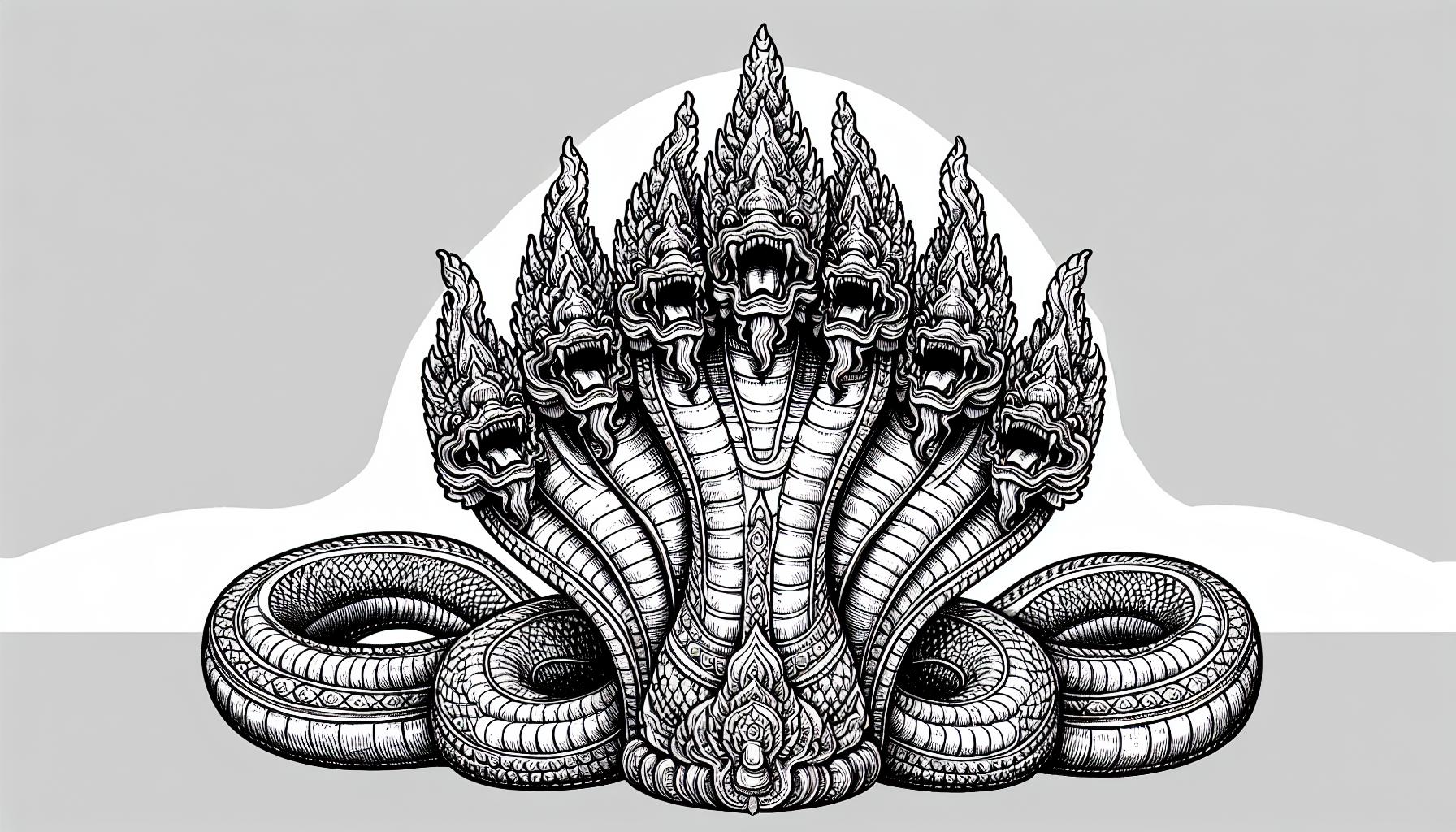
Naga serpent symbolism holds a deep historical significance in various cultures. From ancient times to the modern era, nagas continue to influence cultural and religious narratives.
Origins in Ancient Cultures
Nagas first appeared in ancient Indian texts like the Vedas around 1500 BCE. In these scriptures, they were depicted as powerful serpentine beings living in underground realms. Ancient civilizations, including the Indus Valley and Mesopotamians, revered these snake deities for their control over water. They viewed nagas as protectors, using rituals and offerings to invoke their favor.
Evolution Through Time
Naga symbolism evolved as it spread to regions like Southeast Asia, influencing local myths and religious practices. By the 4th century CE, nagas became integral to Hindu and Buddhist lore, with sculptures and carvings depicting multi-headed nagas in places like Angkor Wat. These representations highlighted their roles as guardians and harbingers of fertility. In medieval Southeast Asian kingdoms, nagas symbolized royal power, with kings often associating themselves with these revered creatures to legitimize their rule.
Cultural Interpretations

Naga serpent symbolism appears in diverse cultures across the globe. Here are the cultural interpretations through the lenses of Hinduism, Buddhism, and folklore.
Hinduism
In Hinduism, naga serpents hold significant mythological meaning. Nagas, half-human and half-cobra beings, inhabit the underworld kingdom known as Naga-loka or Patala-loka. They are predominantly linked with water bodies like rivers, lakes, and seas.
Nagas symbolize strength, beauty, and transformation. They embody the cycle of birth, death, and rebirth because they shed their skin to regenerate. Notable Nagas in Hindu mythology include Shesha, Vasuki – The King of Serpents, and Takshaka – The King of Serpents. Shesha, a giant serpent, serves as Vishnu – The Protector’s resting couch. Vasuki is known for his role in the churning of the ocean (Samudra Manthan), and Takshaka is infamous in the story of King Parikshit – Son of Abhimanyu’s death.
Buddhism
In Buddhist traditions, nagas play a protective role. They are recognized as guardians of spiritual wisdom and wealth. Nagas have a significant presence in Buddhist art and lore. One prominent depiction is that of the naga king Mucalinda shielding Gautama Buddha from a storm. This image symbolizes protection and the connection between the natural world and spiritual enlightenment.
Nagas are also linked to rain and fertility, ensuring agricultural prosperity. Their control over water sources makes them vital in cultures where agriculture sustains livelihood.
Folklore and Mythology
Naga serpent symbolism permeates various folklore and mythologies. Across Southeast Asia, naga statues grace temples and symbolize protection and connection between heaven and earth. For example, the seven-headed naga at Angkor Wat represents the path to enlightenment.
In regional folklore, nagas often symbolize power and sovereignty. In medieval Southeast Asian kingdoms, kings aligned themselves with nagas to legitimize their rule and demonstrate their connection to divine power. These beings are often depicted in folklore as protectors of hidden treasures and dispensers of rain, essential for ensuring good harvests. This makes them central figures in agricultural myths and legends.
Symbolic Meanings
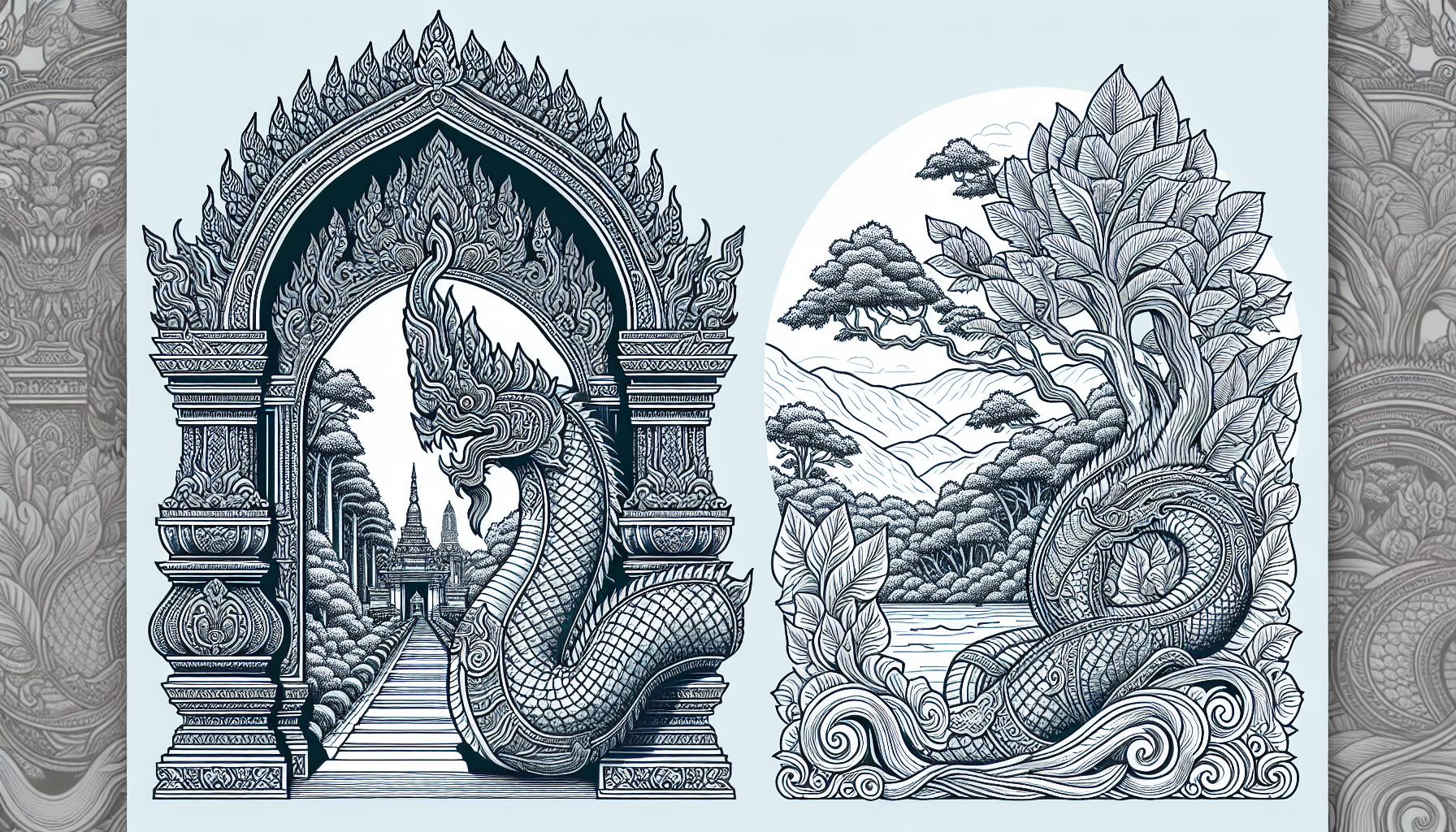
Naga serpents carry deep symbolic meanings in various cultures. Each representation underscores their multifaceted roles, particularly seen in their association with protection, guardianship, fertility, and water.
Protector and Guardian Roles
Naga serpents often symbolize guardianship. Reputed for safeguarding treasures, they are prevalent in numerous myths as protectors of spiritual and material wealth. In Buddhism, the naga king Mucalinda shielded Gautama Buddha, highlighting their role as divine protectors. Statues and carvings of nagas at temple entrances symbolize security, ensuring devotees’ safety. Kings and rulers align themselves with these guardians to display authority and divine sanction.
Symbols of Fertility and Water
Naga serpents are closely linked to fertility and water. In Hindu mythology, their connection with water bodies like rivers, lakes, and oceans underscores their role as rain bringers. This association ensures agricultural prosperity and sustenance. Fertility, represented by their serpentine forms, signifies renewal and life, reinforcing their importance in agrarian societies. Their symbolism extends to rain ceremonies and rituals aimed at invoking bountiful harvests and successful cultivation. People revered nagas for maintaining the balance of natural resources vital for survival.
Artistic Representations
Naga serpent symbolism permeates various artistic expressions across cultures, embodying its significance in religion, mythology, and folklore.
Statues and Sculptures
Numerous cultures incorporate nagas in their statues and sculptures. In Hindu temples, nagas often appear entwined around deities or as standalone figures. You’ll find prominent naga statues at sites like the Hampi complex in India, where the monolithic Naga Linga features a serpent coiled around a Shiva linga. In Southeast Asia, particularly in Cambodia and Thailand, temple exteriors frequently showcase multi-headed nagas guarding entrances, signifying protection and spiritual guardianship.
Literature and Texts
Nagas also feature prominently in religious and mythological texts, enriching their symbolic dimensions. The Mahabharata – The Great Epic, an ancient Indian epic, narrates the story of Vasuki, the king of the nagas, participating in the churning of the cosmic ocean. In Buddhist literature, jataka tales, which recount the Buddha’s past lives, often include nagas as protectors of dharma. The Phra Kanong tale in Thai literature highlights a benevolent naga who aids in agricultural fertility and community welfare.
Modern Depictions
Modern depictions of nagas continue to draw from historical and cultural roots, adapting them for contemporary contexts. You can see nagas in films, television series, and graphic novels, often portrayed as powerful, mystical beings. In modern art, installations like the Serpent’s Path in Malaysia use nagas to blend traditional symbolism with contemporary artistic narratives, reflecting societal values and concerns. The digital art world also reimagines nagas, blending mythological imagery with modern aesthetics to create new forms of artistic expression.
Each of these artistic representations underscores the enduring legacy and evolving significance of naga serpent symbolism in cultural and spiritual narratives.
Conclusion
Exploring the symbolism of naga serpents reveals their profound influence across various cultures and spiritual traditions. Their association with water bodies and their roles in mythological narratives highlight their significance in both ancient and modern contexts. By understanding the diverse representations and meanings of nagas we can appreciate their enduring legacy in art literature and spiritual practices. The naga’s symbolism of protection transformation and connection to the divine continues to resonate reminding us of the depth and complexity of these mythical beings.
Frequently asked questions
What do Naga serpents symbolize in Hindu mythology?
Why do Nagas appear at temple entrances in Southeast Asia?
Which Nagas are most prominent in Hindu mythology?
How are Nagas connected to water and fertility?
Sources & further reading
These themes are explored in greater depth across the following authoritative resources:
- Britannica, Asura
- Britannica, Naga
- Mythopedia, Hindu Mythology
- Internet Sacred Text Archive, Mahabharata
- Wendy Doniger, Hindu Myths (Penguin Classics, 1975)
External resources for further reading. Apam Napat is not affiliated with these publishers; citation does not imply endorsement.
Based on the classical texts of Hindu mythology, see our sources.