
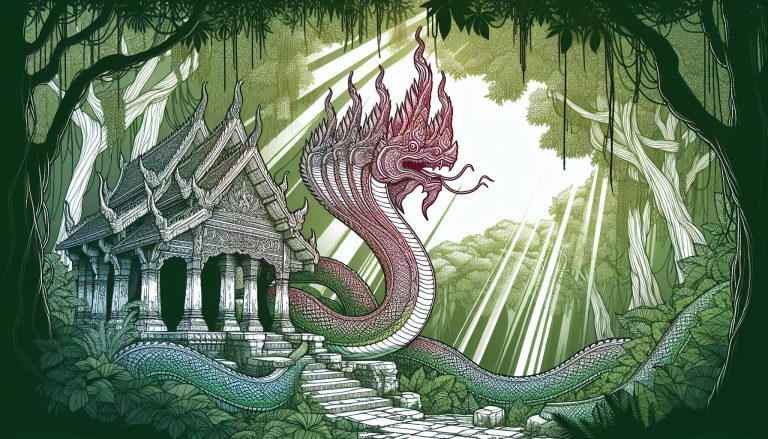
I find the duality of Nagas captivating. They can be benevolent protectors or formidable adversaries, depending on the tale. Exploring their stories not only offers a glimpse into ancient beliefs but also reveals how these myths continue to influence modern culture. Let’s jump into the enchanting world of Naga snake mythology and uncover the layers of meaning behind these mystical serpents.
Origins Of Naga Snake Mythology
Naga snake mythology traces back to ancient Indian and Southeast Asian texts. In Hinduism, Nagas appear in the Mahabharata – The Great Epic and Ramayana – Epic of Hinduism, serving as mighty beings with deep connections to waters and the earth. Notably, Vasuki – The King of Serpents, a king of serpents, helps churn the ocean of milk, resulting in the emergence of divine nectar.
In Buddhism, the Mucalinda story highlights a Naga that protects Buddha meditating under the Bodhi tree. With Buddhism’s spread to Southeast Asia, these tales evolved, intertwining with local traditions and beliefs. Southeast Asian folklore often portrays Nagas as guardians of rivers, lakes, and the underworld.
You can also find Nagas in Jain texts where they feature as important figures. The interconnectedness of these cultures demonstrates how Naga mythology transcends borders, adapting to new contexts while retaining core elements. These serpent deities’ ancient roots continue to influence regional cultures and spiritual practices.
Role In Hindu Mythology
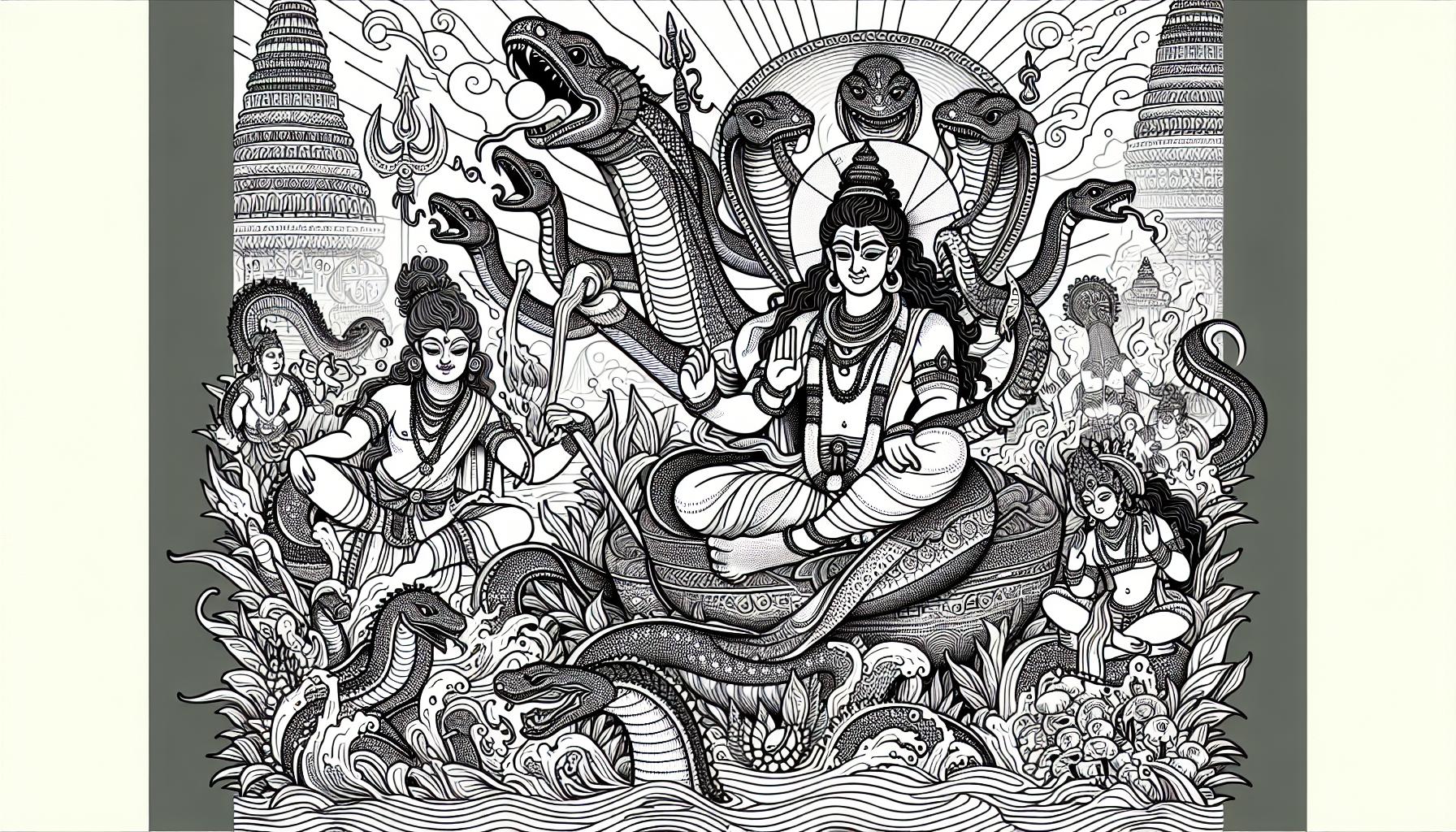
Nagas hold a pivotal position in Hindu mythology, embodying both protective and fearsome aspects. They’re intertwined with various deities and epic narratives, reflecting their complex nature.
Naga Deities
In Hindu mythology, several deities are associated with Nagas. Vishnu – The Protector is often depicted reclining on the Naga Ananta, symbolizing eternity. Shiva wears serpents as ornaments, showcasing their significance. The Naga Vasuki plays a key role in the churning of the ocean of milk, demonstrating the Nagas’ crucial part in cosmic events.
Stories And Legends
Naga myths are rich with diverse stories. In the Mahabharata, the Naga prince Ulupi marries Arjuna – The Peerless Archer, blending Naga and human lineages. The Ramayana features the serpent king Sesha, who supports the universe on his many heads. These stories highlight Nagas’ multifaceted roles in epic tales, underscoring their influence in Hindu mythology.
Significance In Buddhism
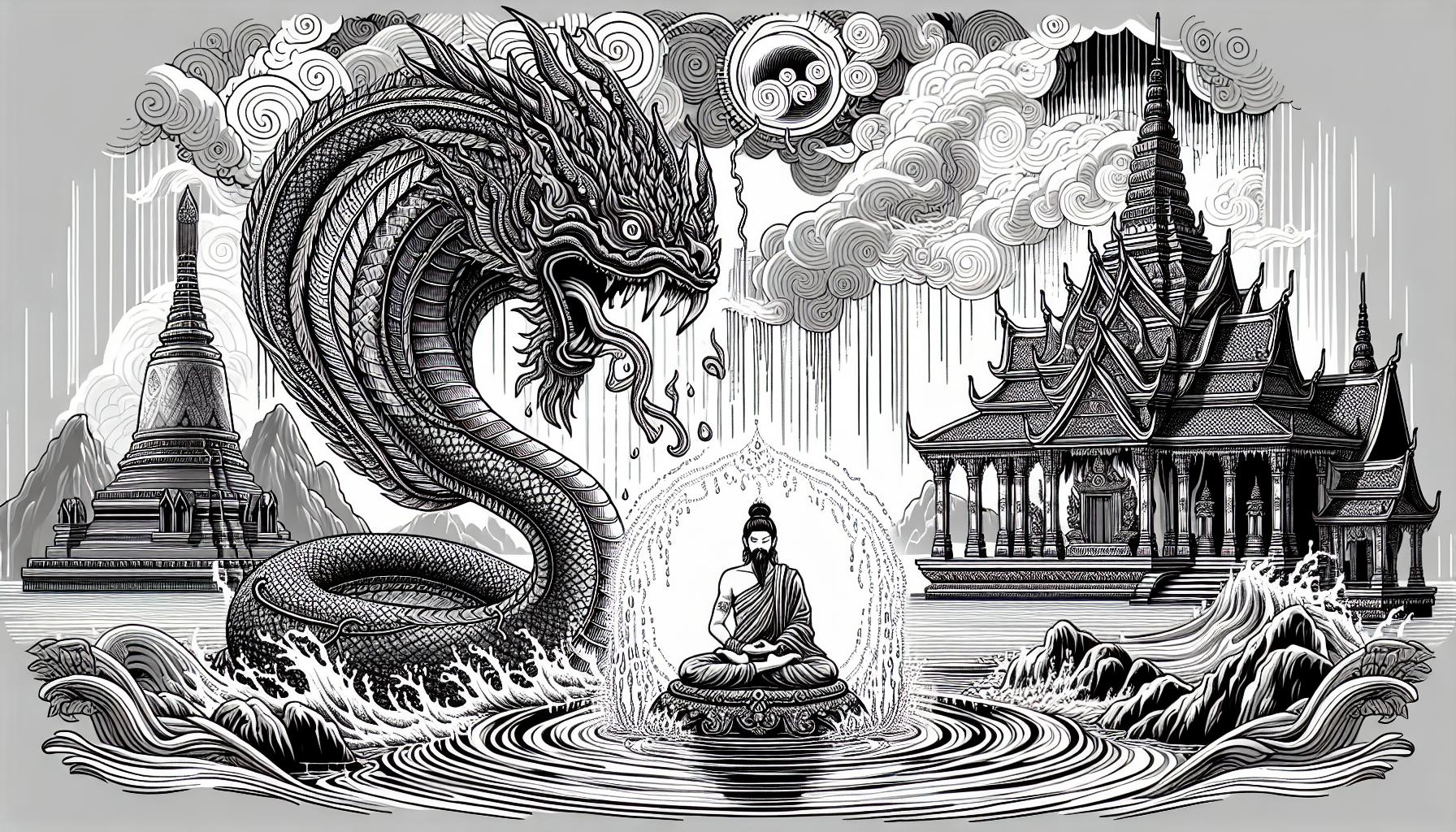
Nagas have a profound significance in Buddhism, particularly as protectors and spiritual beings. In Buddhist texts, Nagas often appear as guardians of the Buddha and his teachings. One notable story involves Mucalinda, the Naga king who shielded the Buddha from a storm. Mucalinda coiled his body around the meditating Buddha and spread his hood to provide shelter. This act symbolizes the Naga’s protective nature and their commitment to safeguarding wisdom.
Plus to protection, Nagas frequently serve as symbols of rebirth and renewal in Buddhist thought. Given their association with water—a crucial element for life and growth—their presence signifies purification and transformation. Nagas are often seen in temple iconography, depicted as divine beings supporting the structure, symbolizing stability and resilience.
Nagas also play a role in spreading the Dharma. According to some legends, they possess hidden treasures and sacred texts, revealing them to those deemed worthy. This underscores their role in the preservation and transmission of spiritual knowledge. Nagas appear in various forms within Buddhist cultures, such as the Southeast Asian tradition of dragon-like Naga statues guarding temple entrances.
Finally, their duality as both beneficent and fearsome entities reflects the Buddhist understanding of dualistic nature in life. Nagas are revered as divine beings, yet they can also be terrifying, embodying the balance of forces in the universe.
Depictions In Art And Culture

Nagas have inspired creators across various mediums, integrating their mythological significance into literature and fine arts.
Literature And Texts
Nagas appear in many ancient texts, often symbolizing protection and transformation. In Hindu scriptures like the “Mahabharata” and “Ramayana,” they serve pivotal roles in stories involving gods like Vishnu and Shiva. “Bhagavad Gita” also references Nagas. Buddhist texts mention Nagas as guardians of the Buddha’s teachings, notably in the “Lotus Sutra,” highlighting their importance in spreading Dharma.
Sculptures And Paintings
Artistic depictions of Nagas are prominent in temples and monuments. Many Southeast Asian temples feature sculptures of Nagas as protectors at entrances or along stairways. The Angkor Wat temple in Cambodia showcases Naga balustrades with intricate carvings, symbolizing their connection to divine protection and water. In paintings, Nagas often appear with multiple heads, underscoring their power and mystical nature. Traditional Thai and Balinese art also frequently incorporate Naga motifs in temple murals and ceremonial items.
Nagas in art and culture demonstrate their enduring influence, embodying themes of protection, transformation, and spirituality.
Influence On Modern Media
Naga snake mythology has made its mark on contemporary entertainment, including films, television, and literature. In movies, Nagas often appear as mystical creatures with supernatural abilities. Films like “Harry Potter and the Chamber of Secrets” feature a basilisk, which is inspired by Naga legends. This film showcases the creature’s terrifying presence and its association with ancient myths.
In television, Nagas have been included in various series. The popular show “Supernatural” features a Naga in one of its episodes, emphasizing the creature’s dangerous and enigmatic nature. This portrayal highlights the enduring fascination with Nagas in modern storytelling.
Literature also draws heavily from Naga mythology, with numerous books incorporating serpent beings. Rick Riordan’s “The Kane Chronicles” includes a character that embodies traits of the Naga, adding depth to the narrative through mythological references. The use of Nagas in modern books underscores their symbolic significance and rich narrative potential.
Video games often use Naga mythology to create immersive worlds and engaging storylines. Games like “World of Warcraft” feature Naga characters as formidable foes and integral parts of the game’s lore. These inclusions showcase the adaptability of Naga mythology across various entertainment platforms, enriching player experiences.
In comics and graphic novels, Naga-inspired characters appear frequently. Marvel Comics’ character, Naga, is a notable example, blending ancient mythology with contemporary superhero tales. Such representations ensure that the myth of the Naga stays relevant and resonant in popular culture.
Conclusion
Naga mythology continues to captivate and inspire across various cultures and media. From ancient texts to modern entertainment, these serpent beings embody themes of protection, transformation, and spirituality. Their presence in films, TV shows, literature, video games, and comics demonstrates their timeless appeal and adaptability. As we see the Naga myth evolve and integrate into new narratives, it’s clear that these mystical creatures will remain a powerful symbol in storytelling for generations to come.
Sources & further reading
These themes are explored in greater depth across the following authoritative resources:
- Britannica, Asura
- Britannica, Naga
- Mythopedia, Hindu Mythology
- Internet Sacred Text Archive, Mahabharata
- Wendy Doniger, Hindu Myths (Penguin Classics, 1975)
External resources for further reading. Apam Napat is not affiliated with these publishers; citation does not imply endorsement.
Frequently asked questions
Who are the Nagas in Hindu mythology?
What role does Vasuki play in Hindu mythology?
Who is Shesha in Hindu mythology?
How does Mucalinda appear in Buddhist tradition?
How are Nagas understood in Southeast Asian cultures?
Based on the classical texts of Hindu mythology, see our sources.