
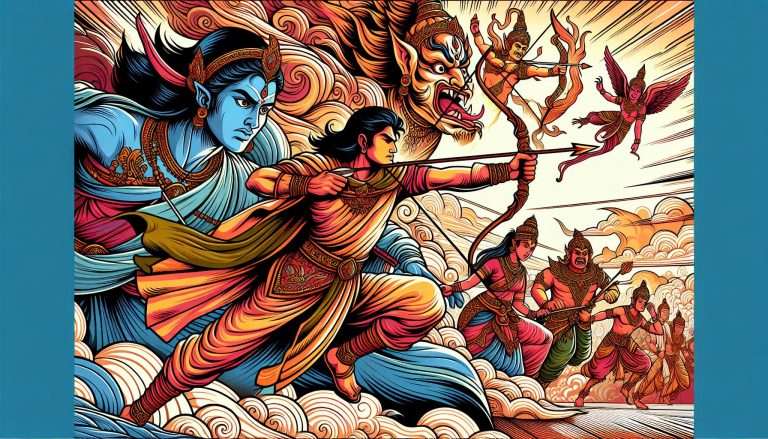
What draws me to the Ramayana is its rich tapestry of characters and the profound wisdom it imparts. Each chapter offers insights into human nature, ethics, and the eternal struggle between good and evil. Whether you’re a seasoned reader of epics or new to this legendary tale, the Ramayana promises a captivating experience that resonates across cultures and ages.
Overview Of The Ramayana Epic Story
The Ramayana tells the story of Prince Rama, whose life’s central quest focuses on rescuing his wife, Sita, from the demon king Ravana. Composed by the sage Valmiki, the epic unfolds across seven books or “kandas,” detailing an array of adventures, battles, and moral dilemmas.
Main Characters
- Rama: The protagonist, an avatar of the god Vishnu, embodies righteousness.
- Sita: Rama’s devoted wife, epitomizes virtue and fidelity; abducted by Ravana.
- Ravana: The antagonist, the ten-headed demon king of Lanka.
- Lakshmana: Rama’s loyal brother who supports him throughout the journey.
- Hanuman: The monkey god, a dedicated follower of Rama, aids in rescuing Sita.
Key Events
Birth and Exile of Rama
Rama, born in Ayodhya to King Dasharatha and Queen Kaushalya, gains extraordinary skills under sage Vishwamitra – The King Who Became a Great Sage’s guidance. Although set to be crowned king, Rama honors his father’s promise to Queen Kaikeyi by accepting a 14-year exile. Joined by Sita and Lakshmana, they settle in the Dandaka Forest.
Abduction of Sita
Ravana, infatuated with Sita’s beauty, deceives her and abducts her to Lanka. Rama and Lakshmana, discovering Sita’s abduction, seek the help of Sugriva and Hanuman. Hanuman’s successful journey to Lanka confirms Sita’s location.
The Great Battle
Rama, with his army of monkeys and bears, builds a bridge to Lanka. A fierce battle ensues, culminating in Rama’s victory over Ravana and Sita’s rescue. However, Rama tests Sita’s chastity by the trial of fire (Agnipariksha), which she passes, reaffirming her purity.
Return to Ayodhya
After defeating Ravana, Rama, Sita, and Lakshmana return to Ayodhya. Rama’s coronation as king marks the beginning of a prosperous rule known as “Rama Rajya.”
The Ramayana’s intricate narrative weaves themes of devotion, duty, and righteousness, offering timeless lessons relevant across cultures and ages.
Major Characters
The Ramayana is rich with compelling characters that drive its timeless narrative. Each major character embodies unique qualities and plays a pivotal role in the epic’s unfolding events.
Rama
Rama, the protagonist, represents ideal manhood and righteousness. He’s the eldest son of King Dasharatha and Queen Kaushalya from the Ayodhya kingdom. Known for his adherence to Dharma (duty), Rama embarks on a challenging journey to rescue his wife, Sita, after her abduction by Ravana. Rama’s unwavering commitment to justice, even in adversity, exemplifies the triumph of good over evil.
Sita
Sita, Rama’s devoted wife, symbolizes purity and self-sacrifice. As the daughter of King Janaka, her life takes a dramatic turn when she follows Rama into exile. Sita’s abduction by Ravana sets the central conflict of the Ramayana in motion. Despite her trials, Sita remains steadfast in her faith and loyalty to Rama, representing the virtues of patience, endurance, and fidelity.
Hanuman
Hanuman, the mighty monkey god, is renowned for his strength and devotion to Rama. As a key ally, Hanuman plays a crucial role in locating Sita and in the subsequent battle against Ravana. His fearless actions, unwavering loyalty, and extraordinary abilities make him an essential figure in Rama’s quest to rescue Sita. Hanuman’s dedication illustrates the power of devotion and courage in the face of great danger.
Ravana
Ravana, the antagonist, is the demon king of Lanka and possesses ten heads, symbolizing his vast knowledge and power. His abduction of Sita ignites the central conflict of the epic. Despite his intellect and strength, Ravana’s arrogance and disregard for righteousness ultimately lead to his downfall. Ravana serves as a complex character, embodying both great strengths and fatal flaws, making his eventual defeat a powerful victory for good over evil.
These major characters, with their distinct roles and attributes, create a narrative texture that continues to resonate with audiences.
Key Plot Points
To better understand the immense narrative of the Ramayana, it’s essential to explore key plot points that mark pivotal moments in the epic.
The Birth Of Rama
Rama’s birth is marked by divine intervention. King Dasharatha of Ayodhya performs a sacred ritual to earn the blessing of children. The gods grant his wish, and Rama, an incarnation of Vishnu, is born to Queen Kausalya – Mother of Rama. His birth marks the beginning of his journey toward righteousness and duty.
Rama’s Exile
Rama’s exile results from palace intrigue. Queen Kaikeyi, influenced by a sly maid, demands two boons from King Dasharatha: the coronation of her son, Bharata, and Rama’s exile for 14 years. Despite the injustice, Rama, ever dutiful, accepts his fate and departs to the forest with his wife, Sita, and brother, Lakshmana.
The Abduction Of Sita
While in exile, Sita’s abduction creates the central conflict of the Ramayana. Ravana, the demon king of Lanka, entices Sita through deceit and kidnaps her. This event propels Rama’s quest to rescue Sita, showcasing his unwavering commitment to justice and love.
The Battle In Lanka
The battle in Lanka forms the climax of the epic. With the help of Hanuman and his monkey army, Rama confronts Ravana. The fierce battle culminates in Rama slaying Ravana, symbolizing the triumph of good over evil and the restoration of dharma (cosmic order).
The Return To Ayodhya
Rama’s return to Ayodhya marks the reunion of righteousness with leadership. After defeating Ravana and rescuing Sita, Rama returns to Ayodhya with his allies. The city celebrates his return, and Rama’s coronation signifies the restoration of moral order and the beginning of a prosperous reign.
Themes And Symbolism
The Ramayana contains rich themes and symbols that convey profound moral and ethical lessons. The epic’s depth lies in its intricate portrayal of dharma, the eternal conflict between good and evil, and the omnipresence of devotion and sacrifice.
Dharma And Duty
Dharma, a key theme, signifies duty, righteousness, and moral order. Rama embodies this as he adheres to his duty despite personal loss. When exiled, he honors his father’s vow without resentment. Sita, too, exhibits dharma by accompanying Rama into exile, showcasing loyalty. Lakshmana’s unwavering support to Rama and Bharata’s refusal to take the throne highlight individual commitment to duty.
Good Vs Evil
The battle between good and evil forms the epic’s core. Rama represents the embodiment of good, while Ravana symbolizes evil. Despite his intellect and might, Ravana’s moral corruption leads to his downfall, emphasizing that good ultimately triumphs. Hanuman’s devotion and courage further illustrate the strength of good forces against evil adversaries. Their victory reaffirms the power of righteousness and virtue.
Devotion And Sacrifice
Devotion and sacrifice underscore many actions and decisions in the Ramayana. Sita’s steadfastness in the face of adversity highlights personal sacrifice. Hanuman’s unwavering devotion to Rama is evident through his heroic endeavors to rescue Sita. Even Ravana’s brother, Vibhishana – Brother of Ravana, sacrifices familial ties to support justice, signifying the ultimate victory of devotion and ethical conduct.
Cultural Impact
The Ramayana’s influence across various cultures is profound, permeating literature, art, and traditions across centuries.
Influence on Literature and Arts
The Ramayana has inspired countless works in literature and arts, transcending linguistic and geographical boundaries. Classic literary adaptations include Tulsidas’s “Ramcharitmanas” in Hindi and Kamban’s “Ramavataram” in Tamil, each adding unique cultural nuances. Modern retellings, both in print and digital mediums, continue to draw from its rich narrative.
Art forms such as paintings, sculpture, and temple carvings often depict scenes from the Ramayana. Traditional dance forms like Ram Leela and shadow puppetry in Indonesia and Thailand showcase the epic’s themes through intricate performances.
Festivals and Celebrations
Ramayana is central to many festivals and celebrations across India. Diwali, the festival of lights, marks Rama’s return to Ayodhya after defeating Ravana. During Navaratri, Ram Leela plays reenact Rama’s life, culminating in Dussehra, where effigies of Ravana are burned to symbolize the victory of good over evil.
In countries like Thailand and Indonesia, cultural performances and festivals celebrate Rama’s heroics, reflecting the epic’s widespread resonance.
Conclusion
The Ramayana stands as a timeless testament to the human spirit’s resilience and the enduring power of virtue. Its multifaceted narrative, rich characters, and profound themes continue to inspire and resonate across generations and cultures. As I reflect on its impact, I’m reminded of the universal truths it imparts and the cultural heritage it preserves. The epic’s legacy endures not just in literature and art but in the hearts and minds of people worldwide, celebrating the eternal battle between good and evil. Embracing the lessons of the Ramayana enriches our understanding of duty, devotion, and righteousness.
Frequently asked questions
Who is the main character of the Ramayana?
Why was Rama exiled in the Ramayana?
Who helped Rama rescue Sita?
What does Rama Rajya mean?
Sources & further reading
These themes are explored in greater depth across the following authoritative resources:
- Internet Sacred Text Archive, Mahabharata (Ganguli translation)
- Internet Sacred Text Archive, Ramayana of Valmiki
- Britannica, Mahabharata
- Britannica, Ramayana
- Bibek Debroy, The Mahabharata (10 vols., Penguin, 2010 to 2014)
External resources for further reading. Apam Napat is not affiliated with these publishers; citation does not imply endorsement.
Based on the classical texts of Hindu mythology, see our sources.