
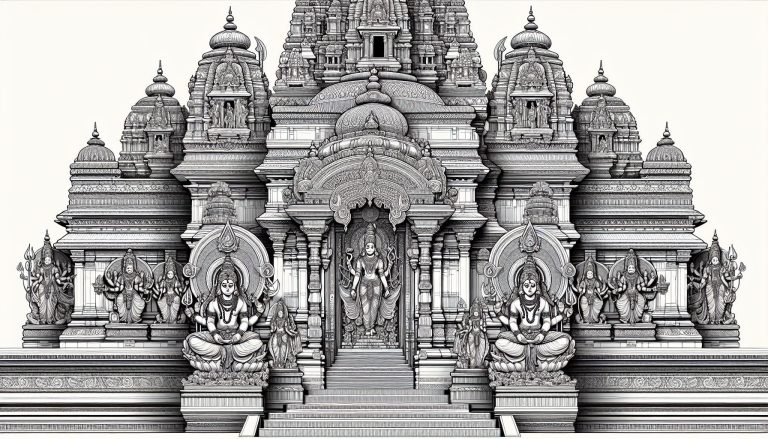
Exploring Shiva’s relationships with his consorts reveals profound insights into the nature of existence, consciousness, and cosmic balance. Parvati symbolizes nurturing and devotion, Kali embodies fierce protection and transformation, while Durga stands for strength and justice. Together, they illustrate the intricate dance of creation and destruction, offering a rich tapestry of wisdom for those who seek deeper understanding.
The Divine Consorts of Shiva
Shiva’s consorts play crucial roles in his metaphysics. Each embodies distinct facets of divine feminine energy, enriching the understanding of Shiva’s multifaceted nature.
Parvati: The Gentle Mother
Parvati, Shiva’s primary consort, personifies benevolence and maternal love. Daughter of the Himalayas, she is celebrated for her beauty and devotion. As the embodiment of Shakti, Parvati represents divine feminine energy. Her union with Shiva symbolizes cosmic balance, harmonizing masculine and feminine forces.
Kali: The Fierce Protector
Kali, another of Shiva’s consorts, embodies destructive and transformative power. Depicted as a fierce warrior goddess, Kali wears a garland of skulls and extends her tongue, symbolizing the annihilation of ignorance and ego. Her fierce protection exemplifies Shiva’s role in destruction as a precursor to rebirth.
Durga: The Warrior Goddess
Durga, revered as a warrior goddess, represents invincible power. Often depicted riding a lion or tiger, Durga wields various weapons, signifying her ability to combat evil forces. Her association with Shiva underscores the divine dynamism necessary to maintain cosmic order and righteousness.
Sati: The First Wife
Sati, Shiva’s first wife, represents loyalty and sacrifice. Her self-immolation, as an act of protest against her father’s disregard for Shiva, underscores her devotion. Sati’s reincarnation as Parvati signifies the eternal nature of the soul and the cyclical aspects of life, death, and rebirth within Shiva’s metaphysical framework.
Metaphysical Significance
Shiva’s consorts play a critical role in the broader metaphysical framework of Shaivism. Consorts like Parvati and Kali exemplify the delicate balance between male and female energies, uniting to create an integrated, cosmic whole.
Symbolism of Dualities
Shiva and his consorts personify essential cosmic dualities. Shiva stands for the transcendent, passive, and masculine principles, whereas Shakti represents the immanent, active, and feminine forces. Their union illustrates opposites such as light and dark, pure and impure, and form and formlessness, showing how these opposing forces create universal harmony.
Manifestations of Shakti
Shakti manifests in various forms through Shiva’s consorts. Parvati embodies nurturing and benevolent energies, while Kali represents transformative, sometimes destructive power. Durga signifies invincible strength, battling evil forces, and Sati highlights loyalty and sacrifice. Each manifestation offers a unique perspective on Shakti’s role in cosmic functions.
Interplay of Creation and Destruction
Shiva’s relationship with his consorts also emphasizes the interplay of creation and destruction. While Shiva is often associated with destruction, it is a form of renewal and transformation, paving the way for creation. This dance of destruction and creation happens in harmony with Shakti, showcasing the cyclical nature of the cosmos.
Mythological Narratives
Mythological stories in Hinduism vividly illustrate the lives and roles of Shiva’s consorts. These narratives enrich our understanding of their divine significance and the metaphysical principles they embody.
Key Stories Involving Parvati
Several key stories in Hindu mythology highlight Parvati’s devotion to Shiva. Sati, Shiva’s first wife, immolated herself at her father Daksha’s yagna after being insulted. She was then reborn as Parvati, Himavat and Mainavati’s daughter, who was named after her father, the king of the mountains. Parvati resolved to marry Shiva despite her parents’ disapproval. To achieve this, she transformed through rigorous penance and became Shiva’s ideal partner. Indra – The King of Heaven sent Kama, the god of desire, to awaken Shiva from meditation. Though Shiva burned Kama to ashes, he eventually accepted Parvati, showing the transformative power of true devotion and penance.
Legends of Durga and Kali
Durga and Kali, two powerful forms of the Devi, symbolize the protective and destructive aspects of divine femininity. Durga emerged when gods sought a warrior goddess to defeat the buffalo demon Mahishasura – Buffalo Demon. Armed with weapons from various deities, she demonstrated unparalleled strength and courage. Kali, another fierce form, manifested from Durga’s wrath to annihilate demons. In these narratives, Durga and Kali illustrate the formidable power necessary to restore cosmic balance and protect righteousness.
The Tale of Sati and Her Rebirth
The tale of Sati and her subsequent rebirth as Parvati is central to understanding her bond with Shiva. Sati, unable to bear the insult to Shiva by her father Daksha, immolated herself. This act led to tension and destruction, signifying loyalty and ultimate sacrifice. Her rebirth as Parvati signified renewal and hope. This story underscores the concept of reincarnation and the perpetual cycle of life and death in Hindu metaphysics. Parvati’s unwavering devotion and transformation through ascetic practices highlight the resilience and determination needed to unite with the divine.
These mythological narratives not only portray the deep bond between Shiva and his consorts but also convey essential metaphysical principles, including transformation, balance, and cosmic order.
Cultural and Religious Impact
Shiva’s consorts, especially Parvati, profoundly shape Hindu culture, rituals, and art, encapsulating the divine balance and unity of opposites.
Influence on Hindu Rituals
The worship of Shiva and his consorts permeates Hindu rituals. The murti (image) of Shiva, often depicted with Parvati, is central in temples. Rituals involving these images, including offerings of flowers, incense, and food, are believed to connect worshippers with Shiva’s divine energy. Ceremonies like Maha Shivaratri celebrate the union of Shiva and Parvati, emphasizing themes of cosmic balance and spiritual renewal.
Representation in Art and Literature
Shiva and his consorts appear extensively in Hindu art and literature. Iconography frequently showcases the ardhanarishvara form, symbolizing the harmonious blend of masculine and feminine principles. Literary works, such as the Shiva Purana and Linga Purana, describe the stories and attributes of Parvati, Durga, and Kali. These representations highlight their roles in maintaining cosmic order and reflect the intricate relationship between divine forces.
Contemporary Worship Practices
Modern reverence for Shiva and his consorts persists across various practices. Devotees often undertake pilgrimages to renowned temples like Kedarnath, where ritualistic practices honor both Shiva and Parvati. Festivals like Navratri, dedicated to the goddess Durga, see widespread participation, reinforcing the relevance of these deities in contemporary spirituality. The worship of Shiva and his consorts remains integral to religious life, bridging ancient traditions with present-day devotion.
Conclusion
Exploring Shiva’s consorts and their metaphysical significance has deepened my understanding of Hindu mythology and its intricate layers. The divine feminine, embodied through Parvati, Kali, Durga, and Sati, not only complements Shiva but also enriches the cosmic narrative with profound symbolism. These relationships illustrate the balance of energies and the cyclical nature of existence, offering valuable insights into the broader metaphysical framework of Shaivism.
The cultural and spiritual impact of Shiva and his consorts remains vibrant today. From rituals to festivals their legacy continues to inspire and shape contemporary spirituality. This exploration reaffirms the timeless relevance of these deities in understanding the universe’s intricate balance and the unity of opposites.
Sources & further reading
These themes are explored in greater depth across the following authoritative resources:
- Encyclopaedia Britannica, Hindu Mythology
- Internet Sacred Text Archive, Hinduism
- Mythopedia, Hindu Mythology
- Harvard Pluralism Project, Hindu Tradition
- Wendy Doniger, The Hindus: An Alternative History (Penguin, 2009), ISBN 978-0143116691
External resources for further reading. Apam Napat is not affiliated with these publishers; citation does not imply endorsement.
Based on the classical texts of Hindu mythology, see our sources.