

As I delved into the Vedic texts, I discovered that finding one’s life purpose isn’t just about personal gain but aligning with a greater cosmic order. The Vedas teach that when we live following our dharma, we contribute to the well-being of the entire universe. This holistic approach not only brings inner peace but also fosters a sense of interconnectedness with all living beings.
Understanding Vedic Life Purpose
The Vedic concept of life purpose, or dharma, centers on the idea that every individual has a unique role. This role is integral to maintaining the balance and harmony of the universe. According to the Vedas, discovering one’s dharma leads to personal fulfillment while benefiting the collective well-being.
Four Stages of Life
The Vedas outline four stages of life, known as ashramas:
- Brahmacharya: The student phase, emphasizing education and character building.
- Grihastha: The householder stage, focusing on family and societal responsibilities.
- Vanaprastha: The hermit phase, transitioning from household duties to spiritual quests.
- Sannyasa: The renounced stage, dedicating oneself entirely to spiritual pursuits.
Each stage shapes an individual’s dharma, helping them align their actions with their life purpose.
Varna System
The Vedic system categorizes individuals into four varnas or classes:
- Brahmins: Priests and teachers, responsible for spiritual and educational guidance.
- Kshatriyas: Warriors and rulers, tasked with protection and governance.
- Vaishyas: Merchants and farmers, ensuring economic prosperity through trade and agriculture.
- Shudras: Laborers and service providers, supporting societal infrastructure.
Varna determines one’s duties and responsibilities, guiding them to fulfill their dharma effectively.
Principles of Karma and Reincarnation
The principles of karma and reincarnation play a crucial role in Vedic life purpose. Karma refers to the law of cause and effect, where actions in one life influence future lives. Through multiple lifetimes, individuals obtain opportunities to realize and fulfill their dharma, progressing spiritually.
Role of Meditation and Yoga
Vedic teachings advocate meditation and yoga to help one understand their life purpose. These practices promote self-awareness and inner peace, making it easier to discover and align with one’s dharma. Regular meditation and yoga cultivate clarity and focus, aiding individuals in their spiritual quests.
Importance of Scriptures
Key Vedic scriptures, such as the Bhagavad Gita and Upanishads, offer profound insights into discovering life purpose. They emphasize devotion, righteousness, and wisdom as pathways to understanding dharma. Studying these texts provides a deeper comprehension of the universe and one’s place within it.
Aligning with the comprehensive framework of the Vedic system, individuals can discover and live their dharma, contributing to their growth and the world’s harmony.
The Concept Of Dharma
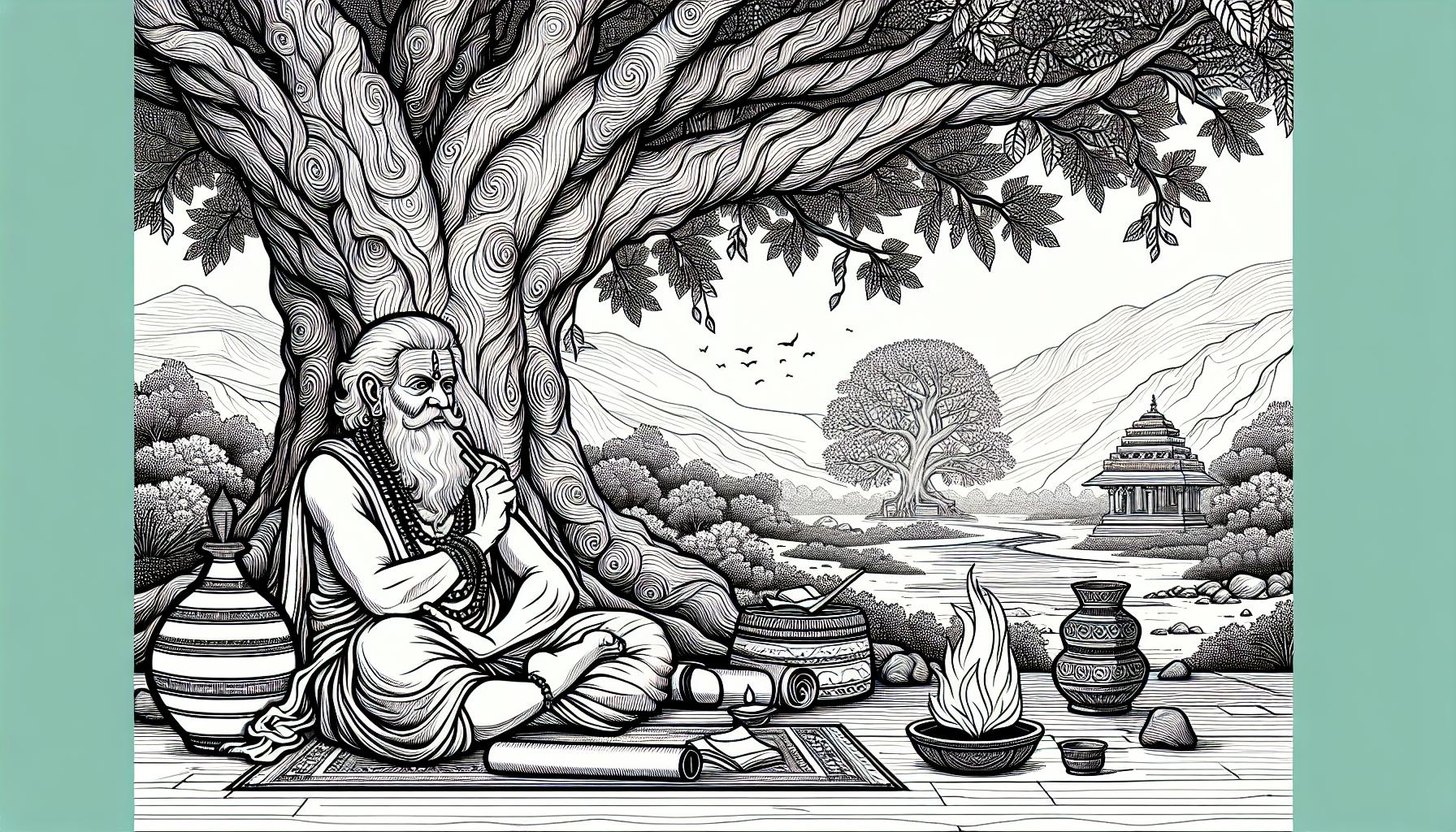
Dharma, an essential tenet of Vedic philosophy, embodies the idea of living following cosmic order and one’s responsibilities. It plays a pivotal role in maintaining harmony at both individual and universal levels.
Definition And Importance
Dharma refers to the moral and ethical duties that an individual must uphold. It’s more than just a set of rules; it’s a way of life that aligns with the inherent order of the universe. Dharma varies based on one’s age, caste, gender, and occupation, making it a dynamic and personal concept. By adhering to dharma, individuals fulfill their roles in society and contribute to the world’s overall balance. Understanding and following one’s dharma leads to personal fulfillment, societal well-being, and spiritual growth.
Sources Of Dharma
The Vedas, ancient scriptures, serve as the primary source of dharma. They provide guidance through hymns, rituals, and philosophical teachings. The Smritis, including texts like Manusmriti, outline dharma’s practical aspects concerning daily life, family duties, and social responsibilities. Epic works like the Mahabharata – The Great Epic and Ramayana – Epic of Hinduism narrate stories exemplifying dharma through the lives of their heroes. The Bhagavad Gita, part of the Mahabharata, offers profound insights into dharma, especially concerning duty and righteousness in challenging situations. Finally, the teachings of enlightened sages and gurus provide practical advice for exploring life’s complexities while staying true to one’s dharma.
Varnas And Life Purpose
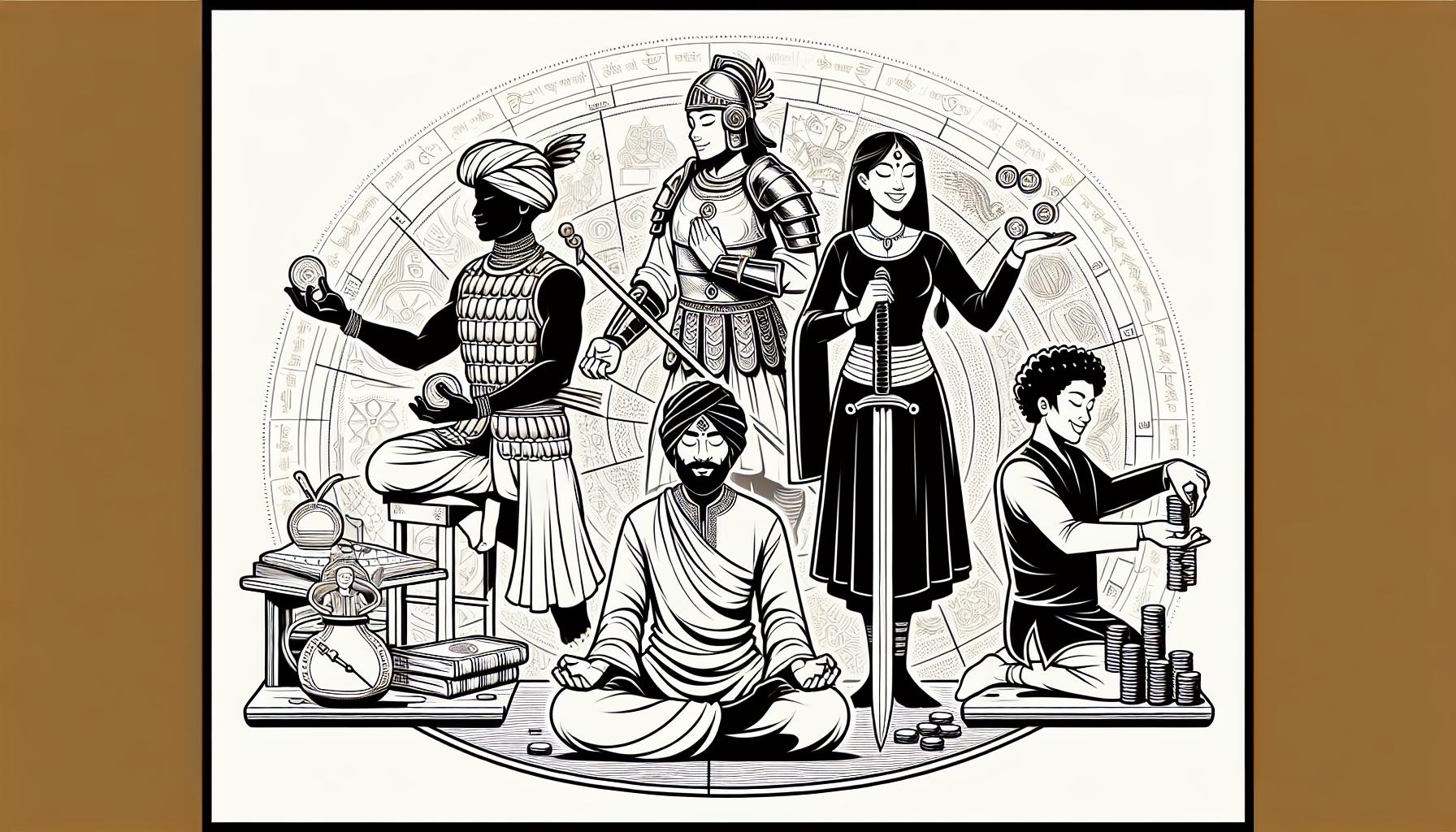
I’ll jump into the Vedic classification of varnas and how each guides one’s life purpose. Understanding these can provide deeper insights into one’s dharma and overall role in society.
Brahmins
Brahmins primarily engage in scholarly and spiritual activities. Their roles include teaching, conducting religious rituals, and preserving sacred texts. For example, they perform yajnas (sacrificial rituals) and study the Vedas. Their lifestyle requires adherence to higher ethical and moral standards, aligning with the pursuit of knowledge and enlightenment.
Kshatriyas
Kshatriyas are warriors and rulers responsible for governance and protection. They lead armies, enforce laws, and ensure societal stability. In Vedic texts, figures like Arjuna exemplify Kshatriya duties, focusing on courage and duty. Their life purpose involves maintaining justice and order through leadership and valor.
Vaishyas
Vaishyas engage in commerce, agriculture, and trade. Their duties include managing businesses, farming, and trading goods. For instance, they sustain the economy through entrepreneurship and mercantile activities. Their life purpose revolves around wealth creation and ensuring material prosperity within society.
Shudras
Shudras provide essential services and support to other varnas. They work as craftsmen, laborers, and service providers. Work like building infrastructure and crafting tools showcases their contributions. Their purpose is to maintain societal harmony through diligent service and skilled labor, supporting the functioning of the community.
Understanding these varnas deepens the comprehension of one’s dharma, illustrating how each role contributes to the broader cosmic order and societal well-being.
The Four Aims Of Life
Vedic philosophy outlines four key aims of life, guiding individuals to achieve holistic fulfillment.
Dharma (Duty)
Dharma represents one’s moral and ethical responsibilities. I find dharma essential for maintaining societal balance, as it varies based on age, caste, gender, and occupation. For instance, the duties of a teacher differ from those of a merchant.
Artha (Prosperity)
Artha refers to the pursuit of material wealth and success. While ensuring prosperity, one adheres to ethical means and contributes to societal welfare. My understanding highlights that true wealth includes both financial stability and the support of societal growth.
Kama (Desire)
Kama encompasses the pursuit of love, pleasure, and emotional fulfillment. It promotes personal happiness while respecting moral boundaries. Achieving kama, in my view, involves nurturing relationships and appreciating life’s pleasures without indulging in excess.
Moksha (Liberation)
Moksha signifies spiritual liberation and self-realization. It’s the ultimate aim, signifying freedom from the cycle of rebirth. Engaging in self-reflection and spiritual practices, individuals strive for moksha, seeking unity with the divine and eternal peace.
Role Of Karma In Life Purpose
Karma, a central tenet in Vedic philosophy, profoundly influences life purpose by linking actions to consequences across lifetimes.
Law Of Karma
The law of karma operates on the principle that every action has a corresponding reaction, shaping one’s present and future life experiences. Good actions yield positive outcomes, while negative actions produce unfavorable results. This belief underscores the importance of living ethically and mindfully. Scriptures like the Bhagavad Gita emphasize karma’s role, guiding individuals toward righteous living to achieve harmony and balance.
Reincarnation And Life Goals
Reincarnation, or samsara, intertwines karma with life’s purpose, as the soul undergoes multiple births based on past actions. This cycle of rebirths offers opportunities for spiritual growth and rectification of past mistakes. Aligning with life goals—Dharma, Artha, Kama, and Moksha—becomes essential in this journey. By understanding karma and reincarnation, individuals can focus on fulfilling their Vedic life purpose through continuous self-improvement and ethical conduct.
Tools For Discovering Your Vedic Life Purpose
Several tools exist within Vedic tradition to help discover one’s life purpose. These tools offer insights aligned with spiritual growth and personal fulfillment.
Astrology (Jyotish)
Astrology, known as Jyotish, serves as a primary tool in understanding one’s Vedic life purpose. Using planetary positions at birth, Jyotish provides a natal chart that reveals personality traits, strengths, and challenges. For instance, if someone’s chart shows a strong influence of Jupiter, it’s believed they possess wisdom and teaching abilities. This astrological guidance helps in aligning actions with cosmic patterns, promoting a harmonious life path.
Meditation And Yoga
Meditation and Yoga play crucial roles in uncovering one’s dharma. Meditation fosters self-awareness by quieting the mind and allowing for introspection. Practices such as mindfulness and chanting can deepen this awareness. Yoga harmonizes the body and mind, creating a balanced state conducive to understanding one’s purpose. For example, regular practice of Asanas and Pranayama can enhance mental clarity, aiding in insight and spiritual awakening.
Conclusion
Understanding and embracing your Vedic life purpose can offer profound clarity and direction. By aligning with dharma and integrating the four aims of life, you can find a balanced and fulfilling path. Utilizing tools like Jyotish, meditation, and yoga enhances self-awareness and spiritual growth. Embracing these practices helps you navigate life’s challenges with a deeper sense of purpose and harmony.
Sources & further reading
These themes are explored in greater depth across the following authoritative resources:
- Internet Sacred Text Archive, Rig Veda (Griffith translation)
- Internet Sacred Text Archive, Upanishads
- Britannica, Veda
- Britannica, Upanishad
- Patrick Olivelle, The Early Upanishads (Oxford University Press, 1998)
External resources for further reading. Apam Napat is not affiliated with these publishers; citation does not imply endorsement.
Based on the classical texts of Hindu mythology, see our sources.