
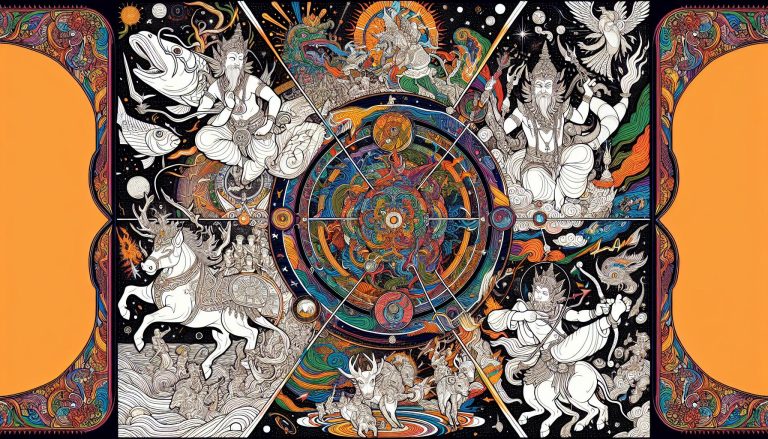
I’ve always been intrigued by how each avatar addresses specific challenges, reflecting the values and dilemmas of their time. Understanding the significance of Vishnu’s avatars offers a window into the spiritual and ethical fabric of Hindu culture. It’s like unlocking a treasure trove of wisdom that resonates even in today’s world.
Overview Of Vishnu’s Avatars
Vishnu’s avatars represent divine interventions aiming to restore cosmic balance. Often referred to as ‘Dasavatara’, these ten incarnations illustrate the role of Vishnu in sustaining and protecting dharma. Each avatar addresses specific challenges, symbolizing a distinct phase in cosmic evolution and different aspects of human life.
- Matsya (Fish): Matsya saved sacred texts and sages from a great flood. Vishnu, in this form, guided a boat carrying crucial knowledge, ensuring the survival of wisdom through the deluge.
- Kurma (Tortoise): Kurma’s role involved supporting Mount Mandara during the churning of the ocean, which aimed to produce amrita, the nectar of immortality. By stabilizing the foundation, Kurma enabled divine and demonic factions to collaborate for a greater good.
- Varaha (Boar): Varaha lifted the Earth from the depths of cosmic waters where it had been submerged by the demon Hiranyaksha. Demonstrating immense strength, this boar form of Vishnu symbolizes the retrieval and upholding of Earth.
These avatars showcase Vishnu’s adaptability and willingness to assume various forms to combat evil. From the primordial waters to mountains, these incarnations illustrate his pervasive influence.
The Dashavatara: Vishnu’s Ten Principal Avatars
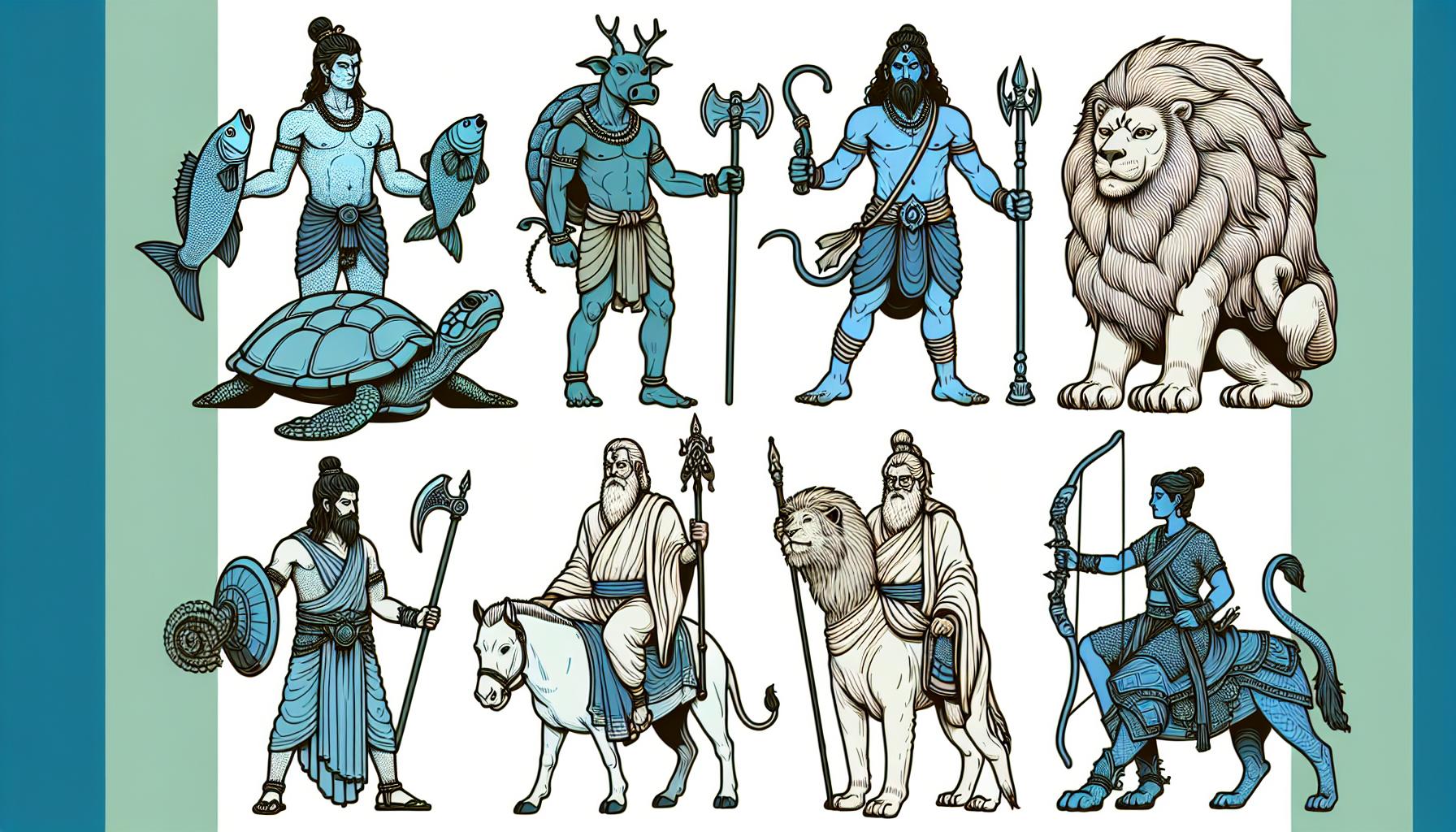
The Dashavatara encapsulates the essence of Vishnu’s divine interventions in the material world. Each avatar serves a specific purpose in restoring cosmic order.
Matsya
Matsya, the fish avatar, appeared to save the sacred Vedas from a deluge. It symbolized the preservation of wisdom and knowledge amid chaos. According to the mythology, Vishnu assumed this form to rescue the seven sages and all living beings from a catastrophic flood.
Kurma
Kurma, the turtle avatar, played a crucial role in the churning of the ocean to obtain the nectar of immortality. This avatar demonstrates endurance and stability. Vishnu supported Mount Mandara on his back, allowing gods and demons to churn the ocean effectively.
Varaha
Varaha, the boar avatar, rescued the Earth, personified as the goddess Bhudevi, from the demon Hiranyaksha. This form highlighted Vishnu’s strength and dedication to protecting the Earth. Varaha lifted Earth from the cosmic waters, signifying the restoration of earthly order.
Narasimha
Narasimha, the man-lion avatar, surfaced to save his devotee Prahlada from his tyrant father, Hiranyakashipu. This incarnation combined the features of a human and a lion, emphasizing fierce protection and justice against evil. Vishnu manifested as Narasimha to uphold dharma and protect the faithful.
Vamana
Vamana, the dwarf Brahmin avatar, tricked the demon king Bali to restore cosmic order. By requesting three strides of land, Vamana expanded to cover the earth and heavens, symbolizing humility and the power of the divine. This clever act rebalanced power dynamics in favor of the gods.
Parashurama – Rama of the Axe
Parashurama, the warrior Brahmin avatar, eradicated corrupt Kshatriya rulers from Earth 21 times. This fierce incarnate represents discipline and martial valor. Parashurama’s actions reinstated righteousness and curbed the misuse of power by the warrior class.
Rama
Rama, the prince of Ayodhya, embodies virtue, honor, and the ideal king. His story, depicted in the Ramayana – Epic of Hinduism, illustrates the importance of duty, loyalty, and righteousness. Rama’s victory over the demon king Ravana marks the triumph of good over evil.
Krishna
Krishna, the divine statesman, is celebrated for his role in the Mahabharata – The Great Epic. Known for his wisdom, he provided the teachings of the Bhagavad Gita. Krishna’s life and acts promote love, compassion, and the significance of following one’s duty without attachment.
Buddha
Buddha, regarded by some traditions as an avatar of Vishnu, promotes the values of peace, non-violence, and enlightenment. This incarnation diverges from traditional Hinduism, reinforcing the importance of compassion and the quest for spiritual awakening.
Kalki
Kalki, the prophesied avatar, is expected to appear in the future to eradicate evil and restore dharma at the end of the current age (Kali Yuga). This avatar represents the ultimate return to balance and the renewal of cosmic order.
Symbolic Interpretation Of Each Avatar
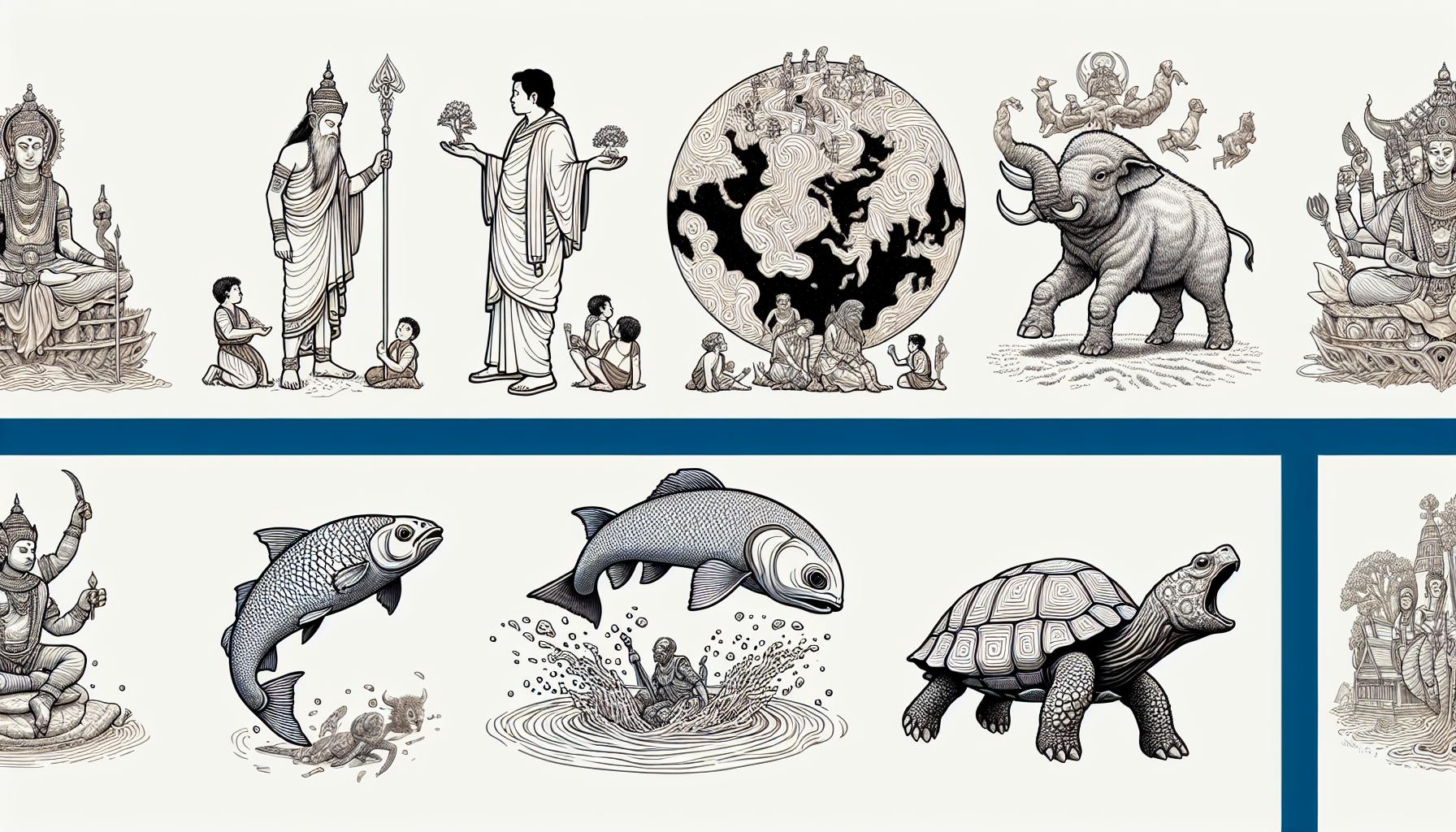
Vishnu’s avatars hold deep symbolic meanings, reflecting various aspects of life and cosmic order in Hindu mythology. Each avatar represents a unique element vital for understanding evolution, morality, and dharma.
Teaching Moral Values
Each avatar teaches a different moral lesson. For instance, Vamana, the dwarf avatar, symbolizes humility and the importance of controlling ego. By incarnating as a humble dwarf, Vishnu humbles the demon king Bali, highlighting that true power doesn’t stem from size or strength but from virtue and humility. Similarly, Varaha, the boar avatar, illustrates the constant struggle and triumph of good over evil by rescuing the Earth from the demon Hiranyaksha, demonstrating that righteousness ultimately prevails.
Representation Of Evolution
The avatars represent the stages of evolution. Matsya, the fish, symbolizes the beginning of life in water. Kachhap, the tortoise, represents the transition from aquatic to terrestrial life, signifying balance and support essential for life. This evolutionary journey continues with avatars like Narasimha, half-man, half-lion, blending human and animal kingdoms, reflecting intermediary evolutionary stages.
Protection Of Dharma
Avatars emphasize the protection and restoration of dharma, the moral law governing the universe. Rama, as moral and just, the perfect archetype of duty and honor, fights and defeats the demon king Ravana, restoring righteousness. Krishna’s role in the Mahabharata highlights strategic wisdom and righteousness, guiding Arjuna in the epic battle of Kurukshetra, symbolizing upholding and protecting cosmic laws.
Historical And Cultural Impact
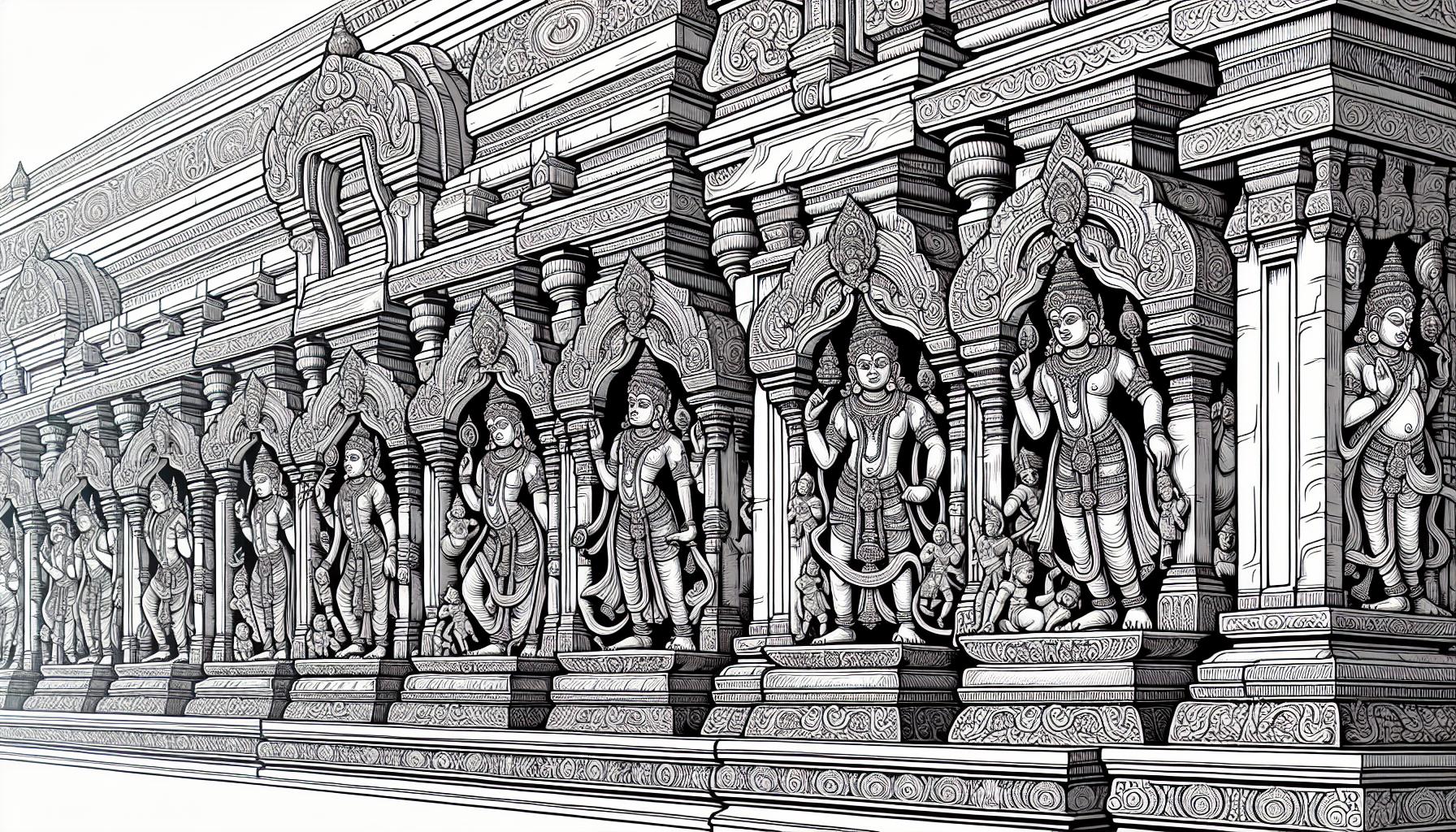
Vishnu’s avatars deeply influenced Indian history and culture. Their significance shaped religious practices and sociopolitical structures.
Influence On Indian Culture
The avatars of Vishnu descended to earth to empower the good and destroy evil, maintaining balance. Each avatar, with distinct mythology, impacted societal values and religious beliefs. For instance, Rama’s adherence to duty and Krishna’s strategic wisdom serve as moral exemplars. Festivals like Ram Navami and Krishna Janmashtami celebrate these avatars, reinforcing cultural traditions and communal identities.
Representation In Art And Literature
Vishnu’s avatars permeate Indian art and literature. Temples, sculptures, and reliefs from the Majapahit Empire vividly depict them. Key sites include the Prambanan Temple Complex, showcasing intricate carvings of Rama and Krishna. Literary works like the Ramayana and Mahabharata narrate the tales of these avatars, offering profound insights into dharma and karma. These representations preserve cultural heritage and perpetuate Vishnu’s enduring legacy.
Spiritual And Religious Importance
Vishnu’s avatars hold deep spiritual and religious significance in Hinduism, embodying divine principles and guiding devotees through life’s complexities.
Cosmic Balance
Avatars symbolize the eternal cycle of creation, preservation, and destruction. This balance, known as dharma, maintains the cosmic order and illustrates the moral responsibilities that each individual must uphold. Vishnu’s interventions as various avatars ensure that despite chaos or evil, the cosmos eventually returns to a state of harmony.
Divine Incarnations
Each avatar of Vishnu serves a distinct purpose in maintaining this cosmic balance. For instance, the avatar of Narasimha emphasizes the triumph of good over evil, while Rama exemplifies duty and righteousness. These incarnations aren’t just historical; they are divine embodiments providing profound teachings on how to live a balanced and morally sound life.
Source Of Strength
Vishnu’s avatars also serve as a source of strength and inspiration for devotees. When facing life’s challenges, I find solace in the teachings and actions of these avatars. They offer spiritual enrichment and moral guidance, showing how to act with integrity and courage.
Role In Hindu Worship
In Hindu worship, Vishnu’s avatars are often central. Idol worship is common in Vaishnava temples, where images and sculptures depict avatars like Krishna and Rama. These representations are not mere statues; they embody Vishnu’s divine power and serve as focal points for devotion and spiritual connection.
Lessons For Devotees
Vishnu’s avatars impart essential lessons to devotees. From Krishna’s teaching of the Bhagavad Gita to Rama’s adherence to dharma, these stories provide moral and ethical guidance. By reflecting on these lessons, I can better navigate the complexities of life, making choices that align with cosmic principles of right and wrong.
Conclusion
Vishnu’s avatars offer timeless wisdom and guidance. They illustrate the eternal battle between good and evil and the importance of upholding dharma. Each avatar’s story enriches our understanding of moral and spiritual principles, providing valuable lessons for navigating life’s challenges.
These divine incarnations are more than mythological tales; they’re integral to Hindu worship and cultural traditions. They inspire devotion and reinforce the values that shape our lives. Embracing the teachings of Vishnu’s avatars can lead to a more balanced and righteous existence.
In celebrating Vishnu’s avatars, we connect with profound spiritual truths and gain insights into living with integrity and courage. Their significance transcends time, continually offering strength and inspiration to all who seek it.
Sources & further reading
These themes are explored in greater depth across the following authoritative resources:
- Encyclopaedia Britannica, Hindu Mythology
- Internet Sacred Text Archive, Hinduism
- Mythopedia, Hindu Mythology
- Harvard Pluralism Project, Hindu Tradition
- Wendy Doniger, The Hindus: An Alternative History (Penguin, 2009), ISBN 978-0143116691
External resources for further reading. Apam Napat is not affiliated with these publishers; citation does not imply endorsement.
Based on the classical texts of Hindu mythology, see our sources.