

Understanding the Puranas isn’t just about reading ancient stories; it’s about uncovering the deeper meanings and philosophies embedded within them. These texts guide us on how to live a righteous life, emphasizing the importance of dharma (duty), karma (action), and bhakti (devotion). By exploring the Puranic understanding, we can connect with timeless wisdom that remains relevant in our modern lives.
Understanding the Puranas
The Puranas, ancient Hindu texts, are central to understanding Hindu cosmology and spirituality. They recount tales of gods, goddesses, heroes, and civilizations. But more than stories, they’re repositories of wisdom and culture, reflecting the moral and philosophical ethos of Hinduism.
Genre and Structure
Puranic literature, a genre distinct from Vedic texts, includes 18 Mahapuranas and 18 Upapuranas. Each text typically contains five subjects: creation, destruction and re-creation, genealogies, cosmology, and legends of royal dynasties.
Key Elements
- Creation Myths: Stories explaining the universe’s origin and structure.
- Genealogies: Lineages of gods, sages, and heroes, which reinforce the tradition’s sacred narratives.
- Legends: Moral tales and adventures of divine and heroic figures, offering ethical guidance.
- Teachings: Philosophical discussions on dharma (righteousness), karma (action), and bhakti (devotion).
Philosophical Concepts
Puranas introduce profound ideas like cyclical time and cosmic balance. They use allegories and metaphors to illustrate complex principles. For instance, Vishnu’s avatars depict moral and cosmic order’s restoration during times of chaos.
Modern Relevance
The teachings in the Puranas remain relevant today. They emphasize universal values like integrity, justice, and devotion. By engaging with these texts, individuals can gain insights into leading a balanced and virtuous life. Knowledge of the Puranas can enrich educational and spiritual endeavors, offering timeless wisdom.
By delving into the Puranas, I continuously discover new layers of meaning, which helps me understand ancient traditions and apply them to contemporary life.
Historical Context of the Puranas
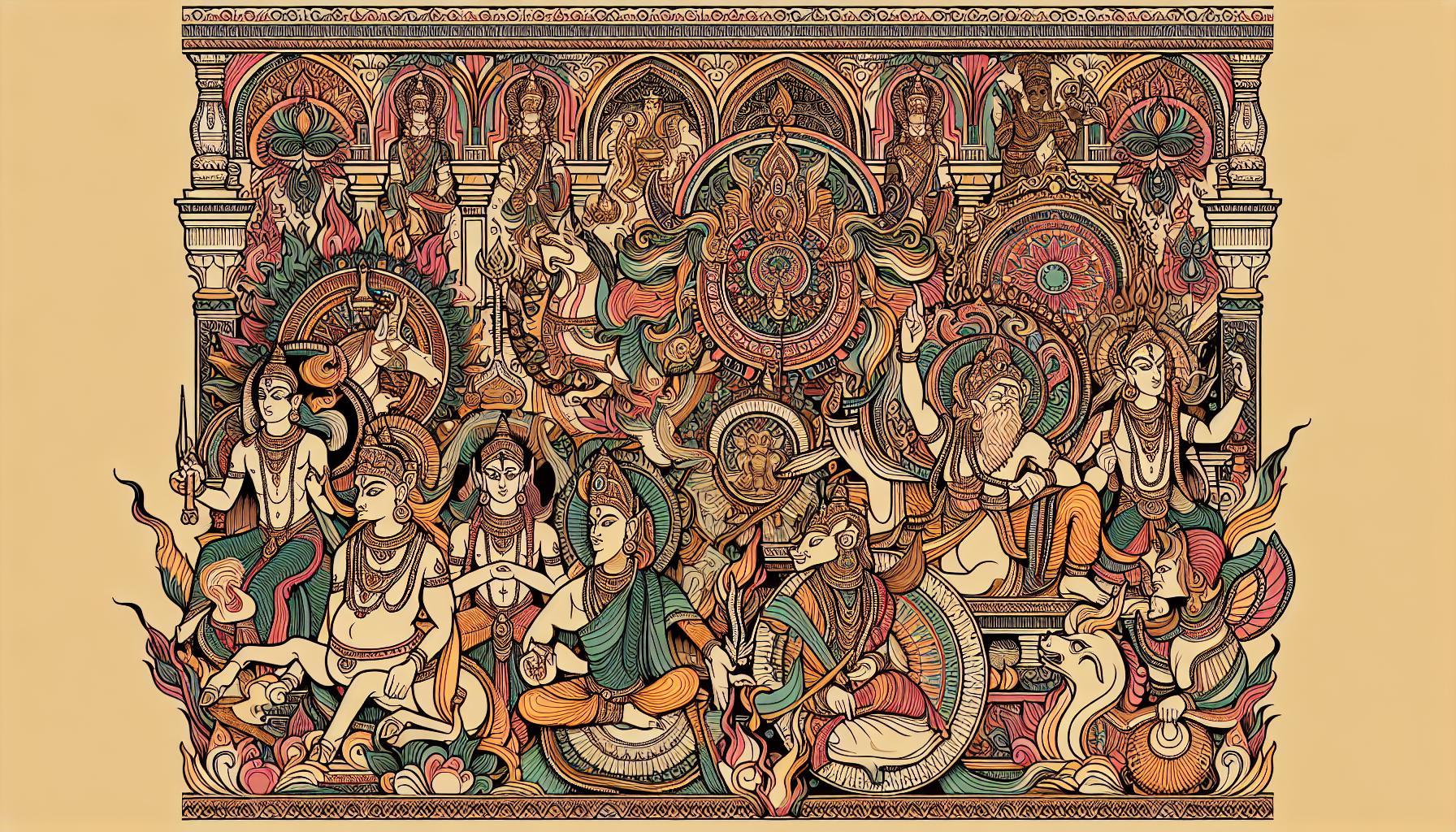
The Puranas, ancient Hindu texts, offer profound insights into spirituality, cosmology, and morality. Understanding their historical context enriches our comprehension of their teachings and significance.
Ancient Origins
The origins of the Puranas trace back to ancient Indian oral traditions, eventually documented over centuries. These texts date to between 300 BCE and 1500 CE. Rooted in Hindu cosmology, Puranic literature emphasizes the cyclical nature of time, encompassing creation, preservation, and destruction processes. The term “Purana” itself means “ancient” or “old,” signifying their role in preserving early cultural and religious stories.
Key Texts and Authors
There are 18 major Puranas, known as Mahapuranas, and many minor ones, each with distinct themes and stories. The Mahabharata – The Great Epic and Ramayana epics frequently intersect with Puranic tales, adding depth to their narratives. Key authors include Vyasa, often credited with compiling and organizing the Puranas. Texts like the Vishnu Purana, Shiva Purana, and Bhagavata Purana are vital, focusing on different deities and philosophical teachings. Each Purana reflects specific devotional practices, cosmological views, and ethical guidelines, illustrating the vast scope of Hindu religious thought.
Themes and Narratives
Puranic literature is rich in themes and narratives that offer profound insights into various aspects of existence. From creation myths to cosmology and time cycles, these texts cover a broad spectrum of topics.
Creation Myths
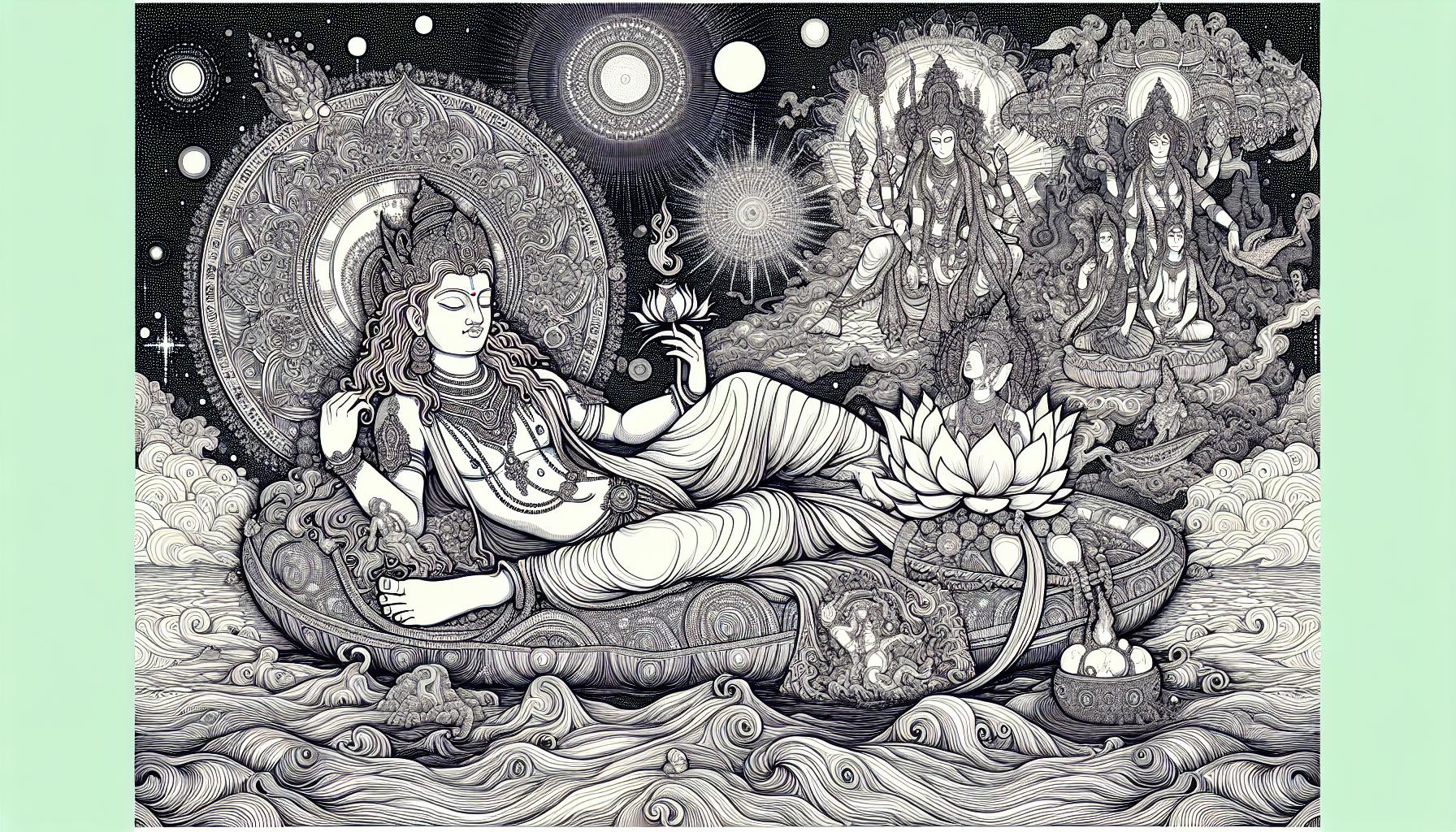
Puranic texts narrate elaborate creation myths, each with unique depictions of how the universe came into existence. In the Vishnu Purana, the story of creation begins with Vishnu resting on the cosmic ocean, from whose navel emerges the lotus carrying Brahma, the creator. Other Puranas, like the Shiva Purana, present different versions, adding richness to the tapestry of Hindu mythology. By examining these diverse narratives, I gain a deeper understanding of ancient perspectives on cosmic origins.
Cosmology and Time Cycles
Hindu cosmology, as detailed in the Puranas, describes a complex structure of time cycles. One significant concept is the Yuga cycle, comprising Satya Yuga, Treta Yuga, Dvapara Yuga, and Kali Yuga, each representing different epochs with distinct moral and spiritual characteristics. For example, the Bhagavata Purana explains how each Yuga diminishes in virtue and duration, with Kali Yuga being the current age of moral decline. These time cycles offer a framework for understanding cosmic events and moral evolution.
Philosophical Insights
Puranic literature delves into profound philosophical insights, offering timeless wisdom on fundamental concepts in Hindu philosophy.
Concept of Dharma
In Puranic texts, the concept of Dharma represents duty, righteousness, and moral order. The Puranas emphasize that individuals should pursue their Dharma according to their role in society, whether as householders, students, warriors, or spiritual seekers. For instance, the Bhagavata Purana discusses the duties of different varnas (social classes) and ashramas (stages of life), guiding individuals to act in harmony with universal laws. By following Dharma, individuals contribute to societal harmony and personal growth.
Reincarnation and Karma
Reincarnation and Karma are central themes in Puranic philosophy. The Puranas teach that the soul undergoes endless cycles of birth, death, and rebirth, influenced by Karma—the law of cause and effect. Actions performed in one lifetime impact future existences, creating a cycle of moral and spiritual lessons. Texts like the Garuda Purana explain how good deeds lead to favorable rebirths, while negative actions result in challenging lives. This doctrine encourages ethical living, as the consequences of one’s actions transcend a single lifetime, shaping future experiences and spiritual evolution.
Cultural Significance
Puranic literature has significantly influenced various aspects of Hindu culture. It’s reflected in art, literature, festivals, and rituals.
Influence on Literature and Arts
These ancient texts have shaped Indian literature and arts. Literary works often draw characters, themes, and morals from the Puranas. For instance, Kalidasa’s “Abhijnanasakuntalam” references the Mahabharata. Artists depict scenes from the Puranas in classical paintings, sculptures, and performances. Chola bronzes of gods like Shiva are inspired by Puranic descriptions. Dance forms like Bharatanatyam and Kathakali convey Puranic stories through expressive movements and sequences.
Role in Festivals and Rituals
Many Hindu festivals and rituals find their origins in the Puranas. The celebration of Diwali relates to the return of Rama in the Ramayana, detailed in the Puranas. Navaratri, a festival dedicated to the goddess Durga, draws from textual descriptions of her battles with demons. Rituals such as Yajnas and Pujas also follow Puranic guidelines, ensuring they align with ancient prescriptions. These practices reinforce communal bonds and offer individuals a way to engage with enduring traditions.
Comparative Analysis
Comparison with Vedas
The Puranas and the Vedas represent two distinct yet interconnected bodies of Hindu literature. The Vedas, considered Shruti texts, are viewed as the eternal, divine knowledge revealed to ancient sages. They consist primarily of hymns, rituals, and philosophical discourses. In contrast, the Puranas, known as Smriti texts, are based on human memory and tradition. Unlike the Vedas, the Puranas contain stories, legends, and myths that explain various aspects of the universe, including its creation, the history of the gods, and the lives of ancient sages and heroes.
The Vedas focus on rituals and metaphysical concepts, laying the foundation for Hindu religious practices and philosophical thought. For example, the Rigveda includes hymns dedicated to various deities, while the Upanishads, part of the Vedic corpus, delve deeper into philosophical ideas like Brahman (universal soul) and Atman (individual soul).
On the other hand, the Puranas offer more accessible narratives and moral lessons, making complex philosophical concepts understandable to the general populace. The Bhagavata Purana, for instance, narrates the life and teachings of Krishna, emphasizing themes of devotion (bhakti) and righteousness (dharma). This narrative style helps in conveying spiritual teachings through relatable stories and characters.
Influence on Modern Hinduism
The Puranic understanding significantly influences modern Hinduism by shaping religious beliefs, practices, and cultural traditions. While the Vedas lay the groundwork for Hindu philosophy, the Puranas make these teachings more accessible and relatable to everyday life. They provide the stories behind Hindu festivals and rituals, infusing them with deeper meanings and moral lessons.
For instance, many Hindu festivals, such as Diwali and Holi, find their roots in Puranic stories. Diwali celebrates Rama’s return to Ayodhya from the Ramayana, while Holi commemorates the legend of Prahlada and the triumph of good over evil from the Vishnu Purana. These stories not only enrich the cultural fabric but also instill values that continue to resonate with modern Hindus.
Additionally, the Puranas emphasize concepts like dharma (duty), karma (action), and bhakti (devotion), which remain central to contemporary Hindu spirituality. These texts guide individuals in leading a balanced and virtuous life, making ancient wisdom applicable in today’s context. For example, the Shiva Purana elaborates on the importance of duties and moral conduct, serving as a guide for personal and societal ethics.
While the Vedas provide the foundational philosophical framework, the Puranas bridge the gap between these abstract ideas and practical, relatable teachings, thus playing a crucial role in shaping modern Hinduism.
Conclusion
Exploring the Puranic understanding has deepened my appreciation for these ancient texts and their timeless wisdom. The Puranas not only complement the Vedas but also offer accessible stories that impart essential moral lessons. Their influence on modern Hinduism is undeniable shaping beliefs traditions and practices that continue to resonate today. Concepts like dharma karma and bhakti remain central guiding individuals towards a balanced and virtuous life. The Puranas serve as a bridge between ancient wisdom and contemporary living enriching our spiritual and cultural landscape.
Sources & further reading
These themes are explored in greater depth across the following authoritative resources:
- Internet Sacred Text Archive, Mahabharata (Ganguli translation)
- Internet Sacred Text Archive, Ramayana of Valmiki
- Britannica, Mahabharata
- Britannica, Ramayana
- Bibek Debroy, The Mahabharata (10 vols., Penguin, 2010 to 2014)
External resources for further reading. Apam Napat is not affiliated with these publishers; citation does not imply endorsement.
Based on the classical texts of Hindu mythology, see our sources.