
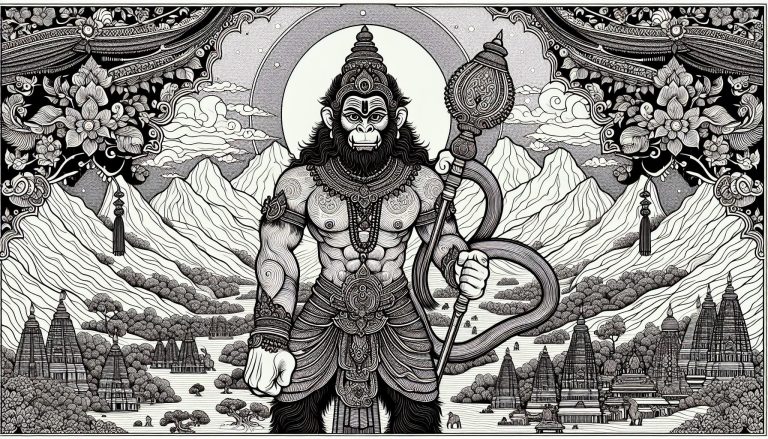
I find it fascinating how Hanuman’s virtues transcend religious boundaries, inspiring people from all walks of life. His story teaches us the power of loyalty and the importance of selfless service, values that resonate deeply in Indian society. Whether it’s through the chanting of Hanuman Chalisa or the vibrant celebrations of Hanuman Jayanti, his legacy continues to thrive, reminding us of the timeless lessons he embodies.
Hanuman in Hindu Mythology
Hanuman, a central character in Hindu mythology, embodies strength, devotion, and loyalty. His parentage traces back to Vayu, the god of air, and Anjani, a celestial nymph.
Hanuman’s extraordinary abilities set him apart. Known for his tremendous strength and bravery, he remains one of the most powerful beings in Hindu lore. Even though he was mischief-prone in his youth, a curse made him forget his divine powers until circumstances demanded their remembrance.
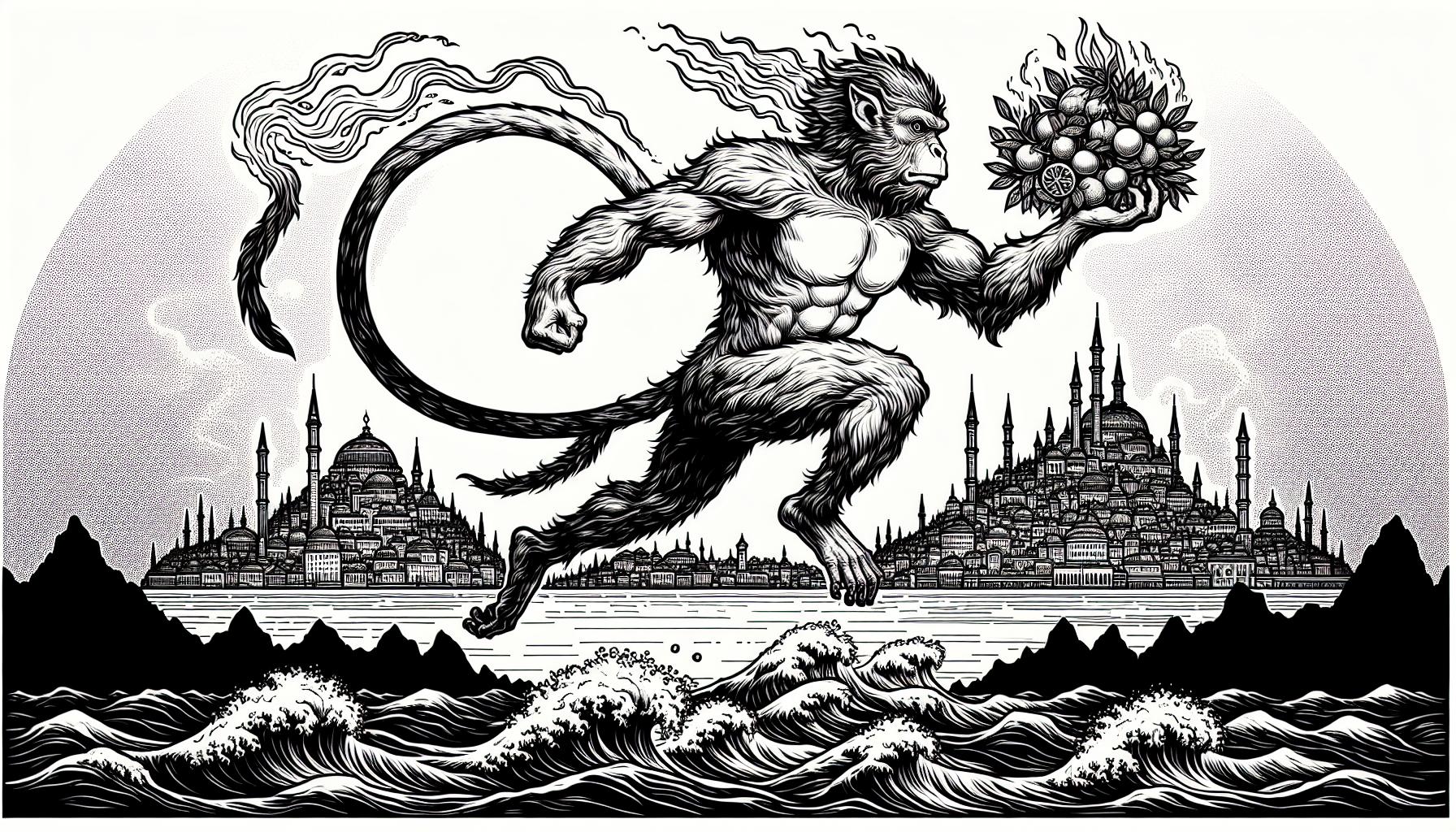
In the epic Ramayana, Hanuman’s support to Lord Rama underscored his unwavering loyalty. His mission to rescue Sita from the demon king Ravana – The Demon King is a testament to his devotion. His leap across the ocean to reach Lanka highlights both his physical prowess and dedicated spirit.
Hanuman’s actions symbolize an ideal mental state, demonstrating what one can achieve through pure devotion and determination.
Hanuman’s Role in Ramayana
Hanuman, the monkey commander, plays a vital role in the Ramayana. His bravery, strength, and unwavering devotion stand out, making him one of the epic’s most revered characters.
Key Episodes
- Crossing the Ocean
Hanuman demonstrates incredible strength and devotion by leaping across the ocean to reach Lanka. This act symbolizes his commitment to helping Rama rescue Sita, overcoming enormous challenges to achieve his goal. - Burning Lanka
Hanuman sets fire to Lanka, using his tail to burn the city after Ravana’s guards ignite it. This episode showcases his formidable power and his role as an agent of divine retribution against evil forces. - Retrieving Medicinal Herbs
Hanuman flies to the Himalayas to bring back a mountain of medicinal herbs, healing Rama’s wounded troops. This act highlights his resourcefulness and dedication to supporting his allies.
Symbolism and Meaning
Hanuman symbolizes unwavering devotion, courage, and selfless service. His tales in the Ramayana illustrate the power of faith and determination. Worshippers see him as a protector and a source of strength, often invoking his name during times of distress. Hanuman’s image serves as a reminder of the virtues of loyalty and devotion, resonating deeply within Indian cultural and spiritual life.
Devotional Practices
Hanuman’s devotion to Lord Rama epitomizes selflessness and courage. He inspires spiritual seekers to develop these virtues through various devotional practices.
Temples and Festivals
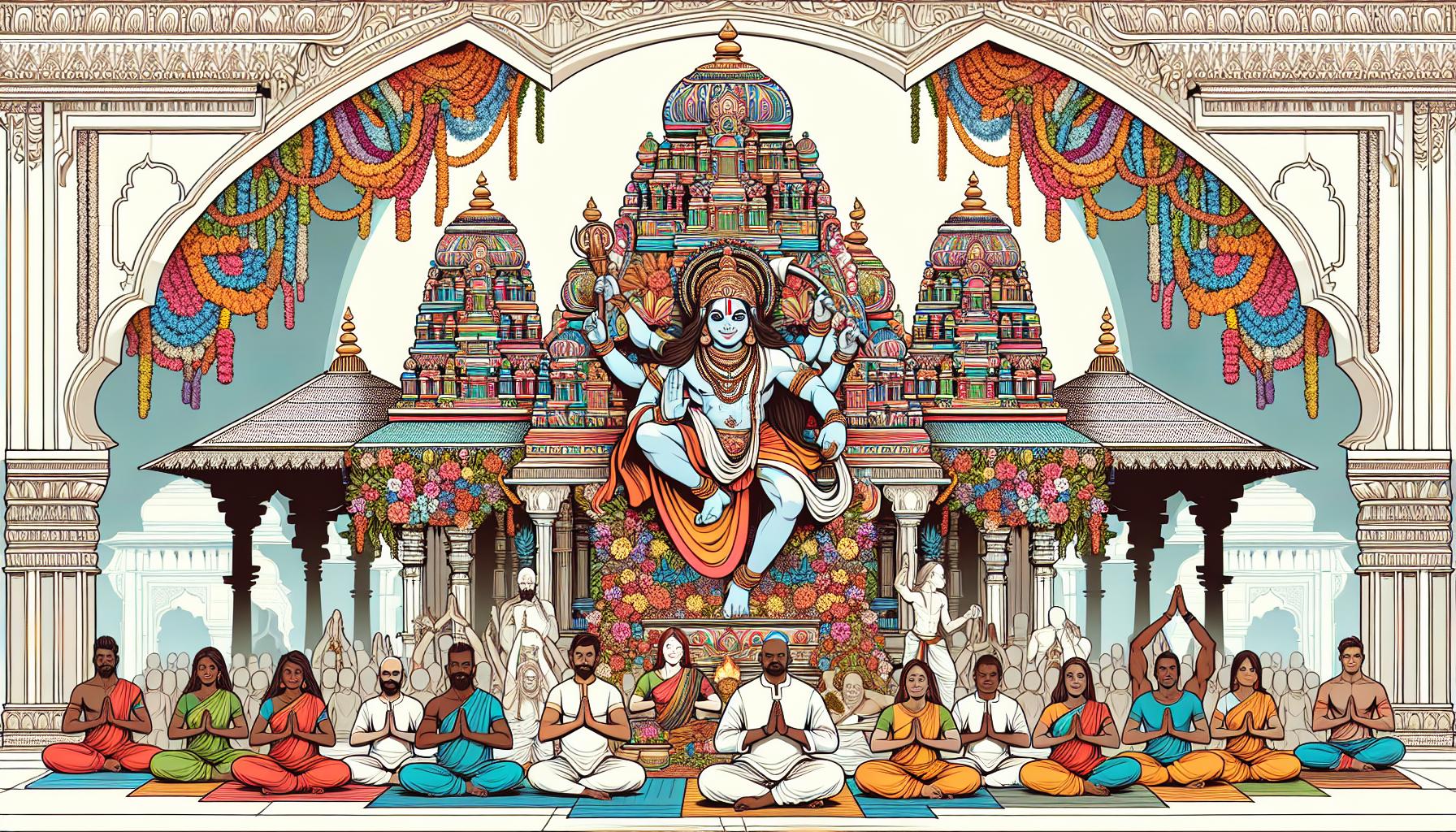
Hanuman temples dot the landscape of India, serving as vital centers for worship and community gatherings. One notable example is the Karya Siddhi Hanuman Temple in Frisco, Texas. This temple offers daily rituals, meditation sessions, yoga classes, spiritual discourses, and workshops. Beyond India, these places act as spiritual and cultural hubs for the diaspora, illustrating Hanuman’s global influence. Festivals like Hanuman Jayanti, celebrating Hanuman’s birth, draw large gatherings of devotees who participate in special prayers and rituals.
Rituals and Prayers
Rituals dedicated to Hanuman include daily recitations of the Hanuman Chalisa, a 40-verse hymn praising Hanuman’s qualities and invoking his blessings. Devotees often perform the “Sankat Mochan Hanuman Ashtak,” an eight-verse stotra to seek relief from troubles. Many engage in physical activities like wrestling and yoga, seen as paths to emulate Hanuman’s strength and discipline. These prayers and rituals, combined with personal vows and fasts, form a structured devotional regimen that deepens spiritual growth and personal development.
Hanuman in Literature and Arts
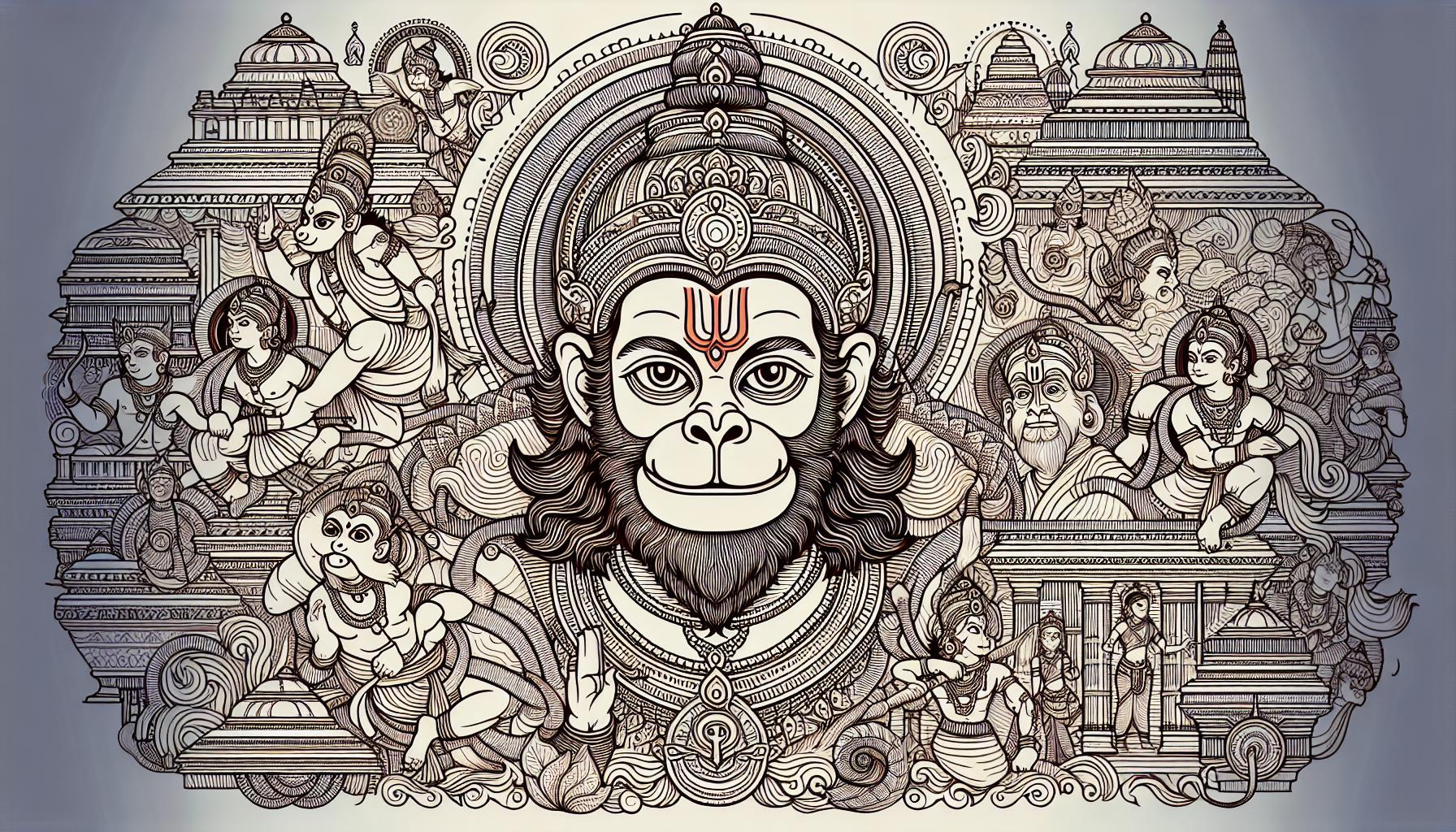
Hanuman’s influence extends profoundly throughout Indian literature and arts, leaving an indelible mark across generations.
Classical Literature
Hanuman’s significance in classical literature is deeply rooted in the Hindu epic, the Ramayana. Composed around the 3rd century BCE, the Ramayana narrates the story of Rama, an avatar of Vishnu – The Protector, and Hanuman’s role as his loyal and powerful monkey companion. Hanuman’s exploits in this epic, such as his heroic leap across the ocean to Lanka and the daring rescue of Sita, have made him a central figure in Hindu mythology. Symbolizing devotion, strength, and courage, Hanuman captures the imagination and reverence of readers. His narrative continues to inspire reinterpretations in modern literature, further cementing his cultural significance.
Visual and Performing Arts
Hanuman’s influence on visual and performing arts is extensive. Hindu art often depicts him as a monkey with a red face, standing erect like a human. These depictions appear in temples throughout India, where he is worshipped either as a subsidiary figure or directly in shrines dedicated to him. Hanuman statues, murals, and frescoes exhibit intricate designs that reflect his revered status. In performing arts, Hanuman’s character features prominently in traditional Indian dance and theater. Kathakali, Bharatanatyam, and various regional plays frequently portray his exploits, using dynamic movements and expressive gestures to bring his stories to life.
Hanuman’s Impact on Social Values
Hanuman’s influence on social values in Indian culture spans courage, strength, devotion, and loyalty. His story and traits offer substantial moral and ethical lessons.
Courage and Strength
Hanuman is renowned for his extraordinary abilities, from his unmatched speed to his immense strength. His bravery is exemplified in various tales from the Ramayana, where he faces formidable challenges without hesitation. Wrestlers and martial artists in India often regard Hanuman as their patron god, seeking his blessings for physical prowess and heroic energy. The concept of shakti, representing strength and assertive excellence, finds a perfect embodiment in Hanuman’s persona, inspiring many to pursue physical and mental fortitude.
Devotion and Loyalty
Hanuman’s unwavering devotion to Lord Rama sets a powerful example of bhakti. His loyalty during the trials faced by Lord Rama illustrates an ideal of loving, emotional devotion to a personal god. Stories of Hanuman’s service, such as bringing the Sanjeevani herb to save Lord Rama’s brother Lakshmana, highlight his selfless actions and steadfast allegiance. This aspect of his character teaches the essence of sincere devotion and loyalty, influencing countless followers in their spiritual journeys.
Modern Interpretations
Hanuman’s influence extends beyond traditional contexts into modern interpretations, showcasing his relevance in contemporary society.
Popular Culture
Hanuman has a prominent place in Indian popular culture, appearing in various forms of media.
- Films and TV Shows: Hanuman features in numerous films (e.g., “Hanuman” 2005) and TV series (e.g., “Sankat Mochan Mahabali Hanuman”), highlighting his heroic deeds and divine powers.
- Comics and Animation: Various Indian comics, like “Amar Chitra Katha,” present Hanuman’s tales, making them accessible to younger audiences. Animated series and movies often depict his adventures.
- Music and Dance: Musical compositions and dance performances frequently draw inspiration from Hanuman’s life, celebrating his valor and devotion.
Contemporary Relevance
In modern times, Hanuman’s traits resonate with individuals facing personal and societal challenges.
- Self-Improvement: Hanuman’s qualities of strength and dedication inspire many to pursue self-improvement and resilience. Books and motivational speeches often cite him as an example.
- Yoga and Fitness: Hanuman’s physical prowess has influenced yoga practices such as Hanumanasana (split pose), symbolizing his leap to Lanka. Fitness routines also incorporate his attributes for discipline and strength.
- Technology and Innovation: Hanuman’s resourcefulness and quick thinking resonate within tech communities, symbolizing problem-solving skills and adaptability.
By adapting Hanuman’s stories and characteristics across diverse modern contexts, his influence remains as strong as ever.
Conclusion
Hanuman’s influence on Indian culture is profound and multifaceted. His timeless virtues of strength, devotion, and loyalty serve as a beacon for countless individuals. From ancient scriptures to modern media, Hanuman’s presence is undeniable and ever-evolving.
His stories inspire not only spiritual growth but also personal and societal resilience. Whether through traditional practices or contemporary adaptations, Hanuman’s legacy continues to guide and uplift. His impact on literature, arts, and everyday life underscores his enduring relevance.
As we navigate the complexities of modern life, Hanuman’s example reminds us of the power of courage and unwavering dedication. His influence transcends time, offering wisdom and inspiration for generations to come.
Sources & further reading
These themes are explored in greater depth across the following authoritative resources:
- Encyclopaedia Britannica, Hindu Mythology
- Internet Sacred Text Archive, Hinduism
- Mythopedia, Hindu Mythology
- Harvard Pluralism Project, Hindu Tradition
- Wendy Doniger, The Hindus: An Alternative History (Penguin, 2009), ISBN 978-0143116691
External resources for further reading. Apam Napat is not affiliated with these publishers; citation does not imply endorsement.
Based on the classical texts of Hindu mythology, see our sources.