
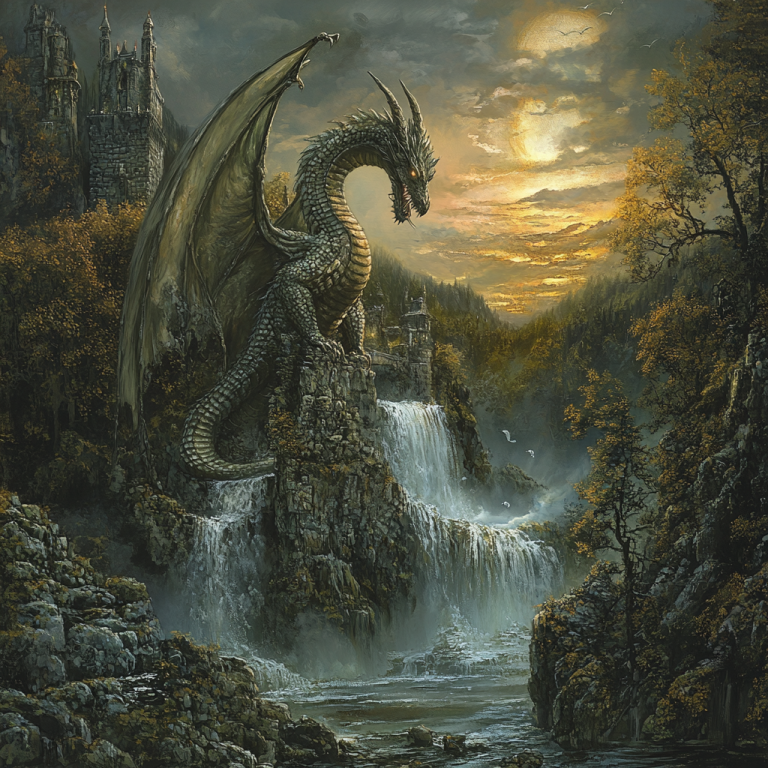
The Tale of Brihaspati – The Guru of the Devas, Indra, and the Slaying of Vritra
The Arrogance of Indra
Brihaspati, the Guru of the Devas, was revered as the foremost among Brahmanas, a repository of wisdom and righteousness. One day, he visited the court of Indra, the King of the Devas, who was engrossed in the celestial delights of dance and music performed by the enchanting Apsaras. Overcome by arrogance, Indra failed to rise from his throne or extend the customary respect to his Guru.
Deeply insulted, Brihaspati departed without uttering a word and withdrew to perform penance. His absence threw the Devas into turmoil. Without their Guru’s guidance, the Devas grew vulnerable. Recognizing their weakened state, the Asuras, their perpetual enemies, prepared to exploit the opportunity.
When Indra sought Brihaspati to atone for his disrespect, the Guru remained untraceable. Acting on the advice of Lord Brahma, the Devas appointed Vishwarupa – Son of Tvashta, the son of Tvashta, as their new preceptor.
Vishwarupa – Son of Tvashta’s Divided Loyalty
Though learned and powerful, Vishwarupa’s loyalties were divided. Born to an Asura mother, he secretly offered a portion of the sacrificial oblations (havis) meant for the Devas to the Asuras, strengthening their power. When Indra discovered this betrayal, he was consumed by rage. Without consideration, he beheaded Vishwarupa, committing the unthinkable sin of Brahmahatya-killing a Brahmana, and worse, his own Guru.
Vishwarupa’s three heads symbolized his activities:
- The first head, used for drinking Soma, became a francolin partridge.
- The second head, used for drinking wine, turned into a sparrow.
- The third head, used for eating, became a partridge.
Burdened by his sin, Indra sought to avoid its consequences. He distributed the sin among earth, water, trees, and women, each of whom bore part of the burden:
- Earth became prone to wastelands.
- Water formed froth.
- Trees bled sap when cut.
- Women experienced menstruation.
In return, they were granted compensatory blessings:
- Earth was allowed to absorb water into its cavities.
- Water gained purifying powers.
- Trees could regenerate their branches.
- Women gained undiminished sexual desire.
Tvashta’s Revenge and the Birth of Vritra
Seeking revenge for his son’s death, Tvashta performed a sacrificial ritual to create a being destined to kill Indra. However, a mispronunciation in the sacrificial mantra altered its meaning. Instead of “May this son of mine slay Indra,” it became “May Indra slay this son of mine.”
From the flames emerged Vritra – Demon-son of Tvashta, a colossal Asura with fiery copper hair, blazing eyes, and armed with a magical trident. His immense strength derived from the sacrificial incantations. Tvashta commanded Vritra to seek out Indra and avenge his brother’s death.
Dadhichi’s Sacrifice
Before Vritra’s creation, the Devas had suffered defeats at the hands of the Asuras and had entrusted their celestial weapons to the ascetic Dadhichi for safekeeping. Lopamudra – Wife of Agastya, the sage’s wife, cautioned him, saying, “An ascetic should remain neutral in worldly conflicts. What if the Asuras retaliate? Worse, what if something happens to these divine weapons under your care?”
Acknowledging her wisdom but bound by his promise, Dadhichi guarded the weapons. Over time, their power began to dissipate. To preserve their essence, the sage dissolved the weapons in water and consumed them, transferring their potency into his bones.
When Vritra’s terror loomed, the Devas sought their weapons. Dadhichi declared, “Their power now resides in my bones. I shall sacrifice my life to aid you in this righteous battle.” True to his word, the sage relinquished his life, and Vishwakarma – The Architect of the Devas fashioned Vajra, the thunderbolt weapon, from Dadhichi’s backbone.
The Battle with Vritra
Armed with Vajra, the Devas engaged Vritra and his Asura army near the cosmic battlefield. Initially, the Asuras overpowered the Devas, but the tide turned when Indra entered the fray. Vritra, angered by his army’s retreat, charged forward. His roar echoed through the heavens, causing many Devas to faint. The ground trembled under his massive frame. With his mace, he struck Airavata, Indra’s elephant mount, but Indra revived it with a touch of Amrit.
A heated exchange of words ensued between Indra and Vritra. The Asura mocked Indra, accusing him of cowardice and treachery, especially for murdering Vishwarupa. Enraged, Indra severed Vritra’s arm with his sword. In retaliation, Vritra opened his massive mouth and swallowed Indra whole.
The Triumph of Vajra
Though swallowed, Indra survived, protected by the grace of Lord Vishnu. From within, he unleashed Vajra, slicing open Vritra’s abdomen and emerging victorious. The Asura, born of a sacrificial fire, was destroyed.
Indra’s Penance
Despite his victory, Indra was weighed down by the sin of slaying a being born of holy sacrifice. Unlike before, he could not rid himself of the sin easily. He retired to the banks of Manasarovar, performing penance for a thousand years to atone for his transgressions and regain his divine splendor.
Connections to Hindu Mythology
- Dadhichi’s Sacrifice
The sage’s selfless act is celebrated as an example of ultimate renunciation and duty. His backbone, transformed into Vajra, symbolizes the power of sacrifice and righteousness overcoming evil. - Vritra’s Role
Vritra – Demon-son of Tvashta, often seen as a metaphor for cosmic obstruction, represents the barriers faced by individuals on their spiritual journey. His defeat symbolizes the triumph of light (Devas) over darkness (Asuras). His origins also tie deeply into the larger framework of Asura Deities: Origins, Symbolism, and Modern Interpretations in Hinduism and Buddhism, who frequently represent forces of ambition, chaos, and cosmic challenge in Hindu mythology. - Indra’s Arrogance and Redemption
Indra’s repeated failings-disrespecting Brihaspati, murdering Vishwarupa, and slaying Vritra-underscore his flawed nature. Yet, his ability to repent and seek redemption highlights the cyclical nature of fall and renewal, a central theme in Hindu philosophy. - Tvashta’s Mispronunciation
The consequences of Tvashta’s mispronounced mantra emphasize the importance of precision in ritual practices, a recurring theme in Hindu scriptures.
This tale weaves together themes of arrogance, redemption, sacrifice, and cosmic balance, serving as a rich allegory for spiritual growth and the responsibilities of leadership.
Sources & further reading
These themes are explored in greater depth across the following authoritative resources:
- Britannica, Asura
- Britannica, Naga
- Mythopedia, Hindu Mythology
- Internet Sacred Text Archive, Mahabharata
- Wendy Doniger, Hindu Myths (Penguin Classics, 1975)
External resources for further reading. Apam Napat is not affiliated with these publishers; citation does not imply endorsement.
Based on the classical texts of Hindu mythology, see our sources.