
Exploring Asura iconography isn’t just about admiring artistic prowess; it’s about understanding the deeper symbolism behind these intricate designs. Each weapon, posture, and facial feature carries a meaning that reflects the Asura’s role in mythological narratives. Join me as we investigate into the captivating world of Asura iconography and uncover the layers of meaning behind these enigmatic figures.
Origins Of Asura Iconography
Asura iconography has evolved through complex narratives in Hindu mythology and Buddhism. Each element in their depiction provides insights into their role and significance in these traditions. In Hindu mythology, Asuras are powerful beings often shown with multiple heads, arms, and legs, symbolizing immense strength and magical powers. The multi-headed Vrtra stands out among them, embodying evil and opposing the god Indra – The King of Heaven. This stark contrast between Asuras and Devas highlights the cosmic struggle central to Hindu mythology.
In Buddhism, Asuras get depicted differently, emphasizing their role within the Kāmadhātu, a area of desire and passion. These demigods or titans often appear with three heads and multiple arms. Renowned for their distinctive myths, the Asuras in Buddhist texts remind us of their defeat by the god Śakra and their subsequent vow to abstain from drinking sura. These features underline their tumultuous nature and their placement within the Buddhist cosmological framework.
The intricate designs in Asura iconography reflect their narrative complexity. These designs beckon us to uncover stories of cosmic battles and divine attributes, enriching our understanding of these enigmatic figures.
Symbolism And Attributes

Asuras in Hindu mythology symbolize powerful, superhuman beings embodying negative qualities such as ego, anger, and an unquenchable desire for power and wealth. Frequently depicted as antagonists to the Devas, they represent darkness, chaos, and evil.
Physical Characteristics
Asuras often appear with strong, muscular builds. They commonly have multiple arms and heads, signifying their immense power and strength. These beings sometimes ride animals like elephants or lions, emphasizing their ferocity and dominance.
- Multiple Arms and Heads: Represent their immense power and strength.
- Riding Animals: Symbolize their dominance and ferocity.
- Dark Colors: Relate to darkness, chaos, and evil.
- Opposition to Devas: Highlight their role as antagonists to the gods.
Variations Across Cultures
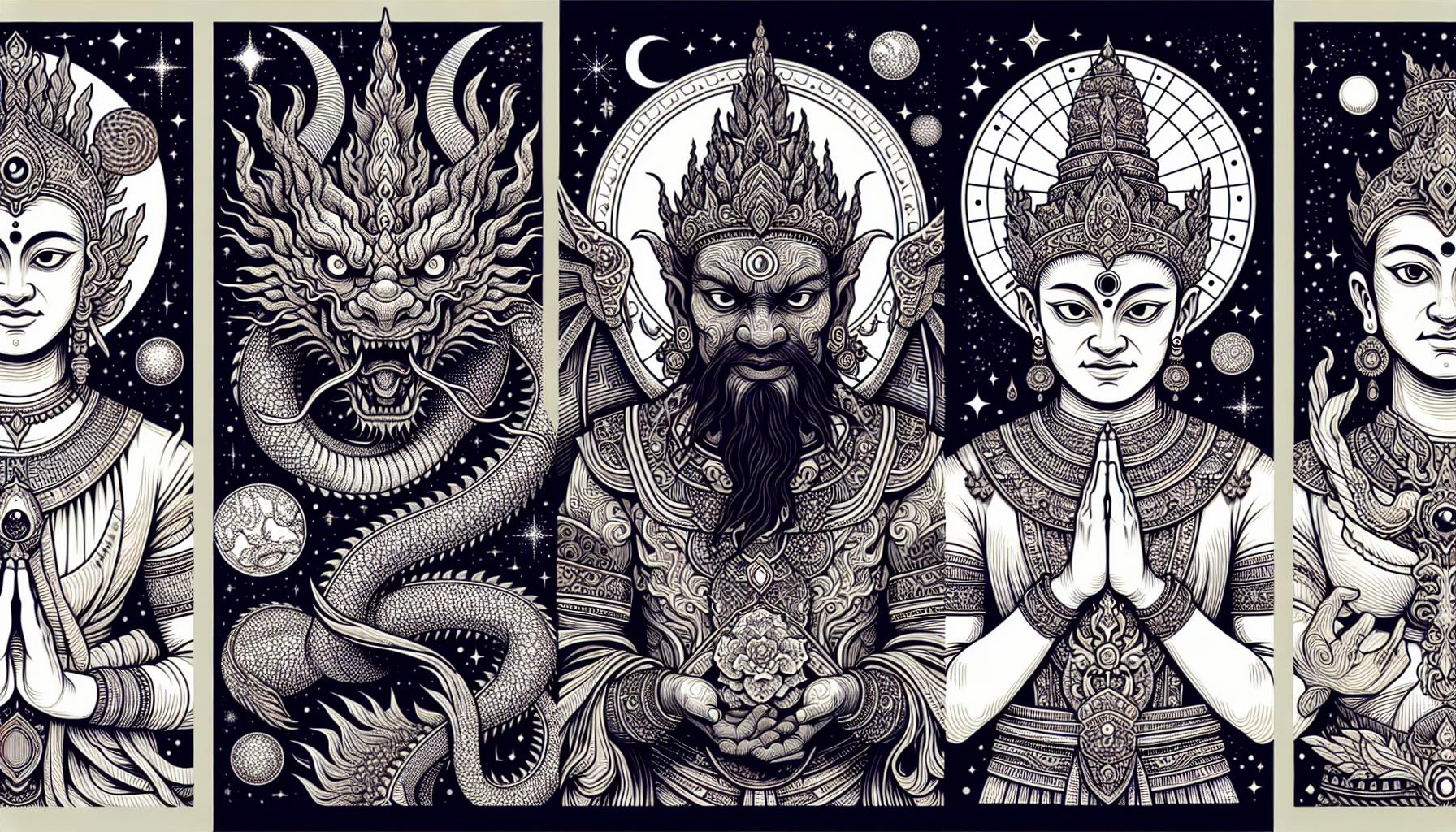
Asura iconography varies significantly across Hindu, Buddhist, and Jain traditions. Each culture presents unique depictions and interpretations of these powerful beings.
Hindu Mythology
In Hindu mythology, Asuras are power-seeking beings often in conflict with the Devas. They possess magical powers and special abilities, which they use for both good and evil purposes. Vrtra, the most well-known Asura, is a dragon representing evil and destruction. Asuras are also linked to the underworld, contrasting with Devas, who are associated with the sky world.
Buddhist Traditions
Buddhist traditions do not emphasize the concept of Asuras as much as Hinduism. But, the term “Asura” describes a class of beings jealous of the gods, known for their pride and envy. Buddhist texts lack detailed descriptions of Asura iconography, but they generally portray these beings as negative entities.
Jain Interpretations
Jainism offers unique interpretations of Asuras. Unlike Hindu and Buddhist traditions, Asuras in Jainism are not necessarily depicted with negative connotations. They are considered just another type of celestial being, involved in the cosmic function without specific alignment to good or evil.
Evolution Over Time
Asura iconography has transformed significantly, adapting to various cultural and religious influences.
Ancient Representations
Initially, depictions of Asura varied across different cultures. In Hindu mythology, Asura often appeared as a buffalo-demon, symbolizing the cosmic struggle between good and evil. Temples, especially in South Asia, housed these naturalistic representations. Jain and Buddhist temples also showcased Asura in their carvings and statues, highlighting the deity’s powerful and multifaceted nature.
Modern Interpretations
Over time, Asura iconography transcended geographical and religious limits. Different groups reinterpreted the image to align with their beliefs and agendas. Political and social movements often used Asura symbolism to represent resistance and strength. These modern adaptations not only altered the visual aspects but also shifted the underlying interpretations. For instance, contemporary artists might depict Asura in abstract forms, emphasizing themes like rebellion and resilience.
These evolving representations showcase how Asura iconography has been shaped by historical, cultural, and social influences.
Influence On Contemporary Art
Artists today find inspiration in ancient Asura iconography, adapting its powerful imagery to modern contexts. You can see this influence in various mediums like painting, sculpture, and digital art. The ferocity and dynamism of Asuras, depicted with multiple arms and fierce expressions, lend themselves well to contemporary reinterpretations.
Painters often use Asura elements to explore themes like conflict and inner demons. For instance, modern artist Rina Banerjee incorporates Asura forms to discuss colonialism and identity struggles. Her art juxtaposes traditional Asura imagery with modern symbols, creating a dialogue between past and present.
Sculptors draw from Asura’s physical attributes to emphasize strength and resilience. Contemporary sculptor Anish Kapoor, known for his monumental installations, sometimes incorporates multi-armed figures resembling Asuras. These sculptures make bold statements on human power and fragility, echoing the dual nature of Asuras.
Digital artists also reinterpret Asura iconography. Many use 3D modeling and virtual reality to bring ancient myths into the digital age. For example, artist Lori Nix creates digital landscapes featuring Asura-like figures, blending mythology with futuristic settings. These works often comment on technology’s role in modern myth-making.
Also, Asura symbolism appears in graphic novels and video games, engaging a broader audience. The narrative complexity of Asuras, with their eternal battle against Devas, translates well into these formats. Game developers and graphic novelists use this rich mythology to create compelling storylines and characters.
Asura iconography continues to evolve, influencing contemporary art in multifaceted ways. By adapting ancient imagery, modern artists create works that resonate with today’s cultural and social issues, ensuring the enduring legacy of Asura symbolism.
Conclusion
Asura iconography’s journey from ancient mythologies to contemporary art showcases its enduring relevance. Artists today harness the potent symbolism of Asuras to address modern conflicts and societal challenges. By reimagining these ancient figures through various artistic mediums, they breathe new life into timeless themes of struggle and resilience. This dynamic adaptation ensures that Asura iconography remains a powerful and evolving narrative, bridging the gap between past and present.
Sources & further reading
These themes are explored in greater depth across the following authoritative resources:
- Britannica, Asura
- Britannica, Naga
- Mythopedia, Hindu Mythology
- Internet Sacred Text Archive, Mahabharata
- Wendy Doniger, Hindu Myths (Penguin Classics, 1975)
External resources for further reading. Apam Napat is not affiliated with these publishers; citation does not imply endorsement.
Frequently asked questions
How are Asuras typically depicted in Hindu art?
What does Vrtra's iconography symbolize?
How do Buddhist depictions of Asuras differ from Hindu ones?
Why do Asuras have multiple arms and heads?
Why are Asuras often shown in dark colors?
Based on the classical texts of Hindu mythology, see our sources.