
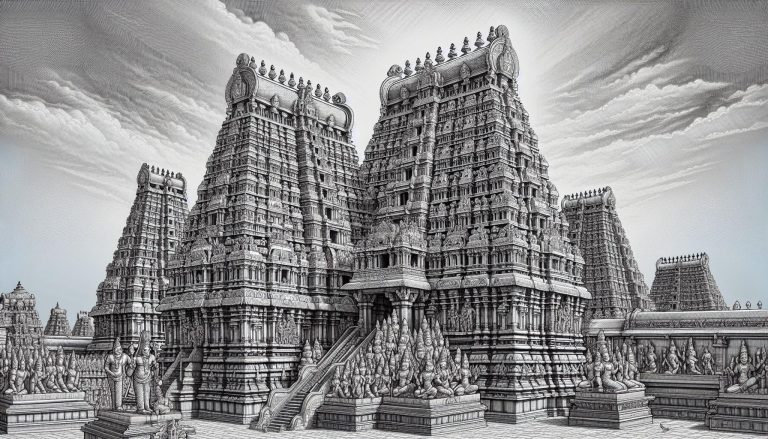
Understanding the orientation of Hindu temples offers a glimpse into the rich tapestry of Hindu cosmology and architecture. It reveals how ancient builders combined spirituality, science, and art to create spaces that resonate with divine harmony. Join me as I explore the intricate principles behind the orientation of these timeless structures.
Historical Significance
Hindu temples’ orientation holds deep historical significance. Ancient texts like the Brihatsamhita prescribe aligning temples with cardinal directions and celestial bodies to channel divine energy. This alignment facilitates spiritual growth and aligns worship spaces with cosmic forces.
Historical records show that temple sites were chosen with care. Ideal locations included proximity to water and gardens. These environments, flourishing with lotus, flowers, and resting animals, enhanced the spiritual atmosphere.
Regional factors also influenced temple orientation. For example, the abundant soft stone in South Karnataka enabled the creation of intricate designs unique to that area. Local materials and climate shaped architectural styles, embedding local identity in temple structures.
Architectural Principles

The orientation of Hindu temples relies heavily on the architectural principles found in Vastu Shastra. These principles ensure the temple’s design provides environmental and spiritual benefits.
Vastu Shastra Guidelines
At the heart of Vastu Shastra is the Vastu Purusha – The Primordial Man Mandala, a square diagram used to proportion and position elements within the temple. This diagram ensures harmony in the structure, aligning it metaphorically and physically with the cosmos. In practice, the site selection for a temple prioritizes proximity to natural water sources like rivers or ponds, as these hold significant importance in Hindu philosophy. Geometric patterns and symmetry further integrate the temple with the natural world.
Astronomical Considerations
Astronomical considerations play a critical role in the orientation of Hindu temples. Ancient texts like the Brihatsamhita detail aligning temples with cardinal directions and celestial bodies to channel divine energy effectively. This alignment not only connects the temple to the cosmos but also reinforces the spiritual atmosphere, ensuring that the temple serves as a gateway to the divine.
Geographic Influences

The orientation of Hindu temples is deeply connected to geographic factors. Various regions and climates impact the design and alignment of these sacred structures.
Regional Variations
Hindu temples across India exhibit unique characteristics based on their regional contexts. For example, North Indian temples, known as Nagara style, typically feature a beehive-shaped tower. These temples often face east, aligning with the rising sun, which symbolizes new beginnings and spiritual awakening. In contrast, South Indian temples, representing the Dravidian style, have their distinct gopurams or monumental towers. These temples also generally orient eastward, but the temple complex’s layout can be more intricate due to regional customs and available space.
Eastern India has its own style, the Kalinga architecture, with temples like the Sun Temple at Konark precisely aligned to capture the first rays of the sun. Western India’s temples often feature intricate carvings and are designed to withstand the region’s arid climate. These regional variances in temple design and orientation reflect the rich cultural diversity across India.
Climatic Adaptations
Climatic conditions play a significant role in temple orientation and architecture. In tropical regions, temple designs incorporate features for ventilation and cooling. High ceilings and open courtyards help regulate temperature, making the temple’s inner sanctum comfortable for devotees.
In contrast, regions with heavier rainfall design temples with sloped roofs to prevent water accumulation. For example, temples in Kerala have steep, tiled roofs to handle the monsoon rains effectively. These adaptations ensure the temples remain functional and maintain their structural integrity despite different environmental conditions.
Symbolic Interpretations
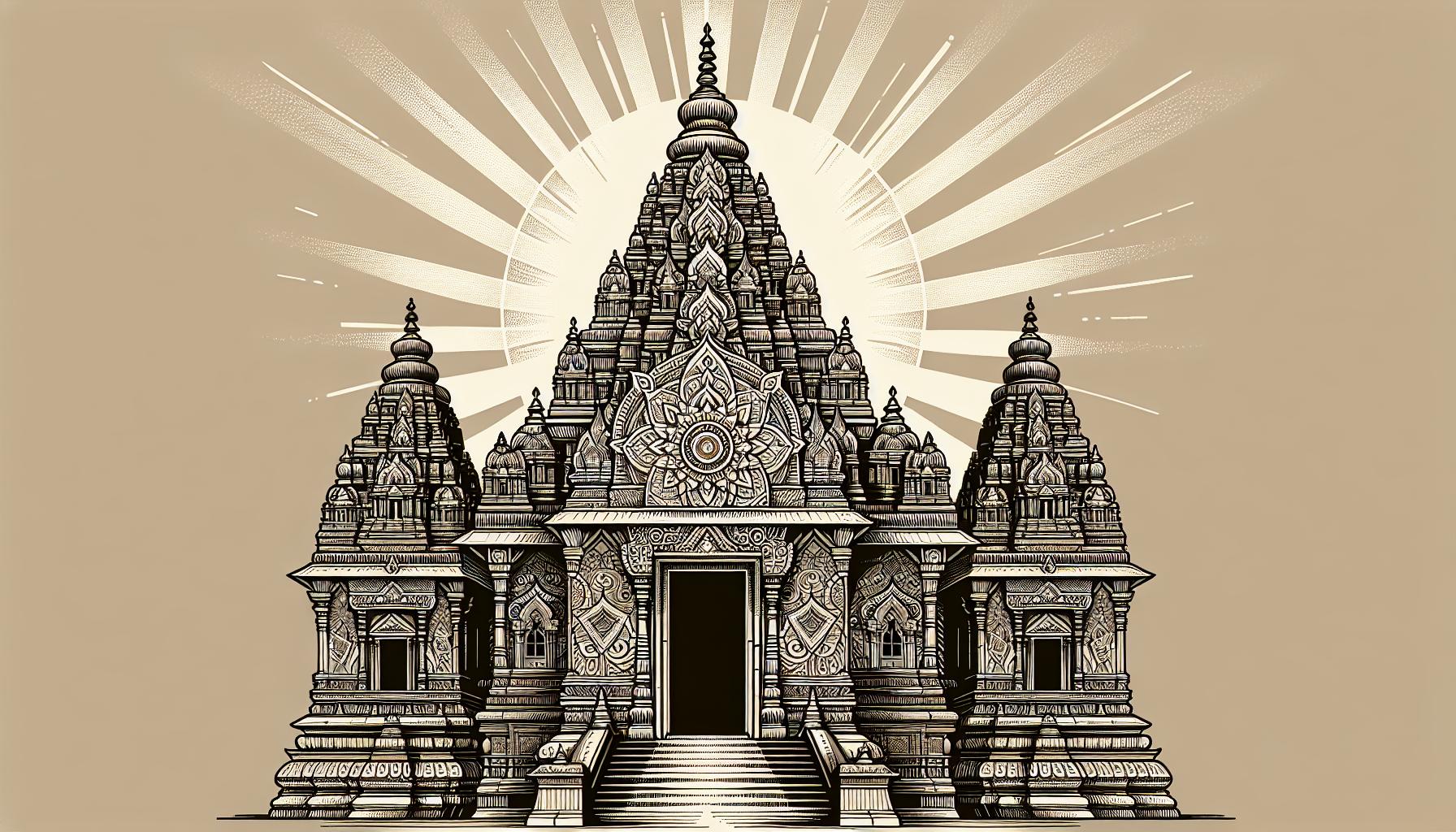
Hindu temples reflect profound symbolic meanings tied to spiritual and cosmic understanding. Their orientation and structure embody deep philosophical concepts.
Spiritual Alignment
Temples symbolize the body of the divine, aligning with cardinal directions to channel spiritual energy. Facing east, temples capture the morning sun’s first rays, representing enlightenment and new beginnings. The garbhagriha aligns with the cosmos’ center, providing a sanctified space for the deity. According to Vastu Shastra, this alignment ensures positive energy flow, promoting spiritual harmony.
Cosmic Harmony
Temple layouts adhere to cosmic principles, mirroring the universe’s structure. The mandala design reflects the cosmos, with the temple as a microcosm of the universe. Walls and floors represent Earth while the towering spire symbolizes the axis mundi, connecting heaven and earth. This cosmic alignment illustrates humans’ place in the universe, fostering a sense of unity and cosmic peace.
Notable Examples
Hindu temples across India exhibit unique architectural styles influenced by regional and cultural factors. Here, I’ll discuss notable examples from the Northern and Southern regions.
Famous North Indian Temples
North India features temples with distinct Nagara-style architecture, known for their beehive-shaped shikharas (towers):
- Kandariya Mahadeva Temple: Located in Khajuraho, Madhya Pradesh, this temple epitomizes Nagara architecture. Its intricate carvings depict various deities and mythological scenes.
- Kashi Vishwanath Temple: Situated in Varanasi, Uttar Pradesh, this temple is one of the holiest for Hindus. It’s dedicated to Lord Shiva – The Destroyer and aligns with the sacred Ganges River.
- Somnath Temple: Found in Gujarat, near the Arabian Sea, it represents one of the twelve Jyotirlingas of Shiva. The temple faces the east, symbolically welcoming the sunrise.
Renowned South Indian Temples
South Indian temples are characterized by Dravidian architecture, prominent for their large gopurams (gateway towers) and extensive complexes:
- Meenakshi Temple: Located in Madurai, Tamil Nadu, this temple features towering gopurams adorned with vivid sculptures. It’s dedicated to Meenakshi, a form of Goddess Parvati – The Consort of Shiva, and Sundareswarar, a form of Shiva.
- Brihadeeswarar Temple: Situated in Thanjavur, Tamil Nadu, this UNESCO World Heritage site is a Chola dynasty masterpiece. The vimana (temple tower) stands at 66 meters, making it one of the tallest in the world.
- Venkateswara Temple: In Tirupati, Andhra Pradesh, this temple is one of the richest and most visited. It sits on the Tirumala Hills, reflecting strong Vaishnavite traditions and devotion.
Modern Comparisons
Modern Hindu temple architecture continues to evolve while maintaining a connection to traditional designs. In urban areas, temples now incorporate contemporary materials like steel and glass. For example, the Akshardham Temple in Delhi blends traditional stone carvings with modern construction techniques.
Environmental sustainability is also a focus in modern temple construction, with solar panels and rainwater harvesting systems becoming more common. Temples like Sri Sri Radha Krishna – An Incarnation of Vishnu Temple in Utah, USA, use eco-friendly materials and renewable energy sources to minimize environmental impact.
Spatial considerations in modern cities lead to compact temple layouts, often multi-story to maximize limited space. Though space constraints exist, temples like the ISKCON Temple in Bangalore preserve intricate designs within smaller footprints.
Integration with modern urban infrastructure is crucial for contemporary temples. The BAPS Shri Swaminarayan Mandir in London showcases how temples are accessible with public transport, offering amenities like parking and community halls.
Despite these modern adaptations, the cardinal alignment and spiritual symbolism remain integral. Temples like the Swaminarayan Akshardham in New Jersey still align their primary sanctum to face the east, honoring traditional practices and maintaining a spiritual connection.
Conclusion
Exploring the orientation of Hindu temples reveals a fascinating blend of tradition and modernity. Each temple’s design is a testament to regional influences and spiritual symbolism. Modern architecture respects these traditions while embracing new materials and sustainable practices. Whether it’s the intricate carvings of the Kandariya Mahadeva Temple or the innovative design of the BAPS Shri Swaminarayan Mandir, Hindu temples continue to inspire awe. Their alignment with cardinal directions and spiritual significance remains a core aspect, bridging the past and present in a seamless, timeless manner.
Sources & further reading
These themes are explored in greater depth across the following authoritative resources:
- Britannica, Hindu Temple Architecture
- Met Museum, Hinduism in the Arts
- Britannica, Iconography
- Stella Kramrisch, The Hindu Temple (Motilal Banarsidass, 1946)
- Heinrich Zimmer, Myths and Symbols in Indian Art and Civilization (Princeton University Press, 1946)
External resources for further reading. Apam Napat is not affiliated with these publishers; citation does not imply endorsement.
Based on the classical texts of Hindu mythology, see our sources.