
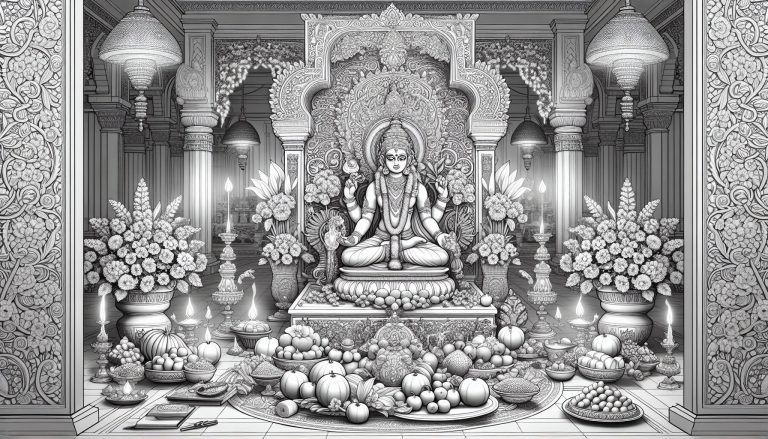
I’ve always found the diversity and depth of these idols fascinating. From the serene visage of Lord Vishnu – The Protector to the fierce form of Goddess Kali, each figure captures an aspect of the divine that’s both captivating and profound. Understanding the significance behind these idols offers a glimpse into the rich world of Hindu beliefs and the cultural heritage that continues to thrive in modern times.
Importance Of Hindu Divine Idols
Hindu divine idols play a vital role in religious and cultural practices. They serve as physical manifestations of deities, making it easier for devotees to forge a personal connection with the divine. Each idol embodies specific attributes, symbolizing different aspects of life and the universe.
People find comfort and guidance when they worship these idols. Ardent devotees often report a sense of inner peace and spiritual fulfillment. These idols enable individuals to focus their prayers and meditations more effectively.
Idols possess deeply rooted historical and cultural significance. They maintain traditions passed down through generations. For instance, the idol of Lord Ganesha, commonly invoked before any new venture, reflects centuries-old beliefs in auspicious beginnings and wisdom.
Each festival or religious ceremony revolves around these idols. They become the central element in rituals such as decoration, offering of flowers, and chanting of hymns. This engagement fosters a sense of community among worshippers who gather to celebrate their faith.
Divine idols also impact Hindu art and architecture. Temples over centuries have been designed to honor these idols, showcasing exquisite craftsmanship. Artists carve intricate details, capturing the essence and stories of the deities they represent.
In essence, these idols embody the core of Hindu worship, connecting devotees to their deities in a tangible, meaningful way. The presence and veneration of these idols reflect the rich cultural world and enduring spiritual values of Hinduism.
Historical Background
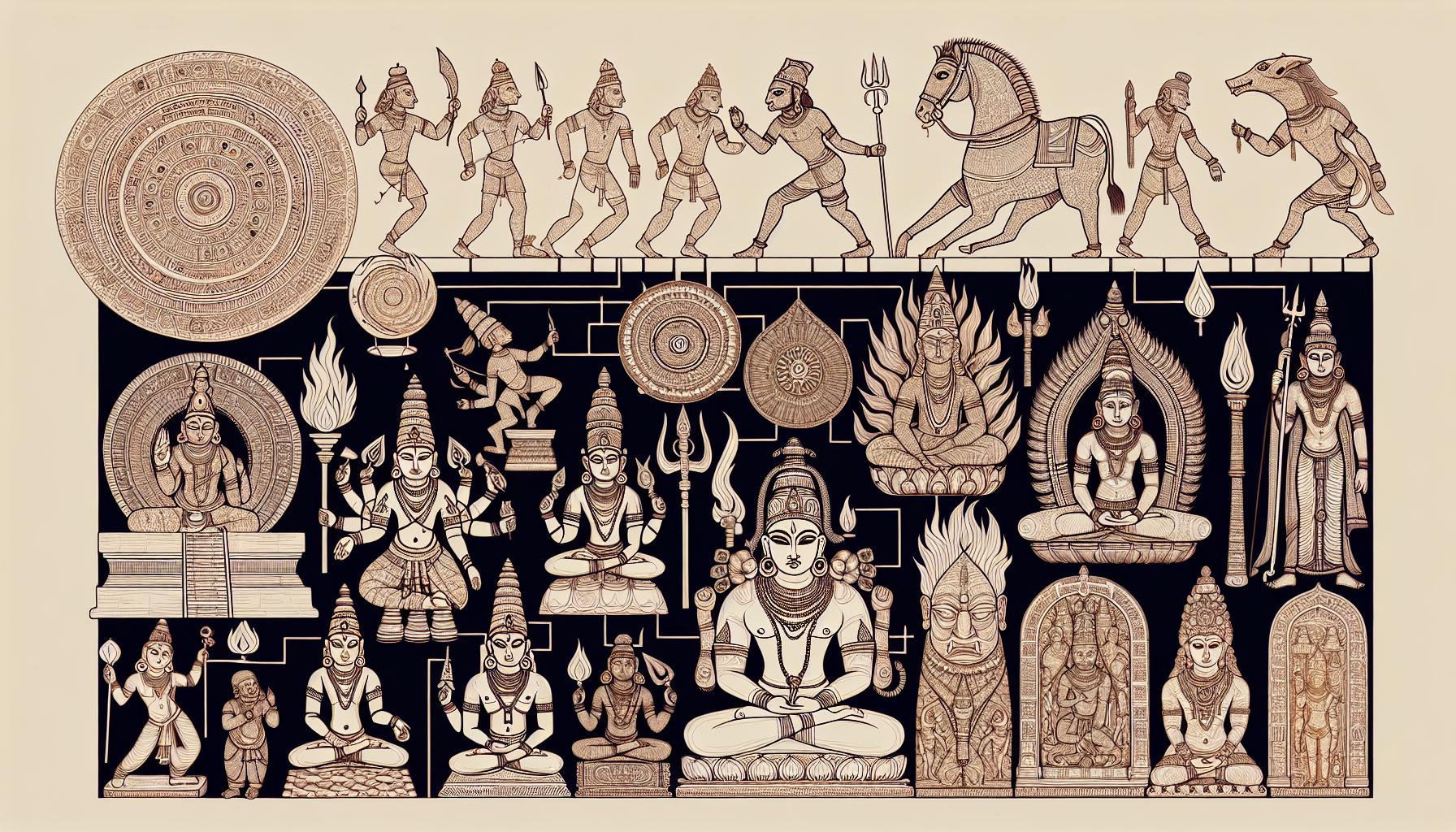
Hindu divine idols hold a rich history that stretches back millennia, embodying the profound spiritual and cultural evolution that has shaped Hinduism.
Ancient Origins
Hindu divine idols trace their origins to the Indus Valley Civilization, around 3300 BCE. Archaeological finds, like the Pasupati seal depicting a proto-Shiva – The Destroyer figure, mark the early veneration of divine forms. These artifacts highlight the emphasis on anthropomorphic and zoomorphic representations, foundational to Hindu iconography.
Evolution Over Centuries
Over centuries, Hindu divine idols evolved significantly. During the Vedic period (1500-500 BCE), rituals focused on fire sacrifices and nature worship, with less emphasis on idols. The later Upanishadic texts shifted towards philosophical introspection, laying the groundwork for Hindu idol worship. By the Gupta period (4th-6th centuries CE), idol worship became widespread, with intricate statues of deities like Vishnu, Shiva, and Devi becoming central to temples.
The Chola period (9th-13th centuries CE) in South India marked another significant evolution. This era produced remarkable bronze idols of exquisite craftsmanship, which have become iconic in Hindu art. Likewise, regional styles emerged, with northern and southern India developing distinct sculptural techniques reflective of local traditions and materials.
Types Of Hindu Divine Idols
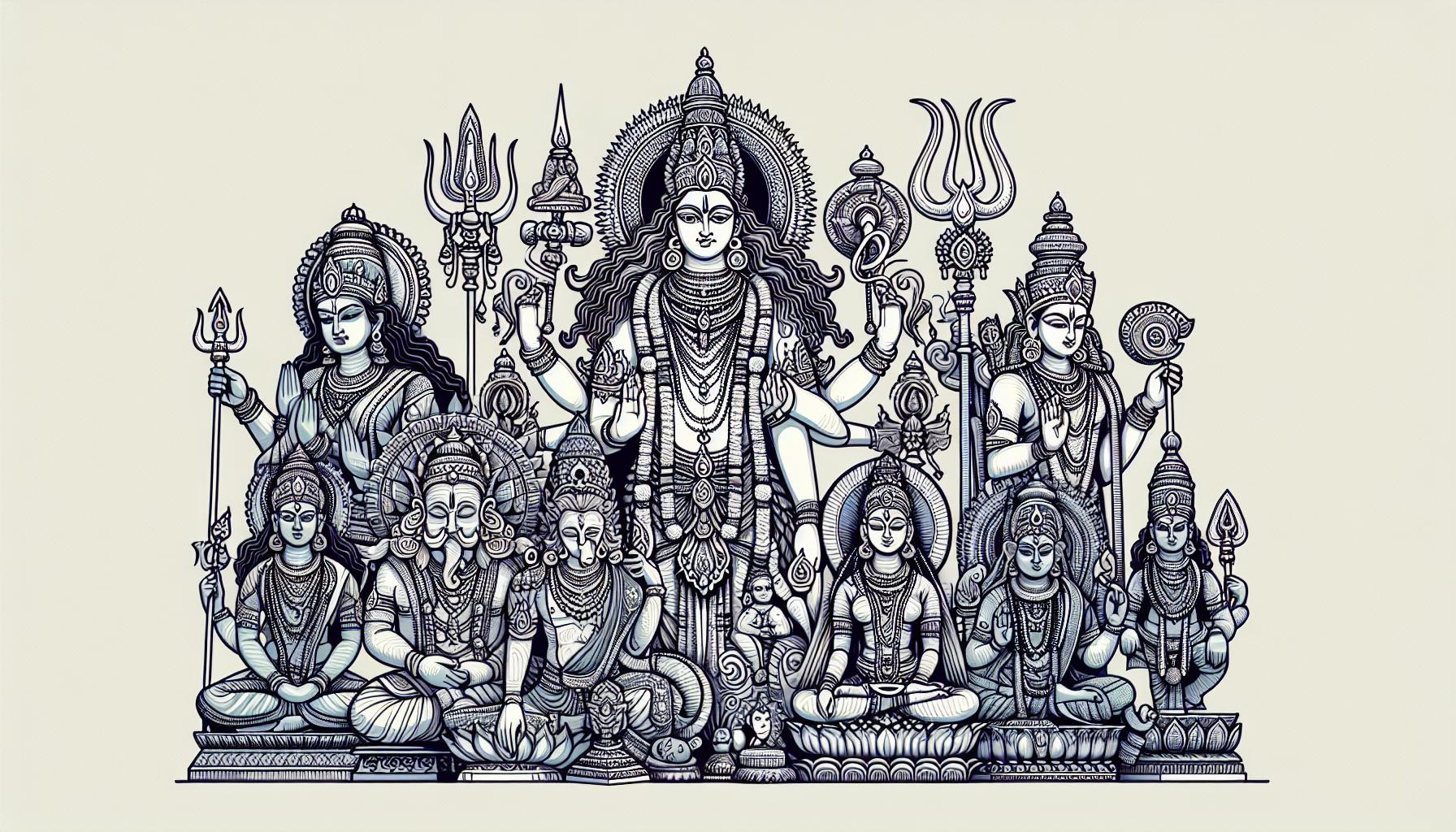
Hindu divine idols come in various forms, reflecting the rich diversity of deities and regional influences. Each type embodies specific attributes and serves distinct purposes in religious practices.
Major Deities
Several major deities are revered in Hinduism, each represented by distinct idols. Lord Vishnu, often depicted in a reclining posture on the serpent Ananta, symbolizes preservation and sustenance. His tenth incarnation, Krishna – An Incarnation of Vishnu, is frequently shown playing a flute or depicting his childhood activities. Goddess Lakshmi, the embodiment of wealth and prosperity, is usually depicted with gold coins flowing from her hands. Lord Shiva, known as the Destroyer, is often represented with a trident and the third eye on his forehead. Iconic forms of Shiva include Nataraja, the cosmic dancer, and Ardhanarishvara, depicting his androgynous nature.
Regional Variations
Regional variations significantly impact the styles and depictions of Hindu idols. In North India, idols are often made from marble or brass, showcasing intricate details and vibrant colors. The South Indian style, particularly from Tamil Nadu, uses bronze, resulting in statutes like the famous Chola bronzes that highlight majestic and graceful forms. In Eastern India, particularly in West Bengal, clay idols dominate, especially during the Durga Puja festival, where elaborate and temporary effigies of Goddess Durga are crafted. Meanwhile, Western India, such as in Maharashtra, features idols of Lord Ganesha made from clay, plaster of Paris, and sometimes metal, reflecting the state’s strong Ganesh Chaturthi celebrations.
These regional styles not only showcase local craftsmanship but also contribute to the diverse representation of Hindu divine idols, each celebrating unique cultural expressions and devotional practices.
Materials And Craftsmanship
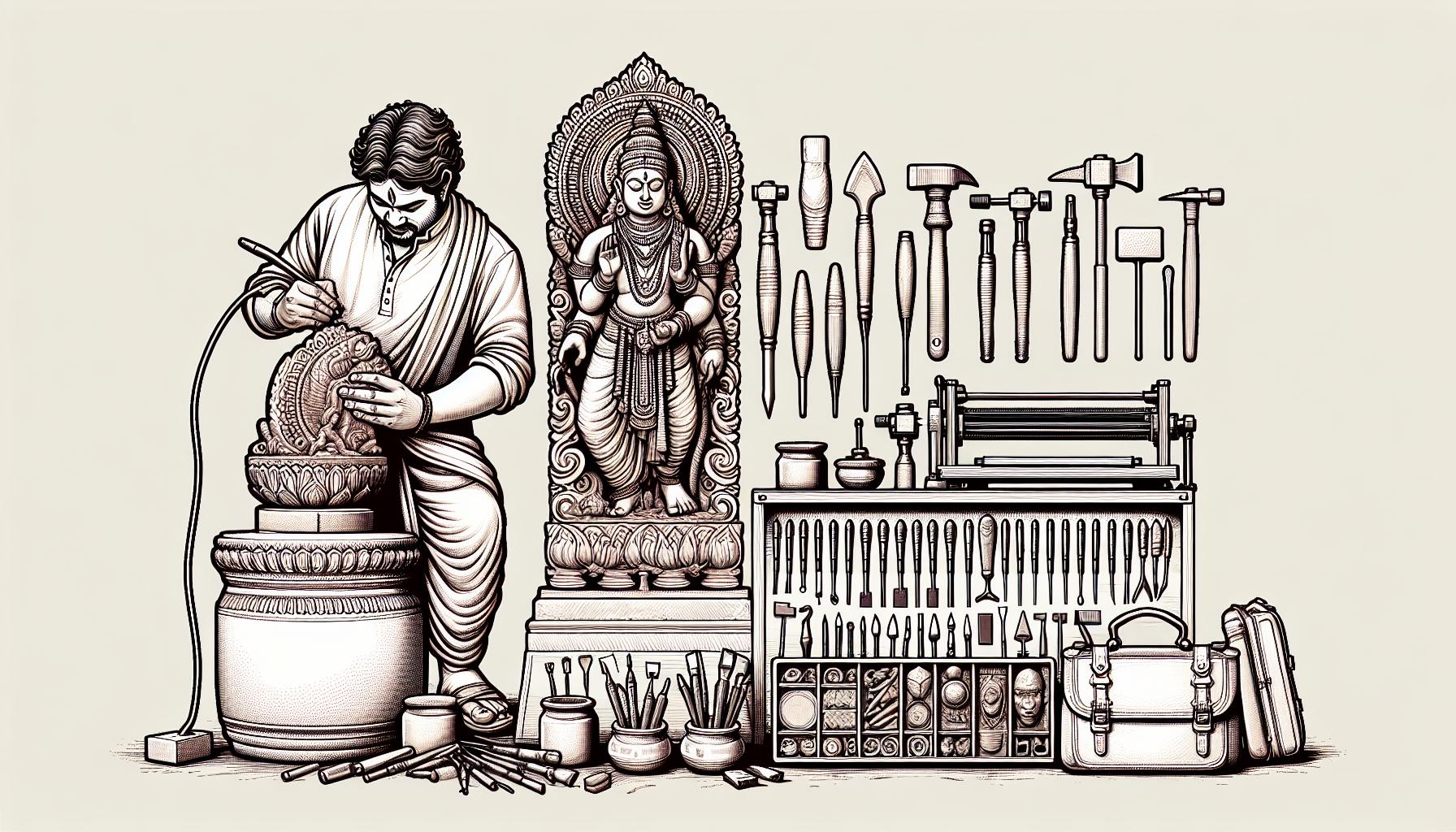
Hindu divine idols showcase a blend of traditional and modern crafting techniques, reflecting cultural heritage and contemporary influences.
Traditional Materials
Craftsmen historically use various materials to create Hindu divine idols. Common materials include:
- Stone: Artisans, especially in North India, carve intricate marble and sandstone idols.
- Metal: Metals like bronze and brass are prevalent, with Chola bronzes epitomizing South India’s craftsmanship.
- Wood: In many regions, particularly rural areas, wood remains a favored medium.
- Clay: East India’s Durga Puja features beautifully crafted clay idols, offering temporary yet elaborate divine representations.
Each material choice conveys distinct cultural and regional craftsmanship, highlighting artisans’ skills and devotion.
Modern Techniques
Contemporary artisans blend traditional craftsmanship with modern techniques to enhance idol creation:
- 3D Printing: Advanced 3D printing technology allows for precise and intricate designs, replicating traditional features with accuracy.
- Mixed Media: Artists combine traditional materials with modern ones, like polymers and resins, to improve durability and detail.
- Eco-Friendly Materials: Increasing awareness of environmental impact has led to the use of sustainable materials like biodegradable substances.
These modern techniques ensure that the tradition of crafting divine idols evolves while adhering to the environmental consciousness and artistic innovation.
Religious Significance
Hindu divine idols hold profound spiritual value, serving as focal points of devotion and meditation. These idols represent various deities, embodying their qualities and powers.
Rituals And Worship
Devotees often engage in daily rituals like puja, abhishekam, and aarti to honor these divine figures. During puja, worshippers offer flowers, sweets, and incense to the deities, believing such acts invite divine blessings. Abhishekam involves bathing the idol with substances like milk, curd, and honey, signifying purification and sanctity. Aarti, a ritual of light, symbolizes the removal of darkness and ignorance.
Festivals And Celebrations
Festivals play a significant role in Hindu practices, centering around the worship of divine idols. During Diwali, devotees adorn idols of Goddess Lakshmi, seeking prosperity and well-being. Navratri involves nine nights of worshiping Goddess Durga and her forms, with elaborate rituals and dances. Ganesh Chaturthi celebrates Lord Ganesha’s arrival, featuring grand processions and immersion ceremonies.
Collecting And Preserving Idols
Collecting Hindu divine idols involves understanding their cultural and religious significance. Proper preservation methods help maintain their integrity and spiritual value.
Tips For Collectors
- Research Origins
Understand the historical and religious background before acquiring an idol. For instance, know the deity and its traditional significance. - Verify Authenticity
Check for authenticity by examining materials and craftsmanship. Genuine idols may be made of metal, wood, or stone. Look for specific details and markers characteristic of traditional artistry. - Source Ethically
Purchase from reputable sellers who practice ethical sourcing. Avoid illegally obtained artifacts to respect cultural heritage and legal frameworks. - Preserve Documentation
Keep any related certificates, receipts, or historical information. These documents validate the idol’s authenticity and add to its historical context.
- Climate Control
Store idols in environments with controlled temperature and humidity. Excess moisture or heat can damage materials like wood or metal. Maintain indoor conditions at around 70°F and 50% humidity. - Cleaning
Use appropriate methods for cleaning different materials. Metals like bronze may require specific polishing agents, while wooden idols need gentle dusting to prevent scratches or damage. - Display
Place idols on clean, stable surfaces. Use dedicated spaces or cabinets that prevent accidental falls or exposure to contaminants. For example, glass cases help minimize dust accumulation. - Regular Inspection
Inspect idols regularly for signs of wear or damage. Early detection helps address issues like tarnish on metal idols or cracks in wooden ones before they worsen. - Restoration
Seek professional restoration services if needed. Experts can handle repairs without compromising the idol’s integrity.
By following these tips and methods, I ensure my Hindu divine idols remain preserved and revered for their spiritual and cultural importance.
Conclusion
Hindu divine idols hold immense spiritual and cultural significance. Whether you’re a devotee or a collector understanding their background and proper care is crucial. The blend of tradition and modernity in their creation adds to their unique charm. By following ethical sourcing practices and maintaining these idols with the right techniques you ensure they continue to inspire and uplift. Their preservation isn’t just about maintaining physical integrity; it’s about honoring the deep spiritual heritage they represent. Through mindful collection and care we can keep this rich tradition alive for future generations.
Sources & further reading
These themes are explored in greater depth across the following authoritative resources:
- Britannica, Hindu Temple Architecture
- Met Museum, Hinduism in the Arts
- Britannica, Iconography
- Stella Kramrisch, The Hindu Temple (Motilal Banarsidass, 1946)
- Heinrich Zimmer, Myths and Symbols in Indian Art and Civilization (Princeton University Press, 1946)
External resources for further reading. Apam Napat is not affiliated with these publishers; citation does not imply endorsement.
Frequently asked questions
Why are Hindu divine idols important?
How do Hindu idols help in spiritual practice?
What does the idol of Lord Ganesha symbolize?
How do Hindu idols connect to art and architecture?
How do Hindu idols foster community?
Based on the classical texts of Hindu mythology, see our sources.