
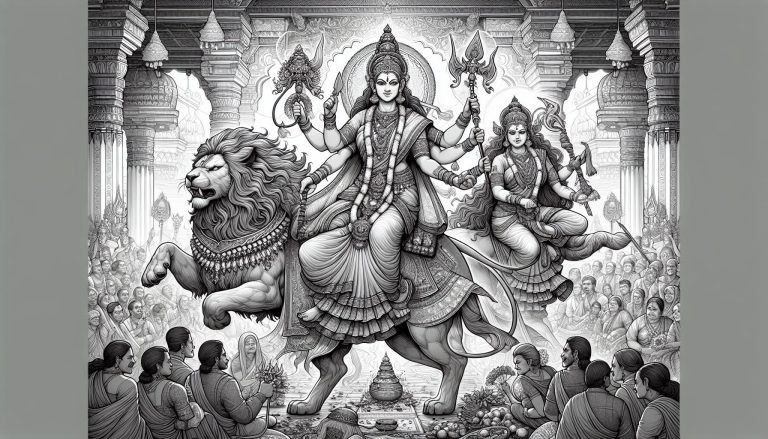
I’ve always found the stories of Shiva and his consorts fascinating because they offer profound insights into the dynamics of divine love and devotion. Through their interactions, rituals, and legends, we uncover layers of wisdom that resonate deeply with our own spiritual journeys. Join me as we explore the captivating relationships between Shiva and his consorts and the timeless devotion they inspire.
Shiva’s Consorts: A Brief Overview
Shiva’s consorts form an integral part of his mythology, embodying various aspects of divine feminine energy. Parvati, his primary consort, is known by many names such as Sati, Uma, Durga, and Kali. Each name and form highlights different facets of her character and divinity.
Parvati: The Gentle Mother
Parvati, often depicted as golden-skinned, represents love, marriage, and fertility. Symbols like the lotus and the lion frequently accompany her images. In her role as Shakti, Parvati embodies power and energy, crucial to Shiva’s dynamic nature.
Durga: The Fearless Protector
Durga emerges as a warrior goddess, known for her tenacity and courage. Representing strength and protection, she is often shown riding a lion or tiger and wielding various weapons. Durga’s role underscores her capacity to eliminate evil and restore cosmic order.
Kali: The Fierce and Wild
Kali, in contrast, embodies destruction and transformation. She is depicted with dark skin, fierce expression, and a garland of skulls, symbolizing the destruction of ego and the impermanence of the physical world. Her form represents the necessity of destruction for rebirth and renewal.
The Significance of Consorts
These consorts not only enhance Shiva’s power but also represent the essential polarities in existence—creation and destruction, love and ferocity. Their stories and symbolism offer profound spiritual teachings and inspire countless devotees.
Parvati: The Benevolent Mother Goddess
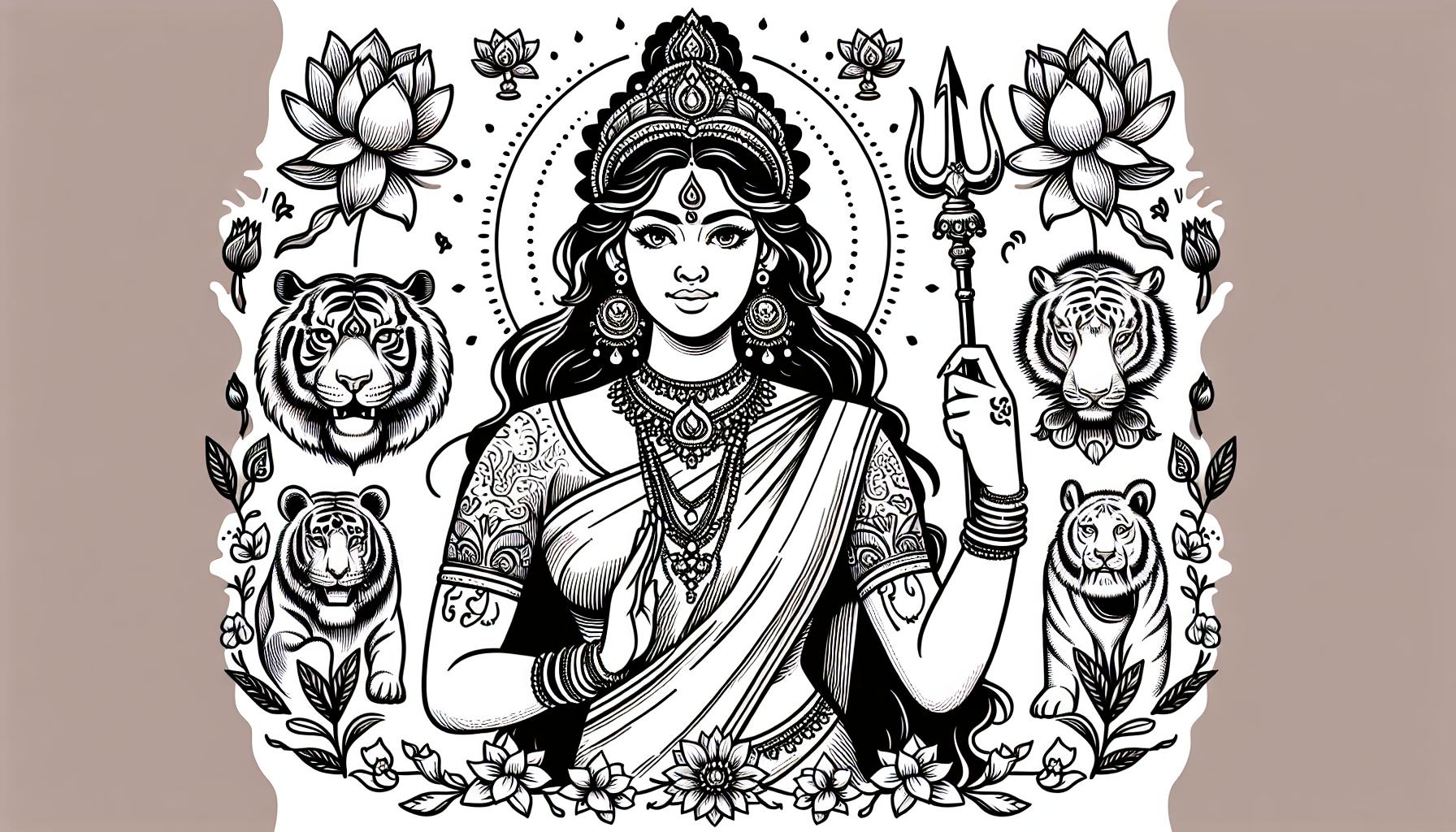
Parvati, the Hindu goddess of fertility, beauty, and love, is Shiva’s consort. She embodies Shakti, the primordial life force, and is the mother of Ganesha and Skanda – Commander of the Army of Devas.
Parvati’s Origin and Mythology
Parvati, the daughter of the mountain king Himalaya, is celebrated for her beauty and unwavering devotion. Through rigorous penances, she won Shiva’s heart. One myth tells how she created Ganesha without Shiva, whom Shiva later accepted as his son.
Symbols and Iconography
Parvati’s iconography often features symbols such as lotus flowers, tigers, elephants, and tridents. She is usually depicted wearing a red dress and often adorns a headband, signifying her role as a nurturing mother and devoted wife.
Temples and Worship Practices
Parvati is worshipped in numerous temples dedicated to her and Shiva across India, including the Meenakshi Temple in Madurai and the Kanyakumari Temple in Tamil Nadu. Devotees perform rituals and offer prayers to seek her blessings for fertility, prosperity, and marital bliss.
Kali: The Fearsome Protector
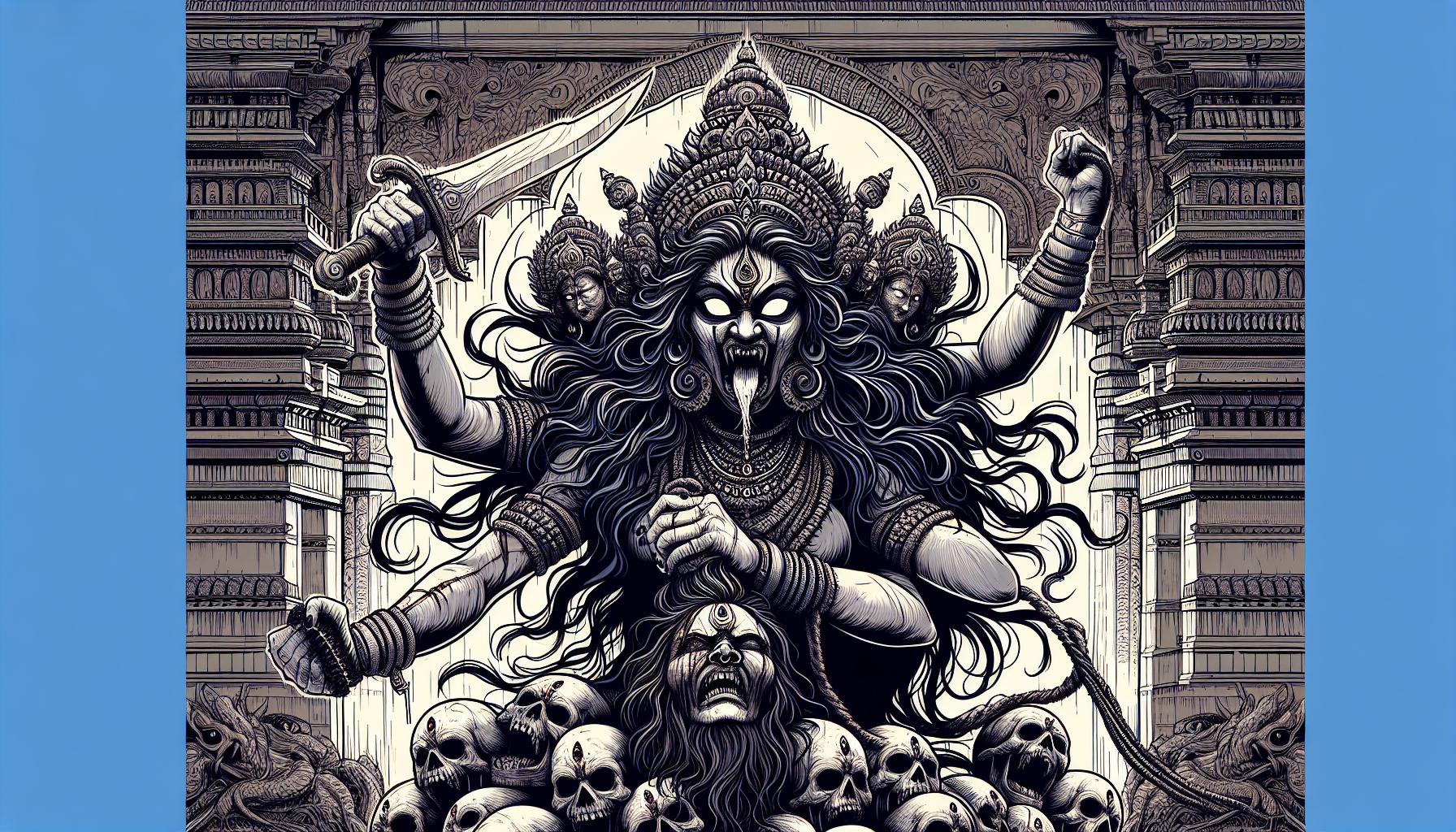
Kali stands as one of the most intense deities in Hinduism. Her fierce demeanor and powerful attributes evoke both fear and respect among worshippers.
Kali’s Origin and Mythology
Kali emerges from the brow of Parvati during a battle against demons, embodying Parvati’s wrath. In the Devi Mahatmya text, she slays the demon Raktabija by consuming his blood, preventing his regeneration. Kali’s mythological tales often highlight her role in combating evil and restoring cosmic balance.
Symbols and Iconography
Kali’s iconography is distinctive and rich in symbolism. She is usually depicted with dark skin and a garland of skulls, symbolizing the cycle of life and death. Her wild hair and protruding tongue represent her untamed nature. She carries a sword and a severed head, signifying her power to destroy evil and delusion. Each element of her imagery communicates her role as a fierce protector and destroyer of negative forces.
Temples and Worship Practices
Devotees worship Kali with intense rituals, especially in Bengal. The Kalighat Temple in Kolkata and the Dakshineswar Kali Temple are key pilgrimage sites. During festivals like Kali Puja and Durga Puja, worshippers perform rituals including fire offerings and animal sacrifices to please the goddess. The devotion to Kali intertwines fear and reverence, reflecting her complex nature as both a destroyer and a liberator.
Durga: The Invincible Warrior
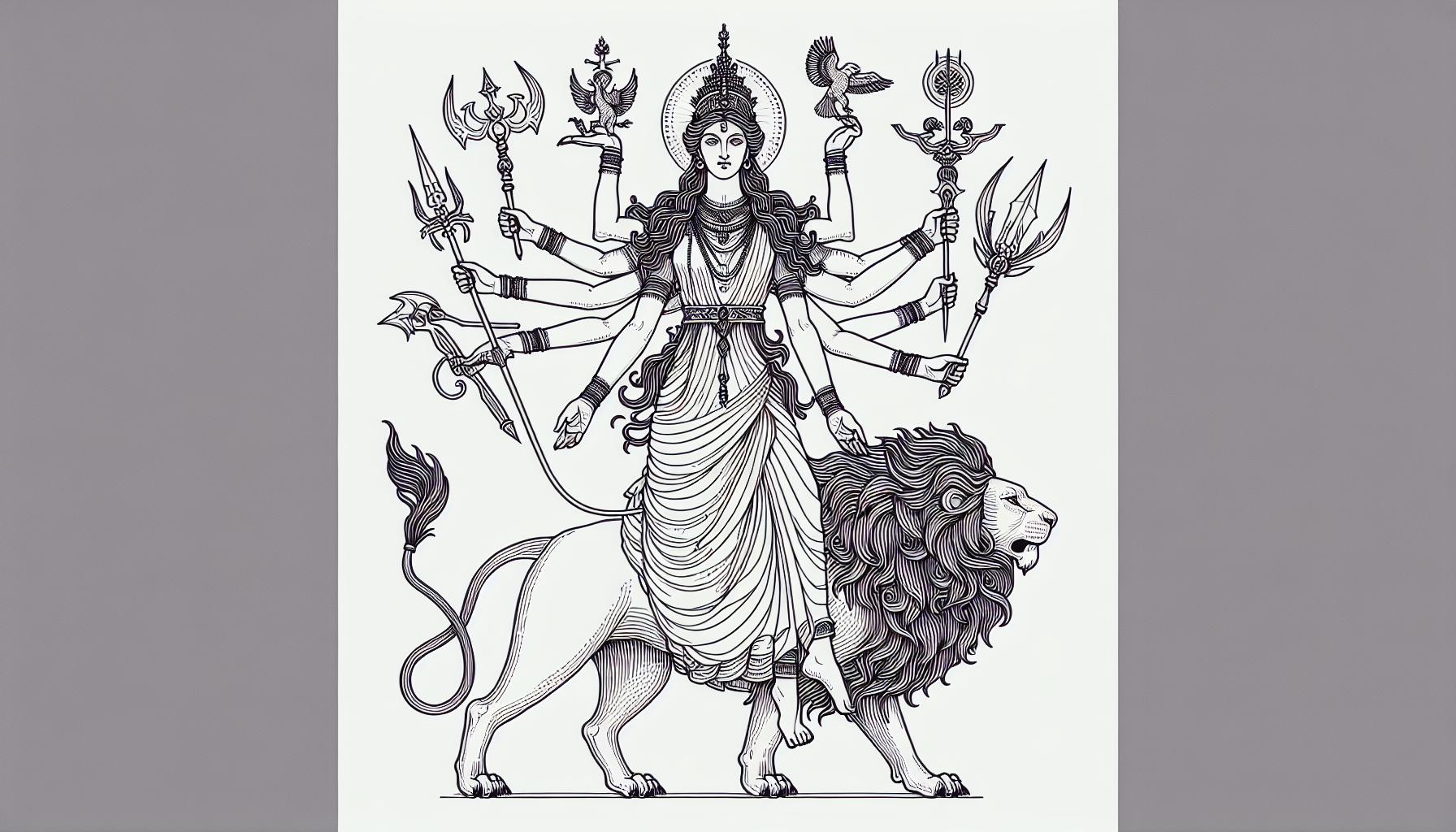
Durga stands as a principal form of the goddess, embodying feminine power, grace, and benevolence. Known for her triumph over the buffalo demon Mahishasura – Buffalo Demon, she symbolizes the victory of good over evil.
Durga’s Origin and Mythology
Durga’s mythology revolves around her defeat of Mahishasura, which earned her the title “Mahishasura Mardini” (the slayer of Mahishasura). According to Hindu texts, Mahishasura, a powerful demon with a buffalo head, terrorized realms, spreading chaos and fear. To restore balance, the gods created Durga, endowing her with their collective strength and divine weapons. Riding a lion, she battled and eventually vanquished Mahishasura. This tale underscores the importance of strength, courage, and righteousness.
Symbols and Iconography
Durga’s iconography reflects her potent attributes. She is depicted with multiple arms, each holding a different weapon given to her by various gods. These weapons include Vishnu – The Protector’s discus, Shiva’s trident, and Indra – The King of Heaven’s thunderbolt, symbolizing their combined might. Durga’s lion symbolizes her latent power and ferocity. Her calm yet determined expression showcases her inner peace and unyielding focus.
Temples and Worship Practices
Devotees honor Durga in numerous temples across India, notably the Vaishno Devi Temple in Jammu, the Dakshineswar Kali Temple in Kolkata, and the Meenakshi Temple in Tamil Nadu. Worship practices often involve intricate rituals, chanting, and the offering of flowers and sweets. During the annual Durga Puja festival, especially in West Bengal, elaborate idols of Durga are worshipped for several days, culminating in grand processions and the immersion of the idols in rivers.
Durga’s worship underscores her role as a protector and savior, inspiring millions to seek her blessings in times of trouble and to celebrate her victory over evil.
Devotional Practices: Connecting with The Divine
Devotional practices for Shiva’s consorts create a deep spiritual connection, purifying the mind and soul while elevating spiritual growth. These practices, centered around rituals and ceremonies, seek divine blessings.
Chanting and Mantras
Chanting sacred mantras like the Panchakshara mantra “Om Namah Shivaya” holds immense significance. This mantra, dedicated to Lord Shiva and his consorts, invokes divine presence and purifies the mind, body, and soul of devotees. Repeating these mantras focuses the mind, creating a meditative state that fosters spiritual growth. Devotees often chant during morning prayers to start the day on a spiritually elevated note.
Rituals and Ceremonies
Rituals and ceremonies form an essential aspect of devotion to Shiva’s consorts. The Maha Shivaratri festival symbolizes the divine union of Lord Shiva and Parvati. Devotees fast, perform rituals, and offer prayers at Shiva temples. This festival represents an eternal bond of love and devotion between the divine couple, reminding devotees of the deeper aspects of their spiritual journey. Other practices include daily offerings of flowers and fruits, symbolizing devotion and seeking spiritual growth.
Festivals Celebrating Shiva’s Consorts
Festivals like Navratri and Teej celebrate Parvati and other consorts of Shiva. Navratri, a nine-night festival, honors the divine feminine and involves elaborate rituals, dances, and prayers. Devotees worship Parvati in her different forms, seeking blessings for protection and prosperity. Teej, observed by women, focuses on Parvati’s devotion to Shiva, symbolizing marital bliss and longevity. These festivals enhance community bonds, uniting people in collective spiritual practices.
Conclusion
Understanding Shiva’s consorts deepens our appreciation of Hindu mythology and spirituality. Parvati, Kali, and Durga offer diverse paths to spiritual growth and enlightenment through their unique qualities and stories. Engaging in rituals and chanting mantras strengthens our spiritual connection and fosters a sense of community. Celebrations like Maha Shivaratri and Navratri not only honor these goddesses but also unite us in devotion and reverence. By embracing these practices, we cultivate a richer spiritual life and a deeper connection to the divine.
Sources & further reading
These themes are explored in greater depth across the following authoritative resources:
- Encyclopaedia Britannica, Hindu Mythology
- Internet Sacred Text Archive, Hinduism
- Mythopedia, Hindu Mythology
- Harvard Pluralism Project, Hindu Tradition
- Wendy Doniger, The Hindus: An Alternative History (Penguin, 2009), ISBN 978-0143116691
External resources for further reading. Apam Napat is not affiliated with these publishers; citation does not imply endorsement.
Based on the classical texts of Hindu mythology, see our sources.