
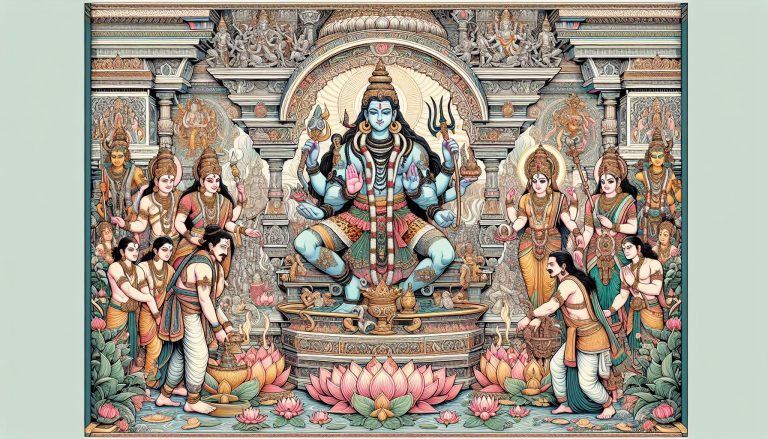
Exploring Hindu deities through Indian art isn’t just about appreciating aesthetics; it’s about understanding a culture deeply rooted in spirituality and tradition. The artistry involved in these depictions reflects the devotion and reverence artists have for their subjects. Whether it’s a delicate miniaturist painting or a grand temple sculpture, the portrayal of these gods and goddesses offers a glimpse into India’s rich cultural heritage.
The Role Of Hindu Deities In Indian Art
Hindu deities in Indian art play a central role in reflecting cultural and spiritual themes. Artists depict gods and goddesses, such as Shiva and Lakshmi, in various forms to convey their divine attributes and stories. These representations often follow iconographic rules, ensuring that each deity’s unique features and symbols are accurately portrayed.
Painters and sculptors use detailed techniques to emphasize specific attributes of deities. For instance, Vishnu is often shown with blue skin and four arms, symbolizing his protective nature. Kali, depicted with a garland of skulls, represents destruction and renewal. These visual elements help viewers identify and connect with each god or goddess.
Indian temples serve as hubs where art and religion intersect. The walls of these sacred spaces are often adorned with intricate carvings and murals that narrate mythological tales. Each sculpture or painting is not just an artwork but a medium that conveys spiritual lessons and history.
Indian festivals also showcase the role of deities in art. During celebrations like Durga Puja and Diwali, large, ornate idols are created to honor gods and goddesses. These temporary artworks reflect community participation and collective devotion, enhancing cultural heritage.
Hindu deities influence various art forms beyond traditional media. Dance, theater, and music integrate these divine figures, bringing their stories to life through performance. Classical Indian dance forms like Bharatanatyam and Kathak often base their routines on episodes from the lives of deities, using expressive gestures and costumes to tell these ancient stories.
By focusing on spiritual themes and using detailed techniques, Indian artists create works that serve both as stunning pieces and as conduits of cultural heritage.
Major Hindu Deities In Indian Art
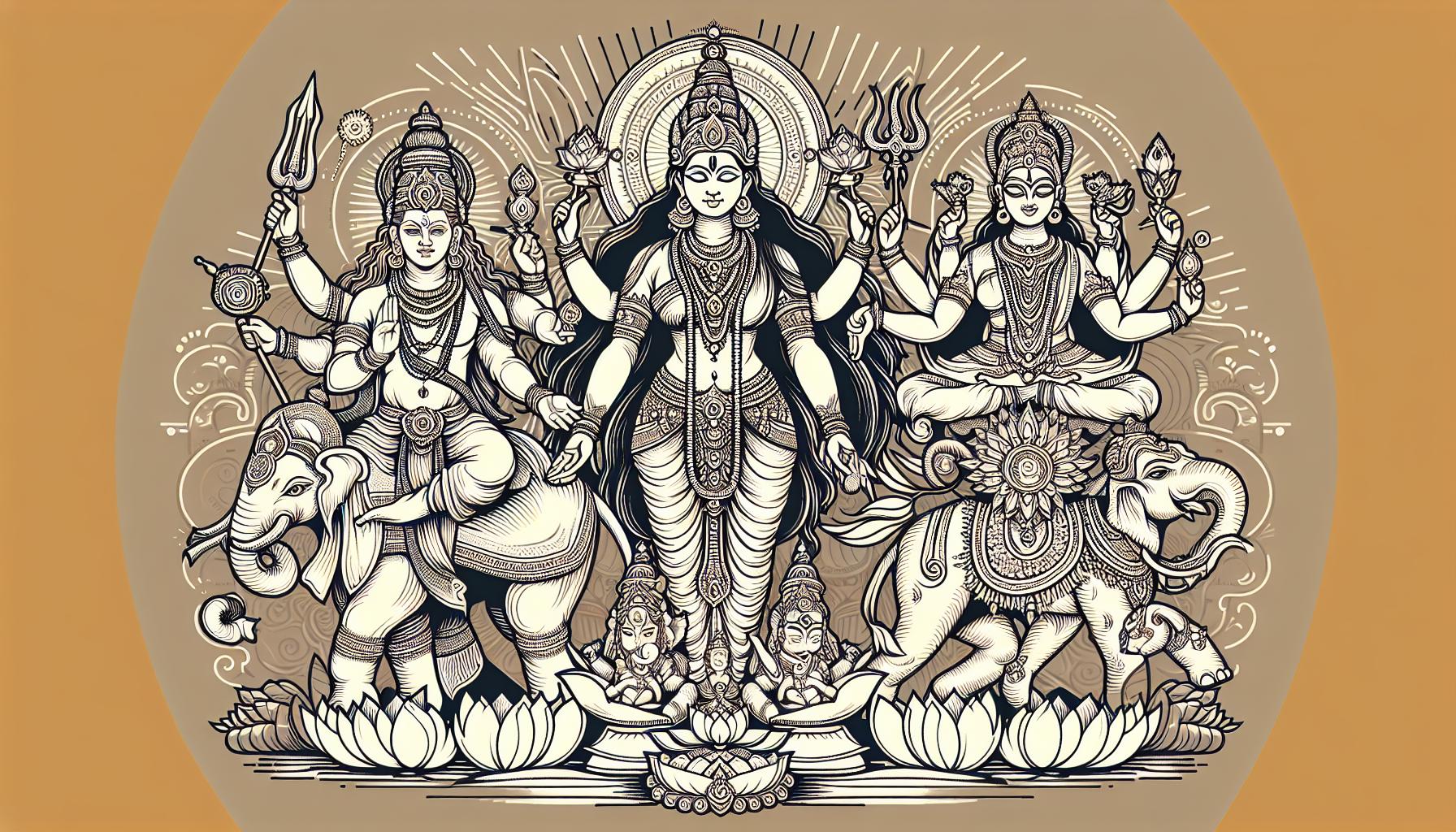
Hindu deities hold a prominent place in Indian art, with rich symbolism and intricate details depicting their divine nature. Artists follow strict guidelines to capture the essence of these gods and goddesses, ensuring each representation aligns with traditional iconography.
Vishnu
Vishnu, the preserver, and protector, frequently appears in Indian art with four arms holding a conch shell, discus, lotus, and mace. Artists often depict him reclining on the serpent Ananta, symbolizing cosmic balance. His avatars like Krishna, who usually appears playing a flute, and Rama, who holds a bow, are also prominent subjects.
Shiva
Shiva, known as the destroyer and transformer, is a complex figure depicted with multiple dimensions in Indian art. Often shown with a third eye, the Ganges flowing from his hair, and a crescent moon on his head, his attributes signify destruction and regeneration. The Nataraja statue, representing Shiva as the cosmic dancer, illustrates his role in maintaining the universe’s rhythm.
Devi (Goddess)
Devi, the mother goddess, represents the feminine divine force in various forms like Durga, Lakshmi, and Saraswati – The Goddess of Learning and Wisdom. Durga, often depicted riding a lion or tiger, embodies power and protection. Lakshmi, shown with gold coins and lotuses, signifies abundance and prosperity. Saraswati, playing the veena, symbolizes wisdom and learning, making her a favorite subject in educational and artistic settings.
Other Notable Deities
Many other deities also feature prominently in Indian art. Ganesha, the elephant-headed god, symbolizes wisdom and new beginnings. Artists often show him with a broken tusk and a sweet, signifying sacrifice and rewards. Hanuman, the monkey god, represents strength and devotion, typically depicted with a mace and a mountain. Kartikeya, the god of war, appears riding a peacock, emphasizing victory and valor.
These deities, through their artistic depictions, offer insights into the multifaceted nature of the divine in Hinduism and the enduring cultural heritage of India.
Artistic Styles And Techniques
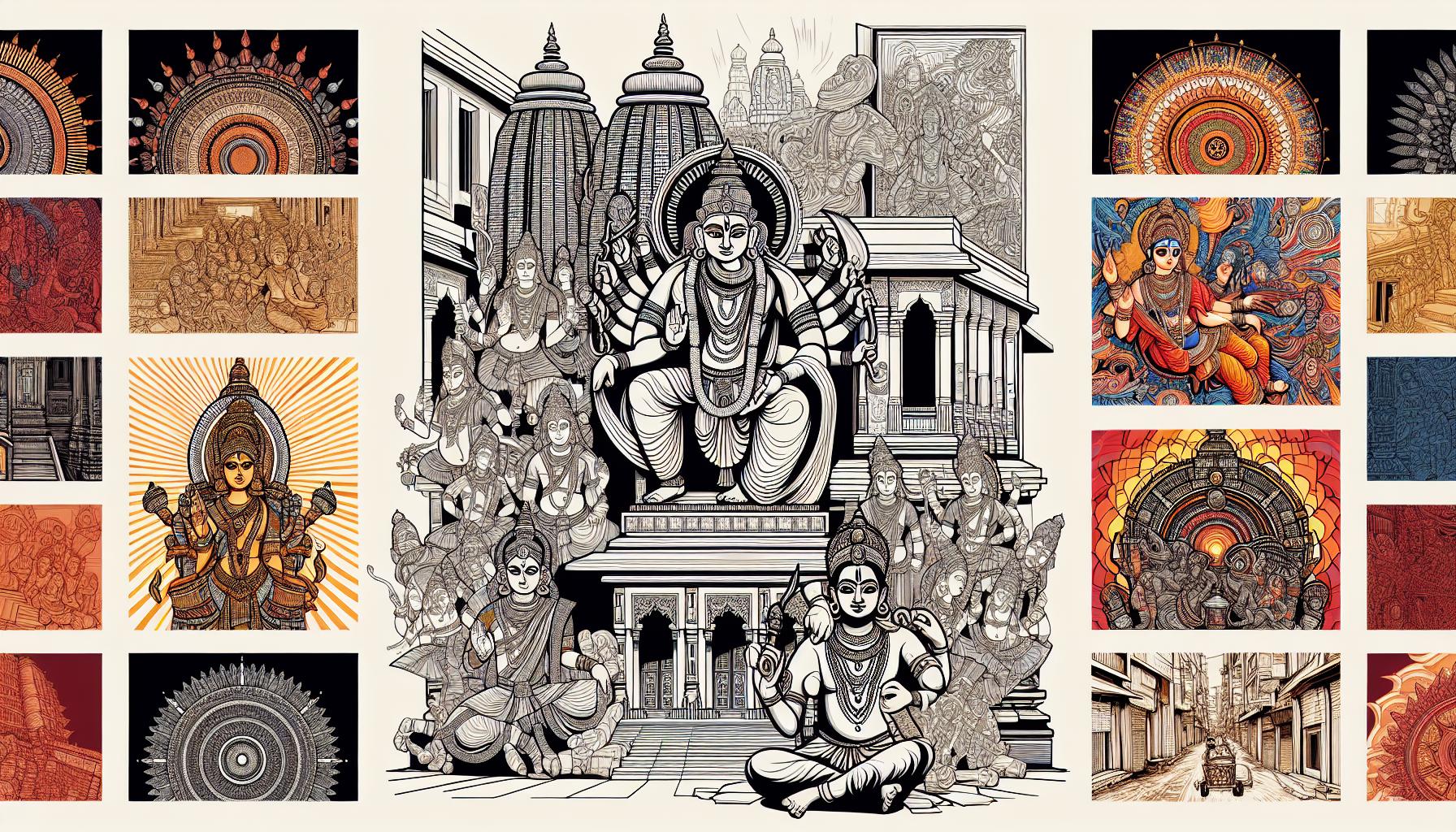
Indian art employs a myriad of styles and techniques in illustrating Hindu deities. From ancient sculptures to modern interpretations, each method reflects the evolving essence of devotion and artistic prowess.
Ancient Temple Sculptures
Ancient temple sculptures intricately portray Hindu deities through stone and bronze carvings. Artists followed Shilpa Shastras, ancient texts detailing iconographic rules. Temples like Khajuraho and Ellora display detailed sculptures of deities like Shiva and Durga. Shiva is often seen in a dancing pose, known as Nataraja, symbolizing cosmic rhythms. Durga typically appears with multiple arms, each holding different weapons, epitomizing strength and protection. These temples serve as repositories of mythological narratives, carved meticulously into their walls.
Miniature Paintings
Miniature paintings emerged during the Mughal and Rajput periods, offering a vivid portrayal of Hindu deities. Crafted on small surfaces, often no larger than a few inches, these artworks use bright colors and fine brushwork. Vishnu’s avatars, like Krishna and Rama, are commonly depicted in these paintings. Krishna, often shown playing the flute, symbolizes divine love and joy. Artists use natural mineral-based pigments, ensuring longevity and vibrancy. The detailed backgrounds and intricate motifs reflect the region’s distinct art styles.
Modern Interpretations
Modern interpretations in Indian art capture Hindu deities through various media, ranging from contemporary paintings to digital art. Artists like M.F. Husain reimagine deities in abstract forms, blending traditional elements with modern aesthetics. Digital art provides new dimensions, allowing dynamic and interactive representations. Contemporary murals in urban areas often depict Ganesha and Hanuman, integrating traditional iconography with street art influences. These modern depictions keep the essence of the deities alive, bridging ancient traditions with today’s artistic innovations.
Regional Variations
Hindu deities depicted in Indian art show remarkable diversity across different regions. Each area has unique artistic traditions that influence the portrayal of gods and goddesses.
Northern Indian Art
Northern Indian art features deities like Shiva, Vishnu, and Devi in detailed temple sculptures and vibrant miniature paintings. Artists in regions like Rajasthan and Uttar Pradesh often use bold colors and intricate patterns to highlight divine attributes. The Mughal influence is evident in the Persian-influenced miniature styles, where deities are depicted in courtly settings with elaborate garments and regal postures. Regional artworks from Kashmir use distinctive floral designs in their depiction of deities, blending local aesthetics with spiritual themes.
Southern Indian Art
Southern Indian art is known for its grand temple architecture and bronze sculptures, primarily of deities like Shiva, Vishnu, and their consorts. Temples in Tamil Nadu and Karnataka are adorned with detailed carvings of deities in various poses. The Chola dynasty’s contribution to bronze sculptures, especially of Nataraja (a depiction of Shiva), stands out with its exquisite craftsmanship. Art from Kerala includes mural paintings on temple walls, showing gods in vibrant hues and detailed expressions, reflecting local traditions and devotional practices.
Eastern And Western Indian Art
Eastern Indian art, particularly from Bengal and Odisha, focuses on deities like Durga, Kali, and Jagannath. Bengal’s Durga Puja showcases elaborate clay idols of Durga in temporary pavilions called pandals. Odisha’s Pattachitra art features intricate depictions of gods on cloth or dried palm leaves. Western Indian art regions like Maharashtra and Gujarat emphasize deities such as Ganesha and Krishna. Ganesha idols crafted for Ganesh Chaturthi in Maharashtra display creativity and attention to detail. Gujarat’s pithora wall paintings, often created for ritualistic purposes, include vibrant images of deities engaged in various activities.
Symbolism And Iconography
Symbolism and iconography play a crucial role in the depiction of Hindu deities in Indian art. Artists use specific symbols and attributes to convey deeper meanings and spiritual ideals, enabling viewers to understand the divine aspects of each deity.
Attributes And Symbols
Attributes and symbols distinguish each deity in Hinduism. For instance:
- Shiva: Often depicted with a third eye (wisdom), the trident (creation, preservation, destruction), and the crescent moon (time cycle) on his head.
- Vishnu: Commonly shown holding a conch (om sound), discus (righteousness), lotus (purity), and mace (strength).
- Lakshmi: Frequently portrayed with gold coins flowing from her hands and standing on a lotus, symbolizing wealth and purity.
- Kali: Illustrates formidable power, often with a garland of skulls and a severed head, representing the destruction of evil.
These icons provide insight into the theology and philosophy related to each deity, making their identities recognizable in various Indian art forms.
Depiction Of Myths And Legends
Hindu art often narrates the numerous myths and legends associated with deities. Key examples include:
- Krishna: Depicted in scenes from the Mahabharata – The Great Epic and Bhagavad Gita, such as playing the flute among the gopis (devotees) or guiding Arjuna in battle.
- Rama: Illustrated in episodes from the Ramayana – Epic of Hinduism, like his exile, battles with the demon king Ravana, and the eventual return to Ayodhya.
- Durga: Shown slaying the buffalo demon Mahishasura – Buffalo Demon, symbolizing the victory of good over evil.
- Ganesha: Featured in stories involving his elephant head and his role as the remover of obstacles.
These artworks serve as visual narratives that preserve and transmit Hindu mythology and religious teachings across generations.
Conclusion
Exploring Hindu deities in Indian art reveals a rich world of cultural and spiritual significance. The intricate depictions of gods and goddesses not only highlight their divine attributes but also serve as a medium to convey profound mythological narratives. Festivals and community rituals further emphasize the deep-rooted devotion and cultural continuity.
Understanding the symbolism and iconography in these artworks provides a deeper appreciation for the spiritual ideals they represent. The stories and legends depicted in Hindu art ensure that the teachings and traditions are passed down through generations.
Indian art’s portrayal of Hindu deities is a testament to the enduring legacy of India’s spiritual and cultural heritage. It continues to inspire and educate, bridging the past with the present in a visually captivating and meaningful way.
Sources & further reading
These themes are explored in greater depth across the following authoritative resources:
- Britannica, Hindu Temple Architecture
- Met Museum, Hinduism in the Arts
- Britannica, Iconography
- Stella Kramrisch, The Hindu Temple (Motilal Banarsidass, 1946)
- Heinrich Zimmer, Myths and Symbols in Indian Art and Civilization (Princeton University Press, 1946)
External resources for further reading. Apam Napat is not affiliated with these publishers; citation does not imply endorsement.
Frequently asked questions
How are Hindu deities depicted in Indian art?
How is Vishnu shown in Indian art?
How is Kali represented in Indian art?
How do Indian festivals showcase deities through art?
How do classical Indian dances depict Hindu deities?
Based on the classical texts of Hindu mythology, see our sources.